Word identification Building Vocabulary Worksheets for Ages 3-8
5 filtered results
-
From - To
Discover our engaging "Word Identification Building Vocabulary Worksheets" designed specifically for children ages 3 to 8! These worksheets help young learners enhance their reading skills by focusing on word identification. Through fun and interactive activities, kids will improve their vocabulary and comprehension, making reading enjoyable and effective. Each worksheet encourages critical thinking and reinforces essential language arts skills, setting a solid foundation for literacy. Ideal for parents and educators alike, our resources support early childhood learning in a playful, stimulating environment. Download our printable worksheets today and watch your child's love for words and reading flourish!
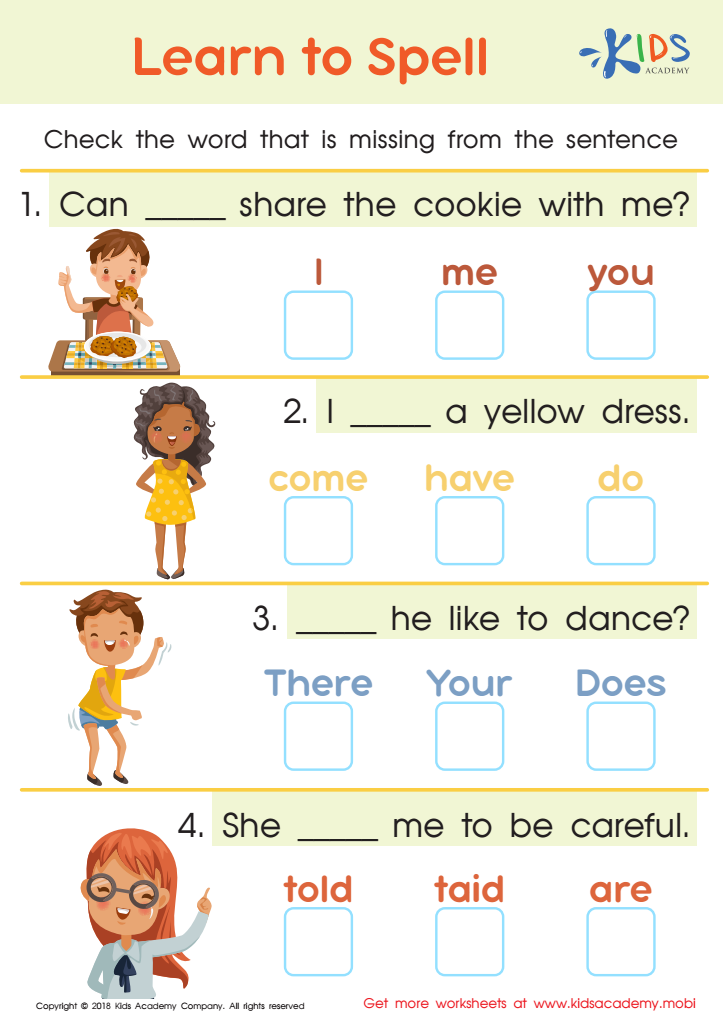
Learn to Spell Worksheet
 Assign to My Students











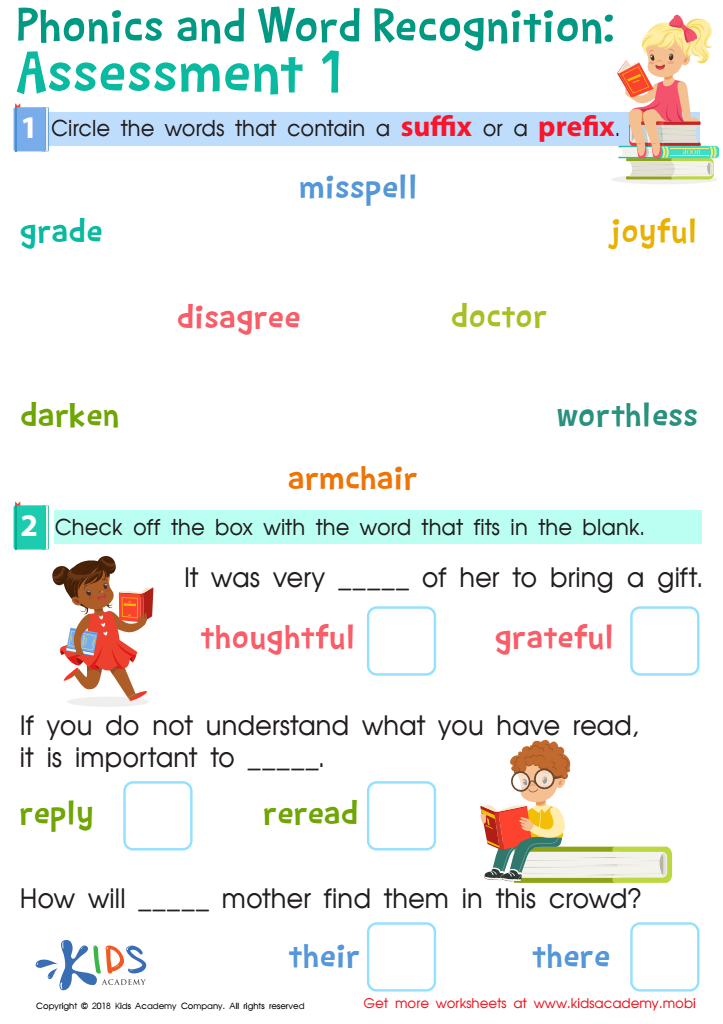
Phonics and Word Recognition: Assessment 1 Worksheet
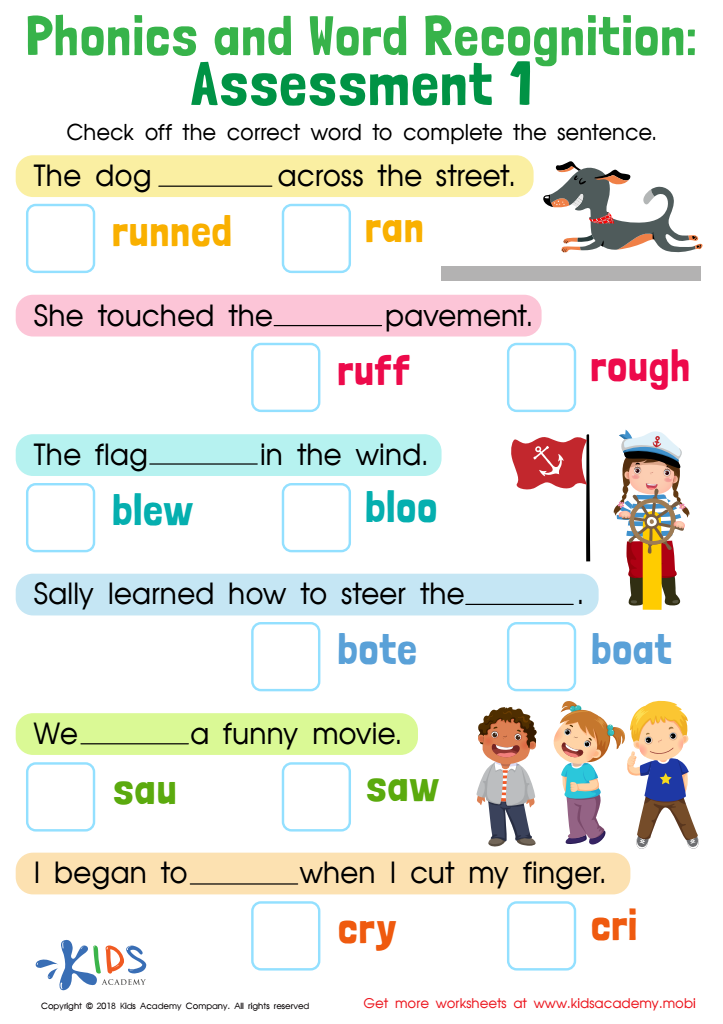
Phonics and Word Recognition: Assessment 1 Worksheet
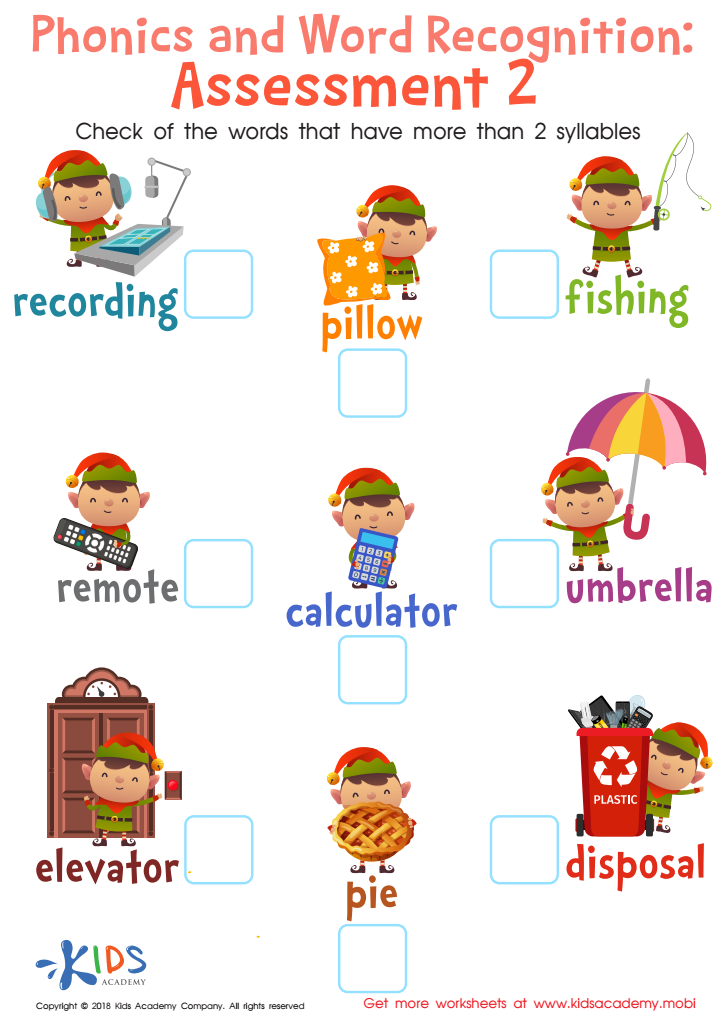
Phonics and Word Recognition: Assessment 2 Worksheet
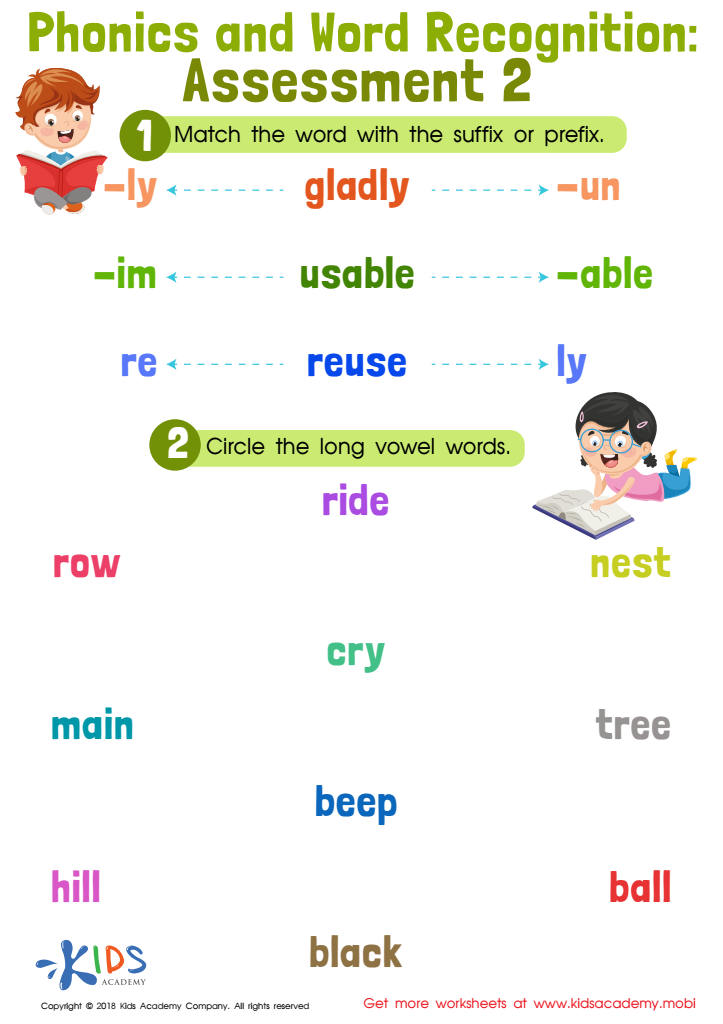
Phonics and Word Recognition: Assessment 2


.jpg)





Parents and teachers should prioritize word identification and building vocabulary for children ages 3-8, as these skills are fundamental to a child’s literacy development and overall academic success. During these formative years, young children are naturally curious about language, and fostering a rich vocabulary can enhance their ability to communicate effectively, express their thoughts, and engage with others.
Word identification helps children recognize and understand written words, paving the way for fluent reading. When children can match spoken words with their written forms, they gain confidence and motivation to explore literature independently. A robust vocabulary not only improves reading comprehension but also aids in listening and verbal abilities, enabling children to participate actively in conversations and classroom discussions.
Moreover, a strong vocabulary is linked to later academic performance across subjects. Children who engage with diverse words are better equipped to grasp complex concepts in math and science, as a rich vocabulary facilitates critical thinking and problem-solving skills. Parents and teachers can work together by reading aloud, using varied vocabulary in everyday conversations, and encouraging playful word games. By focusing on these aspects, adults can significantly influence children’s cognitive development and love for learning.








