Animal identification Reading Worksheets for Ages 3-8
6 filtered results
-
From - To
Discover our engaging Animal Identification Reading Worksheets designed for children aged 3-8! These worksheets are perfect for early learners, helping them enhance their reading skills while exploring the fascinating world of animals. Each worksheet features vibrant illustrations and simple texts, making it easy for kids to identify and learn about various animals. Our activities not only promote literacy but also encourage curiosity and a love for wildlife. Ideal for at-home learning or classroom use, these resources are perfect for developing vocabulary and comprehension skills. Dive into the fun of learning with our exciting animal-themed reading worksheets today!
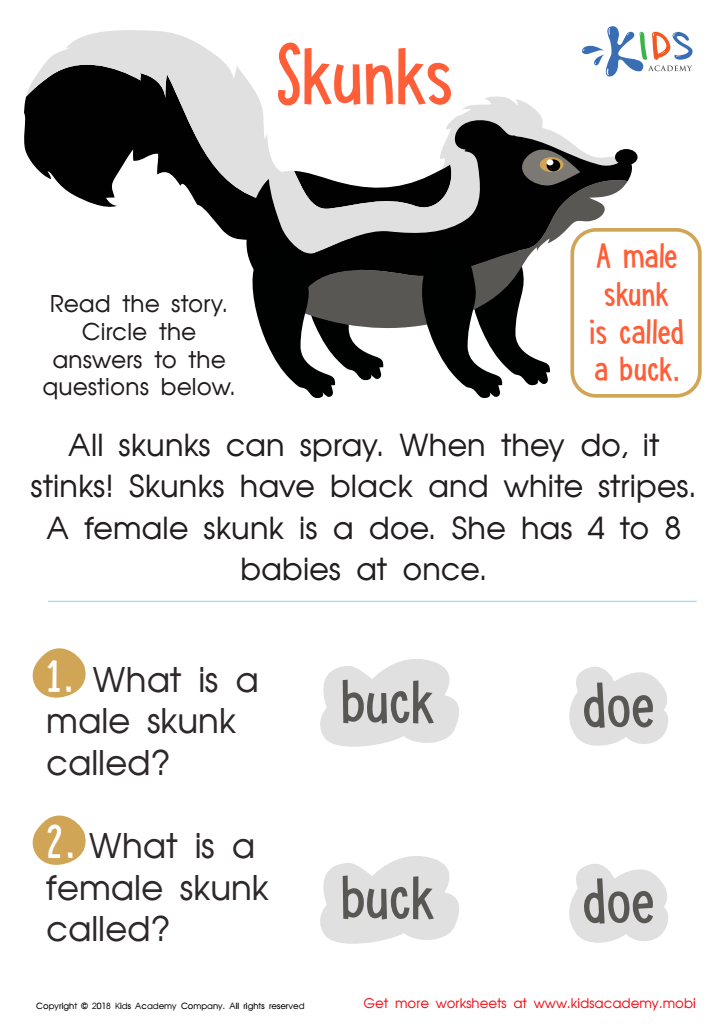
Skunks Worksheet
 Assign to My Students
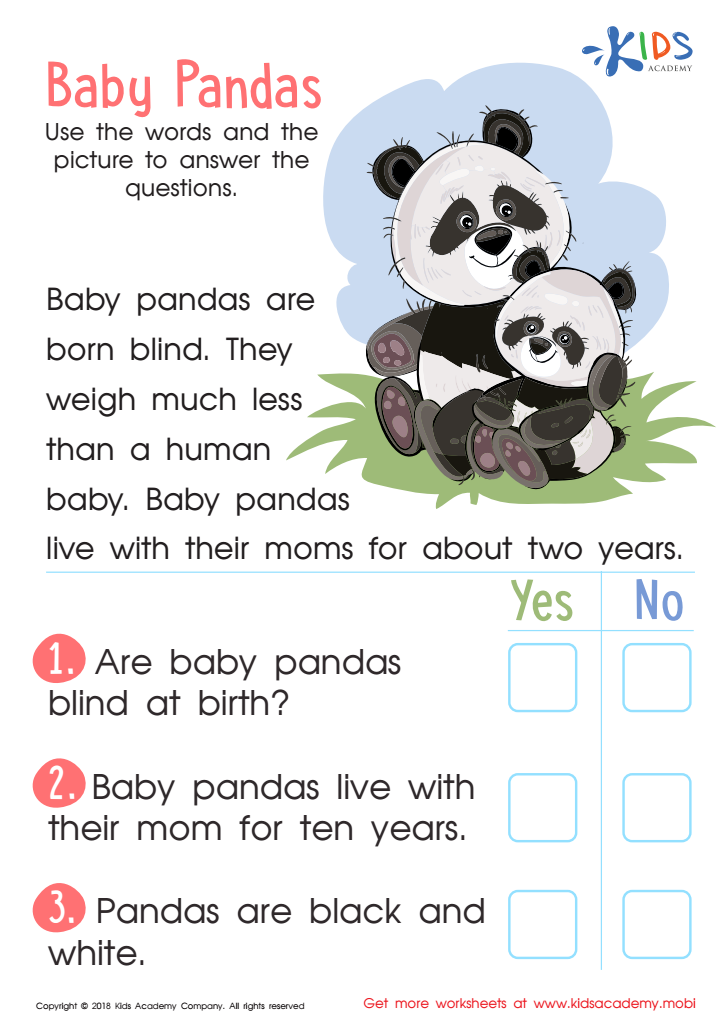
Baby Pandas Worksheet
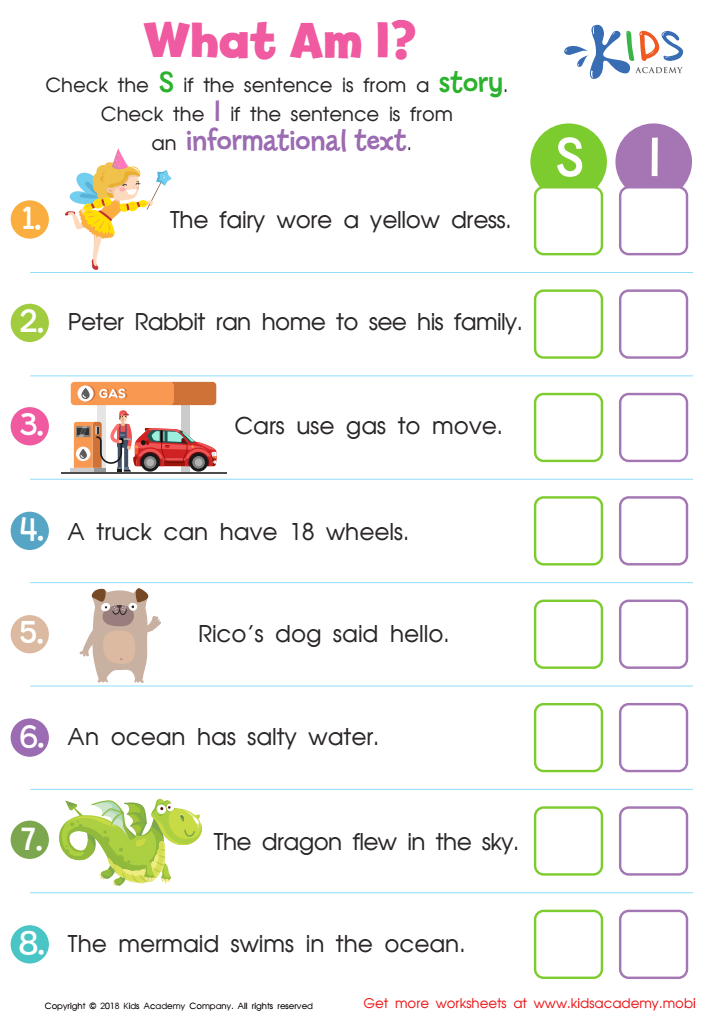
What Am I? Worksheet
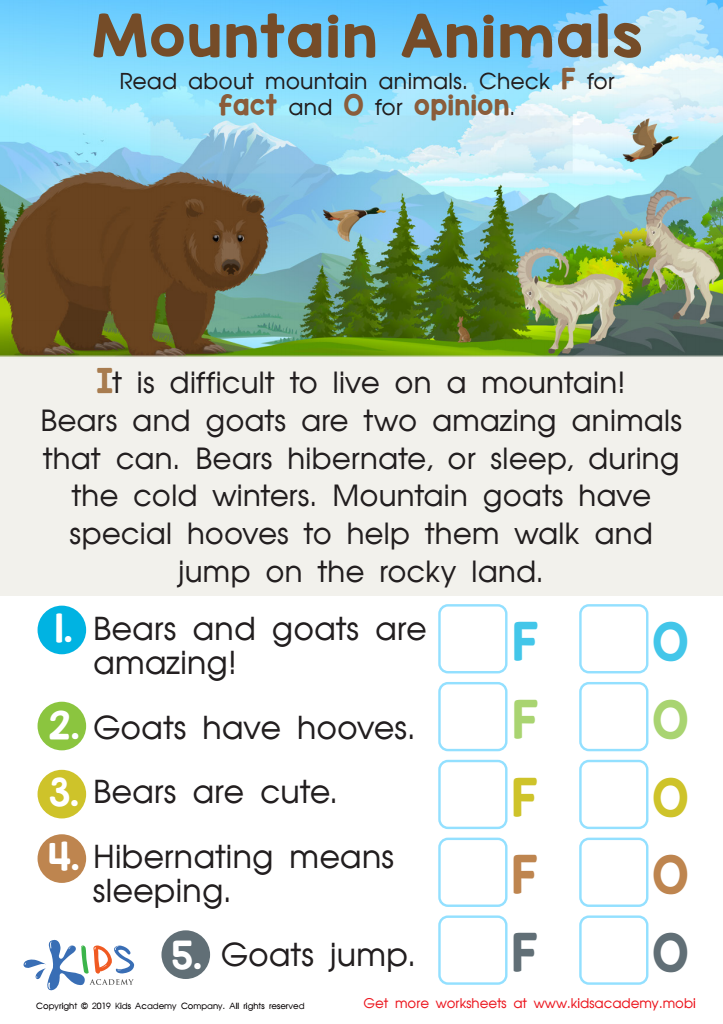
Mountain Animals Worksheet
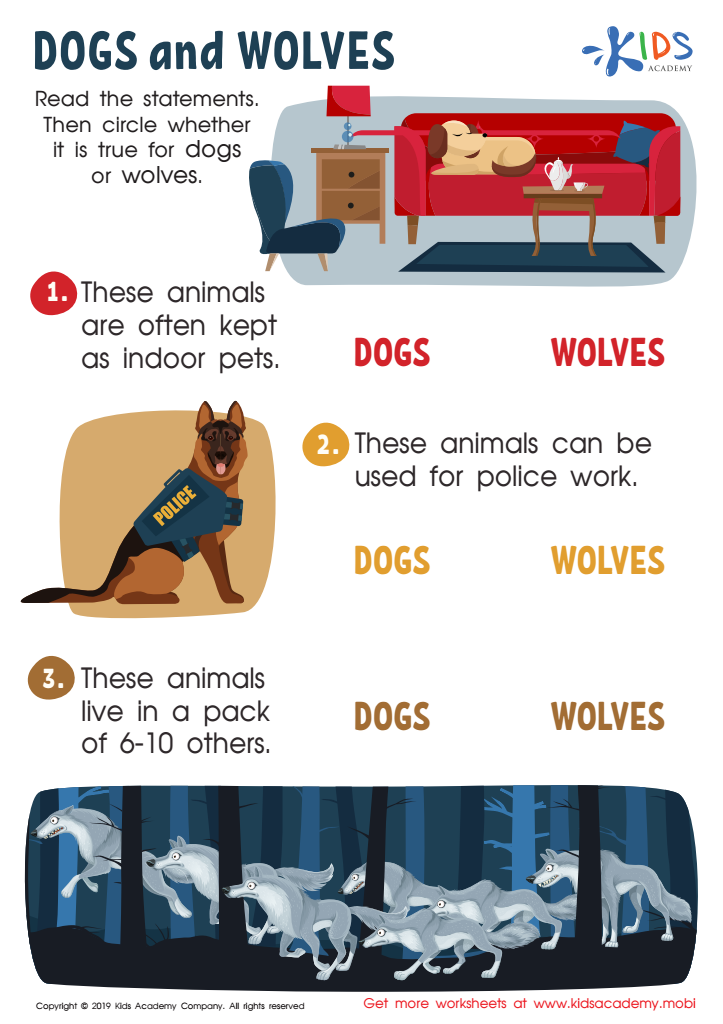
Dogs and Wolves Worksheet






Animal identification reading is a crucial activity for children aged 3-8, and it merits great attention from both parents and teachers. First, it fosters early literacy skills, helping young learners develop vocabulary and comprehension through engaging stories and illustrations of various animals. As children identify different species, they simultaneously enhance their reading skills, which can lay a strong foundation for future academic success.
Moreover, understanding animal identification promotes curiosity and a love for nature. Children become aware of biodiversity, recognize their place in the ecosystem, and develop empathy toward living creatures. This educational journey can spark a lifelong interest in science and conservation, encouraging environmentally responsible behaviors as they grow.
Additionally, reading about animals reinforces critical thinking. Kids learn to categorize, compare, and contrast different species, exercising their cognitive abilities. This activity often generates excitement in classrooms or homes, creating opportunities for meaningful discussions between adults and children, thus strengthening their emotional bonds.
In conclusion, animal identification reading provides multifaceted benefits, combining literacy development with science education, emotional growth, and open-ended discussions. It enriches children's minds while nurturing responsible global citizenship, making it essential for parents and teachers to prioritize this learning experience.








