Answering questions Reading Worksheets for Ages 3-8
3 filtered results
-
From - To
Introduce young learners to the joy of reading with our "Answering Questions Reading Worksheets for Ages 3-8." Tailored to build comprehension skills, these engaging worksheets encourage kids to read short passages and answer questions, enhancing retention and understanding. Perfect for preschool, kindergarten, and early elementary students, our materials support cognitive development through fun, interactive tasks that make learning enjoyable. Assist your child in developing critical thinking and problem-solving skills with worksheets that foster curiosity and growth. Start your journey today and watch your child's reading skills blossom with confidence and enthusiasm!
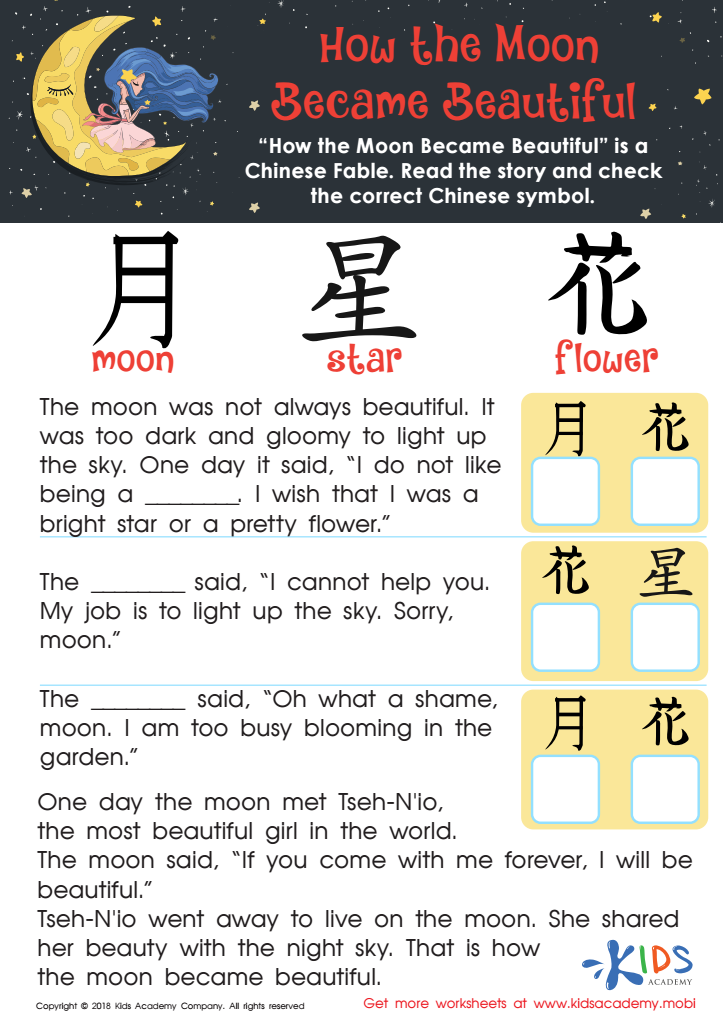
How the Moon Became Beautiful Worksheet
 Assign to My Students
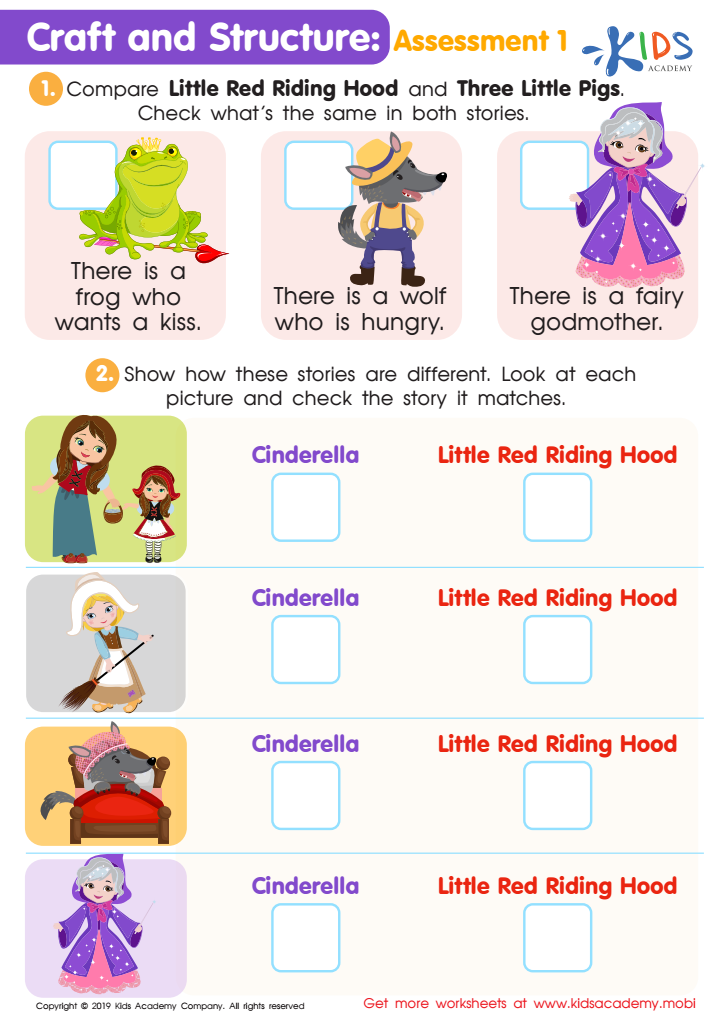
Craft and Structure: Assessment 1 Worksheet
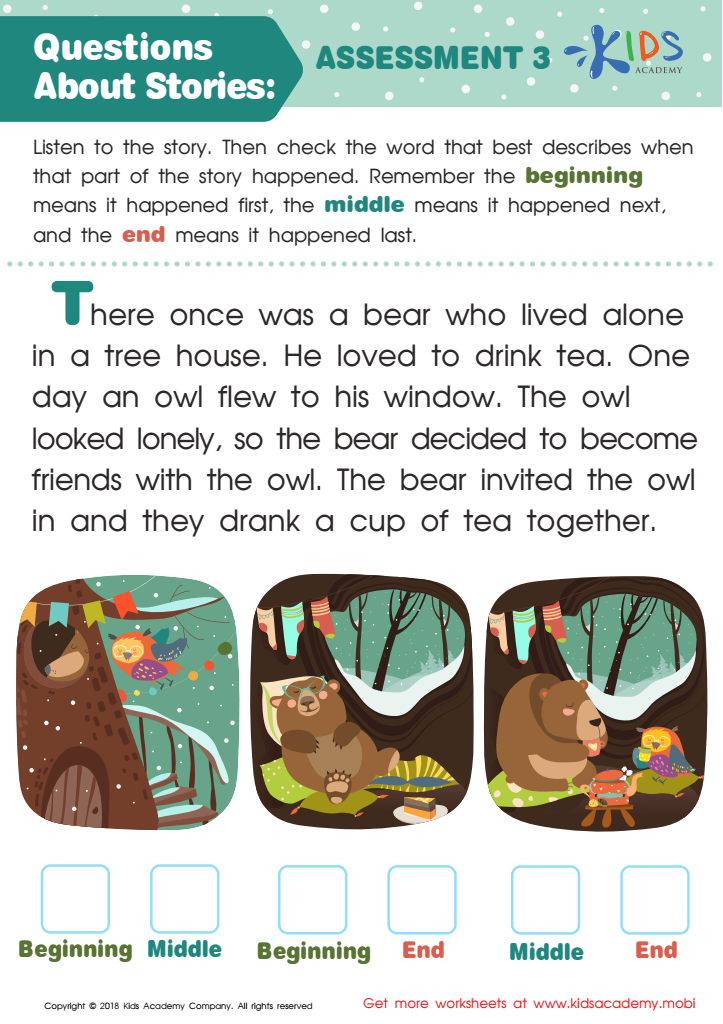
Questions About Stories: Assessment 3 Worksheet








Absolutely! Engaging children in answering questions through reading activities between the ages of 3-8 is incredibly important for their cognitive, emotional, and social development. Firstly, answering questions helps children enhance their comprehension skills. It ensures they are not just passively hearing or reading words but are actively processing and understanding the material. This active engagement fosters critical thinking, enabling kids to make connections, infer meanings, and recall details.
Furthermore, this activity promotes vocabulary expansion, as children are exposed to new words and phrases within a meaningful context. When parents and teachers ask questions, they encourage children to think about these words, enhancing their speaking and listening skills. In turn, this can improve their conversational abilities and overall communication competence.
Emotionally, such interaction strengthens the bond between the adult and the child. It makes children feel valued and heard, boosting their confidence and encouraging a love for reading and learning. Socially, it builds their ability to articulate thoughts and reasons, which is crucial for future classroom discussions and collaborations.
Lastly, this practice can help identify any learning difficulties early on. If a child consistently struggles to answer questions, parents and teachers can address these areas promptly. Therefore, fostering a habit of answering questions during reading is foundational for a child's holistic growth.








