Categorization skills Reading Worksheets for Ages 3-8
5 filtered results
-
From - To
Boost your child's cognitive development with our "Categorization Skills Reading Worksheets" designed for ages 3-8! These engaging, age-appropriate worksheets help young learners identify, group, and classify objects based on shared attributes. Through fun, interactive activities, children can enhance their critical thinking and vocabulary while honing essential reading skills. Our printable worksheets are perfect for at-home or classroom education, supporting varied learning styles and levels. Give your child the tools to succeed with educational exercises that turn learning into an exciting adventure. Visit Kids Academy and start your child's journey to mastering categorization now!
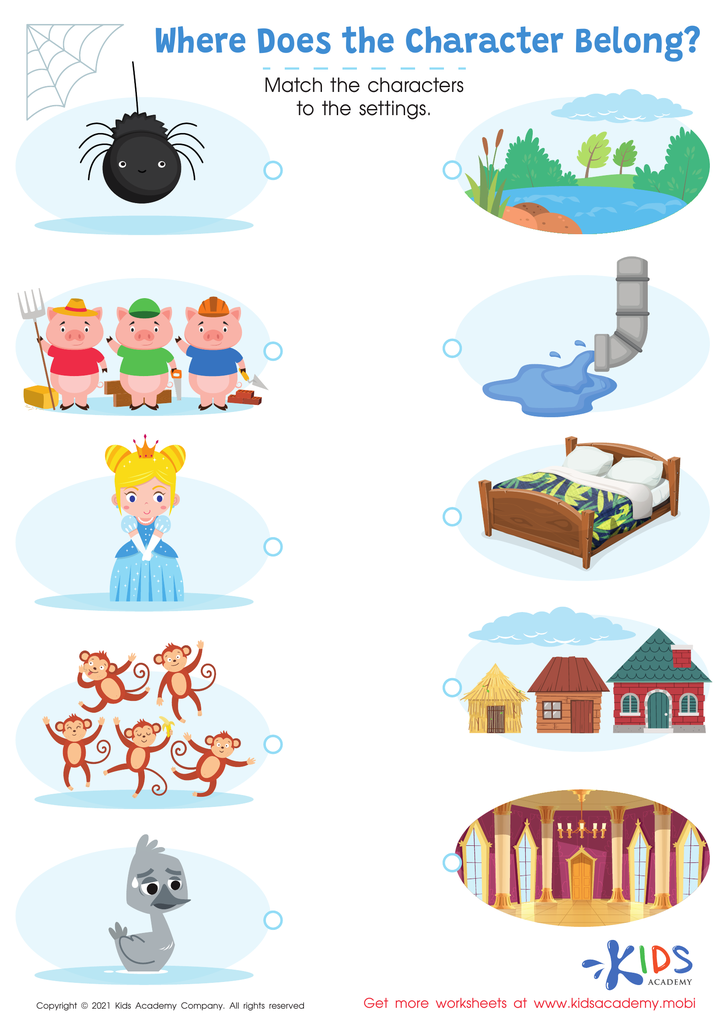
Where Does the Character Belong? Worksheet
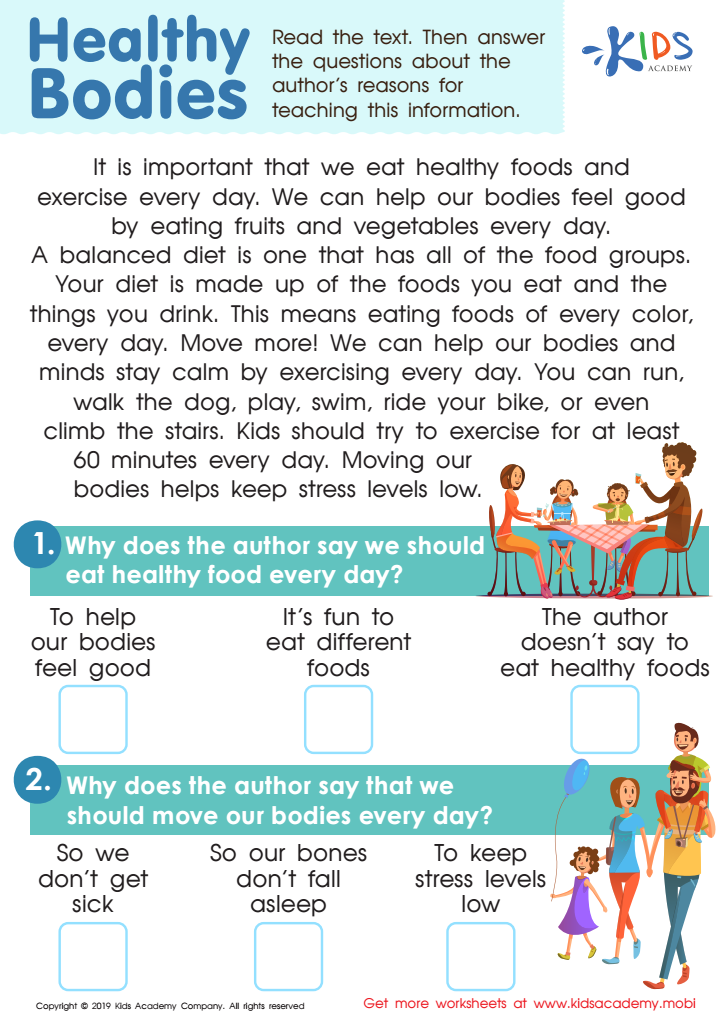
Healthy Bodies Worksheet
 Assign to My Students
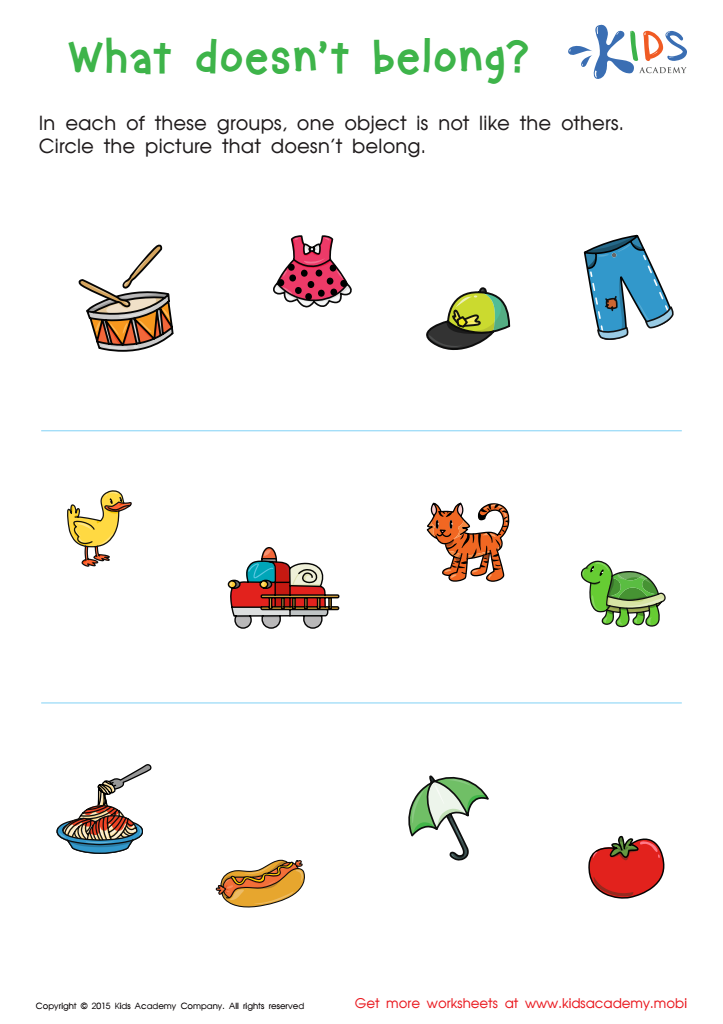
First Words: What Doesn't Belong Worksheet
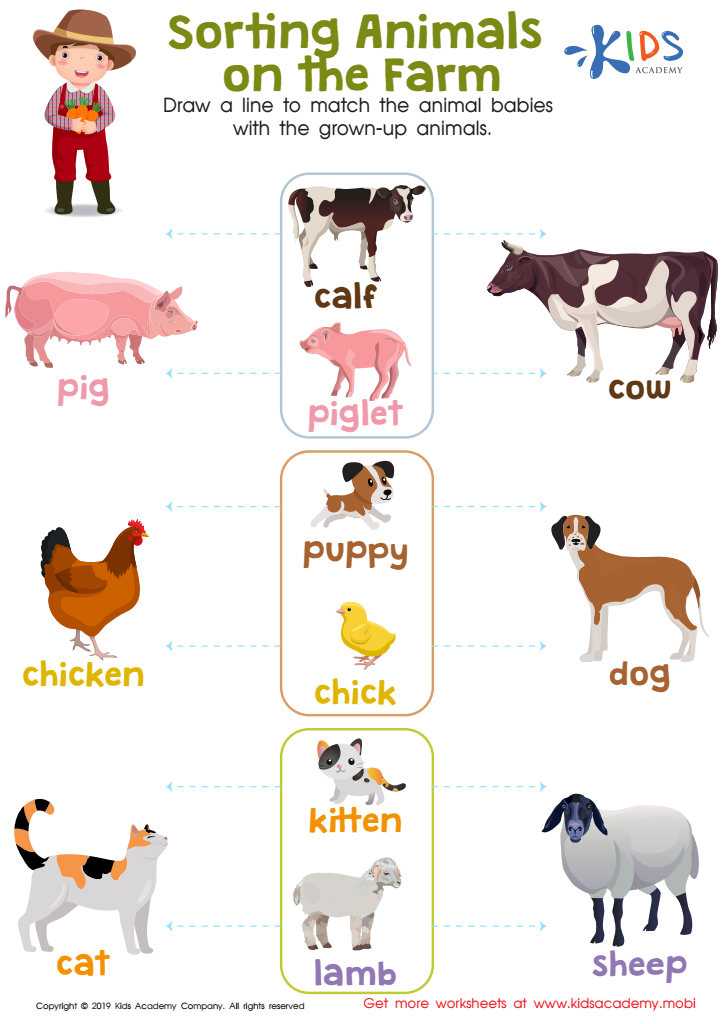
Sorting Animals on the Farm Worksheet






Parents and teachers should prioritize fostering categorization skills in children aged 3-8 because these foundational cognitive abilities are crucial for their overall academic and personal development. Categorization, the ability to group items based on shared attributes, enhances a child's critical thinking and organizing skills, which are essential for many learning domains such as reading, math, and science.
When children learn to categorize, they begin to understand relationships between different objects and concepts, aiding their comprehension and retention abilities. For instance, being able to categorize words by sounds or visual patterns helps children decode and recognize words more efficiently, forming a strong basis for early reading skills.
Moreover, categorization aids in vocabulary expansion as children learn to identify and articulate differences and similarities among objects, enhancing their descriptive language abilities. It also helps them make connections to prior knowledge, boosting their understanding and reasoning capabilities.
Socially, strong categorization skills allow children to navigate their environments more effectively, understanding societal norms and expectations through generalized concepts. For example, grasping the category of 'safe' versus 'dangerous' situations encourages better decision-making and behaviors.
Overall, developing categorization skills from an early age lays the groundwork for complex thought processes and learning, which is essential for academic success and everyday problem-solving.








