Detail identification Reading Worksheets for Ages 3-8
4 filtered results
-
From - To
Unlock the joy of learning with our Detail Identification Reading Worksheets designed for children ages 3-8! These engaging printables enhance reading comprehension by helping young learners focus on detail recognition within various texts. Each worksheet offers fun, interactive exercises that encourage observation and critical thinking skills. Aligned with educational standards, our resources support early literacy development, making it perfect for teachers and parents alike. Foster a love of reading while boosting attention to detail in your child's learning journey. Explore a diverse collection of worksheets that are both informative and entertaining, ensuring a solid foundation for future reading success!
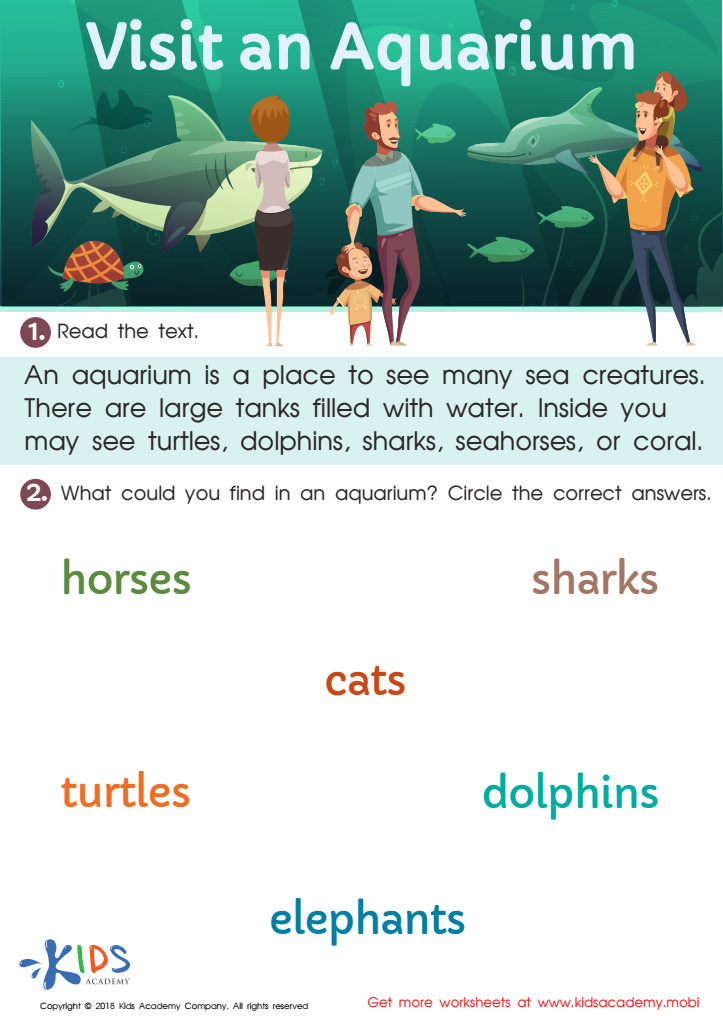
Visit an Aquarium Worksheet
 Assign to My Students
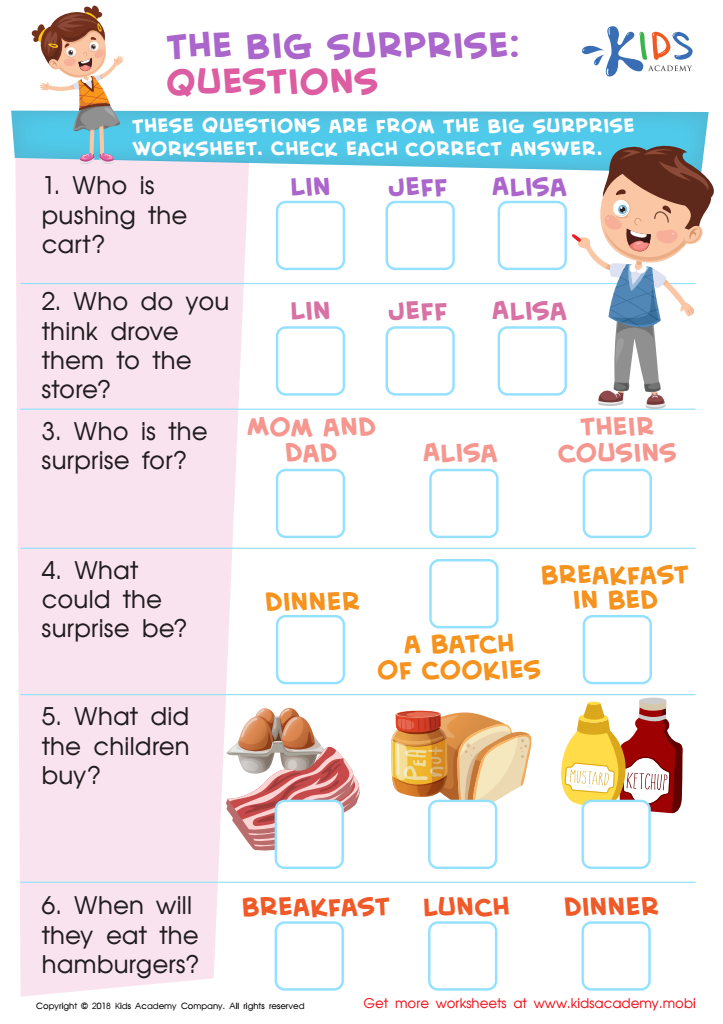
The Big Surprise: Questions Worksheet
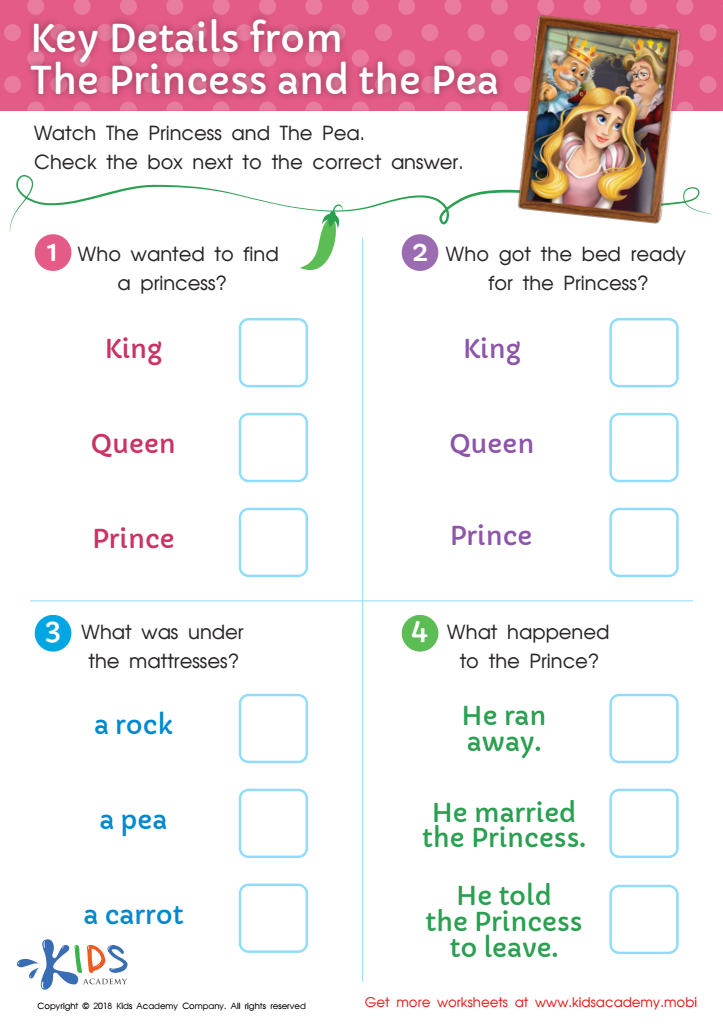
Key Details from the Princess and the Pea Worksheet
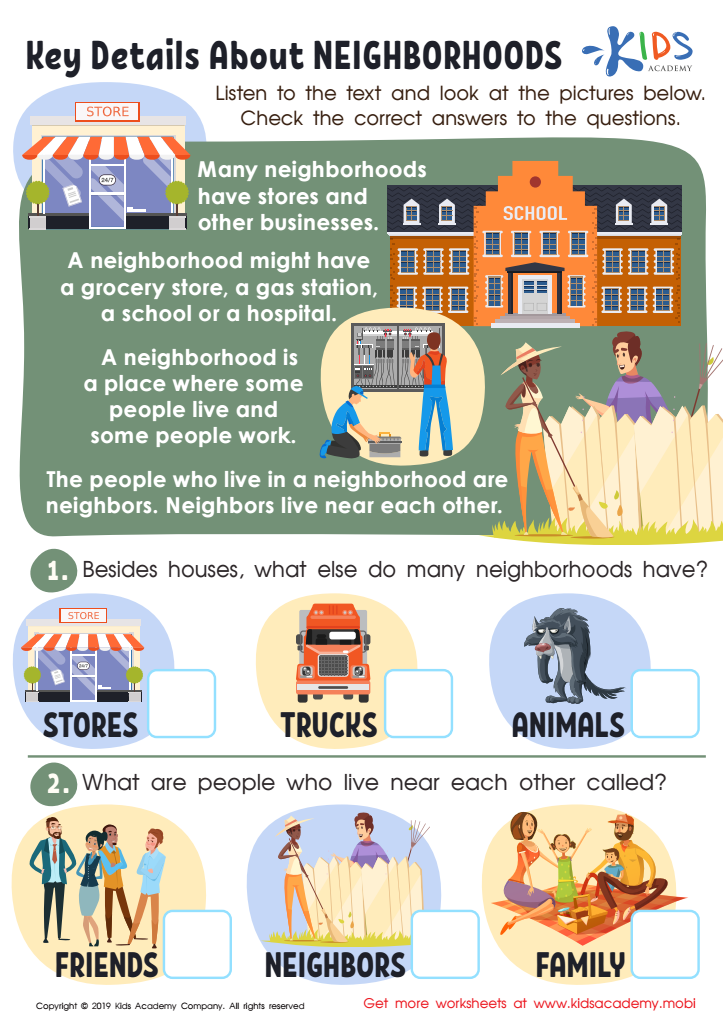
Key Details Neighborhoods Worksheet








Detail identification reading is a crucial skill for children aged 3-8, as it lays the foundation for comprehension and critical thinking. Parents and teachers should prioritize this skill for several reasons.
Firstly, young children are naturally curious and eager to explore stories. By focusing on detail identification, adults can help foster this curiosity, encouraging children to notice specific elements in texts—such as characters, settings, and events. This engagement promotes deeper understanding and retention of information.
Secondly, detail identification improves vocabulary and language skills. As children learn to identify and describe details, they build their word bank, enabling them to articulate thoughts and ideas more effectively. This is particularly important at a young age, as strong language skills are linked to later academic success.
Additionally, the ability to identify and analyze details enhances critical thinking skills. When children assess the significance of various elements in a story, they develop analytical abilities that extend beyond reading, benefiting them in problem-solving situations across subjects.
In fostering detail identification, parents and teachers create a supportive environment that encourages interactive reading, promotes cognitive development, and cultivates a love for literature, setting children on a path of lifelong learning and inquiry.








