
Develop critical thinking Reading Worksheets for Ages 3-8
6 filtered results
Difficulty Level
Grade
Age
-
From - To
Subject
Activity
Standards
Our Develop Critical Thinking Reading Worksheets for ages 3-8 are designed to stimulate young minds and promote analytical skills. Crafted by educational experts, these worksheets go beyond basic reading by challenging kids to reason, question, and explore. Each engaging activity helps children comprehend text, recognize details, and draw conclusions, laying a strong foundation for future learning. Perfect for home or classroom use, these worksheets make learning fun while fostering essential cognitive development. Empower your child to become a thoughtful reader and a lifelong learner with our diverse selection of critical thinking activities. Explore today for smarter reading tomorrow!
Favorites
With answer key
Interactive
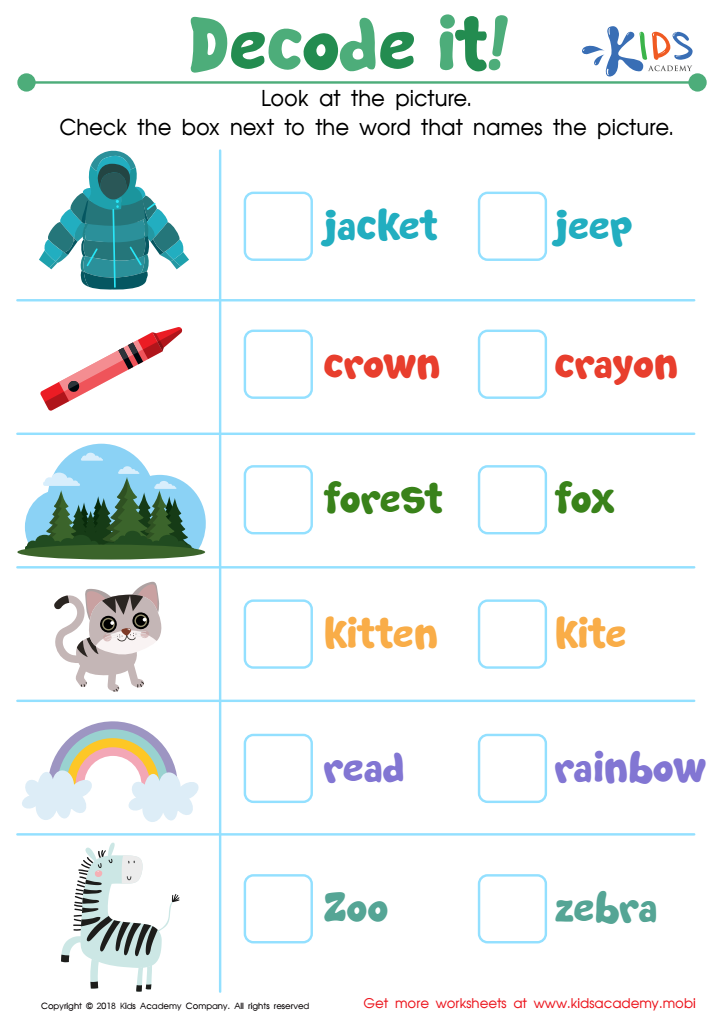
Reading: Decode It Worksheet
Look at the picture and circle the word that names it. This exercise helps kids practice picture cues and decoding words, with the same beginning sound. It builds their fluency and comprehension, giving them the skills to read unfamiliar words.
 Assign to My Students
Reading: Decode It Worksheet
Worksheet
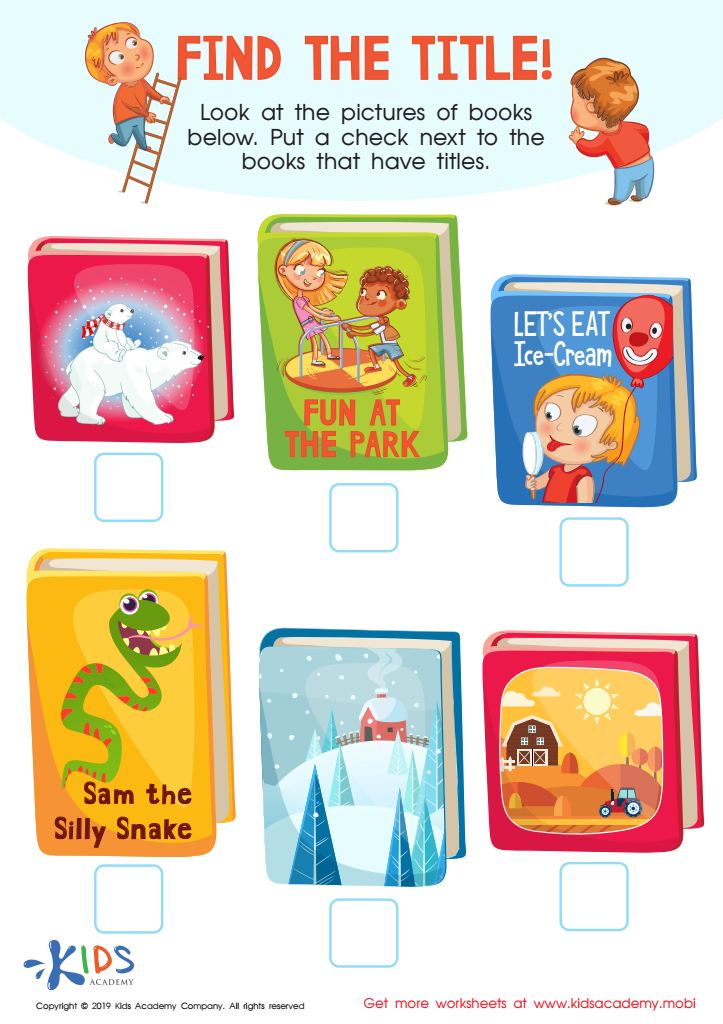
Find the Title Worksheet
Help your kids to identify the colors of the books on this worksheet. Ask them to spot the differences between the six books, such as which ones have titles printed on their covers. Ask them to put a check next to the books with titles. This activity will promote your kids' thinking skills.
Find the Title Worksheet
Worksheet

Fox Rhyming Words Worksheet
Can your child rhyme a fox? Listen carefully and see if it's sun, beans, or ox! Help your child recognize rhymes with a pencil or crayon maze. Travel from the dog to the picture that rhymes. This worksheet builds pre-reading skills - a great way to learn!
Fox Rhyming Words Worksheet
Worksheet
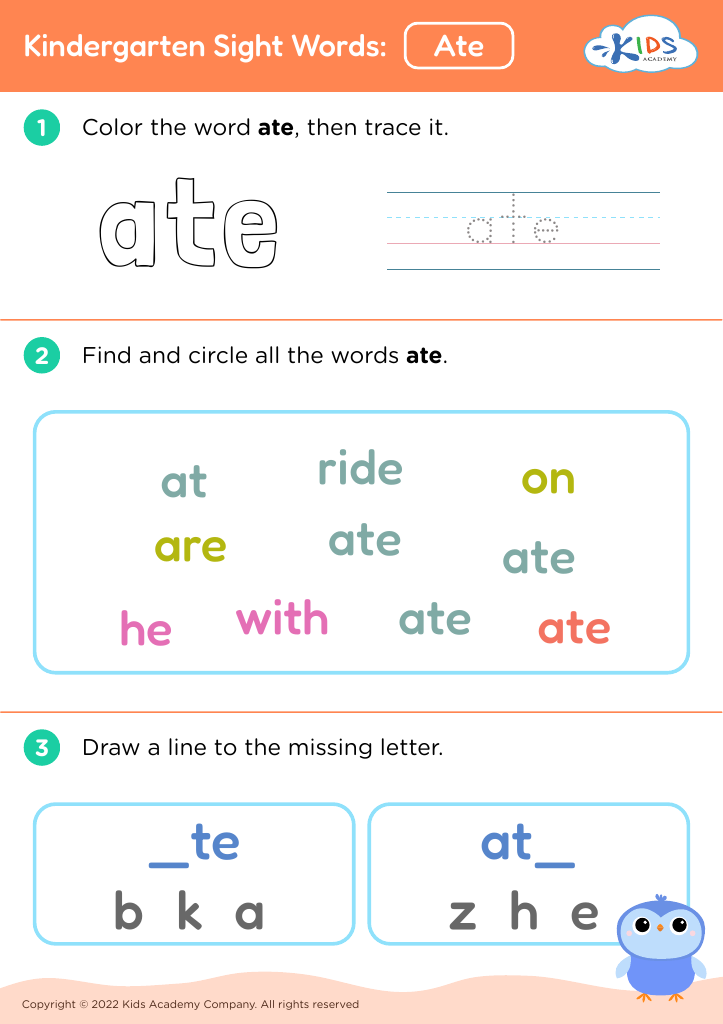
Join Kids Academy for Free
Who is primarily going to use this learning content?







Fostering critical thinking skills in young children, specifically through reading, is crucial for their cognitive and overall developmental growth. At ages 3-8, children's brains are particularly receptive and impressionable, making it an ideal time to nurture cognitive abilities that will serve them for a lifetime. Critical thinking promotes problem-solving and decision-making skills, both of which are essential for academic success and real-life experiences.
When children engage in critical thinking while reading, they learn to question the story, predict outcomes, and understand various perspectives. This active engagement doesn't just improve their comprehension but also enables them to become independent and innovative thinkers. For parents and teachers, encouraging this kind of reasoning helps detect and nurture a child's innate interests and talents early on. Critically thinking readers are more likely to develop empathy by understanding different characters' emotional experiences.
Moreover, these skills lay a foundation for lifelong learning. For this age group, integrating fun, interactive, age-appropriate books that challenge reasoning can create rounder individuals who handle complexities and discern information effectively. Natural curiosity ignited through such critical thinking exercises builds a robust framework for future academic pursuits and personal decision-making processes. Thus, parents and teachers should prioritize and invest in cultivating these skills through reading to foster holistic and higher-order cognitive development.








