Identifying story elements Reading Worksheets for Ages 3-8
4 filtered results
-
From - To
Discover our engaging "Identifying Story Elements" reading worksheets designed for children ages 3-8. These fun and interactive resources help young learners grasp the essential components of a story, including characters, setting, plot, and main ideas. Each worksheet is crafted to promote critical thinking and enhance comprehension skills through colorful visuals and relatable content. Perfect for both classroom and home use, these worksheets encourage creativity and imagination while reinforcing foundational literacy skills. Join us in fostering a love for reading and storytelling in early learners as they explore the dynamic world of narratives. Download your worksheets today!
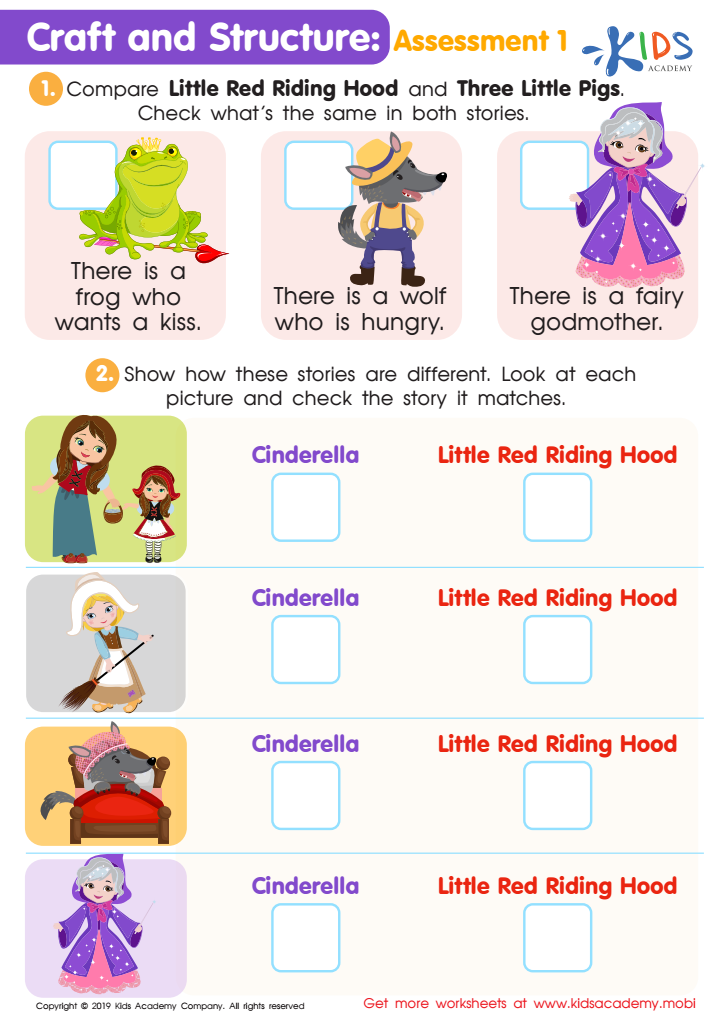
Craft and Structure: Assessment 1 Worksheet
 Assign to My Students
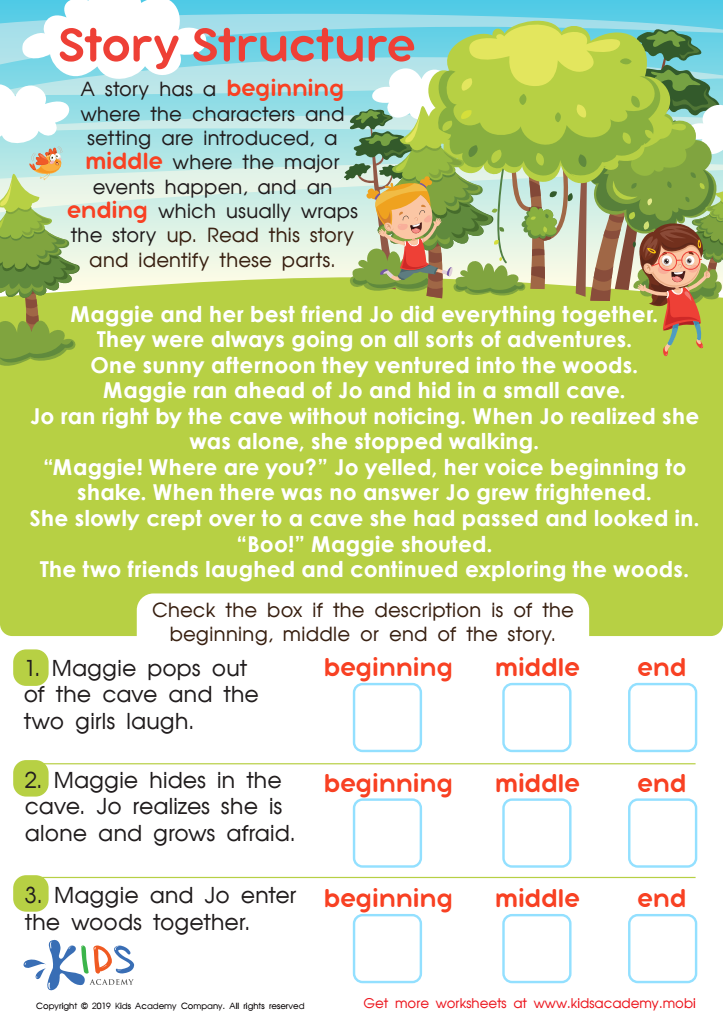
Story Structure Worksheet
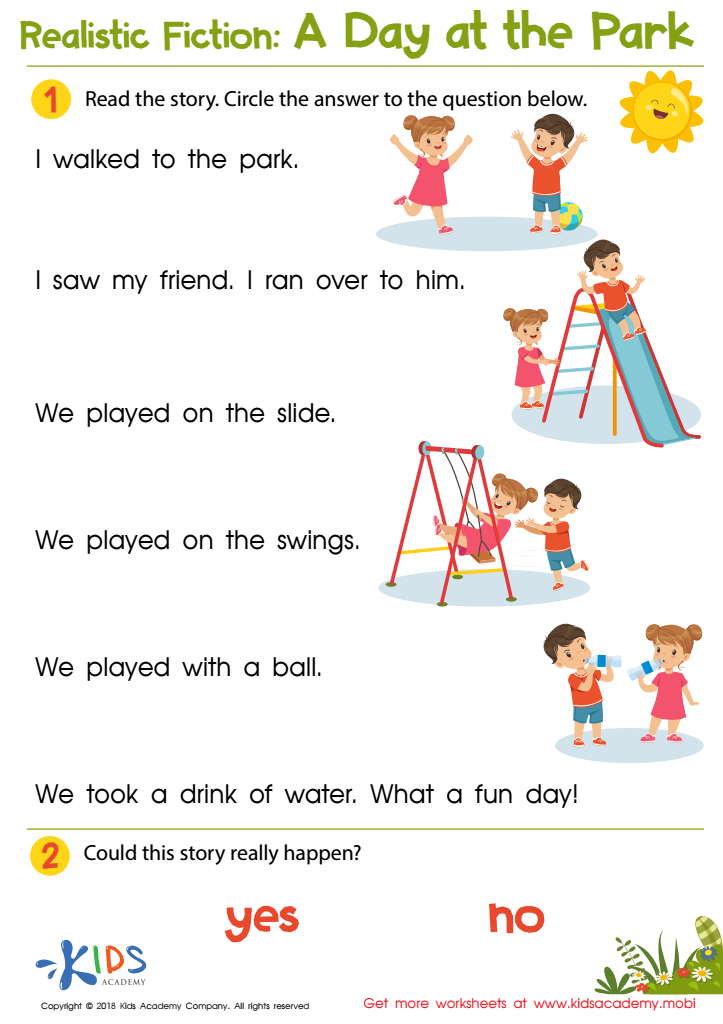
A Day at the Park Worksheet
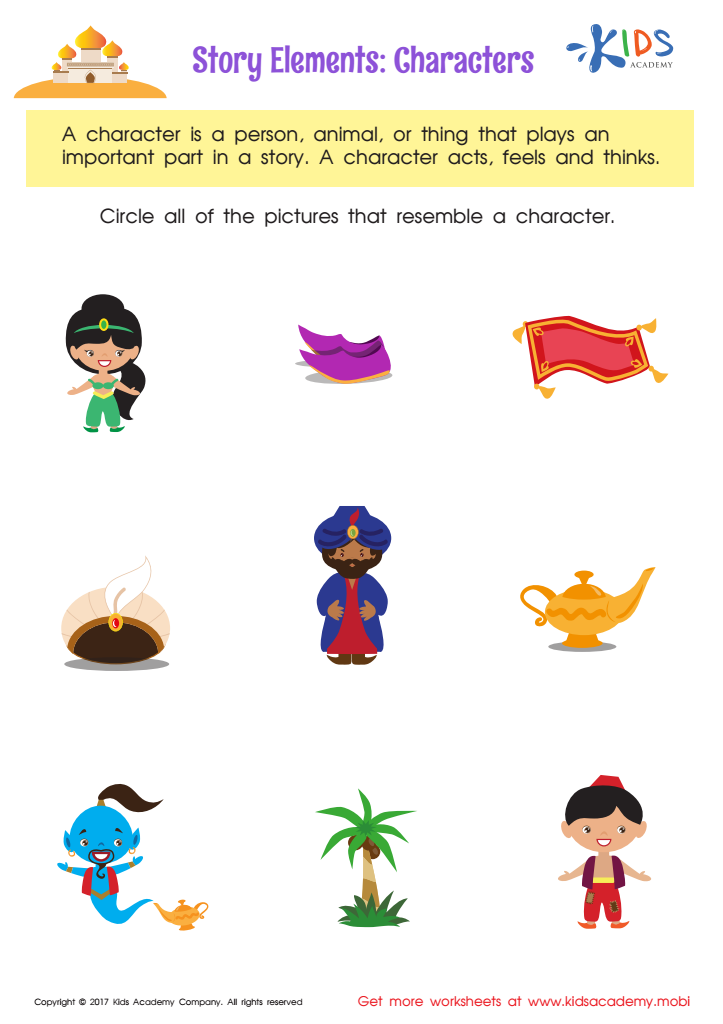
Story Elements Printable







Identifying story elements is crucial for young readers, especially those aged 3 to 8, as it lays the foundation for literacy and critical thinking skills. When parents and teachers help children recognize elements like characters, setting, plot, conflict, and resolution, they actively engage with the narrative, enhancing comprehension and retention.
Understanding these elements promotes curiosity and encourages children to ask questions, enriching their comprehension as they make connections between the text and their own experiences. For instance, recognizing characters fosters empathy as children consider different perspectives and emotions.
Moreover, grasping story elements helps improve language skills. As children discuss these components, they enhance their vocabulary and articulation, essential for effective communication. This foundational skill set also prepares them for more complex reading in later grades, ensuring a smoother transition into advanced literary studies.
Additionally, identifying story elements can enhance imaginative play. Children become not just consumers of stories but active participants who can recreate or reinvent narratives, fostering creativity.
In essence, grasping story elements enriches young children’s reading experience, facilitates deeper understanding, and nurtures crucial cognitive and social skills, making it an invaluable focus for parents and educators alike.








