Sequencing events Reading Worksheets for Ages 3-8
3 filtered results
-
From - To
Our Sequencing Events Reading Worksheets for ages 3-8 are designed to enhance your child's comprehension and storytelling skills. Through fun and engaging activities, kids learn to identify the logical order of events, boosting their ability to understand and relay complex narratives. These worksheets cater to various learning styles, incorporating colorful images and interactive elements that captivate young minds. Ideal for early readers, these resources support cognitive development and build a strong foundation for future reading success. Perfect for at-home learning or classroom use, our worksheets make mastering sequencing events an enjoyable experience for young learners.
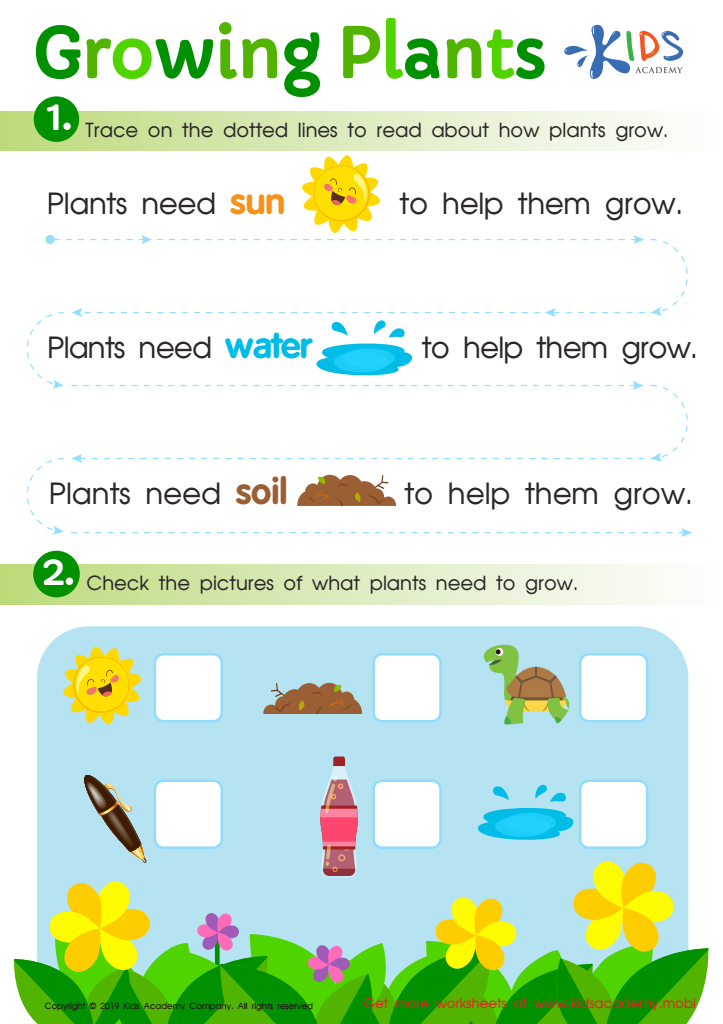
Growing Plants Worksheet
 Assign to My Students
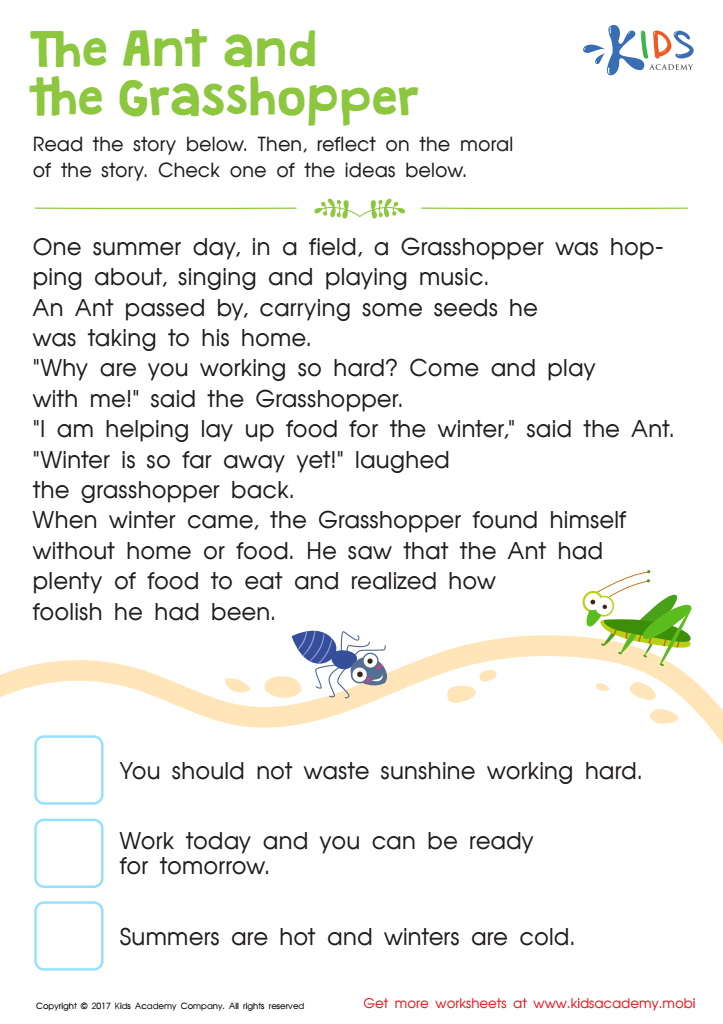
The Ant and The Grasshopper Printable
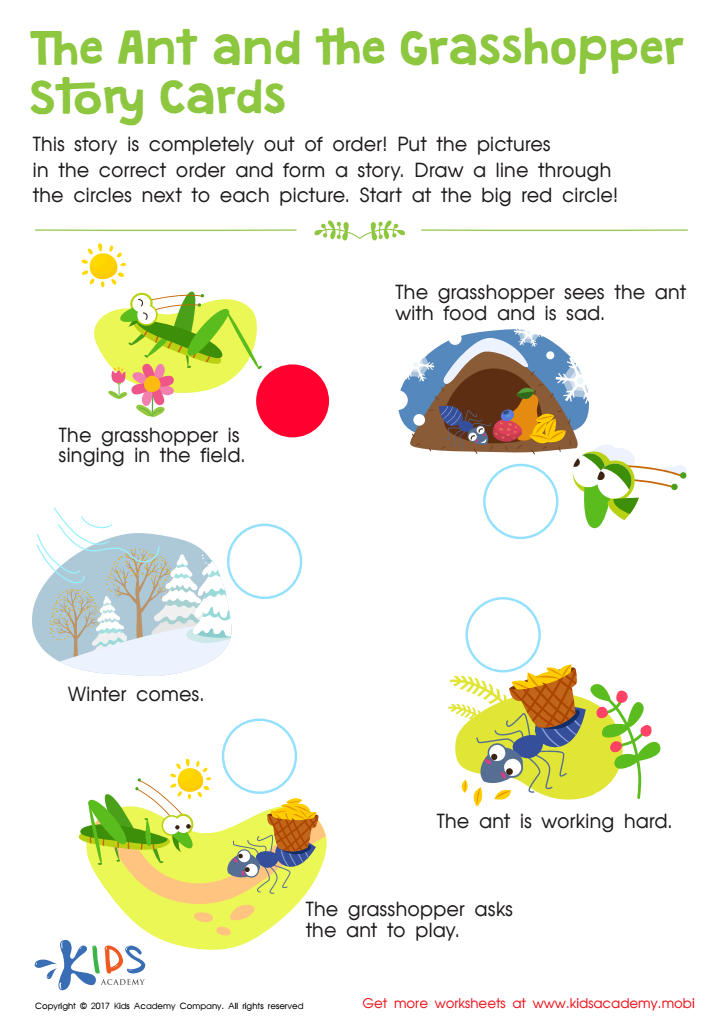
The Ant and The Grasshopper Worksheet




.jpg)


Sequencing events in reading is crucial for children aged 3-8 because it lays the foundation for key literacy skills and cognitive development. At this young age, kids are developing an understanding of time, order, and narrative structure. When parents or teachers emphasize sequencing, they help children grasp the concept of beginning, middle, and end, which is essential for both reading comprehension and storytelling.
Engaging with sequencing activities enables children to improve their memory and recall, as they practice remembering and retelling events in the correct order. This skill also aids in their ability to follow directions and manage daily routines, promoting overall self-discipline and organization. Sequencing activities can be made fun and interactive, such as using story cards, picture books, or even real-life events, which helps keep young minds engaged.
Moreover, sequencing supports vocabulary development and language skills, as kids learn to verbalize connections between events. It enhances analytical and critical thinking by encouraging children to ask "what happens next" and ponder the consequences and relationships between events. Eventually, these skills translate not only to reading and academic success but also to everyday problem-solving and effective communication. For these reasons, parents and teachers should prioritize sequencing events in reading activities for young children.








