Understanding sequencing Reading Worksheets for Ages 3-8
3 filtered results
-
From - To
Enhance your child's reading skills with our "Understanding Sequencing" worksheets designed for ages 3-8. These engaging resources help young learners develop their ability to identify the order of events in stories, a crucial skill that boosts comprehension and logical thinking. Each worksheet is filled with fun activities that encourage children to sequence pictures or sentences, fostering creativity and enhancing their narrative skills. Suitable for home or classroom use, our printable worksheets offer a hands-on approach to learning while keeping children entertained. Explore our collection today and support your child's journey in mastering the art of sequencing through reading!
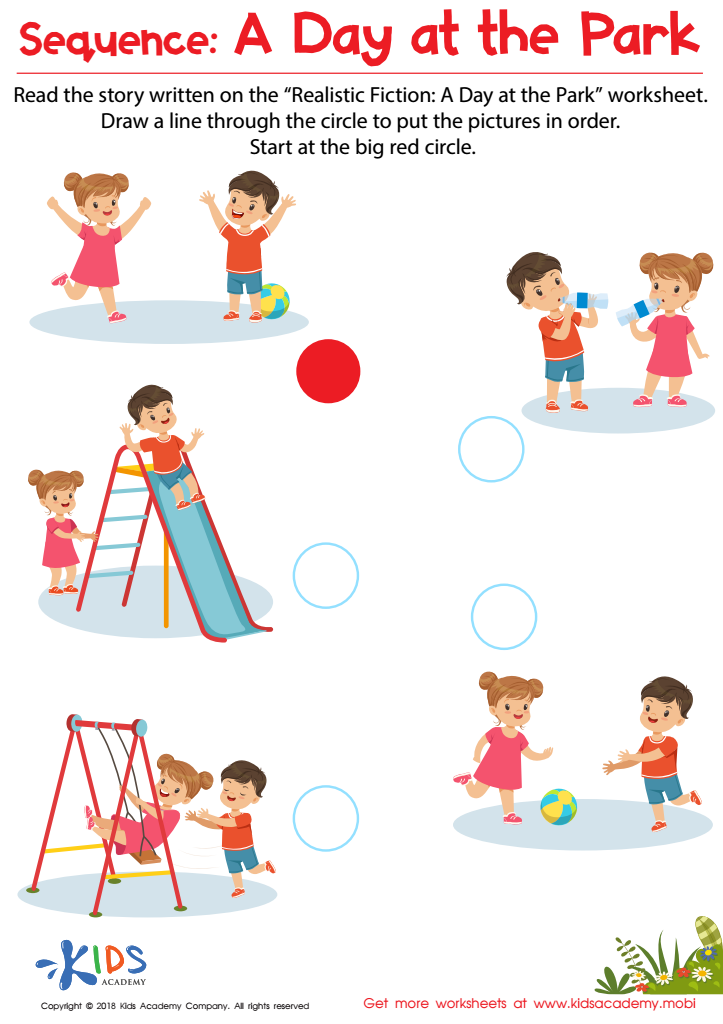
Sequence: A Day at the Park Worksheet
 Assign to My Students
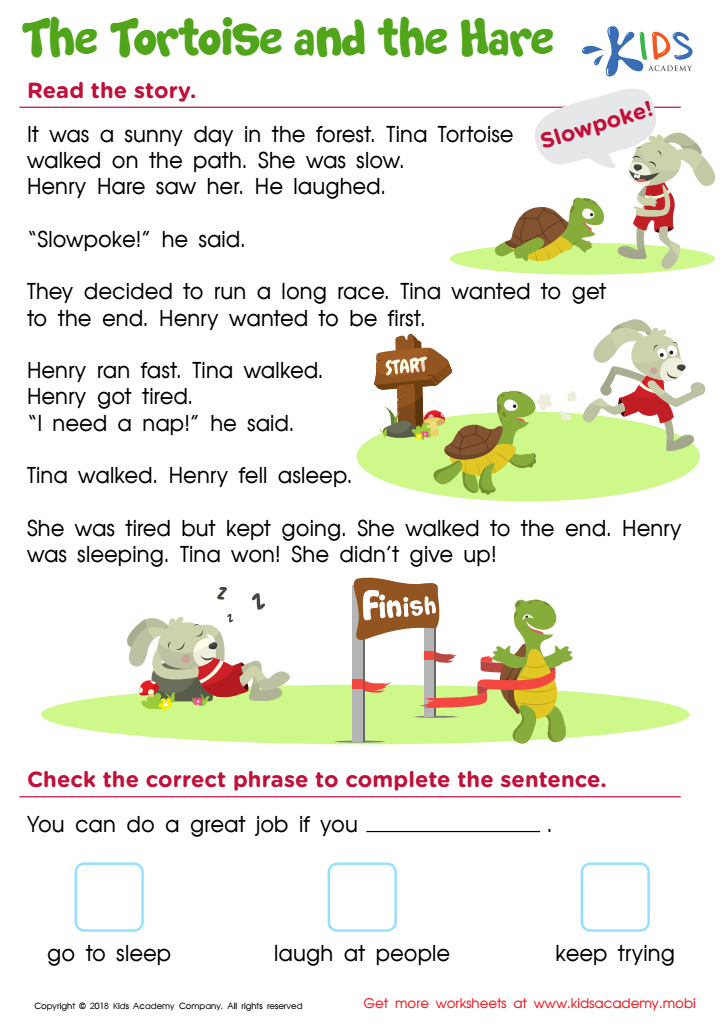
The Tortoise and the Hare Worksheet
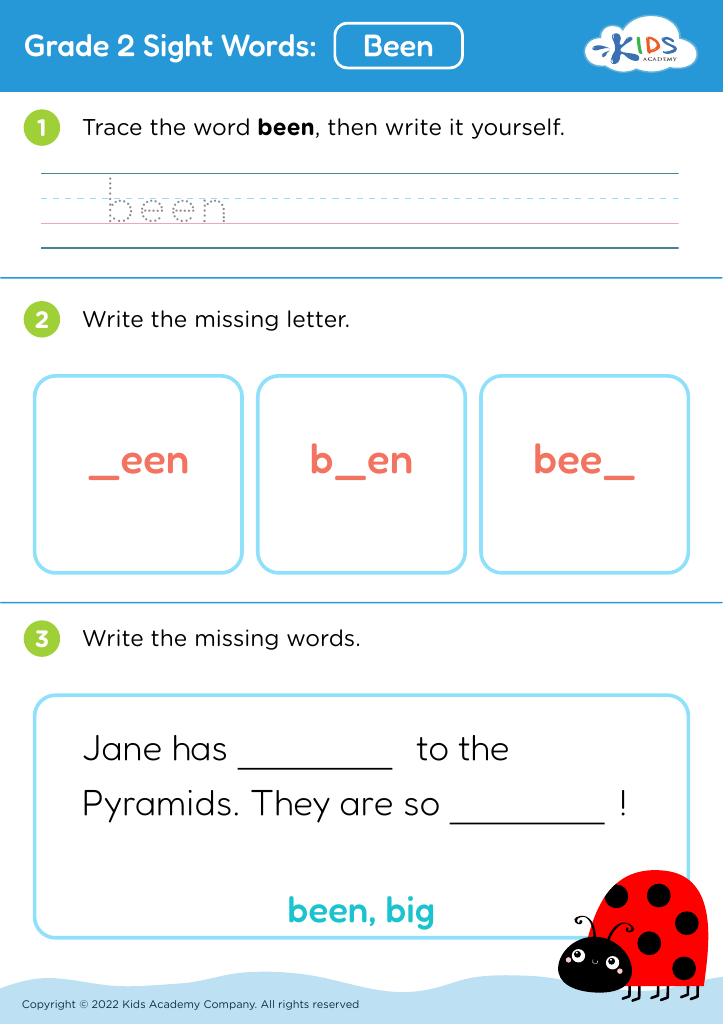







Understanding sequencing in reading is crucial for children aged 3-8, as it is foundational to their overall comprehension and literacy development. For parents and teachers, recognizing the significance of sequencing helps foster stronger reading skills in young children.
Sequencing involves arranging events in the order they occur, aiding children in grasping the structure of stories and enhancing their ability to predict outcomes. This skill is essential for developing critical thinking, enabling kids to connect ideas and understand relationships between actions and consequences.
Additionally, good sequencing skills support oral language development and vocabulary acquisition, as children learn to articulate their thoughts in a logical manner. Engaging in sequencing activities, such as retelling stories or organizing picture cards, not only makes learning fun but also strengthens their memory, listening skills, and attention spans.
By supporting children in understanding sequencing, parents and teachers empower them to become confident, proficient readers who can navigate more complex texts as they progress. Ultimately, fostering these skills lays a strong foundation for academic success and a lifelong love of reading, which are vital in today's information-rich world.








