Verb identification Reading Worksheets for Ages 3-8
3 filtered results
-
From - To
Discover engaging Verb Identification Reading Worksheets tailored for children aged 3-8! Our worksheets are designed to enhance early reading skills by focusing on verbs, one of the essential building blocks of language. Each interactive activity promotes vocabulary development and comprehension in a fun, age-appropriate manner. Children will enjoy identifying verbs in various contexts, strengthening their understanding of action words. Ideal for classroom settings or home learning, these printable worksheets cater to diverse learning styles, ensuring every young learner flourishes. Start fostering your child's reading confidence and abilities with our creative and educational resources today! Perfect for parents and teachers alike!
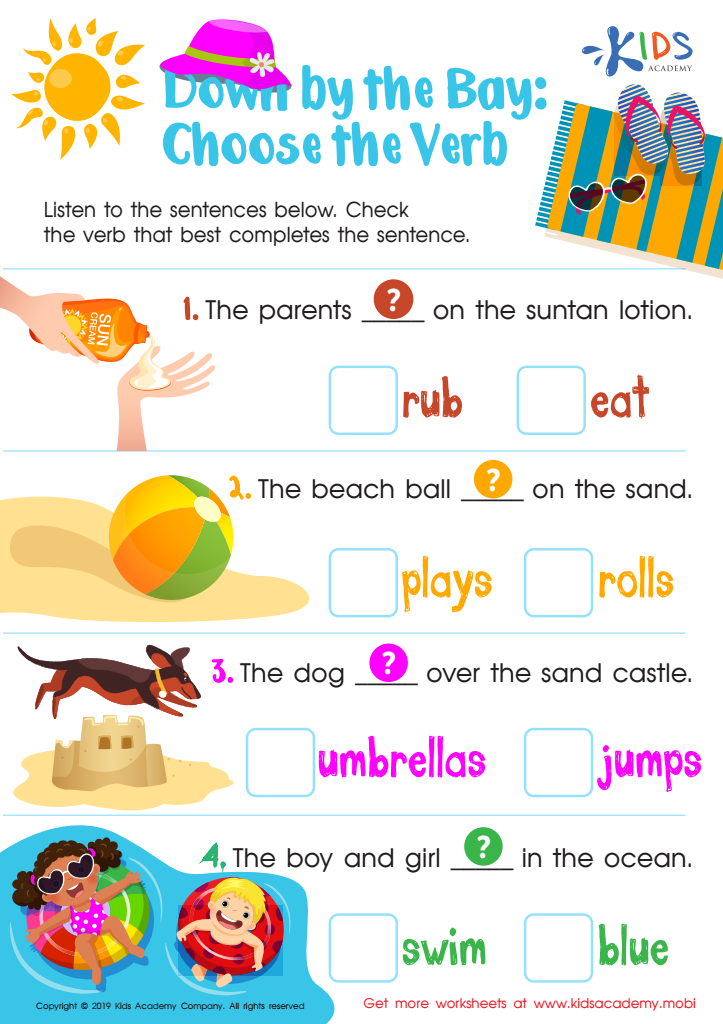
Down by the Bay: Choose the Verb Worksheet
 Assign to My Students
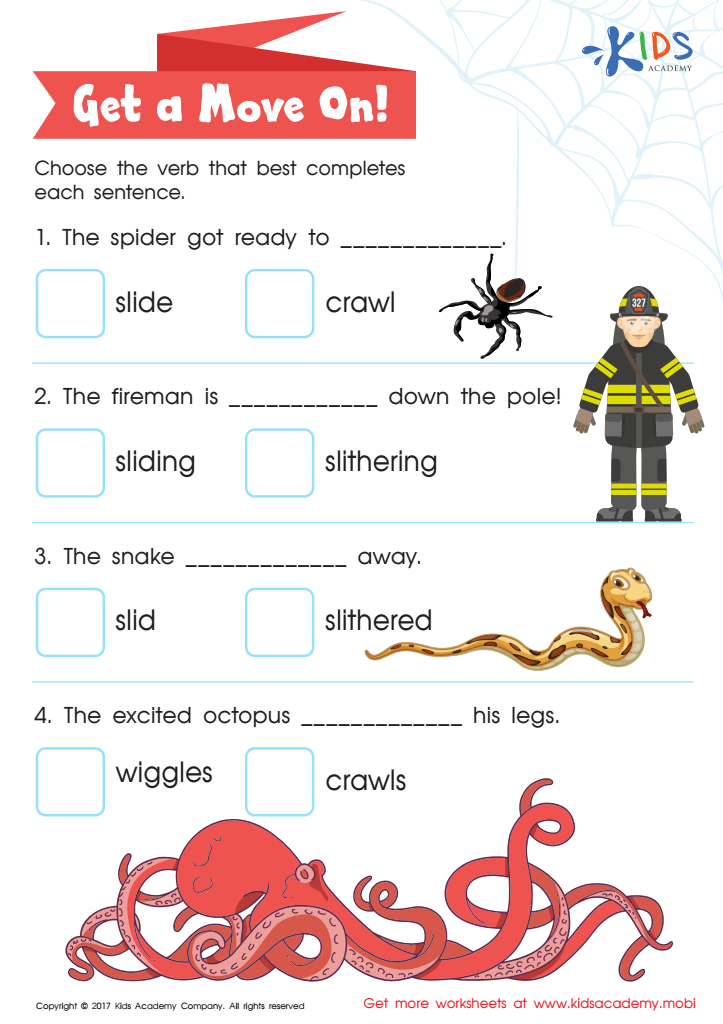
Verb Worksheet
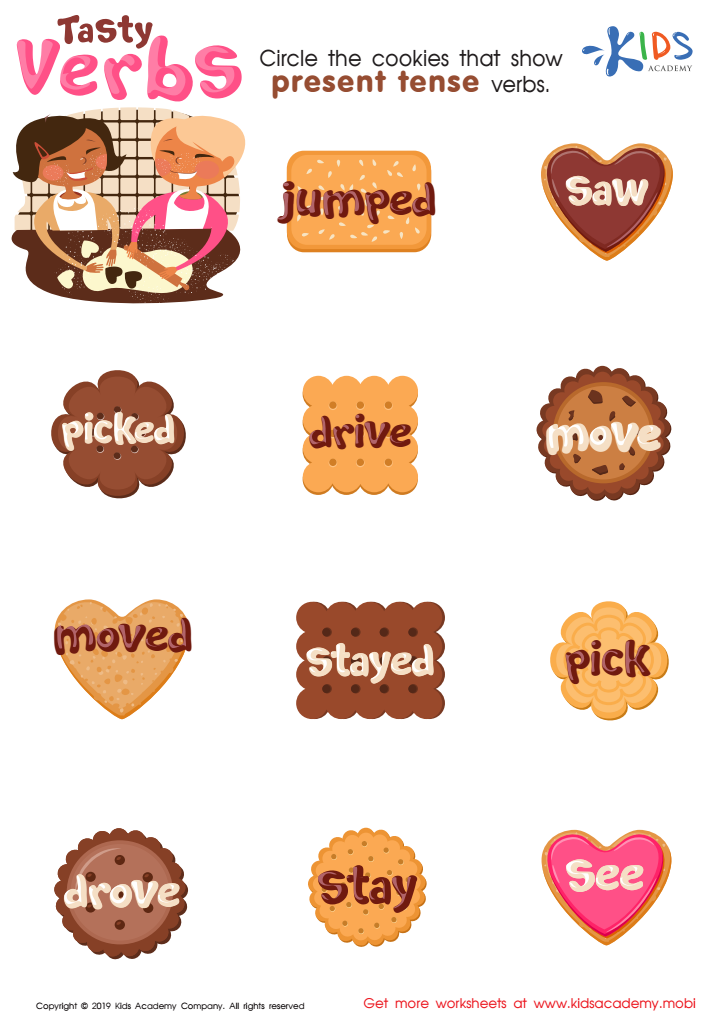
Tasty Verbs Worksheet






.jpg)
Verb identification is a crucial aspect of early literacy development for children aged 3-8. Understanding verbs helps children comprehend the action in stories and enhances their ability to make sense of sentence structure. Parents and teachers should care about verb identification because it builds a strong foundation for reading fluency and comprehension.
When children can identify verbs, they become more engaged with texts, as they can follow the narrative flow and relate to the characters' actions. This engagement fosters a love for reading and encourages them to explore more complex texts as they grow. Furthermore, recognizing verbs supports vocabulary development, as children encounter new action words through various reading materials, which they can use in their speech and writing.
Additionally, focusing on verb identification helps cultivate critical thinking and creativity. Children learn to visualize actions, predict outcomes, and understand cause and effect in storytelling. Encouraging activities such as verb-focused games, storytelling, and interactive reading can sharpen these skills, making learning enjoyable and effective. Overall, promoting verb identification strengthens children's literacy skills and prepares them for lifelong academic success.








