Word Recognition Reading Worksheets for Ages 3-8 - Page 2
29 filtered results
-
From - To
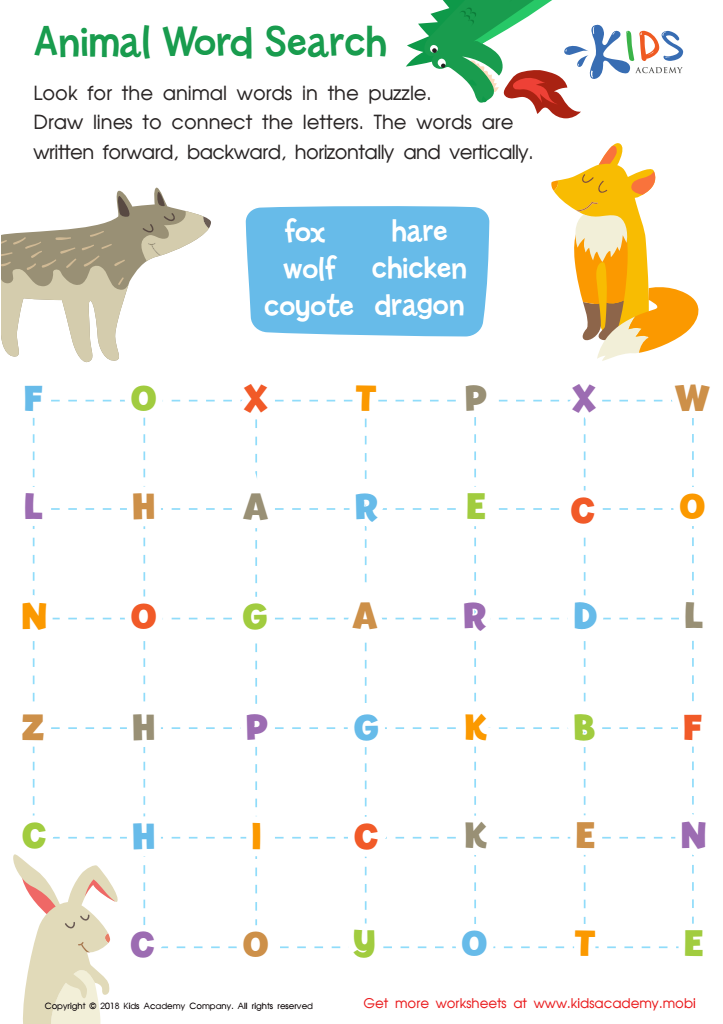
Animal Word Search Worksheet
 Assign to My Students
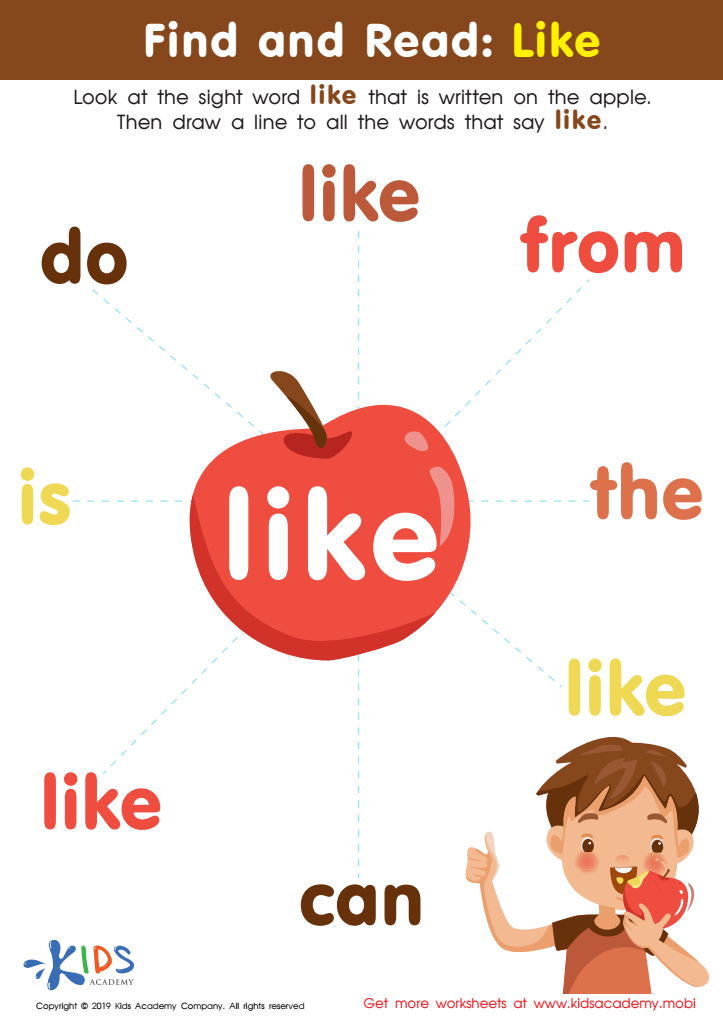
Find and Read: Like Worksheet
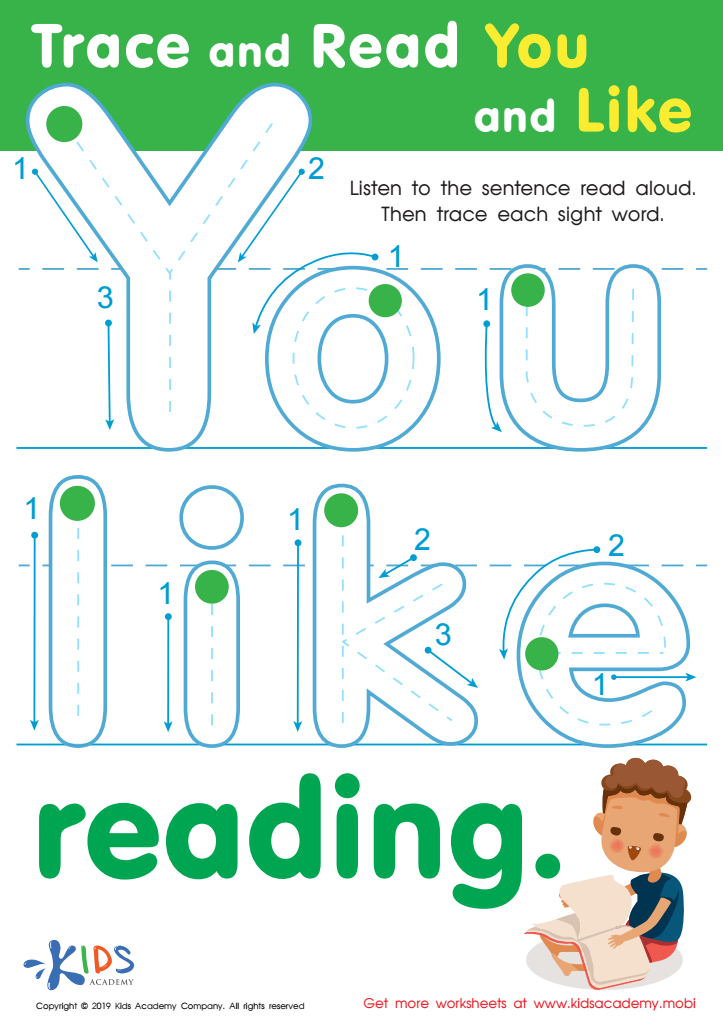
Trace Read You Like Worksheet
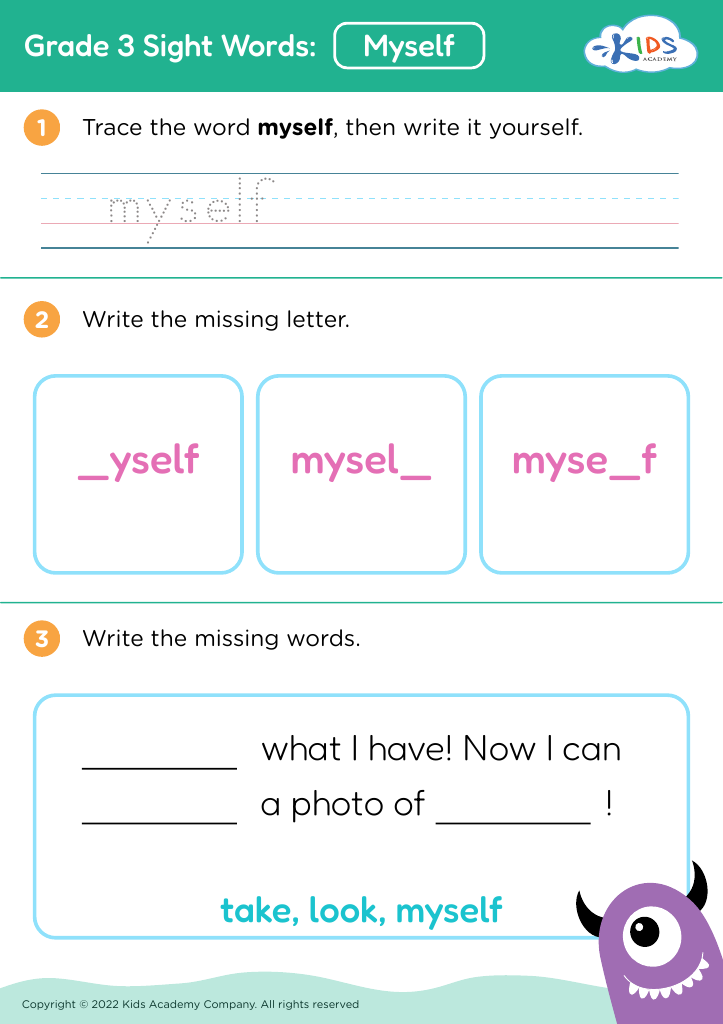
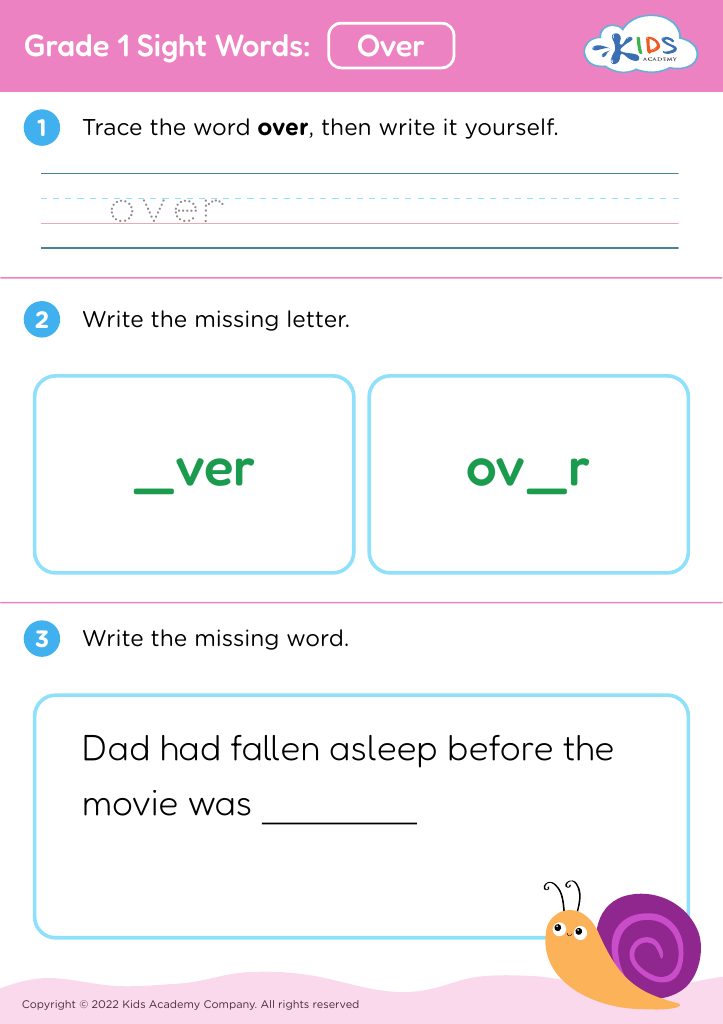








Word recognition reading is a crucial skill for children aged 3 to 8, forming the foundation for literacy development. During this critical stage, children are developing their ability to identify and understand written words, which directly impacts their reading fluency and comprehension. By mastering word recognition, young learners can transition from decoding individual letters to recognizing words instantly, allowing them to focus on understanding the text rather than laboring over individual phonemes.
Parents and teachers should care about word recognition because it influences academic success and self-confidence. Proficient readers are more likely to enjoy reading, leading to greater exposure to diverse vocabulary, concepts, and ideas. This early engagement with text fosters a lifelong love of reading and learning. Furthermore, early struggles with word recognition can lead to feelings of frustration and decreased motivation, potentially hindering overall academic performance.
By prioritizing word recognition through targeted activities such as phonics games, books with repetitive patterns, and interactive storytelling, caregivers and educators can create a rich literacy environment. This proactive approach not only enhances a child's reading abilities but also builds essential cognitive and social skills that serve them well throughout their education and beyond. Supporting word recognition is an investment in a child's future learning and overall development.








