
Basic Addition Reading Comprehension Worksheets for Ages 3-8
3 filtered results
Difficulty Level
Grade
Age
-
From - To
Subject
Activity
Standards
Enhance your child's reading and math skills with our Basic Addition Reading Comprehension Worksheets, designed specifically for ages 3-8. These engaging worksheets combine simple addition problems with fun stories to promote both literacy and numeracy. Children will enjoy reading age-appropriate narratives while practicing basic addition concepts, fostering a love for learning in an interactive way. Our worksheets not only support essential math skills but also encourage critical thinking and comprehension abilities. Perfect for parents and educators alike, these resources are ideal for use at home or in the classroom. Empower your child’s educational journey with these delightful worksheets today!
Favorites
With answer key
Interactive
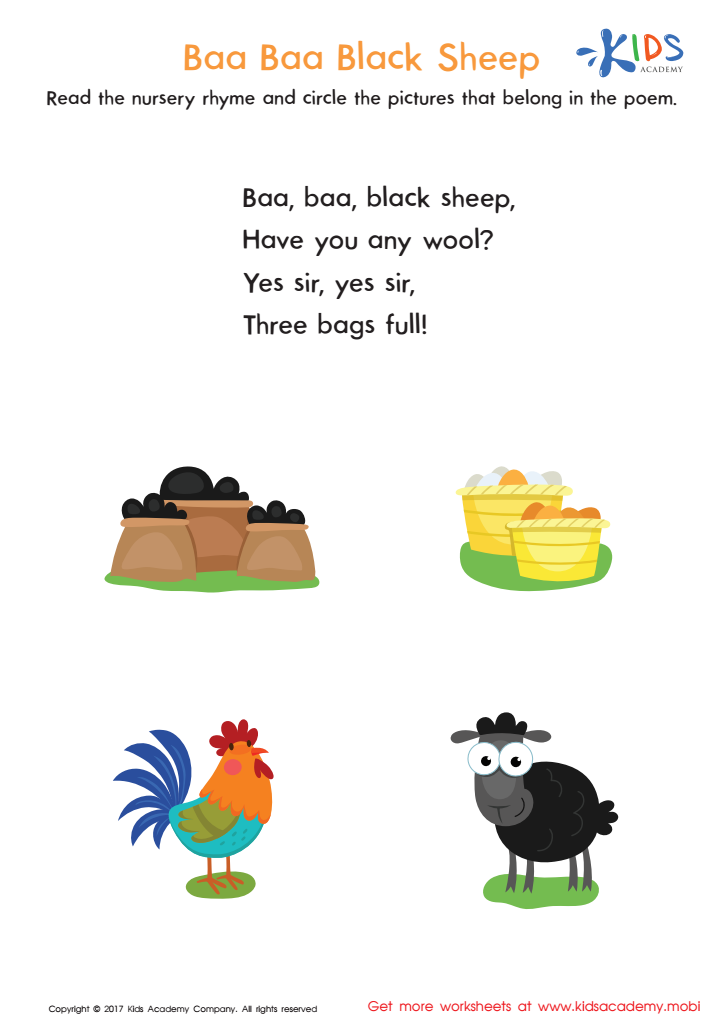
Baa Baa Black Sheep Printable
Jumpstart your child's reading skills with this printable Baa Baa Black Sheep worksheet! Recite the lines with them, then have them select the pictures associated with the poem to test comprehension. Fun and educational!
 Assign to My Students
Baa Baa Black Sheep Printable
Worksheet
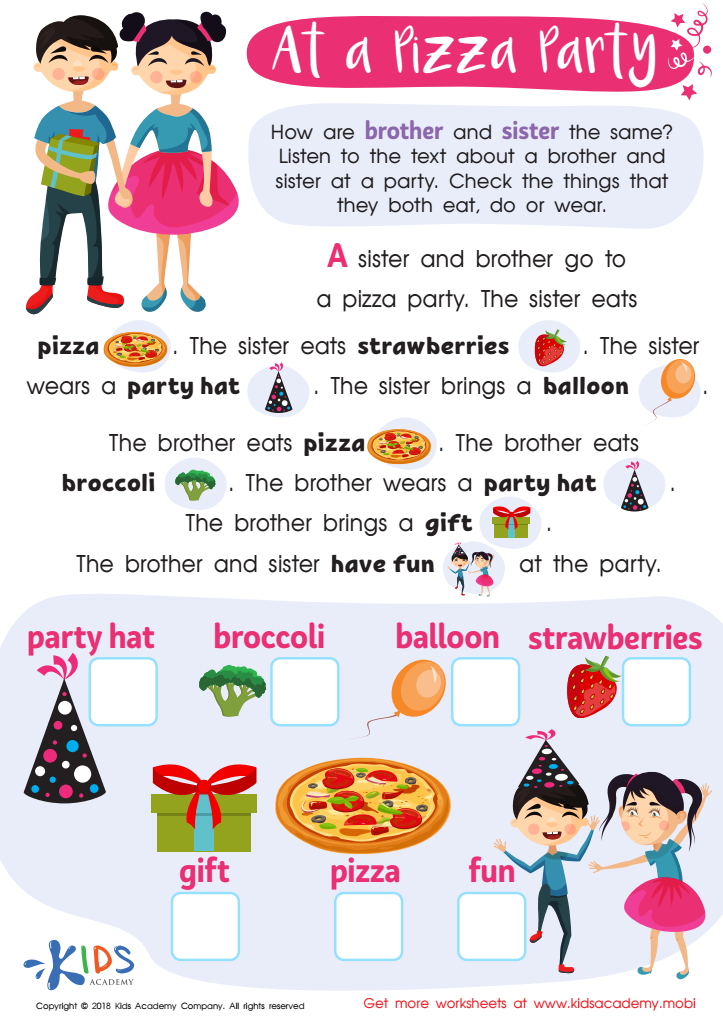
At a Pizza Party Worksheet
Parties are the best! Eating, playing, singing, dancing and gift-exchange - what's your child's fave part? In this worksheet, a brother and sister are eager to enjoy their party. Read the text to them and help them check what they do, eat, and wear. 80 words.
At a Pizza Party Worksheet
Worksheet
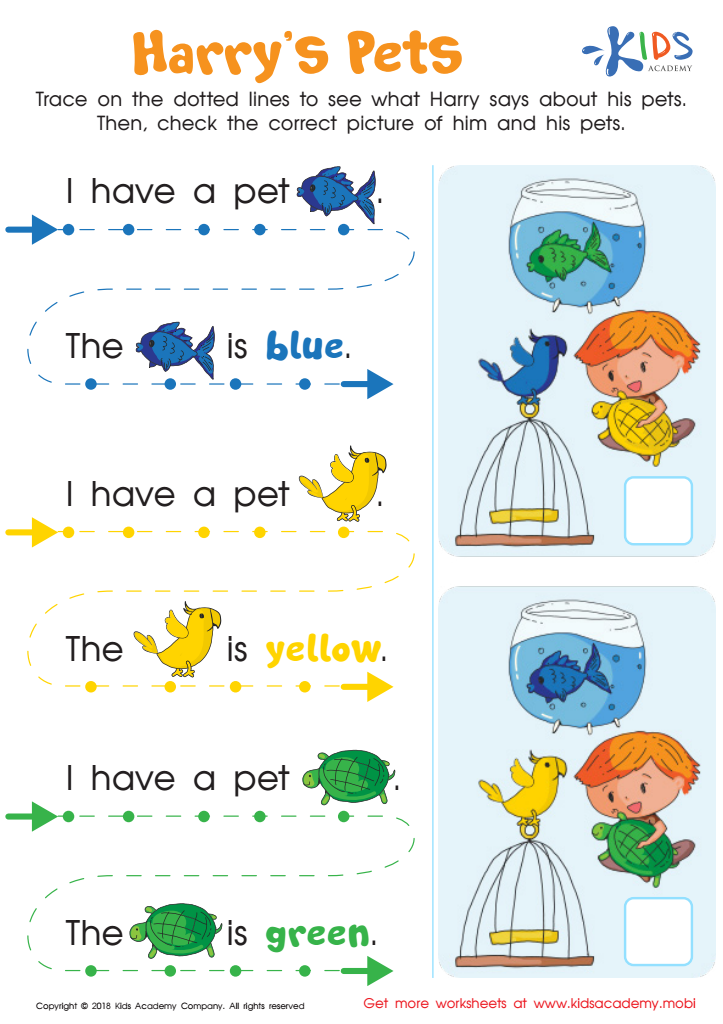
Read from Left to Right: Harry's Pets Worksheet
Help your child read the sentences on this tracing sheet about Harry and his pets. Point to the dotted lines and follow the sentences to the correct picture. Ask your child to identify which animal corresponds to which color. Check the picture to ensure accuracy. 80 words.
Read from Left to Right: Harry's Pets Worksheet
Worksheet
Join Kids Academy for Free
Who is primarily going to use this learning content?



.jpg)




Parents and teachers should prioritize basic addition and reading comprehension for children ages 3-8 because these foundational skills are crucial for cognitive and academic development. At this stage, children are increasingly curious and ready to learn, and the ability to grasp basic addition allows them to understand the fundamental concepts of math that will support their future learning endeavors. Engaging in addition games and activities builds not only numerical proficiency but also enhances problem-solving skills and logical thinking.
Similarly, developing reading comprehension skills at this age is equally important as it encompasses understanding and interpreting text, which underpins exploration across various subjects. Children who enter schooling with strong reading comprehension are more likely to excel in literacy and other academic areas, fostering confidence and a love for learning.
Additionally, combining these skills enriches children's learning experiences, as storytelling can incorporate basic math concepts, reinforcing both areas simultaneously. Engaging parents and teachers in this process creates a supportive environment where children feel encouraged to express their understanding and ask questions. By nurturing these skills, adults help lay the groundwork for a child’s long-term academic success and intellectual curiosity, making it essential for parents and teachers to prioritize this development in early years.








