Moral understanding Reading Comprehension Worksheets for Ages 3-8
5 filtered results
-
From - To
Introduce young learners to essential life lessons with our Moral Understanding Reading Comprehension Worksheets, designed for ages 3-8. Each worksheet is crafted to cultivate early reading skills while imparting important moral values such as kindness, honesty, and responsibility. Through engaging stories and relatable scenarios, children will enhance their comprehension abilities and develop a strong moral foundation. Perfect for use at home or in the classroom, these worksheets inspire meaningful discussions between parents, teachers, and students, fostering character education alongside academic growth. Encourage thoughtful reading habits and ethical thinking with these impactful resources.
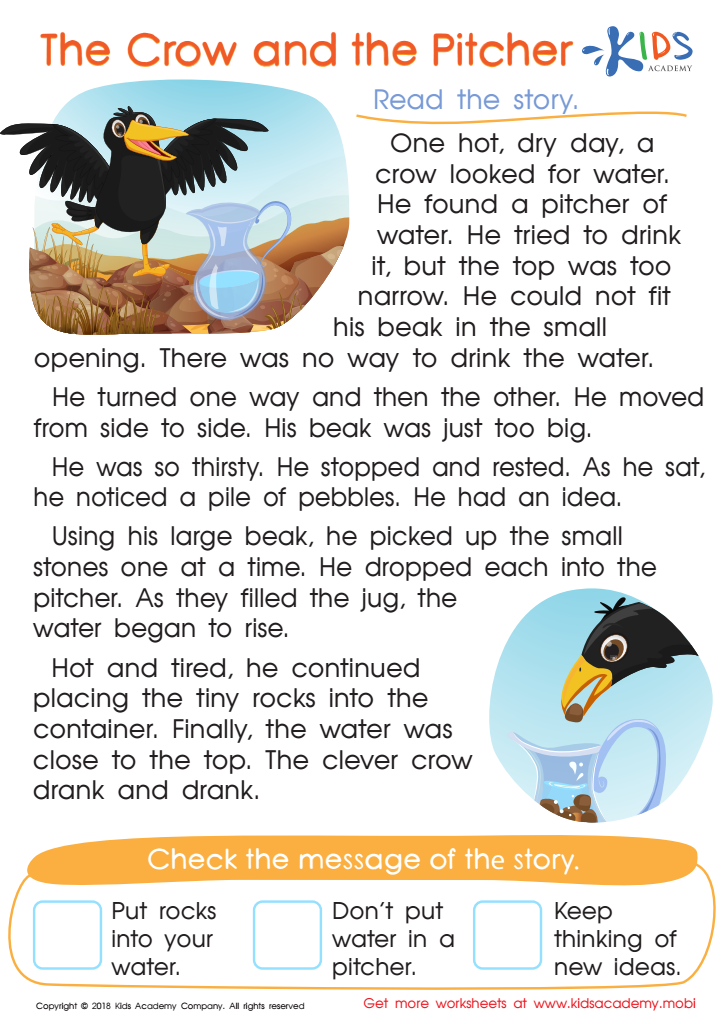
The Crow and the Pitcher Worksheet
 Assign to My Students
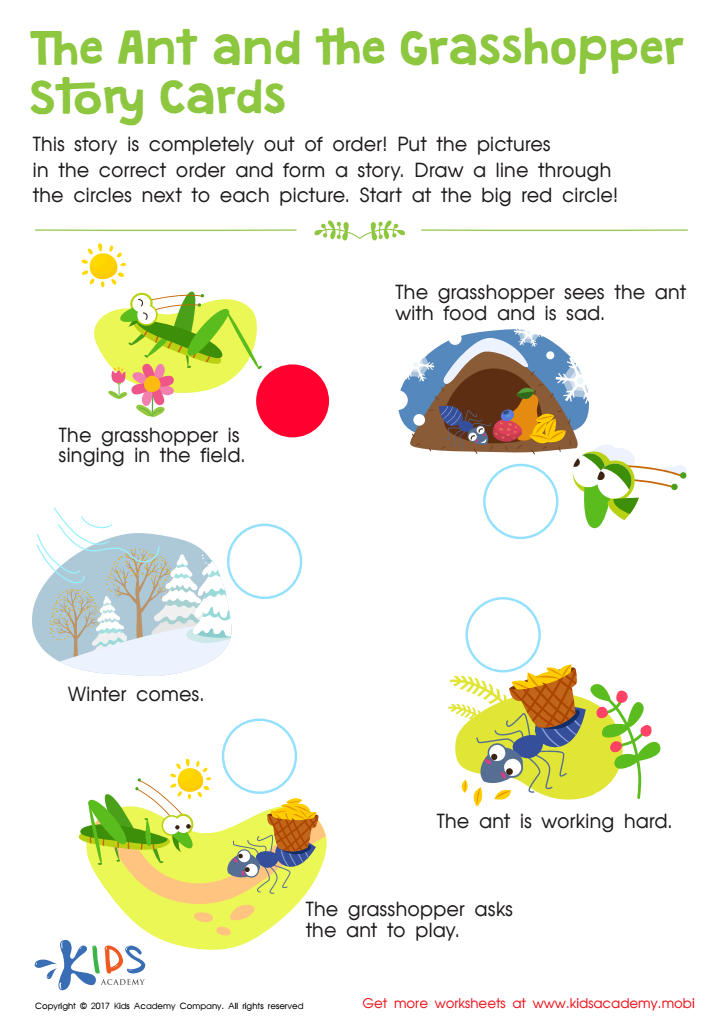
The Ant and The Grasshopper Worksheet
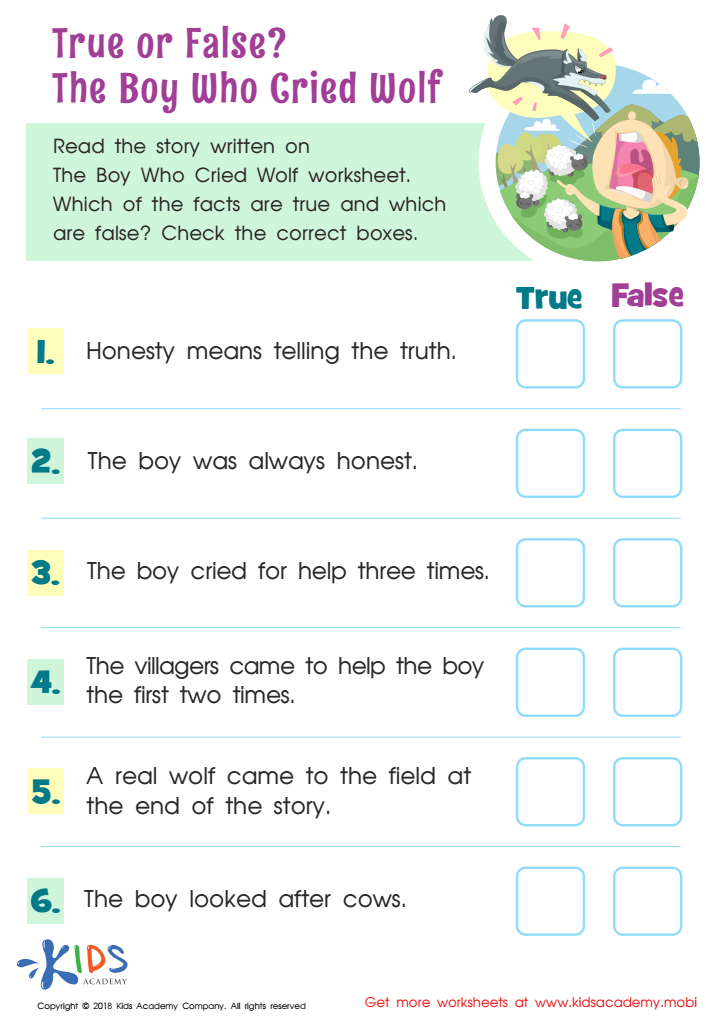
True or False? The Boy Who Cried Wolf Worksheet
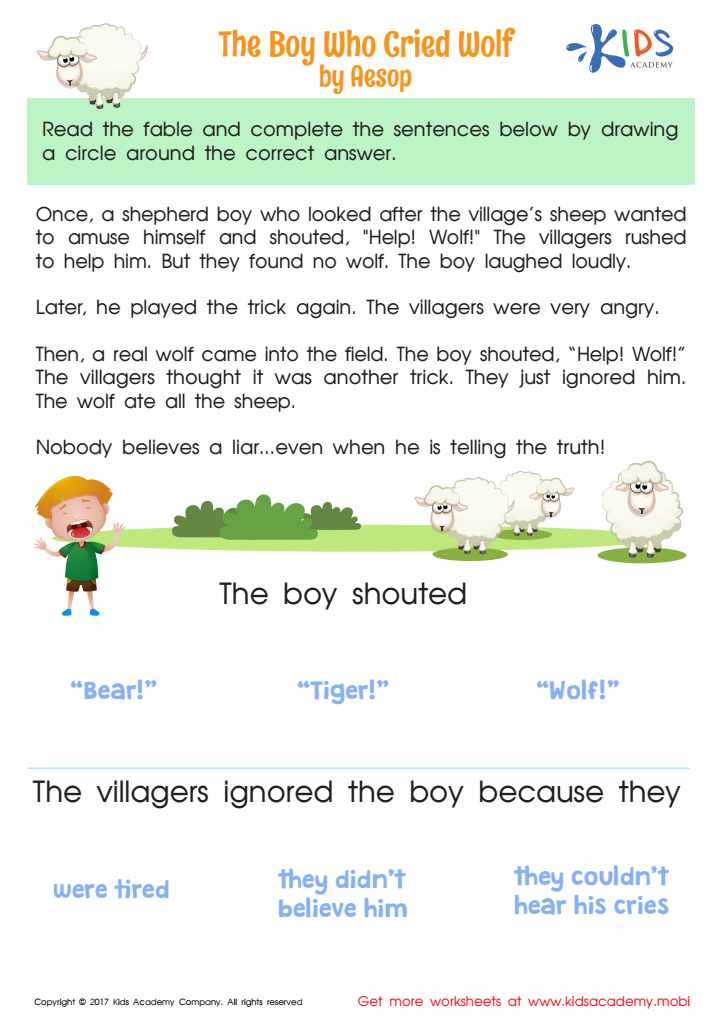
The Boy Who Cried Wolf Worksheet
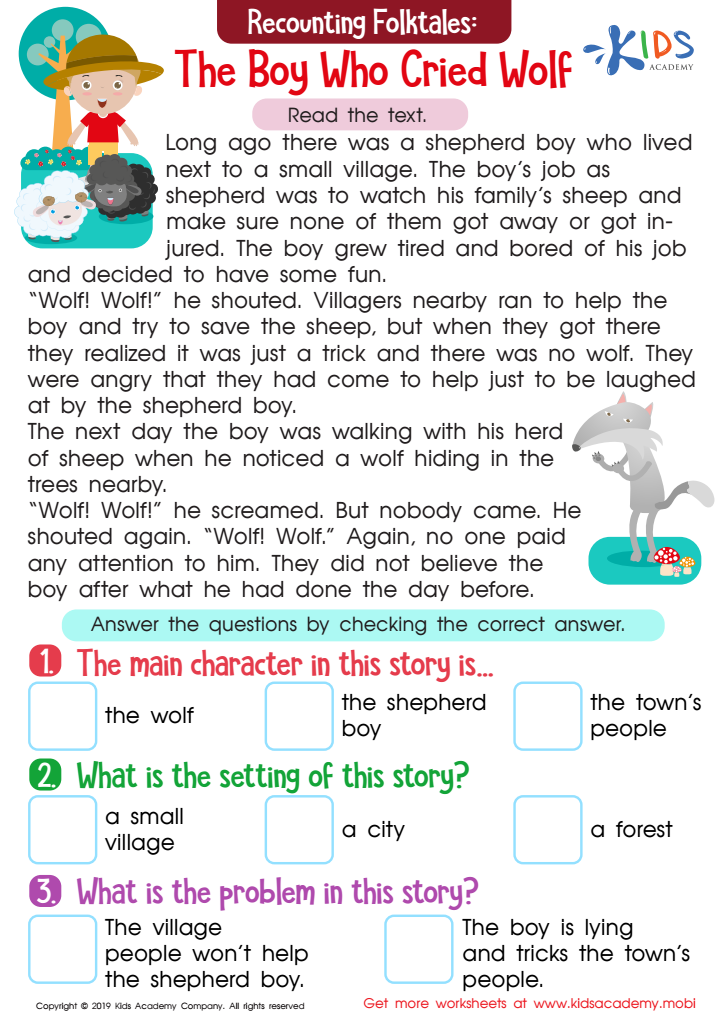
The Boy Who Cried Wolf Part 1 Worksheet







Moral understanding and reading comprehension are foundational skills that significantly shape a child's overall development, particularly in the ages 3-8. At this formative stage, children are not only learning to decode words but are also beginning to understand complex social dynamics and moral principles. Integrating these elements provides a multifaceted tool for personal and academic growth.
Developing moral understanding through stories helps children distinguish right from wrong, comprehend the consequences of actions, and cultivate empathy. Characters in stories often face ethical dilemmas and make choices that highlight core values such as honesty, kindness, and responsibility. When children encounter these scenarios, it stimulates their ability to reason morally and apply these lessons in real-life situations.
Simultaneously, enhancing reading comprehension is crucial for academic success. It fosters critical thinking, enriches vocabulary, and improves cognitive abilities like memory and concentration. When combined with moral lessons, stories become more engaging and meaningful, encouraging children to think deeply about both the content and its larger implications.
Therefore, parents and teachers should prioritize this blended approach, which aligns cognitive growth with emotional and social development. It lays down the pathway for children to become not just proficient readers, but also compassionate, ethically aware individuals who can navigate complexities of life with insight and integrity.








