Story analysis Reading Comprehension Worksheets for Ages 3-8
7 filtered results
-
From - To
Unlock young readers' potential with our "Story Analysis Reading Comprehension Worksheets for Ages 3-8." Tailored for early learners, these printable resources enhance understanding and critical thinking through engaging exercises. Each worksheet focuses on identifying key elements like characters, settings, and main ideas of stories suited for young minds, fostering a love for reading. Perfect for parents and educators, the activities promote both independent and guided learning. Make reading fun and educational, helping children confidently analyze and appreciate stories from a young age. Start their literacy journey on a strong note with Kids Academy’s meticulously crafted worksheets!
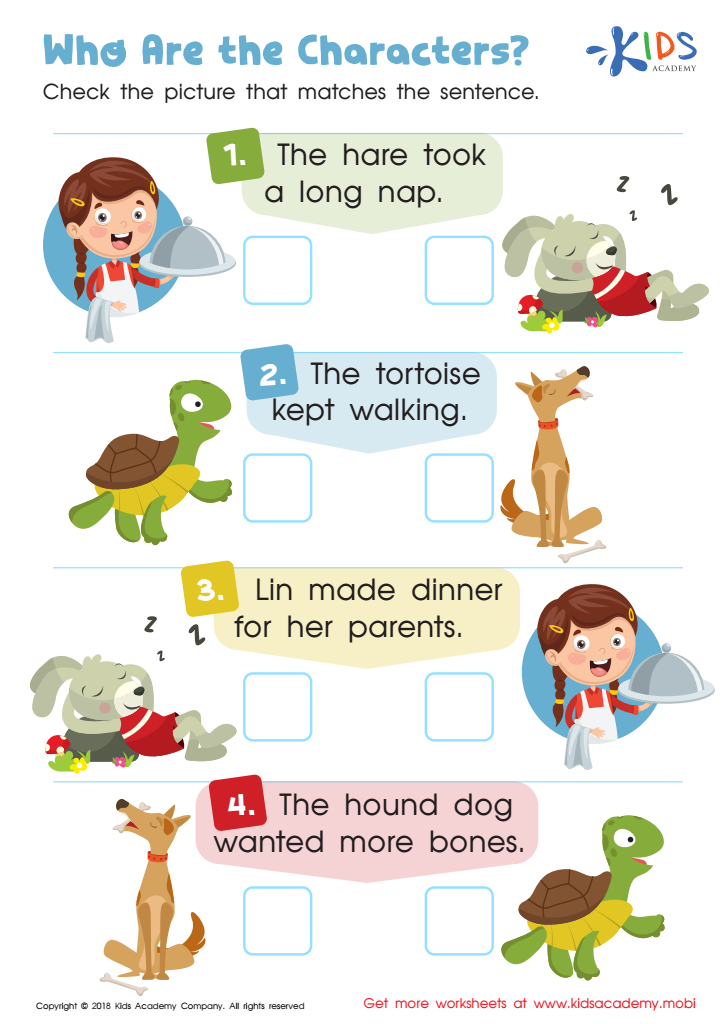
Who Are The Characters Worksheet
 Assign to My Students
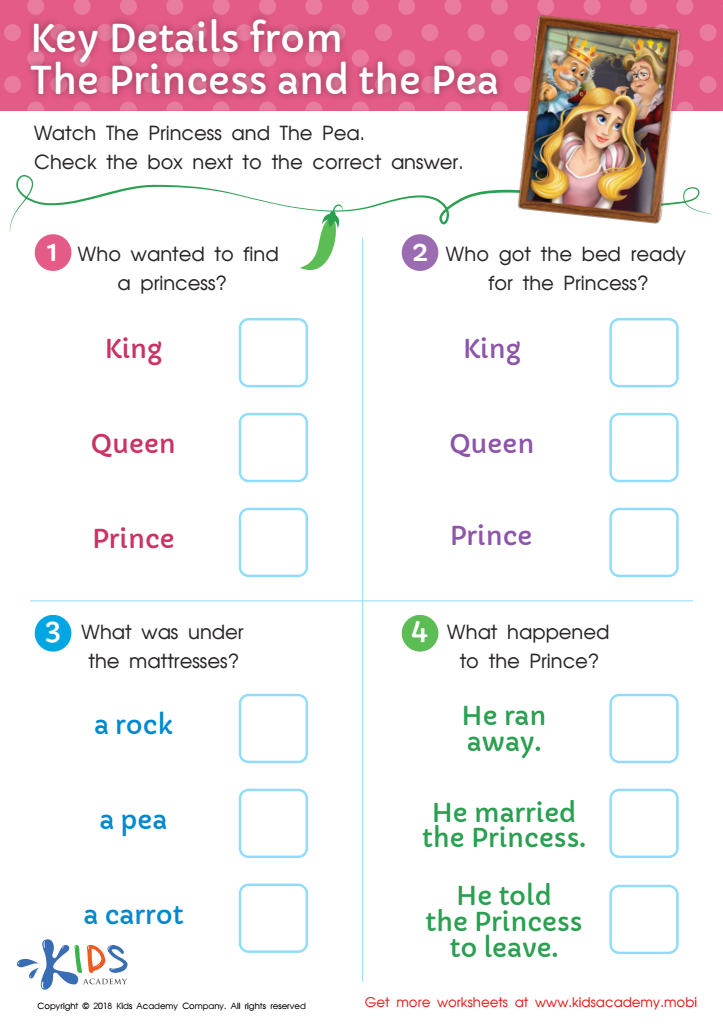
Key Details from the Princess and the Pea Worksheet
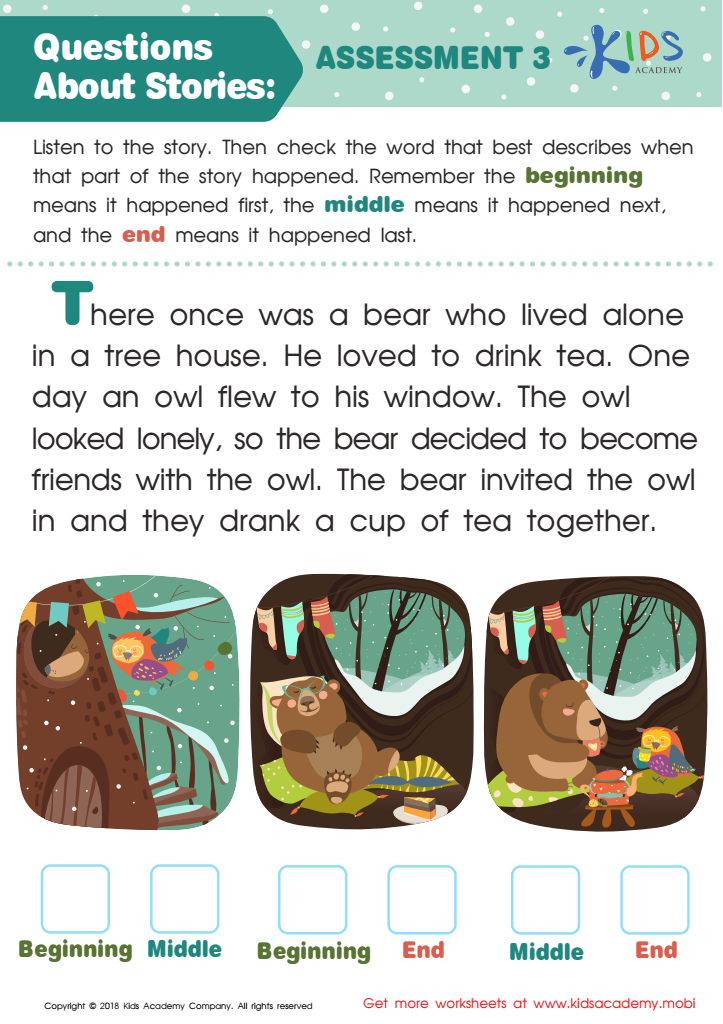
Questions About Stories: Assessment 3 Worksheet
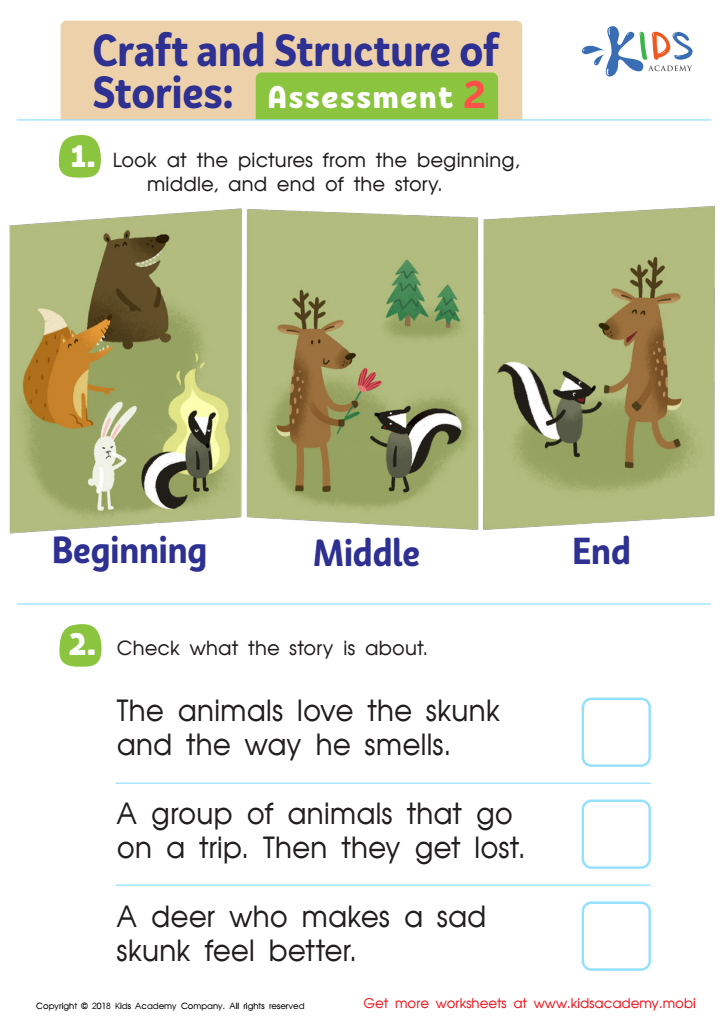
Craft and Structure of Stories: Assessment 2 Worksheet
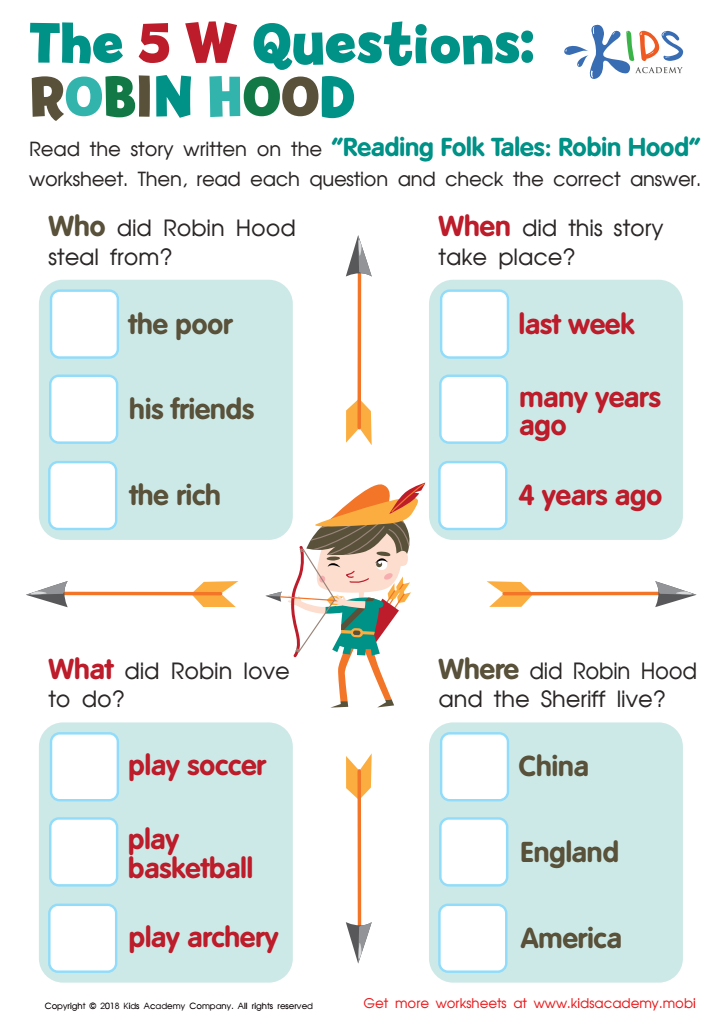
The 5 W Questions: Robin Hood Worksheet
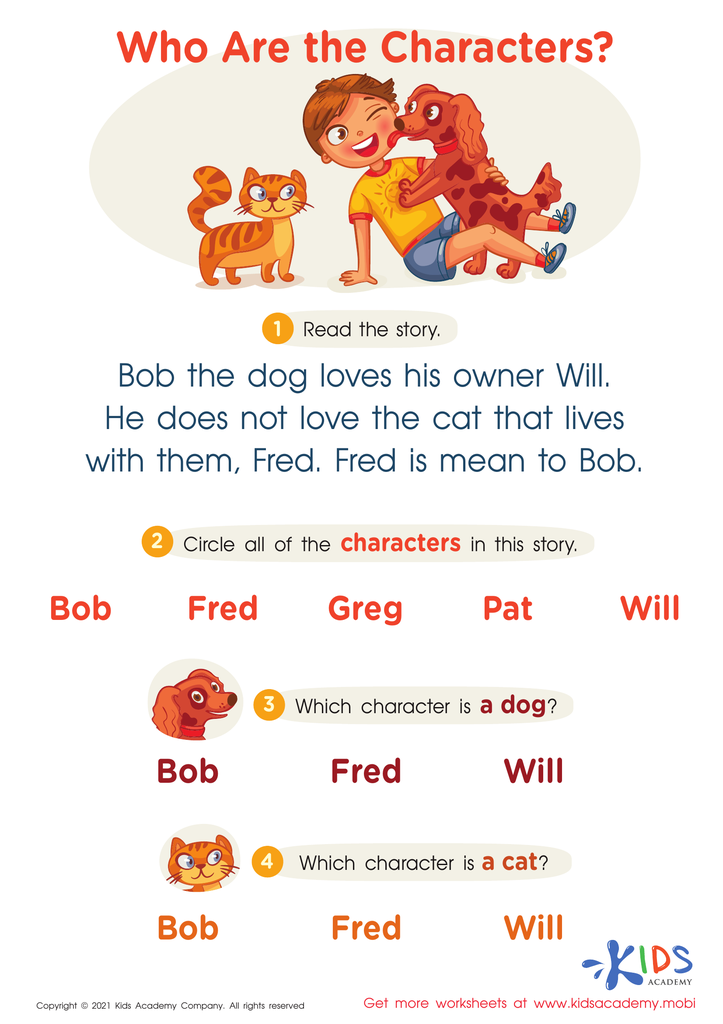
Who Are the Characters? Worksheet
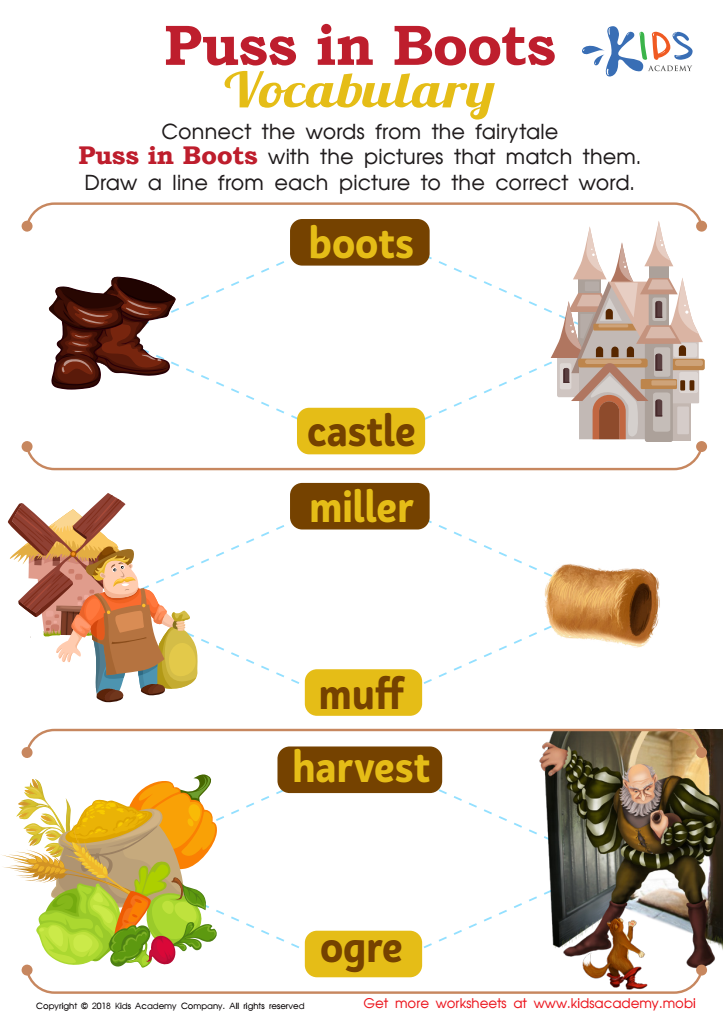
Puss in Boots Vocabulary Worksheet








Story analysis and reading comprehension are essential building blocks in early childhood education, particularly for children aged 3-8. Parents and teachers should care about these skills for several crucial reasons.
First, reading comprehension forms the foundation for all future learning. When children develop the ability to understand and analyze stories, they are not just learning to read words but also to derive meaning, make predictions, and connect ideas. This ability is crucial for academic success across subjects as they progress through school.
Second, engaging in story analysis fosters critical thinking. Children learn to reflect on characters, plot, and settings. They also start to understand moral lessons, differentiate right from wrong, and develop empathy by putting themselves in characters' shoes.
Third, story analysis enhances language development. Through exposure to varied vocabulary and complex sentence structures, children expand their verbal skills and linguistic competence, which is crucial at a stage where they are building their expressive and receptive language capacities.
Lastly, these activities foster a love for reading. When children enjoy stories, they are more likely to view reading as a pleasurable and rewarding activity, which encourages lifelong literacy and learning.
Therefore, guiding and nurturing these skills in young children not only sets the stage for their academic achievements but also for their overall cognitive and emotional development.








