Understanding life cycles Reading Comprehension Worksheets for Ages 3-8
3 filtered results
-
From - To
Introduce young learners to the fascinating world of life cycles with our "Understanding Life Cycles Reading Comprehension Worksheets" designed for ages 3-8. These engaging worksheets blend vibrant illustrations with informative passages, making learning about the growth stages of plants, animals, and insects both fun and interactive. Each worksheet is carefully crafted to enhance reading comprehension, vocabulary, and critical thinking skills, providing a comprehensive learning experience. Perfect for classroom or home use, our collection supports early learning standards and inspires a love for science from an early age. Help your child explore, read, and learn with these captivating educational resources!
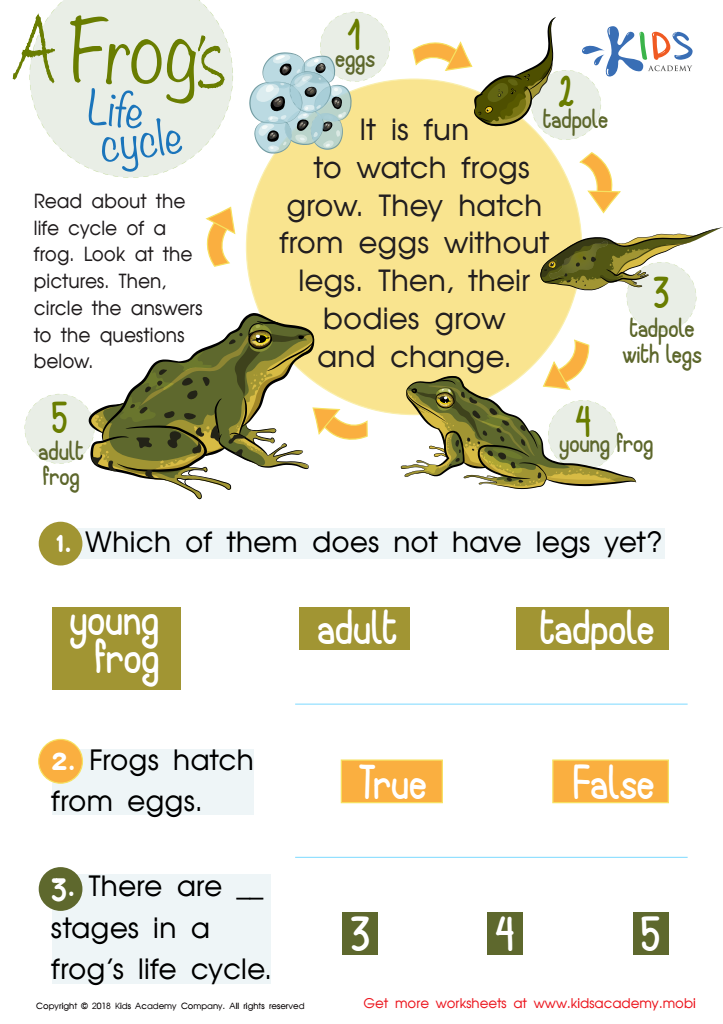
A Frog’s Life Cycle Worksheet
 Assign to My Students
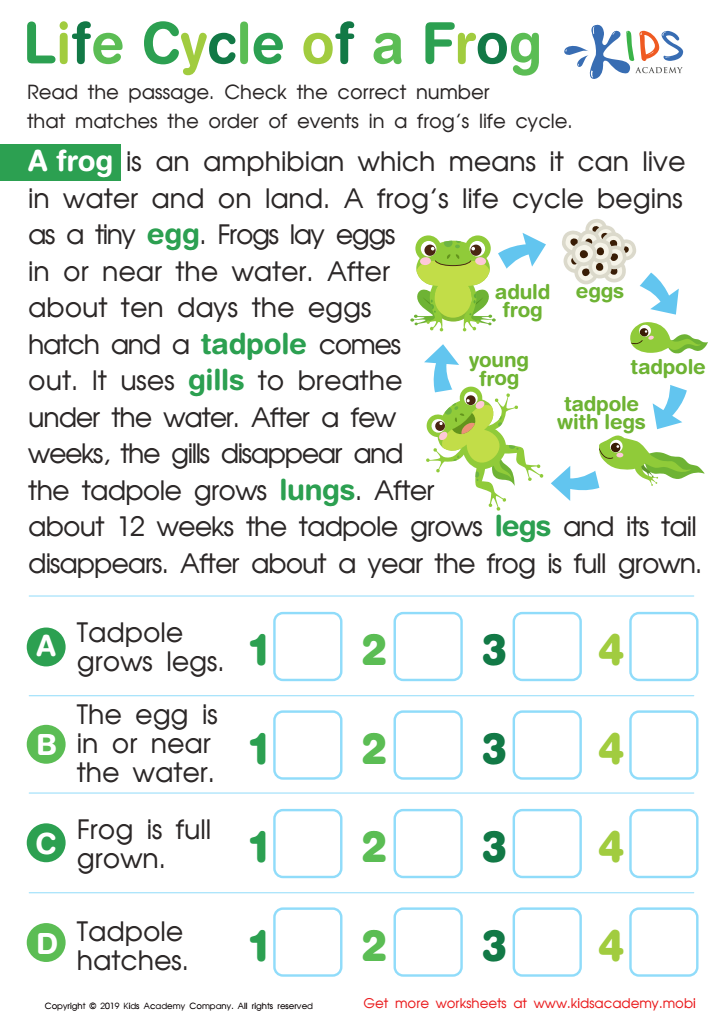
Life Cycle of a Frog Worksheet
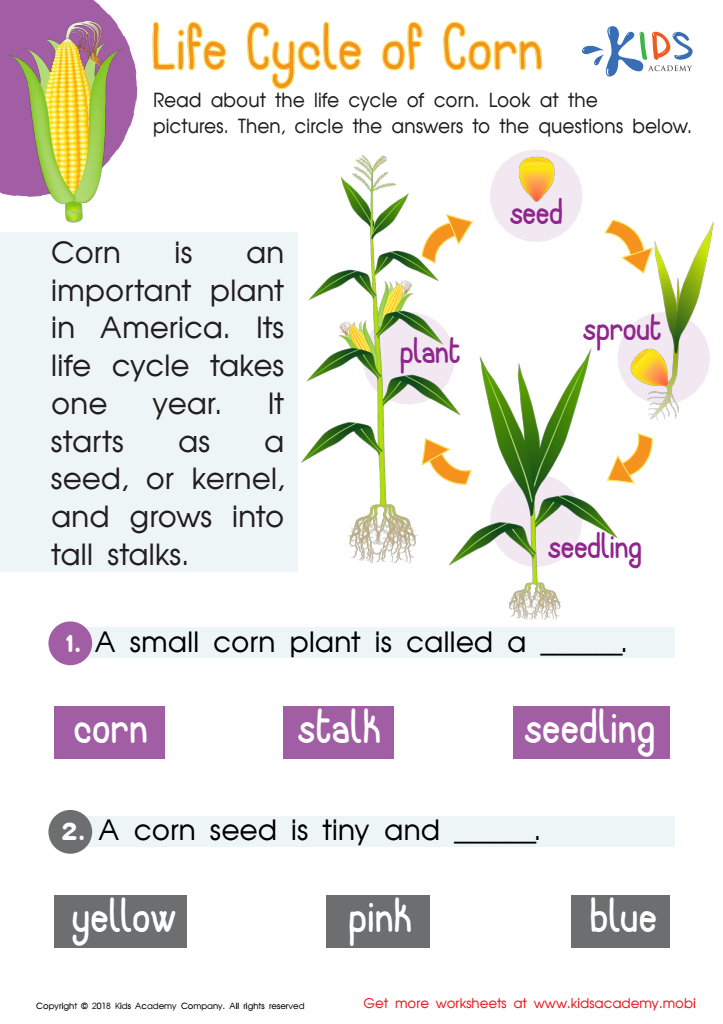
Life Cycle of Corn Worksheet






Understanding life cycles is fundamental for young children aged 3-8 because it builds a foundation for scientific thinking, environmental awareness, and cognitive development. At this age, children are naturally curious about the world around them. Introducing them to life cycles—from caterpillars turning into butterflies to seeds growing into plants—helps make abstract concepts tangible. This occurs while teaching patience and the importance of every stage of life.
Moreover, reading comprehension skills are crucial for educational success. When children engage with stories or information about life cycles, they practice critical thinking, sequencing, and analytical skills. They learn to predict outcomes, understand the cause-and-effect relationship, and grasp the continuity and changes in nature.
For parents and teachers, focusing on this area means providing children with the necessary tools to ask questions, seek answers, and comprehend new knowledge. Developing these skills early promotes a lifelong love for learning and a robust understanding of science and nature. Plus, these activities often become shared exploration opportunities, fostering stronger bonds between adults and children. Well-rounded reading experiences related to life cycles encourage empathy, by relating the care we show for small seedlings or pet caterpillars to the broader theme of respecting and valuing life in all its forms.








