Character analysis Reading Fiction Worksheets for Ages 3-8
5 filtered results
-
From - To
Unlock your child's imagination with our engaging Character Analysis Reading Fiction Worksheets, designed for ages 3-8. Perfect for young readers, these worksheets inspire kids to explore and understand personalities and motives in stories. Through fun, interactive exercises, little learners delve into character traits, emotions, and development, enhancing comprehension and critical thinking skills. Whether at home or in the classroom, these printable worksheets make reading time educational and entertaining. Explore a variety of beloved stories that fuel your child's love for reading while building solid analytical skills for academic success. Download today and bring characters to life!
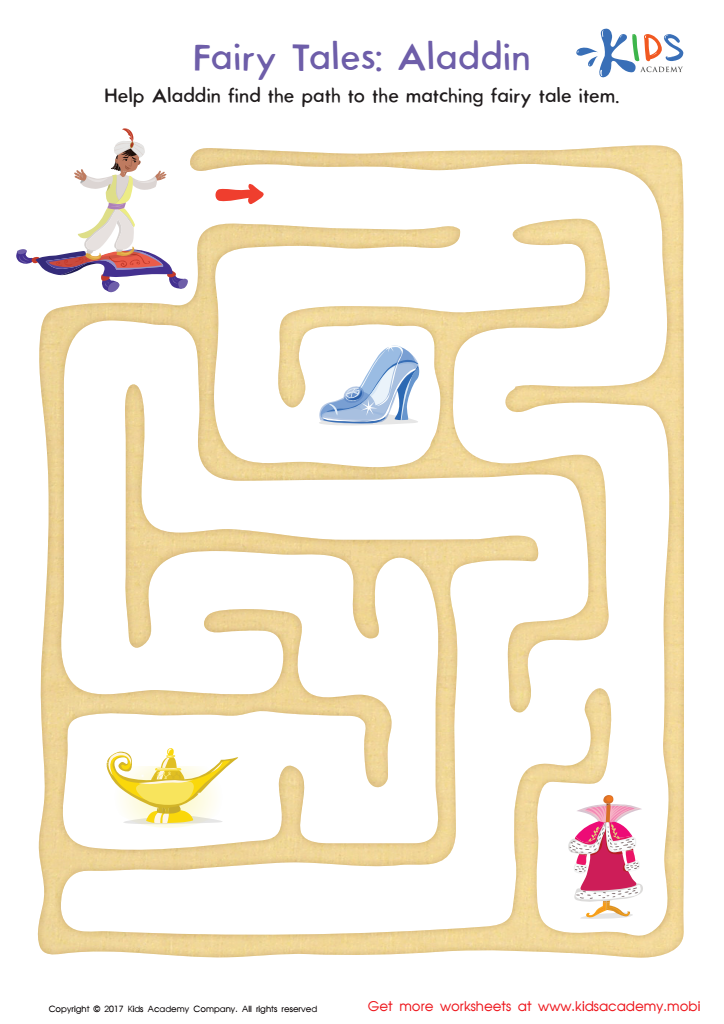
Fairy Tales Aladdin Printable
 Assign to My Students
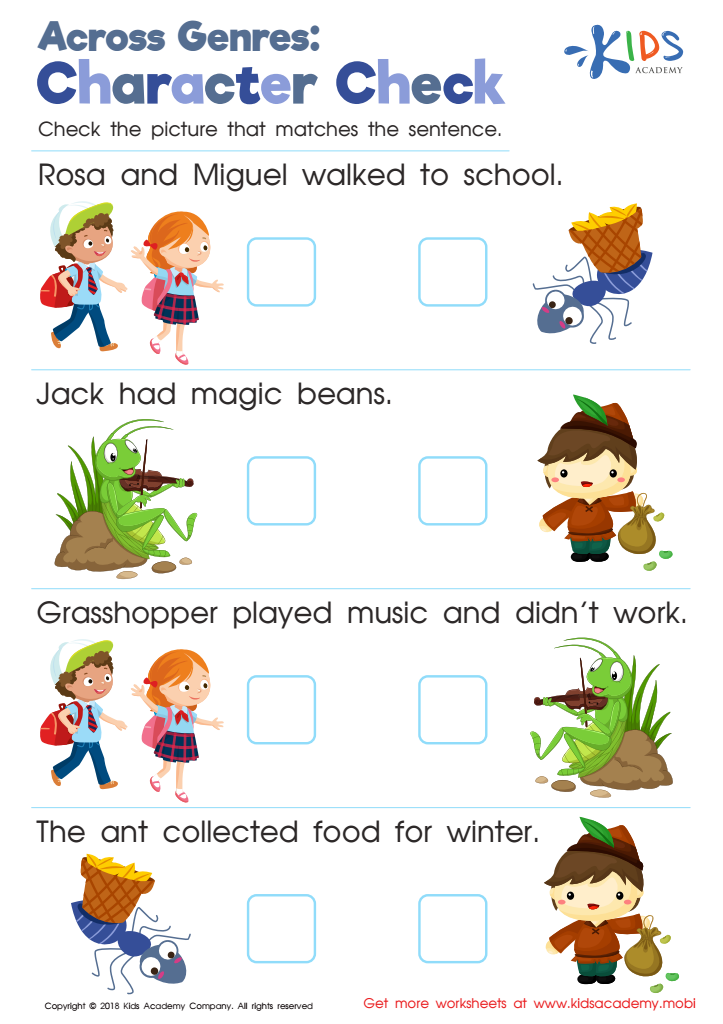
Across Genres: Character Check Worksheet
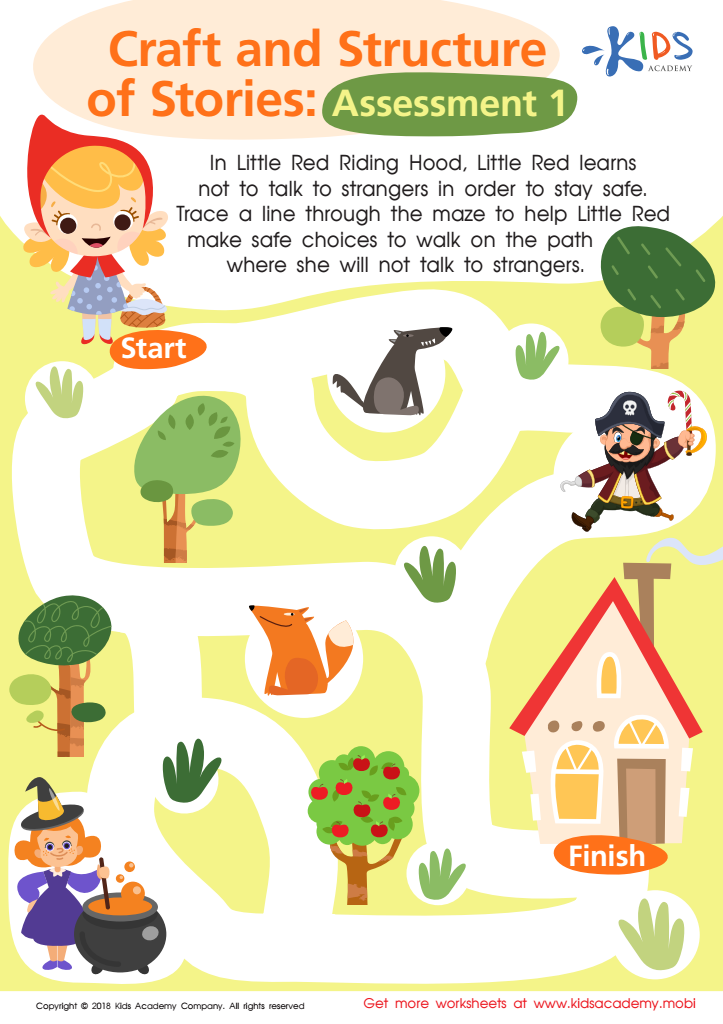
Craft and Structure of Stories: Assessment 1 Worksheet
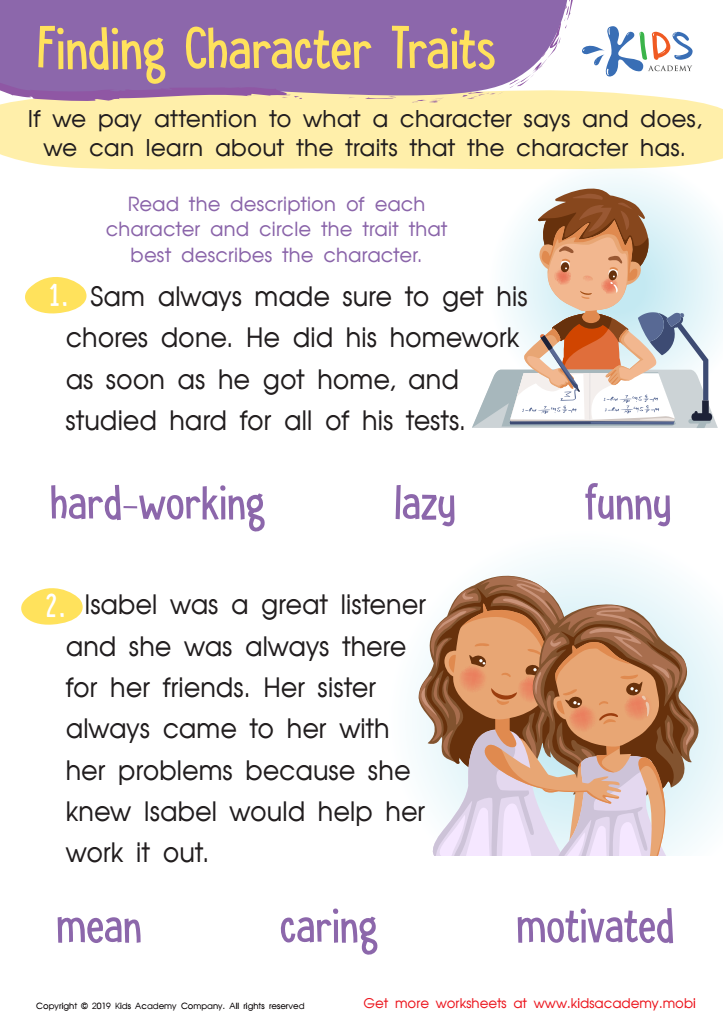
Finding Character Traits Worksheet
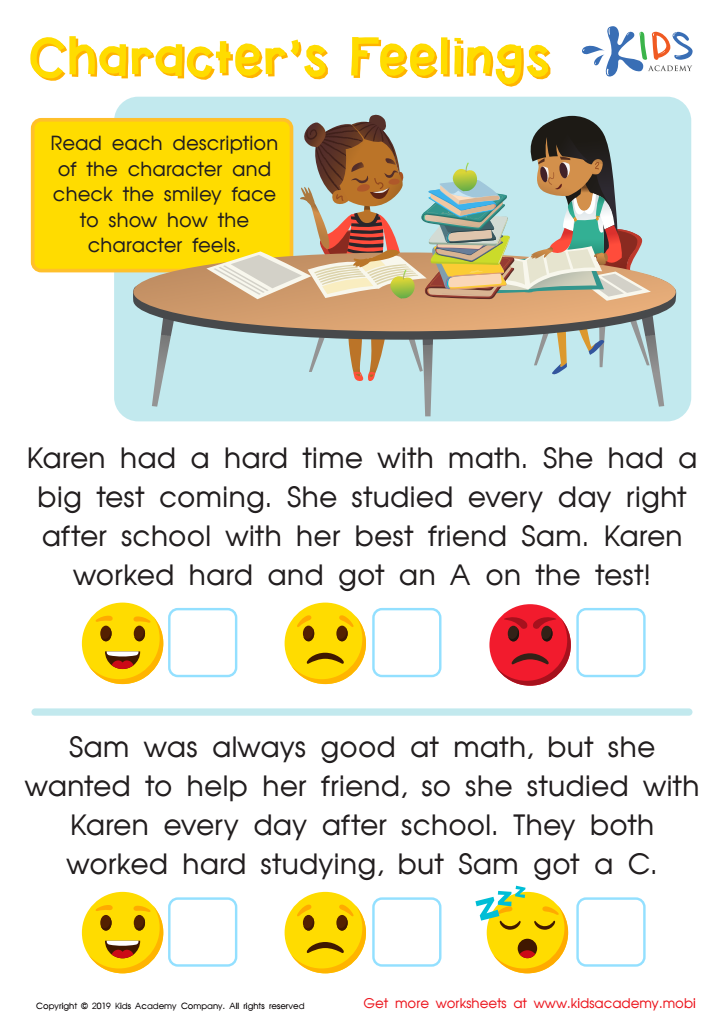
Character’s Feelings Worksheet



.jpg)




Character analysis in reading fiction for ages 3-8 is profoundly important for both parents and teachers to emphasize. At this developmental stage, young children are in the process of forming foundational understandings of the world, social skills, and moral values. Delving into character analysis helps young readers relate to, understand, and reflect on the actions and emotions of diverse characters.
First and foremost, exploring characters’ traits, motivations, and growth promotes critical thinking and empathy. Children learn to identify with characters' feelings and viewpoints, encouraging them to consider perspectives outside their own. This can significantly enhance their emotional intelligence and social skills, essential for building positive relationships.
Secondly, character analysis assists in developing problem-solving skills. When children see characters navigating challenges or conflicts, they can discuss possible outcomes and solutions, fostering creative and analytical thinking.
Furthermore, such discussions enrich children's language skills. As they describe character traits and cite evidence from the story, they learn new vocabulary and expressive techniques. This also enhances their comprehension and ability to communicate effectively.
In summary, character analysis in young children’s fiction reading nurtures essential life skills such as empathy, critical thinking, problem-solving, and language proficiency, making it a pivotal practice for early childhood educators and parents.








