Moral understanding Reading Fiction Worksheets for Ages 3-8
5 filtered results
-
From - To
Discover our engaging "Moral Understanding Reading Fiction Worksheets" designed for children ages 3 to 8. These worksheets are crafted to help young learners grasp essential moral lessons from captivating stories. By exploring relatable characters and challenges, kids can develop their empathy and critical thinking skills while enhancing their reading comprehension. Each worksheet features fun activities that encourage discussions about right and wrong, choices, and consequences, fostering a deeper understanding of morality. Perfect for parents and educators, our resources make learning enjoyable and meaningful. Dive into the world of fiction and help your child unlock valuable life lessons today!
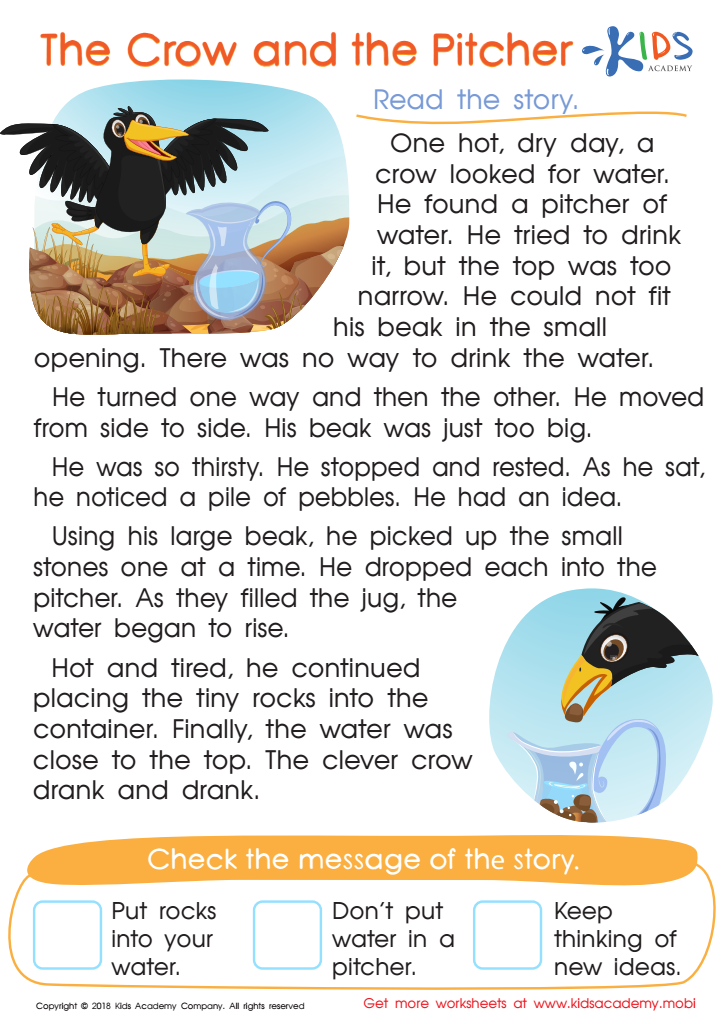
The Crow and the Pitcher Worksheet
 Assign to My Students
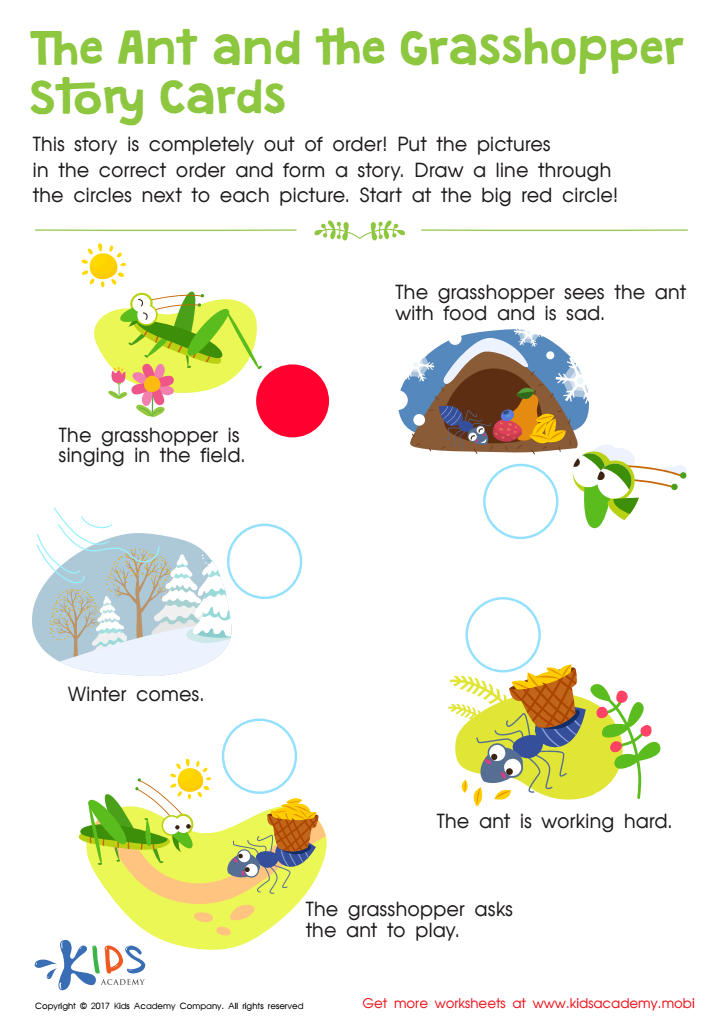
The Ant and The Grasshopper Worksheet
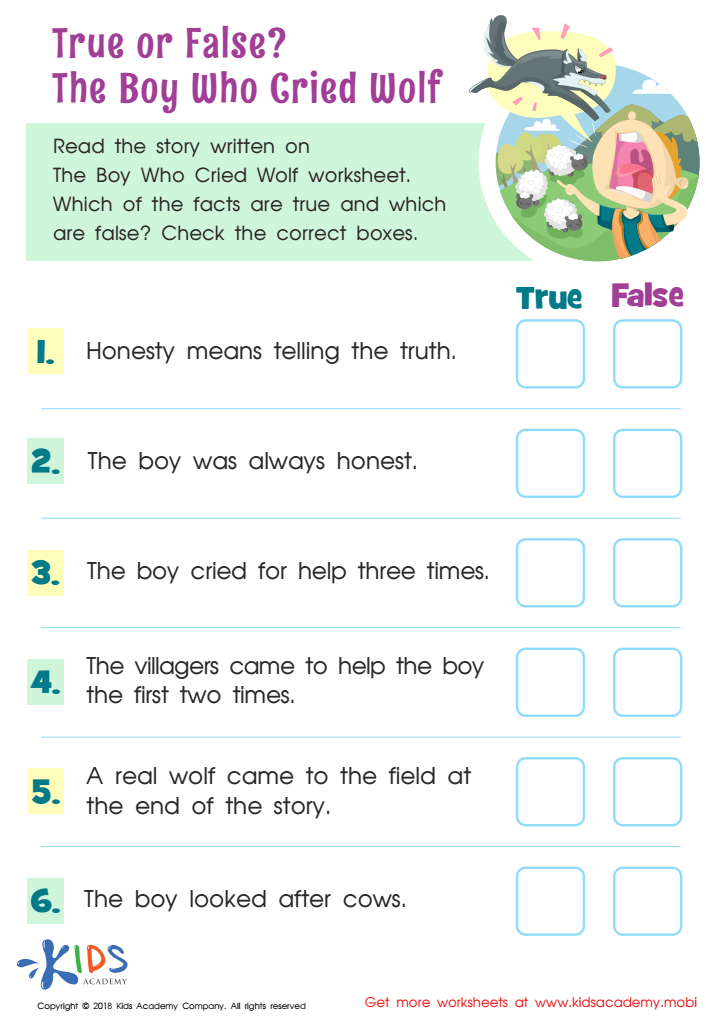
True or False? The Boy Who Cried Wolf Worksheet
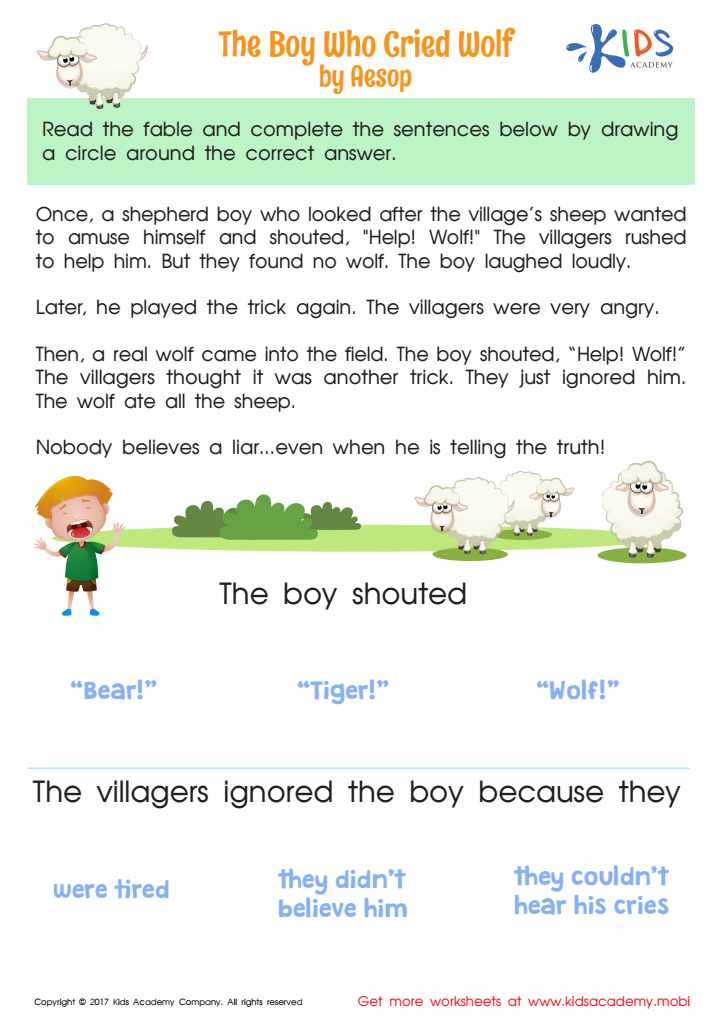
The Boy Who Cried Wolf Worksheet
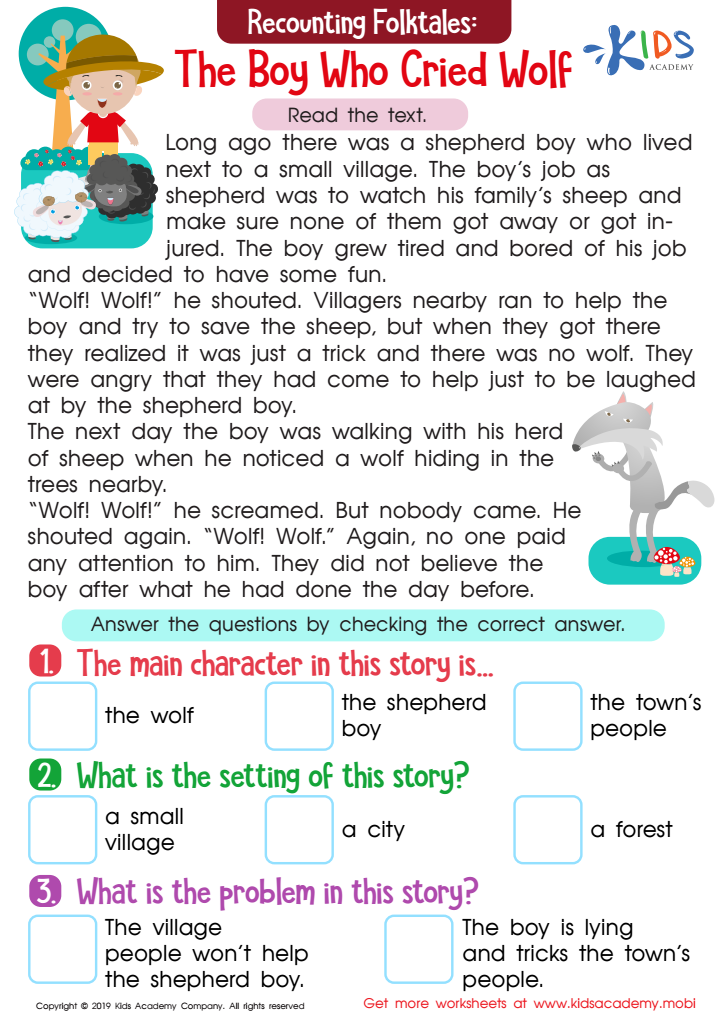
The Boy Who Cried Wolf Part 1 Worksheet


.jpg)


.jpg)


Parents and teachers should prioritize moral understanding in reading fiction for children ages 3-8 because it fosters empathy, critical thinking, and social development. Engaging with stories allows young readers to explore diverse perspectives, understand complex emotions, and relate to characters’ experiences. Fiction often presents moral dilemmas, which encourages children to think about right and wrong, thus laying the foundation for their moral compass.
Reading stories that incorporate moral lessons can help children articulate their feelings and navigate social situations. For instance, when characters face conflicts or make choices, kids can reflect on similar situations in their own lives. This promotes emotional intelligence and equips them with problem-solving skills crucial for personal interactions.
Moreover, shared reading experiences create opportunities for meaningful conversations between parents, teachers, and children. Discussing characters’ motivations and actions helps reinforce values such as kindness, honesty, and respect. This collaborative exploration cultivates a nurturing environment where children learn the significance of cooperation and compassion.
Incorporating moral understanding through reading fiction not only enhances literacy skills but also shapes character development, paving the way for responsible, empathetic individuals who can positively contribute to society. Thus, fostering moral understanding during these formative years is vital for holistic growth in children.








