Filters

103 filtered results

Clear all filters
Favorites
With answer key
Interactive

103 filtered results

Difficulty Level

Grade


Check out this FREE Trial Lesson on Reading Fiction for age 3-8!

Answer Questions About Unknown Words in a Story

Favorites
With answer key
Interactive
  • 3-8
  • Reading comprehension
  • Reading Fiction
Look at the Pictures: The Princess and the Pea Worksheet

Look at the Pictures: The Princess and the Pea Worksheet

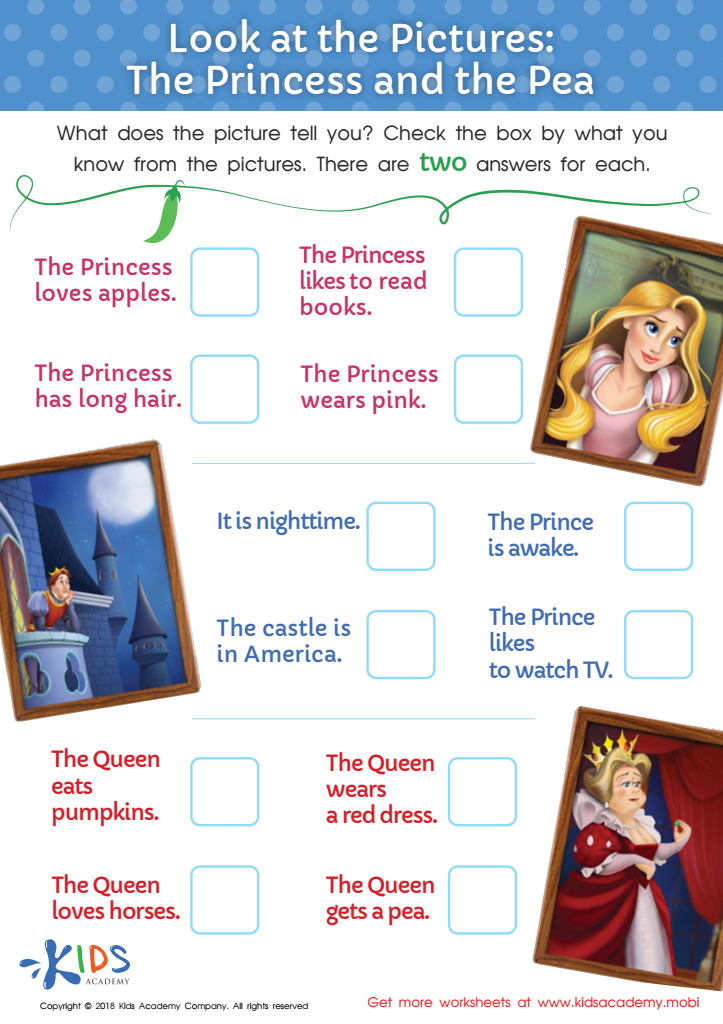
Early readers can benefit from picture clues to understand stories and text. Looking at images helps them learn the meaning of words and comprehend events. Use this worksheet on The Princess and the Pea to let students observe and learn from the pictures. It's a great way to help them comprehend early reading materials.
Look at the Pictures: The Princess and the Pea Worksheet
Worksheet
Puss in Boots Vocabulary Worksheet

Puss in Boots Vocabulary Worksheet

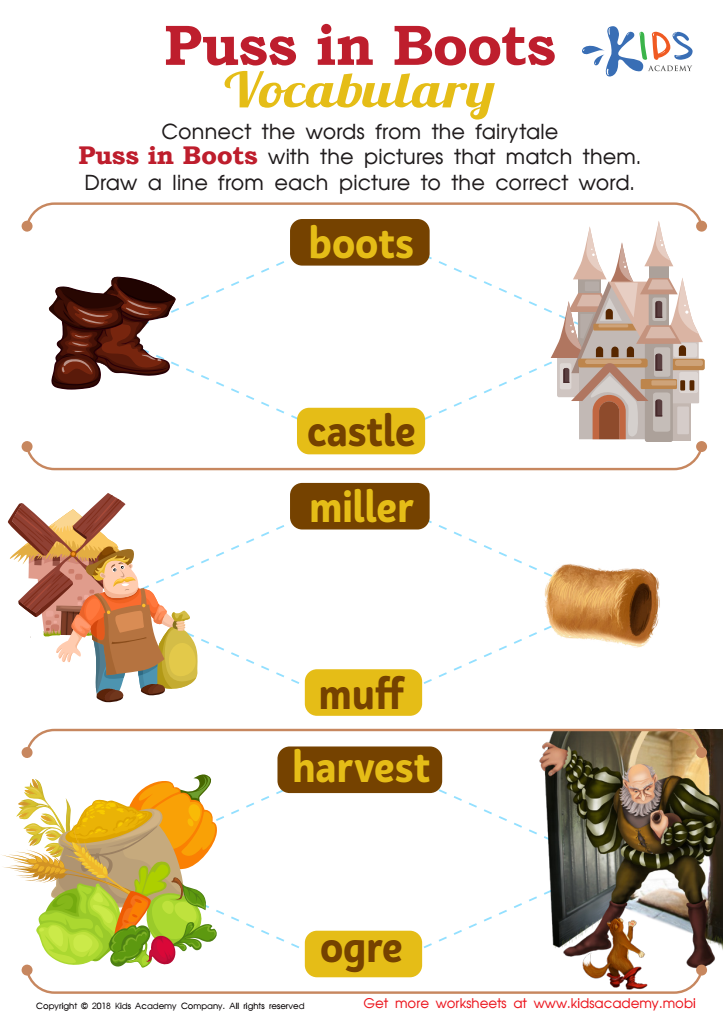
Let your kids enjoy story-telling while learning at the same time. Help them learn from the fairytale, Puss in Boots, by connecting words from the worksheet with the matching pictures. Ask them to draw a line between each picture and corresponding word to build their vocabulary.
Puss in Boots Vocabulary Worksheet
Worksheet
Think About It: Assessment Worksheet

Think About It: Assessment Worksheet

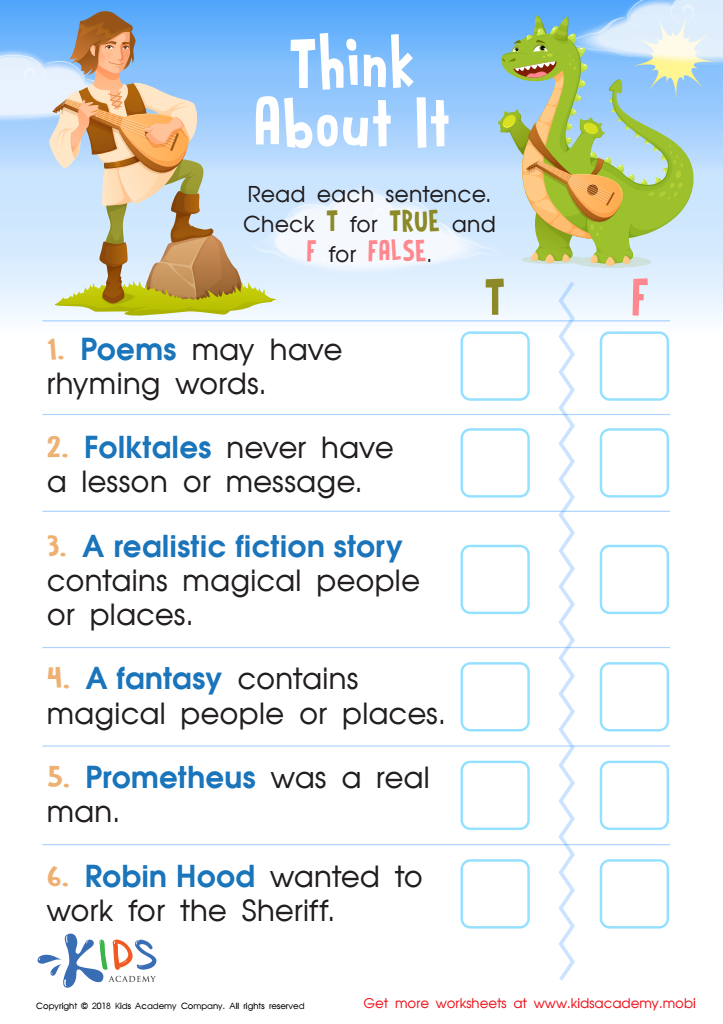
Reading is a fun and important way to learn. Help your students become better readers with this simple yet colorful worksheet. Read each sentence aloud, then have them read it by themselves. Ask them to check T for True and F for False. It's a great way to practice their reading skills!
Think About It: Assessment Worksheet
Worksheet
Reading Comprehension Worksheet: Aladdin

Story Elements Printable

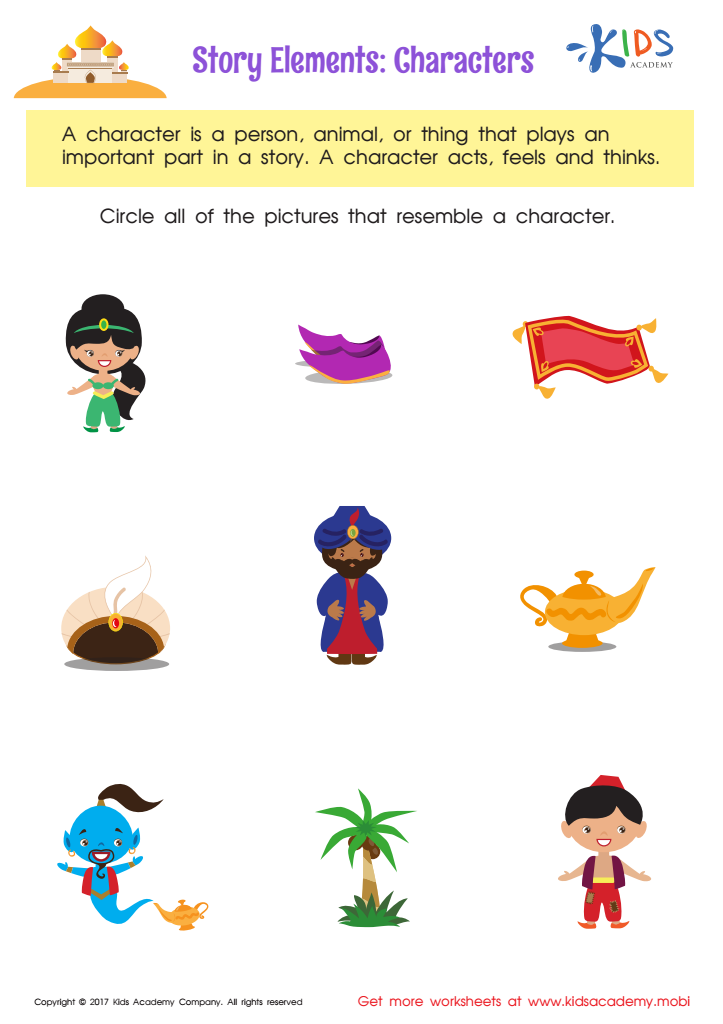
Read the text and review the characters, settings and plot in a guided discussion. Take your child on a journey to the Middle East and review the characters, settings and plot of their favorite childhood stories with this Aladdin-themed worksheet! It'll help them master early analysis skills and learn about characterization. Enjoy a fun, guided discussion with your child as you review important story elements.
Story Elements Printable
Worksheet
Princess and the Pea Questions Worksheet

Princess and the Pea Questions Worksheet

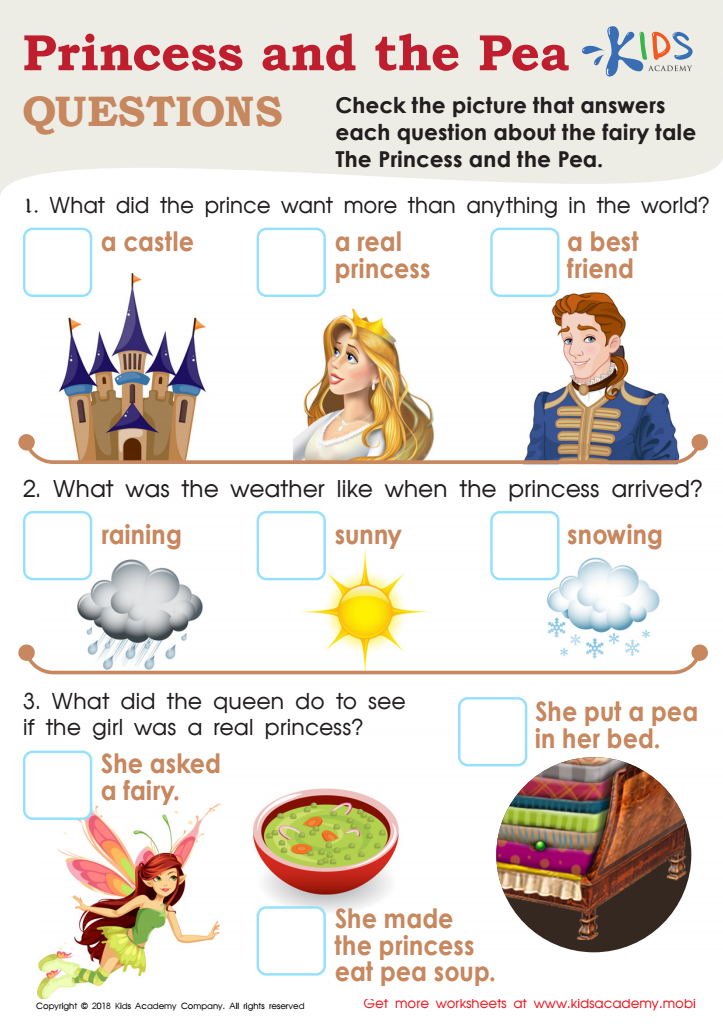
Your kid knows The Princess and the Pea inside-out? Test their knowledge with this worksheet. Ask your little one to read the questions and match each one to the picture. It's a fun way to see just how much attention they've paid to their bedtime story.
Princess and the Pea Questions Worksheet
Worksheet
The Boy Who Cried Wolf Part 2 Worksheet

The Boy Who Cried Wolf Part 2 Worksheet

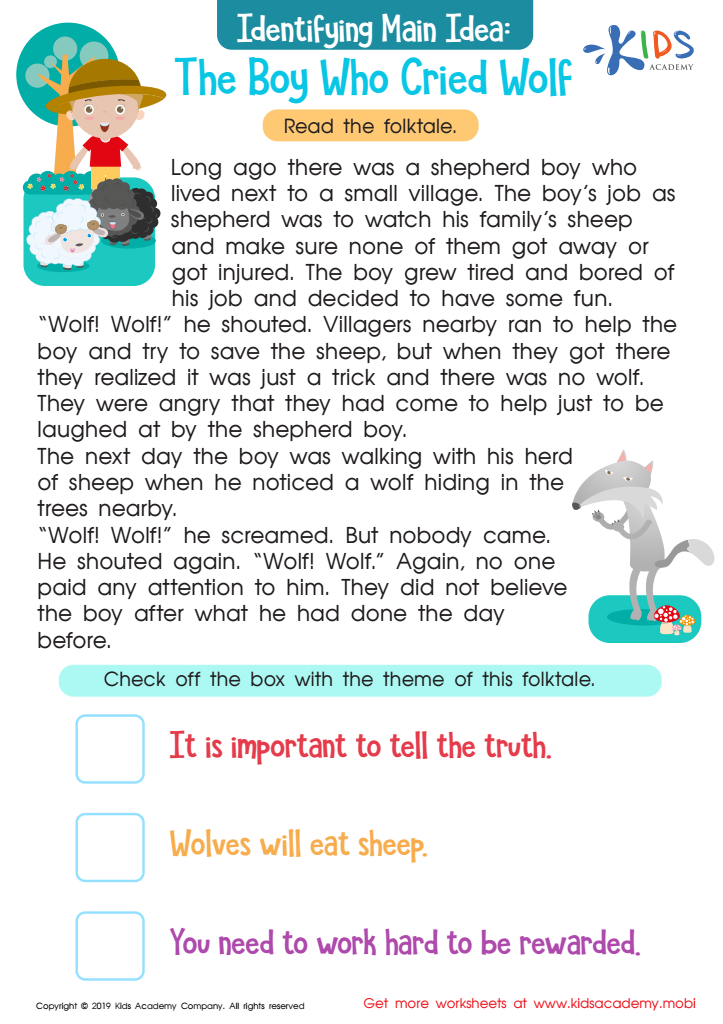
Kids love story time - no doubt they know their favorites! This worksheet tells a story with a theme or main idea. Read it carefully with your kids and ensure they understand every word. Then, help them answer the simple questions at the bottom of the page.
The Boy Who Cried Wolf Part 2 Worksheet
Worksheet
Who, What, Where? Worksheet


Who, What, Where? Worksheet

The availability of technology has changed the way students learn and interact with their environment in a very meaningful way. Technology has revolutionized learning and interaction for students. It offers an array of opportunities to engage with their surroundings, leading to a more meaningful educational experience.
Who, What, Where? Worksheet
Worksheet


... 4 5

Reading comprehension and exposure to fiction are crucial for children aged 3 to 8, as these early years lay the foundation for lifelong learning. At this age, children are like sponges, absorbing new concepts and developing critical thinking skills. Engaging with fiction helps foster imagination, creativity, and empathy, allowing young children to understand diverse perspectives and experiences.

Furthermore, reading fiction enriches vocabulary and language skills, as stories introduce new words and sentence structures in context. This enhances their ability to construct meaning and understand complex sentence formations, benefitting their overall communication skills. Discussing storylines encourages children to analyze and infer, boosting their comprehension skills.

For parents and teachers, promoting reading comprehension in fiction serves to strengthen the bond between child and caregiver through shared storytelling experiences, creating positive associations with reading. Ultimately, strong reading skills become essential for academic success across all subjects in later years. By prioritizing reading comprehension in the early years, we equip children with the necessary tools for critical thinking, emotional intelligence, and effective communication, setting them on a path to successful lifelong learning. In summary, nurturing these skills not only benefits individual children but society as a whole, paving the way for informed, empathetic future generations.