Filters

7 filtered results

Clear all filters
Favorites
With answer key
Interactive

7 filtered results

Difficulty Level

Grade


Discover our engaging Vocabulary Development Reading Fiction Worksheets designed specifically for children aged 3-8! These worksheets provide a fun and interactive way to enhance your child's language skills through captivating stories. Each worksheet incorporates vibrant illustrations and age-appropriate text to keep young learners motivated. By exploring fiction, children expand their vocabulary while improving their comprehension and critical thinking abilities. Ideal for use in the classroom or at home, our printable resources cater to various learning styles and abilities. Foster a love for reading and empower your child with essential language skills today! Explore our collection and watch them thrive!

Check out this FREE Trial Lesson on Reading Fiction for age 3-8!

Compare and Contrast the Experiences of Characters in Familiar Stories

Favorites
With answer key
Interactive
  • 3-8
  • Vocabulary development
  • Reading Fiction
Prometheus story worksheet

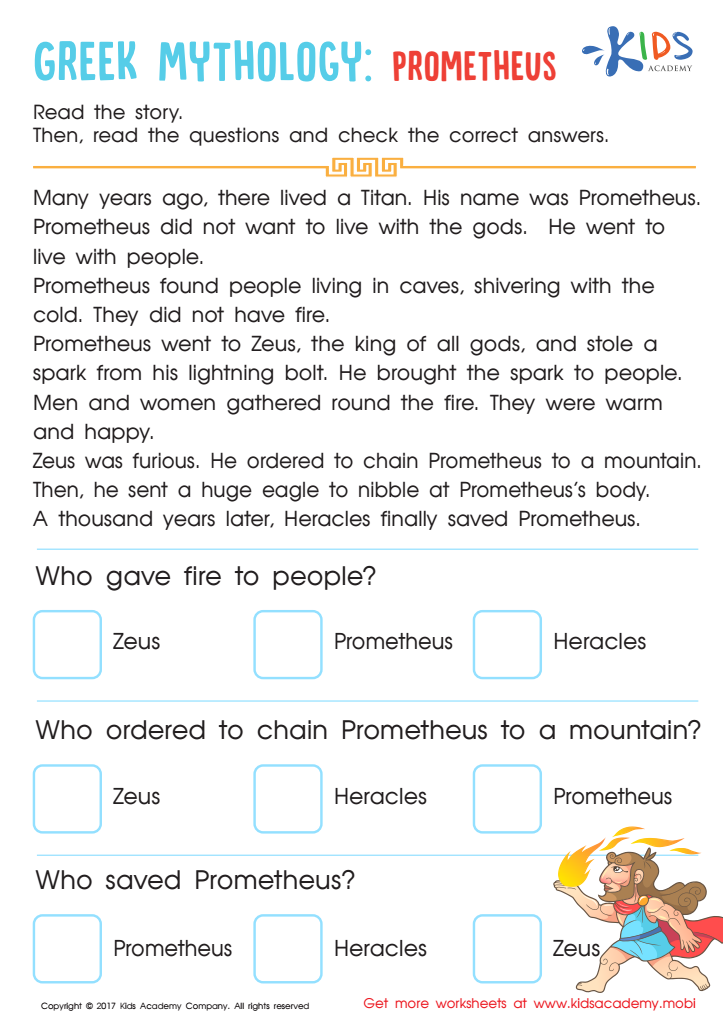
Prometheus Story Worksheet

Help kids improve reading comprehension with this Prometheus story worksheet! Learn about this classic mythological tale and break down the plot into understandable parts. By doing so, children will understand the story each step of the way.
Prometheus Story Worksheet
Worksheet
“The Princess and the Pea” and “Cinderella” Worksheet

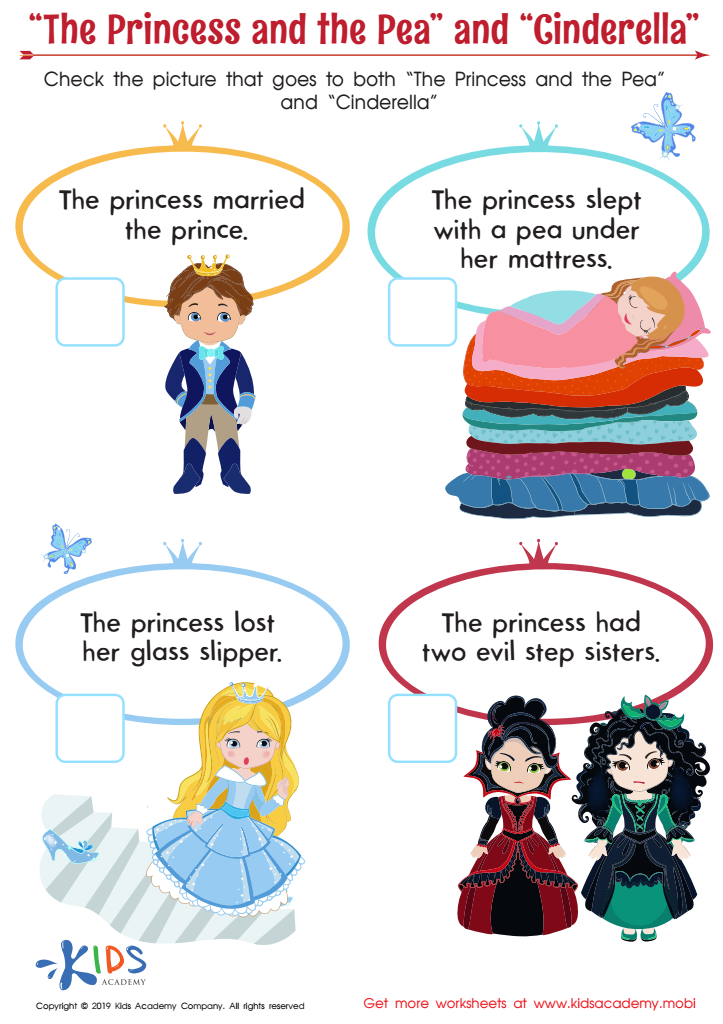
“The Princess and the Pea” and “Cinderella” Worksheet

Read "Cinderella" and "The Princess and the Pea" to your little ones. Ask them what their favorite parts were and what similarities they found in the princesses. This worksheet has four pictures of scenes from the stories. Ask your kids which picture goes with both tales.
“The Princess and the Pea” and “Cinderella” Worksheet
Worksheet
King Midas Worksheet

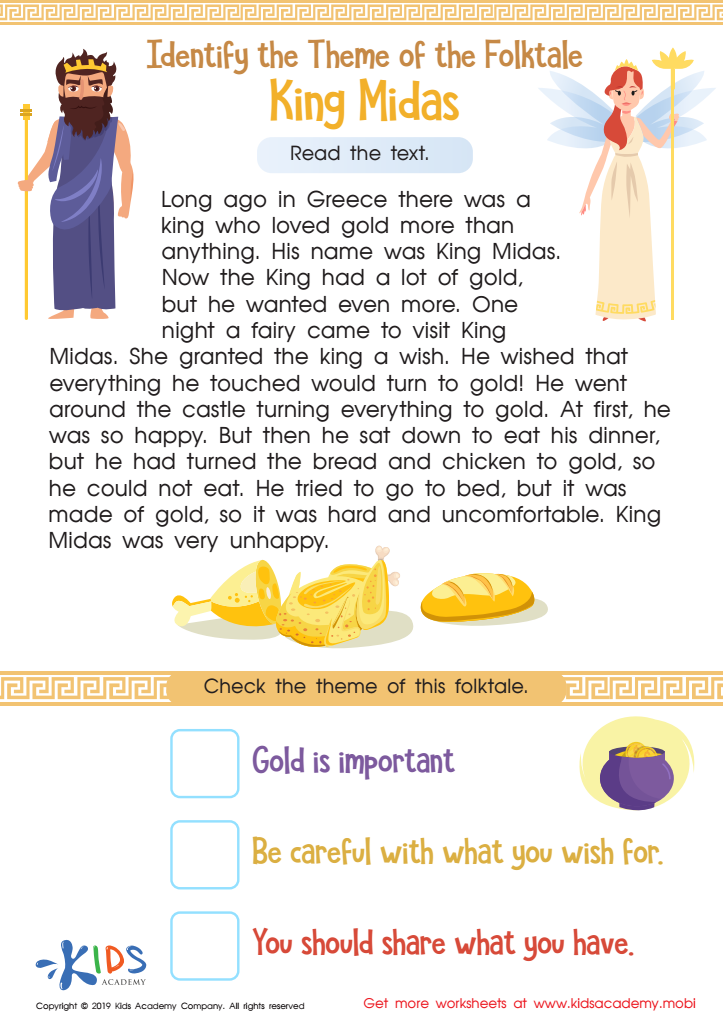
King Midas Worksheet

Read the ancient Greek history of King Midas to your kids. If they're into Greek gods and mythology, they'll be excited to complete the exercise. Read the text carefully, and if needed, twice. Help your kids locate the story's theme at the bottom of the page. 80 words.
King Midas Worksheet
Worksheet
Craft and Structure: Assessment 1 Worksheet

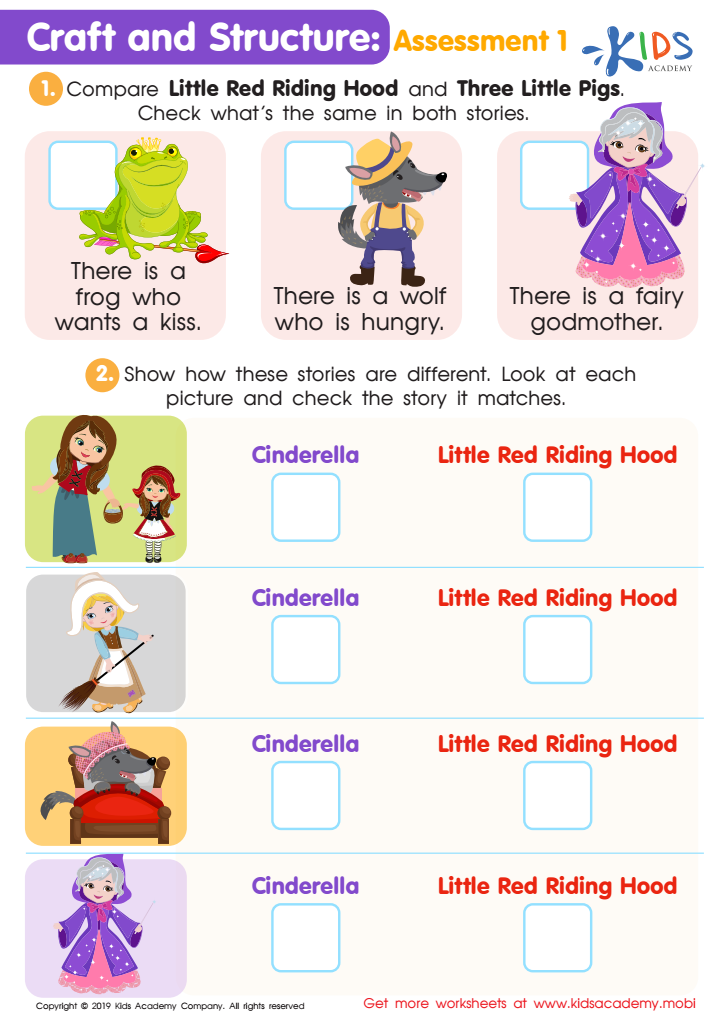
Craft and Structure: Assessment 1 Worksheet

Fairytales are a great way to bond with your kids while teaching them. Popular stories include Little Red Riding Hood and Three Little Pigs. Test how well they understood these two with this assessment worksheet. Ask them to compare the two stories and check what is the same. Doing this will help kids learn new words and sentence construction, as well as teaching them life lessons.
Craft and Structure: Assessment 1 Worksheet
Worksheet
Finding Character Traits Worksheet

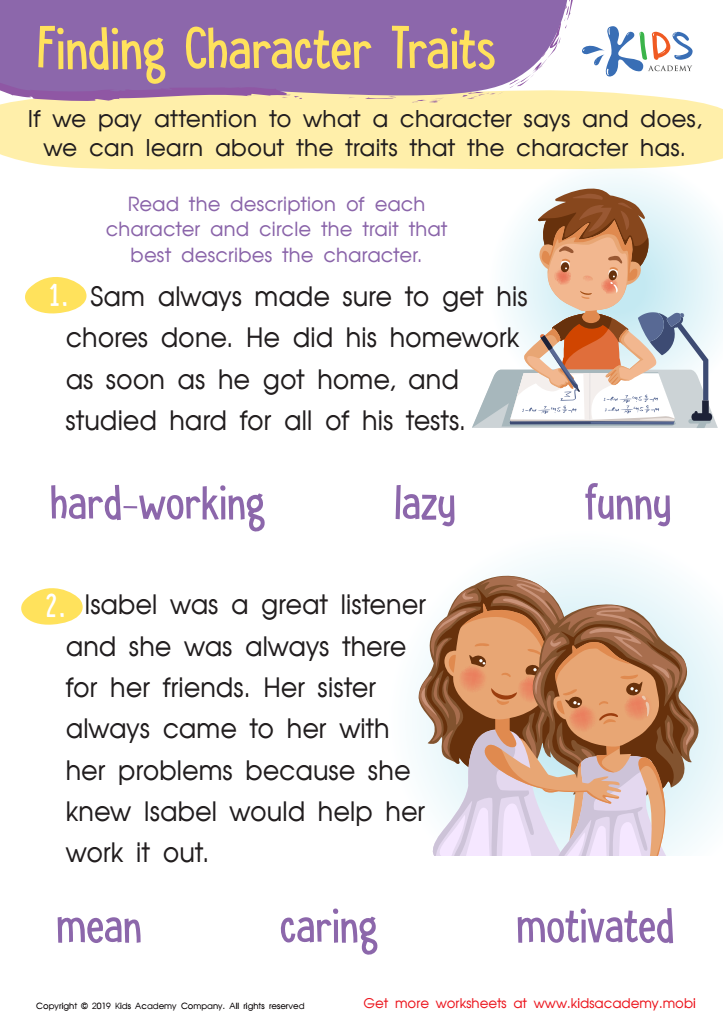
Finding Character Traits Worksheet

Before you start, make sure your kids know the difference between a character trait and a feeling. Traits are part of a character's entire personality and can be inferred from what they say and do in a story. Read the character descriptions on the worksheet and help your kids circle the best trait for each.
Finding Character Traits Worksheet
Worksheet
Craft and Structure of Informational Texts: Assessment 1 Worksheet

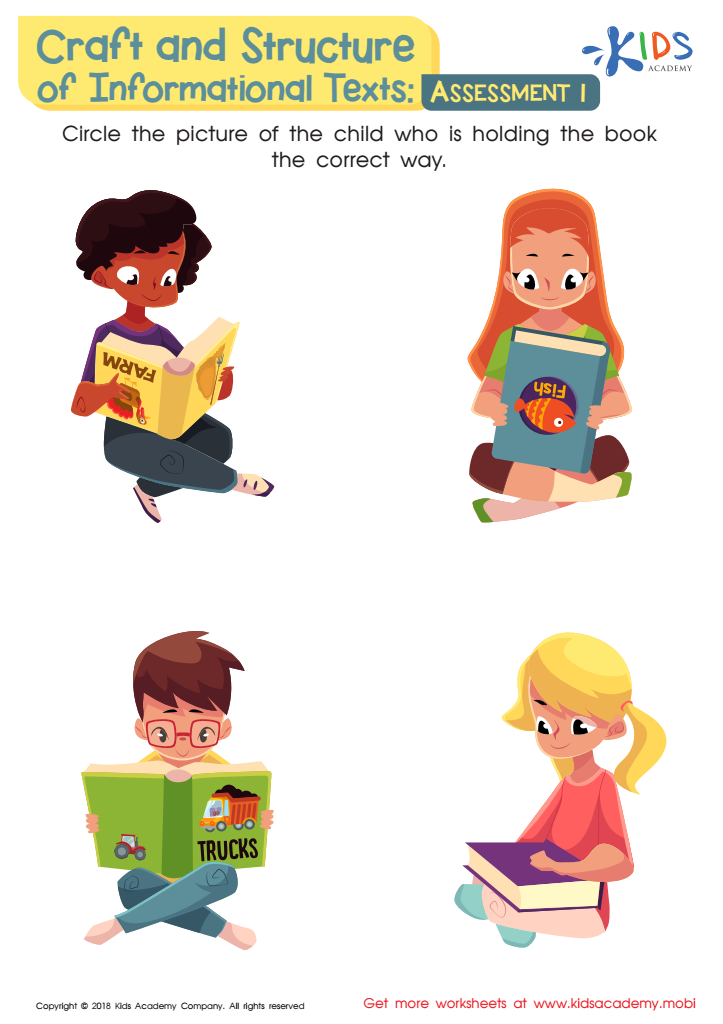
Craft and Structure of Informational Texts: Assessment 1 Worksheet

Young children need to know how to hold books correctly when they start reading. This assessment worksheet helps them show they know what to do. They'll look at the pictures and circle the child who is holding the book correctly. It's a great way to tell they are well on their way to becoming lifetime readers!
Craft and Structure of Informational Texts: Assessment 1 Worksheet
Worksheet
Who, What, Where? Worksheet


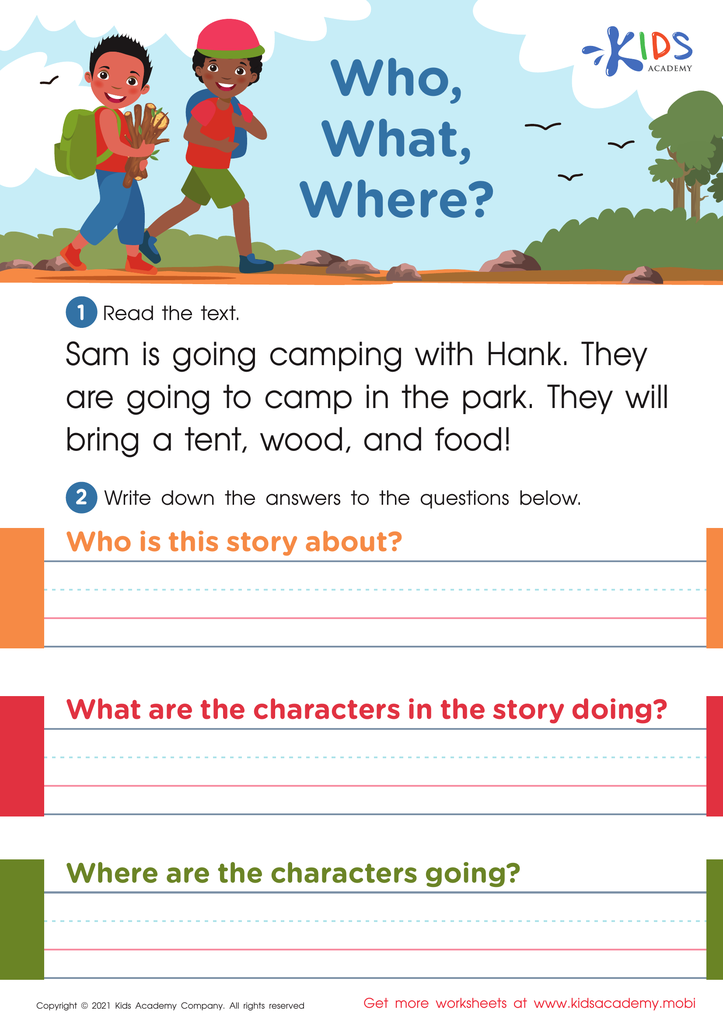
Who, What, Where? Worksheet

The availability of technology has changed the way students learn and interact with their environment in a very meaningful way. Technology has revolutionized learning and interaction for students. It offers an array of opportunities to engage with their surroundings, leading to a more meaningful educational experience.
Who, What, Where? Worksheet
Worksheet


Vocabulary development is crucial for children aged 3-8, as it directly influences their overall literacy and academic success. Engaging with fiction during these formative years significantly enhances vocabulary acquisition, stimulating imagination and fostering critical thinking skills. Parents and teachers should care about this because reading fiction introduces children to diverse language patterns, enriching their lexicon with new words and expressions in context. This exposure helps children grasp meanings more intuitively and apply vocabulary in varied situations.

Furthermore, fiction often includes rich narratives and compelling characters, making learning more enjoyable and relatable for young readers. When children connect emotionally with stories, they are more likely to remember and use new vocabulary. Additionally, reading together creates bonding moments between parents, teachers, and children, promoting shared learning experiences that nurture social-emotional development.

Consequently, vocabulary growth from reading fiction also boosts comprehension, setting a solid foundation for future reading and writing skills. By prioritizing vocabulary development through engaging storytelling, we equip young learners with essential tools for effective communication and critical analysis, thereby laying the groundwork for lifelong academic success and personal growth. In essence, supporting vocabulary development through fiction reading should be a shared goal for parents and educators alike.