Rhyming skills development Rhyming Words Worksheets for Ages 3-8
3 filtered results
-
From - To
Discover our engaging Rhyming Words Worksheets designed specifically for children aged 3-8! These worksheets aim to strengthen rhyming skills, a crucial aspect of early literacy and language development. With colorful illustrations and fun activities, kids will explore phonetics while enjoying the rhythm of words. Our thoughtfully crafted exercises promote vocabulary expansion, auditory discrimination, and creative thinking. Perfect for home or classroom use, these worksheets provide an interactive learning experience that captivates young minds. Encourage a love for language and boost reading confidence with our collection of rhyming materials tailored to support your child's educational journey! Explore now and empower their learning with fun!

Rhyming Words Rhyming Worksheet
 Assign to My Students
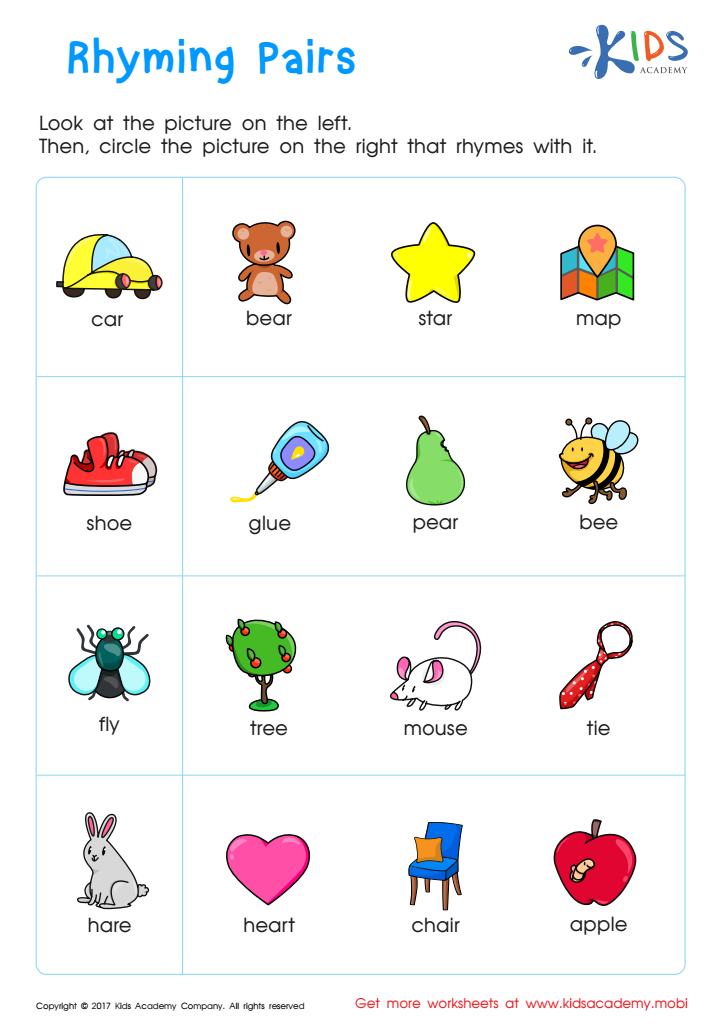

First Words: Picture Rhymes Worksheet


.jpg)





Rhyming skills development is crucial for children ages 3-8 for several reasons. First, it lays the foundation for phonemic awareness, which is the ability to hear and manipulate individual sounds in words. This skill is vital for reading development, as recognizing rhyming patterns enhances a child's understanding of word structures, which aids in decoding unfamiliar words.
Furthermore, rhyming fosters vocabulary growth. When children are exposed to rhyming words, they often learn new terms and their meanings through playful contexts, enriching their language repertoire. Engaging with rhymes can also promote memory and recall, as the rhythmic patterns make it easier for children to remember words and phrases.
Additionally, rhyming often incorporates elements of playfulness, making learning enjoyable and motivating for young learners. Activities like singing, playing rhyming games, and reading rhyming books engage children in a fun manner while subconsciously building essential literacy skills.
Lastly, learning and practicing rhyming helps enhance children's social and emotional skills as they share joyful experiences with peers and caregivers. Overall, rhyming skills are a key component in early literacy that support lifelong learning. Therefore, parents and teachers must prioritize and actively foster rhyming skills in children’s education.








