Improve counting skills Sight Words Worksheets for Ages 3-8
7 filtered results
-
From - To
Unlock your child's potential with our "Improve Counting Skills Sight Words Worksheets" designed for ages 3-8. These engaging worksheets blend counting practice with essential sight words, fostering early numeracy and literacy. Tailored to suit young learners, our printables encourage hands-on learning and make practicing fun. Each worksheet aims to enhance counting skills, number recognition, and vocabulary simultaneously. Ideal for both classroom use and at-home activities, these resources support the development of foundational skills necessary for future academic success. Help your child excel in their early learning journey with our expertly crafted counting and sight words worksheets!





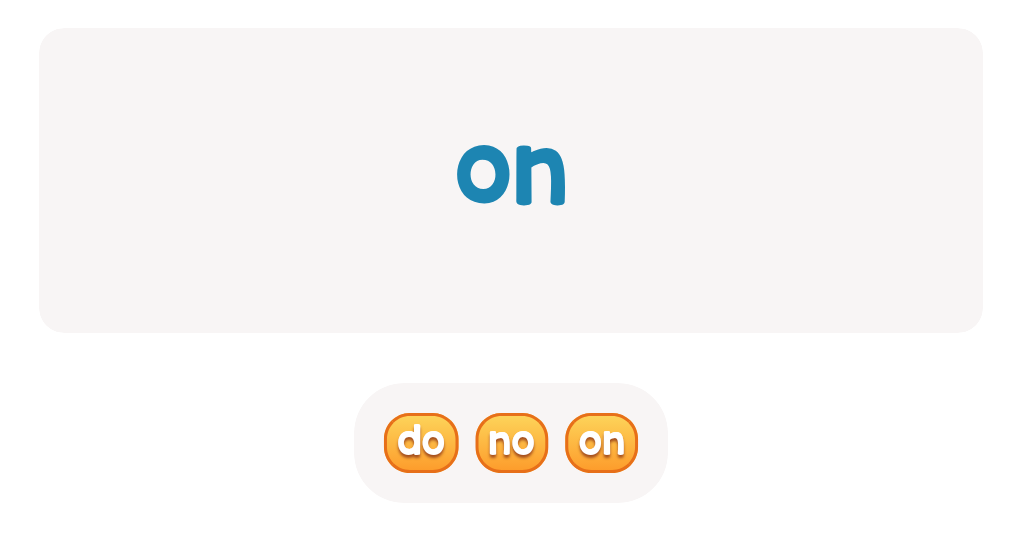
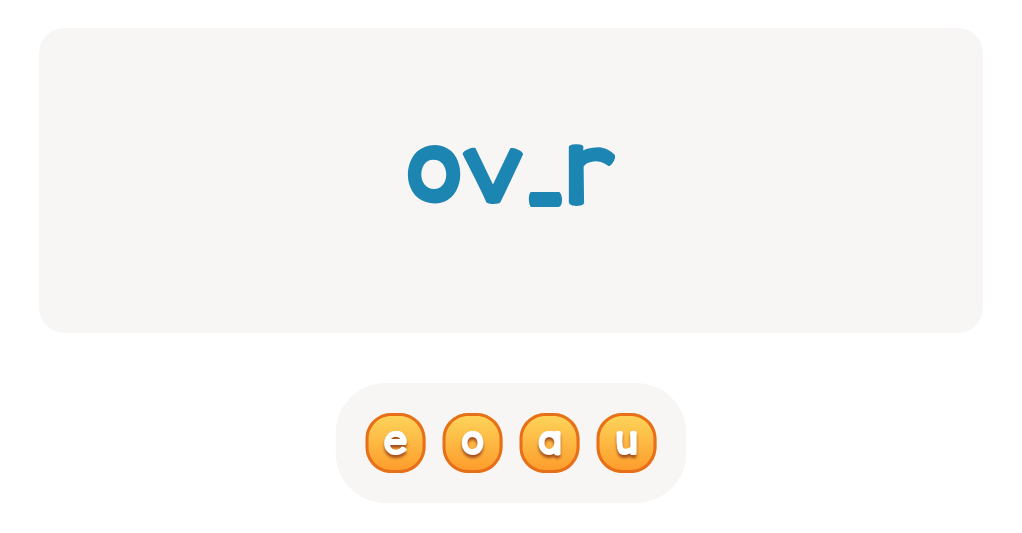
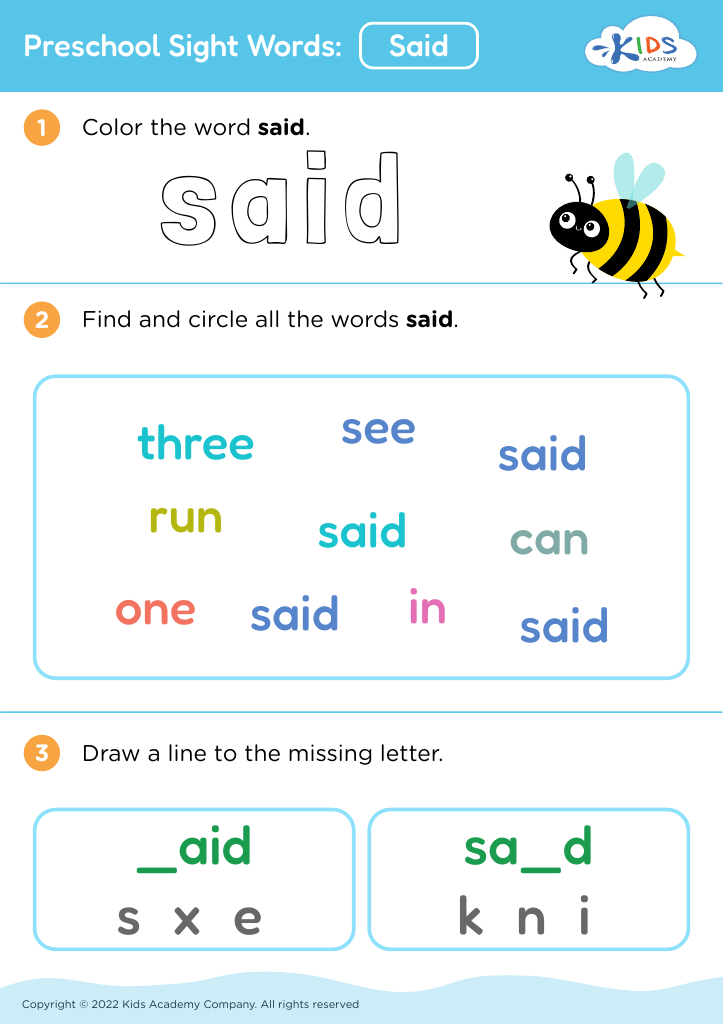
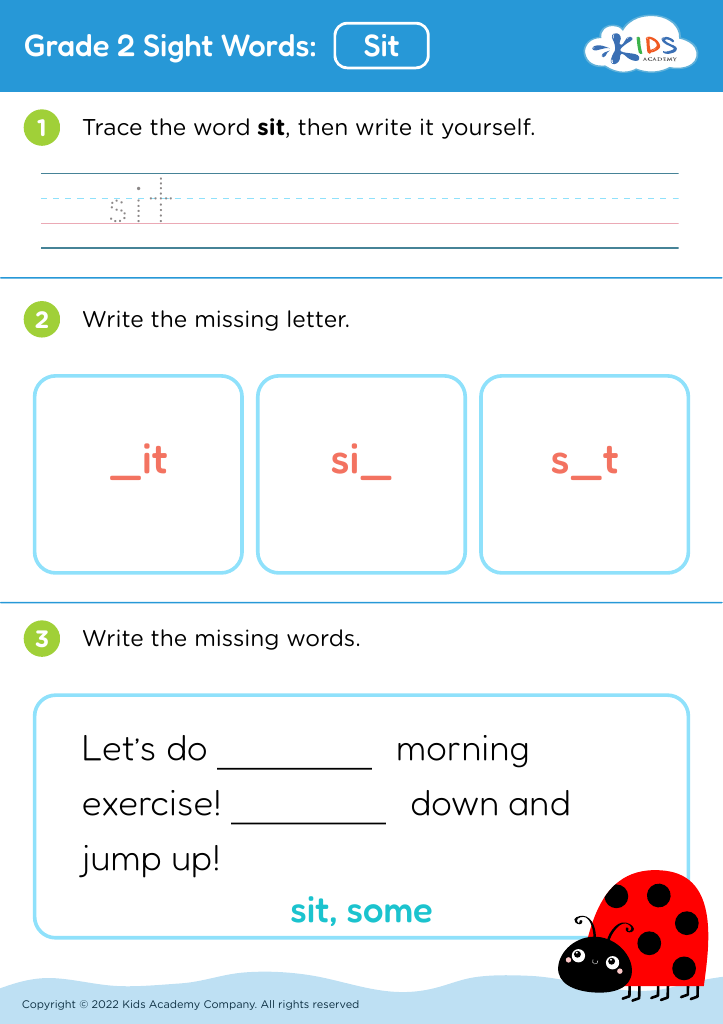
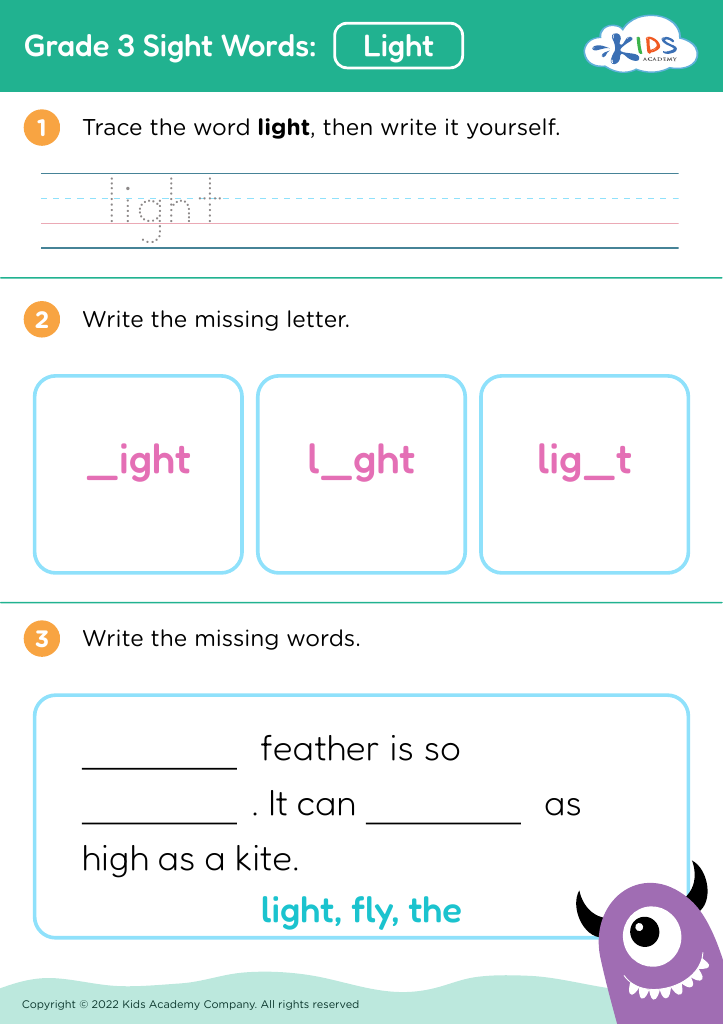
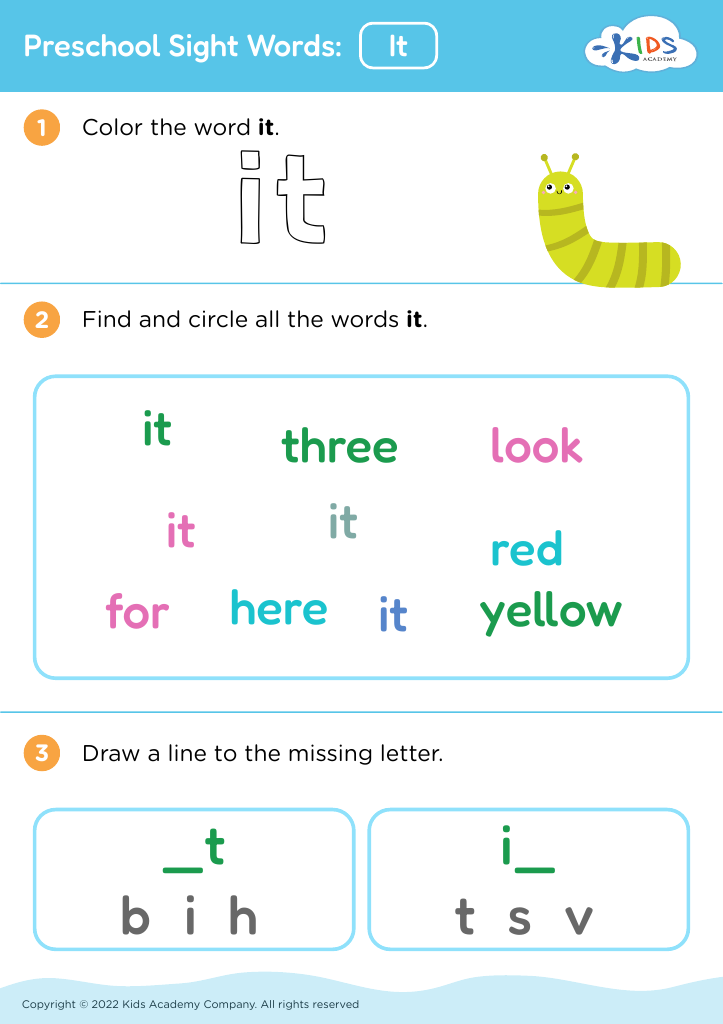
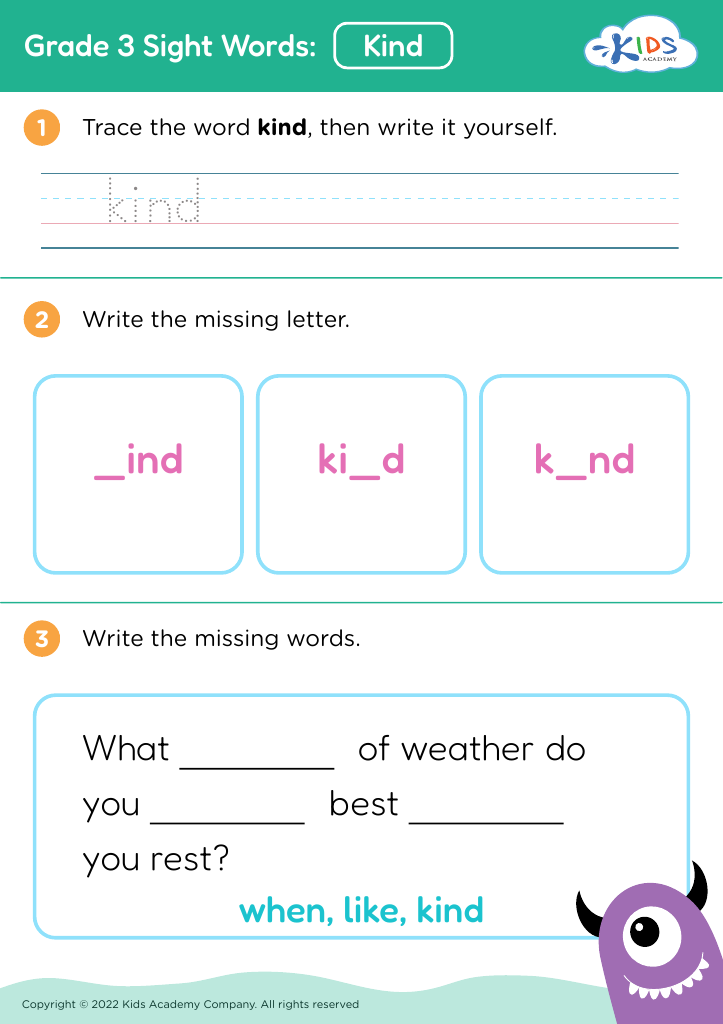
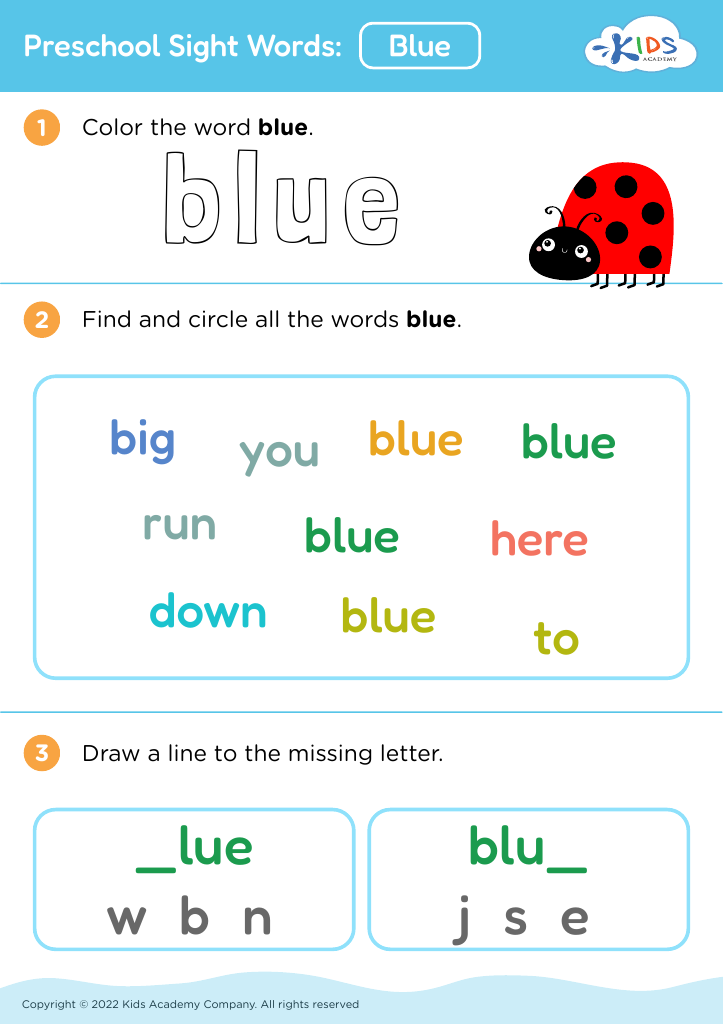








Parents and teachers play a pivotal role in shaping a child's early learning experiences, and focusing on improving counting skills and sight word recognition is fundamental for children aged 3-8. Counting skills are foundational for mathematical understanding. They enable children to grasp basic concepts such as number sense, sequencing, and arithmetic. Early proficiency in counting also fosters problem-solving capabilities and logical thinking, which are essential for more advanced mathematical topics later.
Sight words, on the other hand, constitute a large portion of the words children encounter in everyday reading. These are typically high-frequency words that often do not follow regular phonetic rules, making them difficult to decode using traditional phonics. Improving sight word recognition helps children read more fluently and with greater comprehension. When children can quickly recognize these words, they free up cognitive resources to focus on understanding the text rather than decoding each word.
By investing in these skills, parents and teachers lay a strong literacy and numeracy foundation, paving the way for academic success. Children who are confident counters and readers are more likely to engage positively with their learning, leading to better educational outcomes and a lifelong love of learning. Therefore, prioritizing these areas is crucial for early childhood development.