
Enhancing observation skills Physical Science Worksheets for Ages 3-8
3 filtered results
Difficulty Level
Grade
Age
-
From - To
Subject
Activity
Standards
Discover our "Enhancing Observation Skills Physical Science Worksheets" crafted for young learners aged 3-8. These printable resources are designed to spark curiosity and foster a love for science by engaging children in hands-on activities that improve their observational skills. Each worksheet features fun exercises that encourage kids to explore their environment, observe physical properties, and think critically about what they see. Perfect for home or classrooms, these worksheets provide an interactive way to nurture early scientific thinking. Equip your little scientists with essential skills that will last a lifetime—explore our collection today and watch their discovery journey unfold!
Favorites
With answer key
Interactive
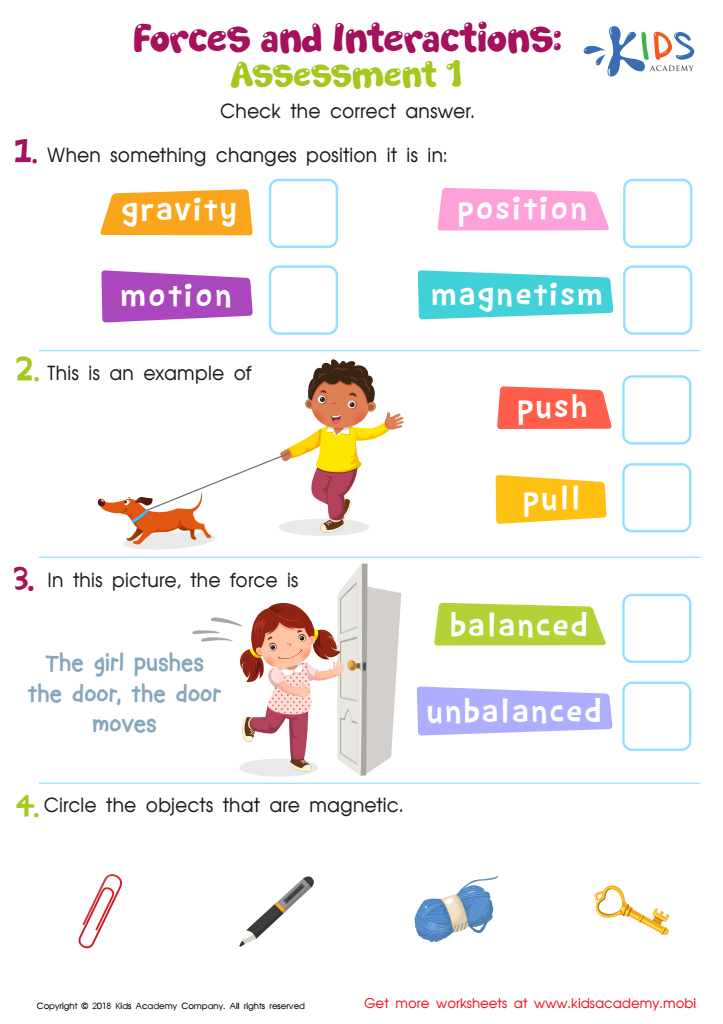
Forces and Interactions Printable
Test your child's physics know-how with this vibrant forces and interactions printable worksheet! Kids can assess their understanding of the different types of forces while they complete it. Read each example and check the boxes to show what they know!
 Assign to My Students
Forces and Interactions Printable
Worksheet
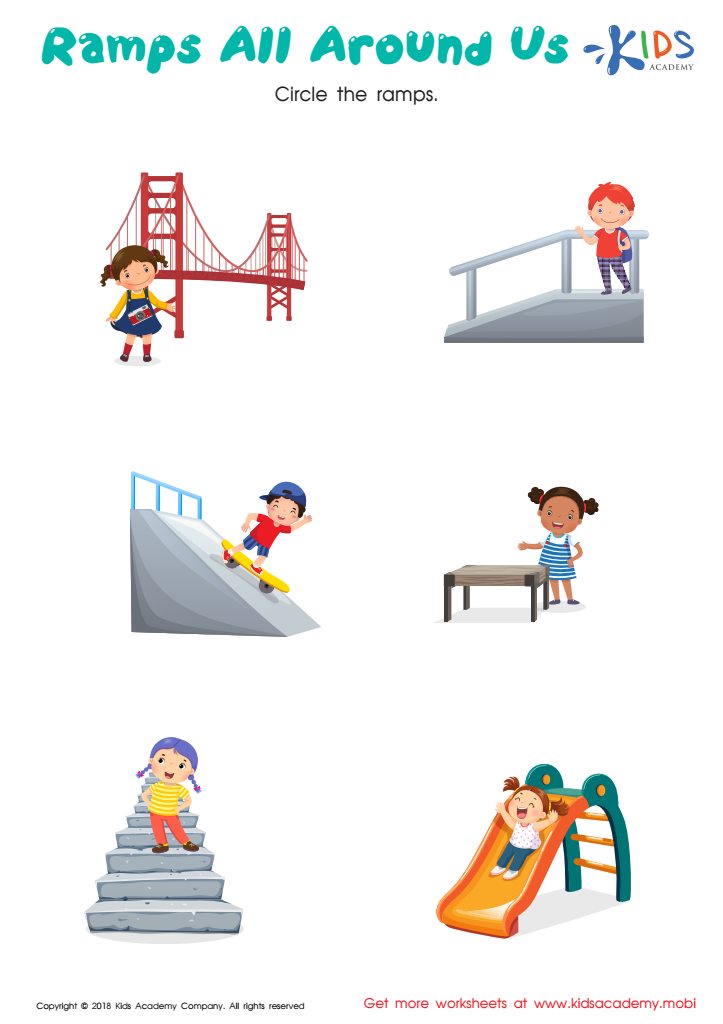
Ramps All Around us Worksheet
Ask your kids if they know what ramps are, then have them give you examples of places they've seen them. This worksheet has pictures of ramps - have your child identify and circle them.
Ramps All Around us Worksheet
Worksheet
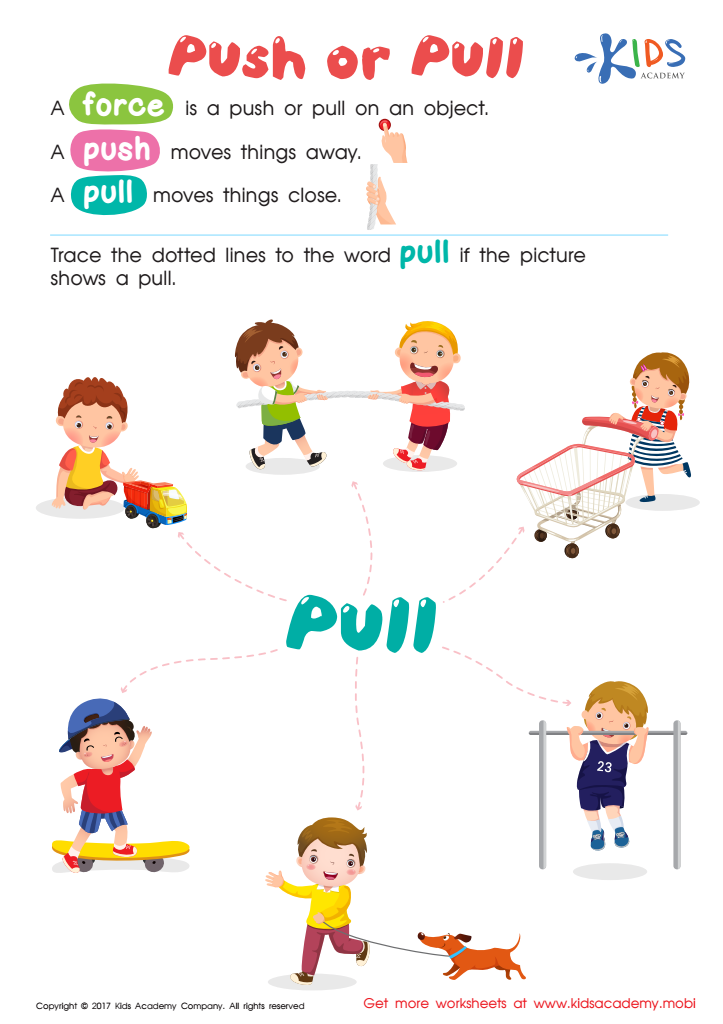
Pull or Push Worksheet
With this fun worksheet, they'll explore physics by sorting objects into categories according to their mode of motion. It's a great way to get them interested in science.
Pull or Push Worksheet
Worksheet
Join Kids Academy for Free
Who is primarily going to use this learning content?








Enhancing observation skills in Physical Science for children aged 3-8 is crucial for several reasons. During these formative years, children's innate curiosity about the world drives their learning. By encouraging them to observe their surroundings, seek patterns, and ask questions, parents and teachers can nurture a sense of inquiry that is foundational for scientific exploration.
Observation skills cultivate critical thinking. Children learn to gather evidence, make predictions, and draw conclusions based on their experiences, which are essential elements of scientific reasoning. Moreover, by engaging with physical science concepts, like the properties of materials or the principles of matter and energy, children start to build a foundational understanding of the world around them.
Additionally, enhancing observation skills supports language development as children articulate their findings and ideas. It fosters collaboration when they share observations with peers, promoting social skills and teamwork. Learning through observation also ties into various learning styles, making science accessible and enjoyable for all children.
Ultimately, fostering these skills lays the groundwork for lifelong learning, encouraging children to explore, question, and appreciate the interconnectedness of the natural world. This investment in early scientific education prepares them for more advanced studies and informed citizenship in the future.







