Understanding light sources Physical Science Worksheets for Ages 3-8
6 filtered results
-
From - To
Explore the world of light with our "Understanding Light Sources Physical Science Worksheets" designed for ages 3-8. These engaging and educational worksheets bring the fascinating concept of light to life through simple, hands-on activities. Kids will learn to identify various light sources, understand their uses, and distinguish between natural and artificial light. Each worksheet is crafted to encourage curiosity and foundational science skills, making learning both fun and meaningful. Perfect for young scientists embarking on their first exploration of physical science concepts, these resources provide an excellent blend of education and entertainment.
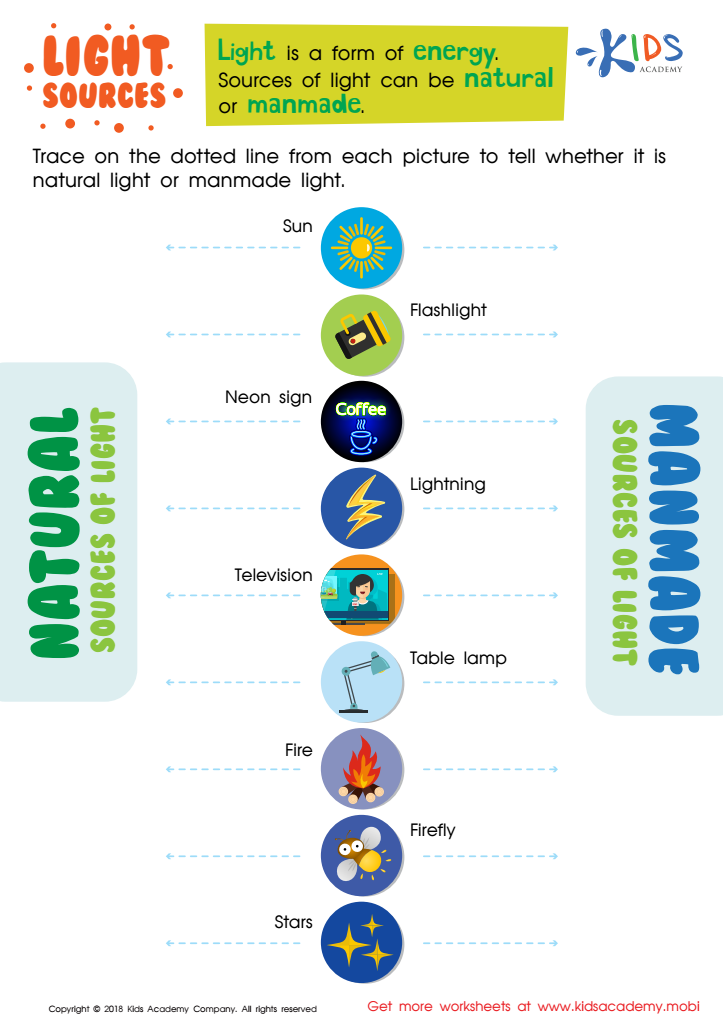
Natural and Manmade Light Sources Worksheet
 Assign to My Students
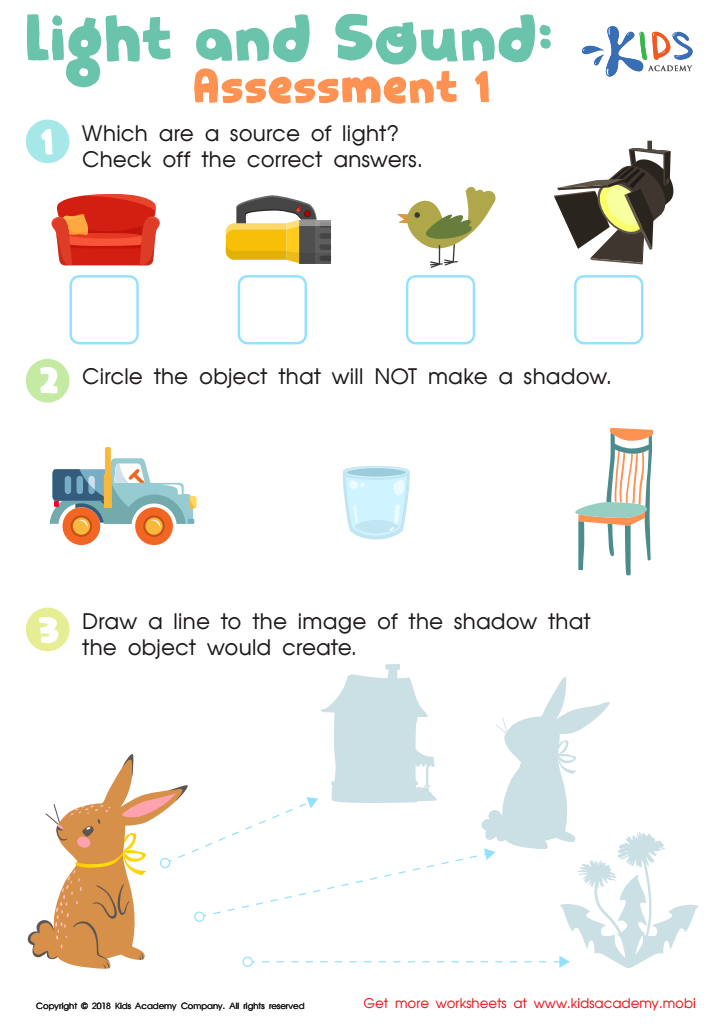
Light and Sound: Assessment 1 Worksheet
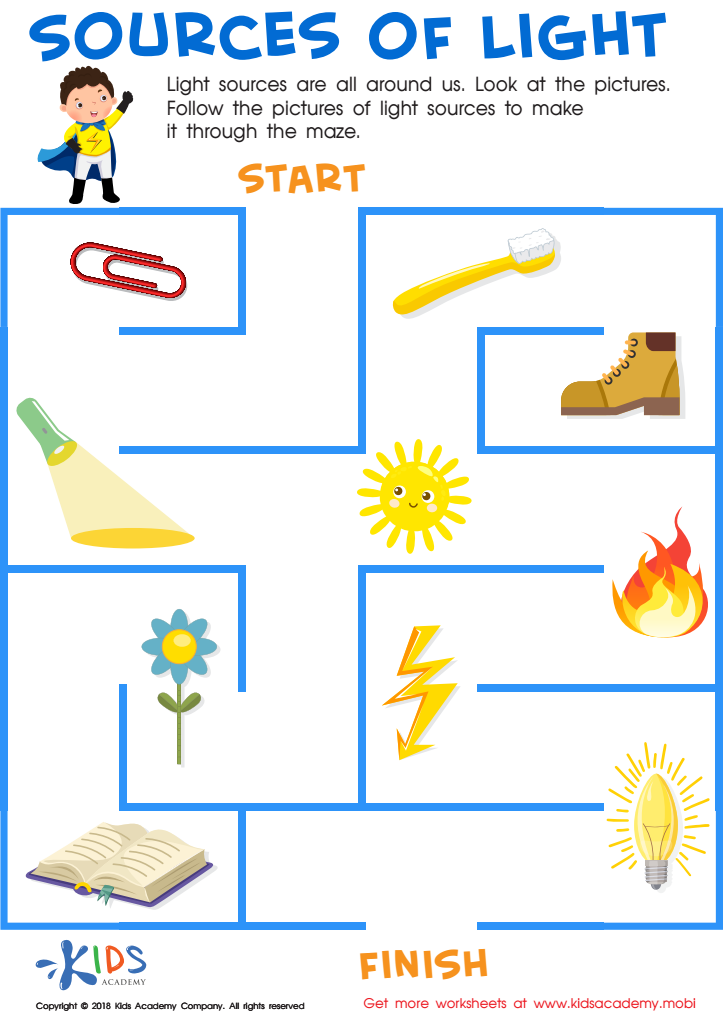
Sources of Light Worksheet
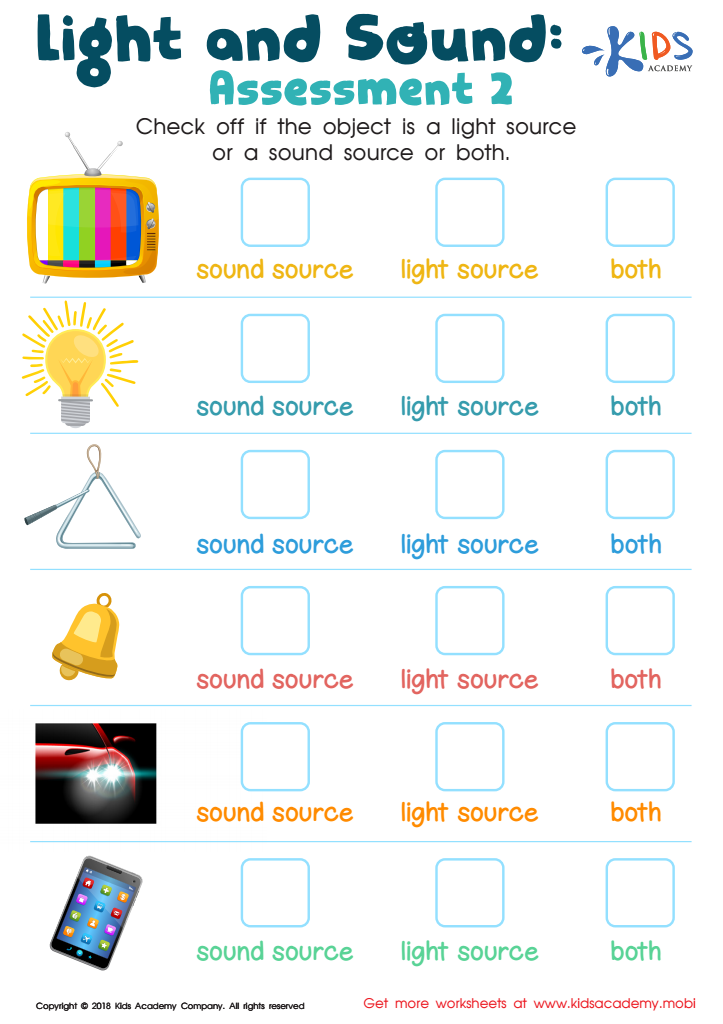
Light and Sound: Assessment 2 Worksheet
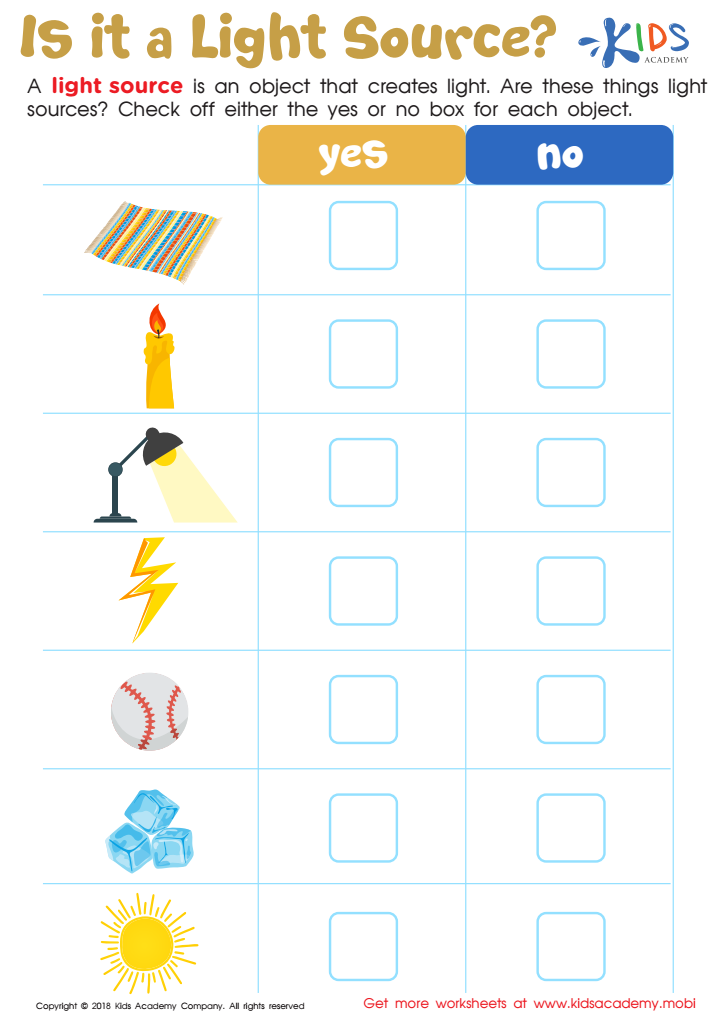
Is It a Light Source? Worksheet
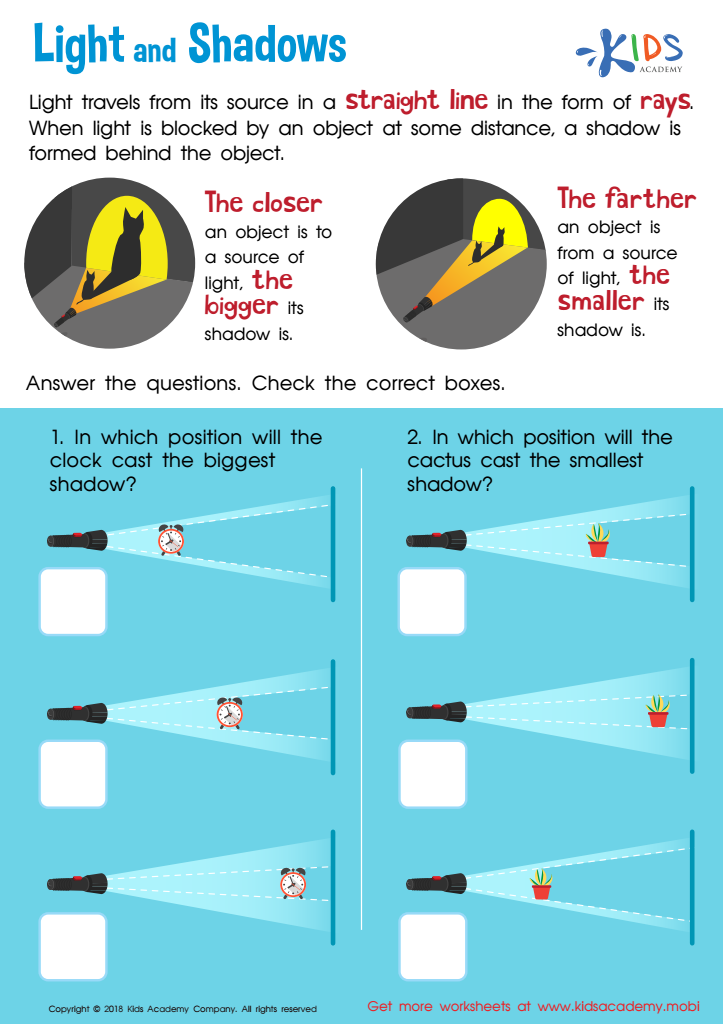
Light and Shadow Worksheet for Grade 3






Understanding light sources is crucial for children aged 3-8, as it builds foundational knowledge in physical science, nurturing curiosity and critical thinking skills. Introducing young learners to the various sources of light, such as the sun, lamps, and fireflies, helps them comprehend the world around them, promoting scientific literacy at an early age.
First, learning about light sources aids in grasping key scientific concepts such as energy, visibility, and safety. For instance, children learn that the sun provides daylight and warmth, which are vital for life on Earth, while artificial lights let us see in the dark. This fundamental understanding can spark further interest in energy conservation and alternative energy sources, instilling environmentally conscious behaviors.
Second, exploring light sources engages cognitive development and encourages experiential learning. Activities like observing shadows, using flashlights, or playing with prisms offer hands-on opportunities for students to observe cause and effect relationships, enhance observation skills, and develop vocabulary.
Lastly, understanding light also enhances safety awareness. Children learn the importance of not staring directly at bright lights like the sun, and the role reflective clothing plays in visibility at night.
By fostering early interest and understanding in light and its sources, parents and teachers lay the groundwork for future scientific exploration, responsibility, and safety in our technologically advanced world.







