Understanding moon phases Space Worksheets for Ages 3-8
3 filtered results
-
From - To
Discover the fascinating world of lunar phases with our "Understanding Moon Phases" space worksheets, designed for ages 3-8! These engaging educational tools help young learners grasp the changing shapes of the moon in a fun, interactive way. Each worksheet is crafted to build essential skills, such as observation and critical thinking, while sparking curiosity about space. Through coloring, matching, and hands-on activities, kids explore how the moon waxes and wanes. Perfect for classrooms or at-home learning, these printables make complex concepts easily accessible, nurturing a lifelong love of science and astronomy in young minds.
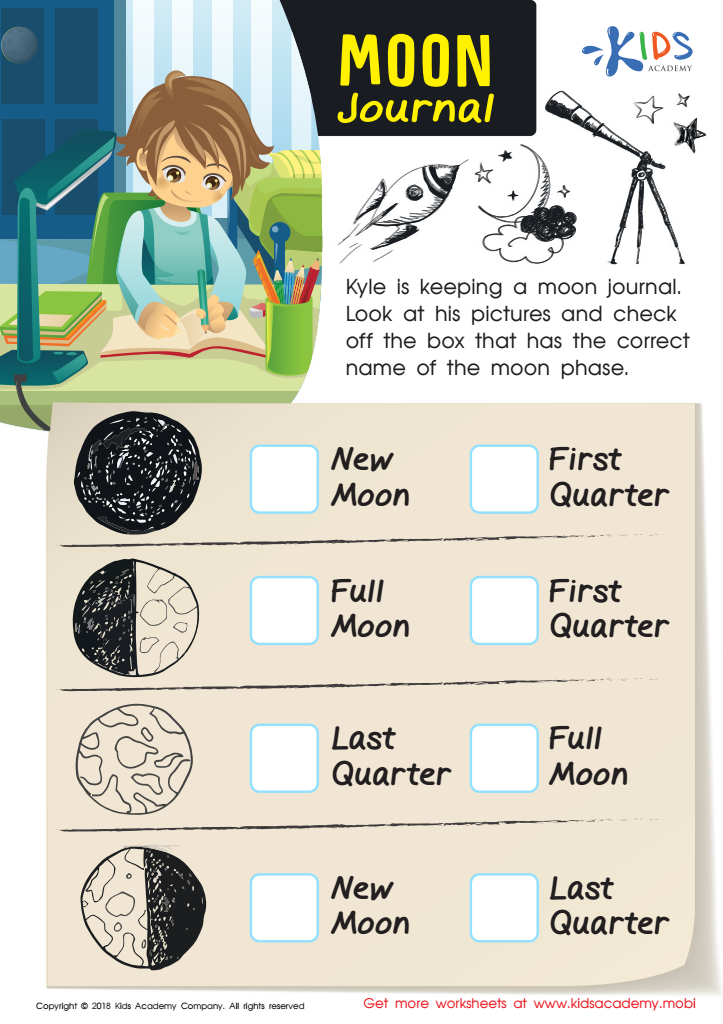
Moon Journal Worksheet
 Assign to My Students
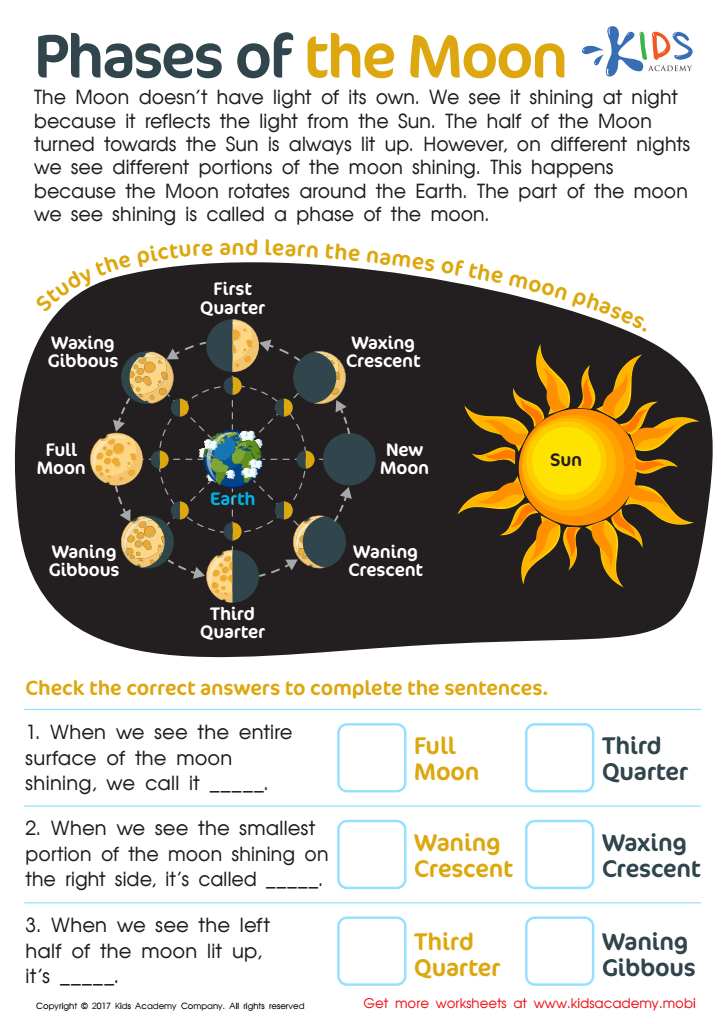
Phases of The Moon Worksheet
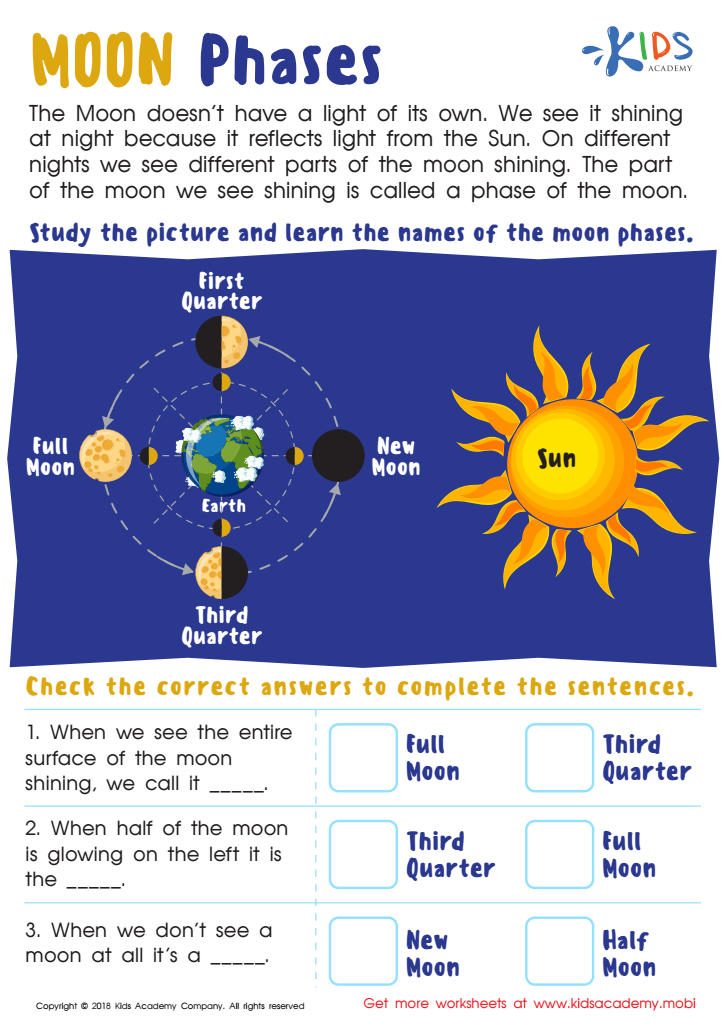
Moon Phases Worksheet





.jpg)
Understanding moon phases can be enriching for young children, helping to spark their natural curiosity and offering countless educational benefits. For children aged 3-8, observing the night sky and learning about the moon’s cycles introduces them to the wonders of space science in an accessible way. It can deepen their appreciation for nature's patterns and promote observational skills as they track the changing shape of the moon.
Moreover, engaging children in discussions about moon phases fosters foundational science concepts such as orbits, light, and celestial movement. It enhances their cognitive development by encouraging critical thinking and problem-solving. Kids learn to ask questions like, "Why does the moon look different tonight?" and explore scientific explanations, which cultivates a lifelong love for learning.
Additionally, moon phases illustration activities, such as drawing or using flashcards, enhance fine motor skills and provide a hands-on learning experience. This topic also ties seamlessly into broader educational themes like storytelling about myths and folklore involving the moon, which can improve literacy skills.
Parents and teachers play a crucial role in providing these enriching experiences. By focusing on moon phases, they can instill a sense of awe and fascination with the universe, fostering both intellectual growth and imaginative play in young learners.







