Decision making skills Community Worksheets for Ages 3-8
3 filtered results
-
From - To
Enhance your child's decision-making skills with our engaging Community Worksheets, designed specifically for ages 3-8. These printable resources promote critical thinking and empower young learners to evaluate options and make informed choices in everyday situations. Featuring colorful visuals and relatable scenarios, our worksheets encourage children to explore their surroundings, contemplate consequences, and collaborate with peers. With a focus on real-life applications, these activities not only boost confidence but also foster social awareness and responsibility within the community. Whether in classrooms or at home, our Decision Making Skills Community Worksheets provide the perfect way to support early developmental learning in fun and interactive ways!
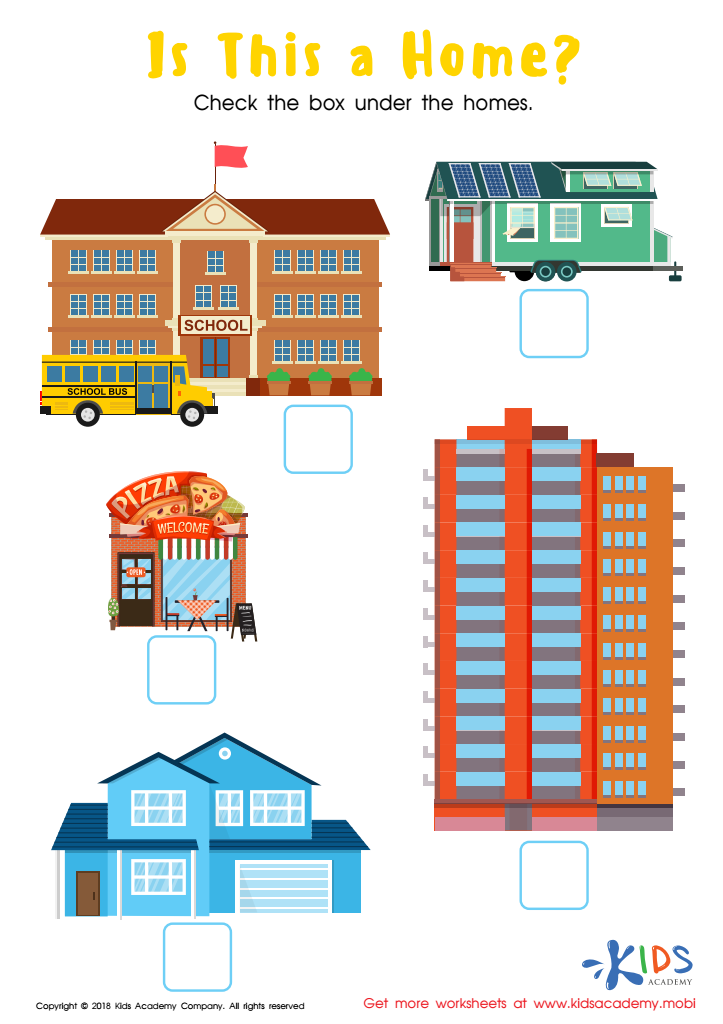
Is this a Home? Worksheet
 Assign to My Students
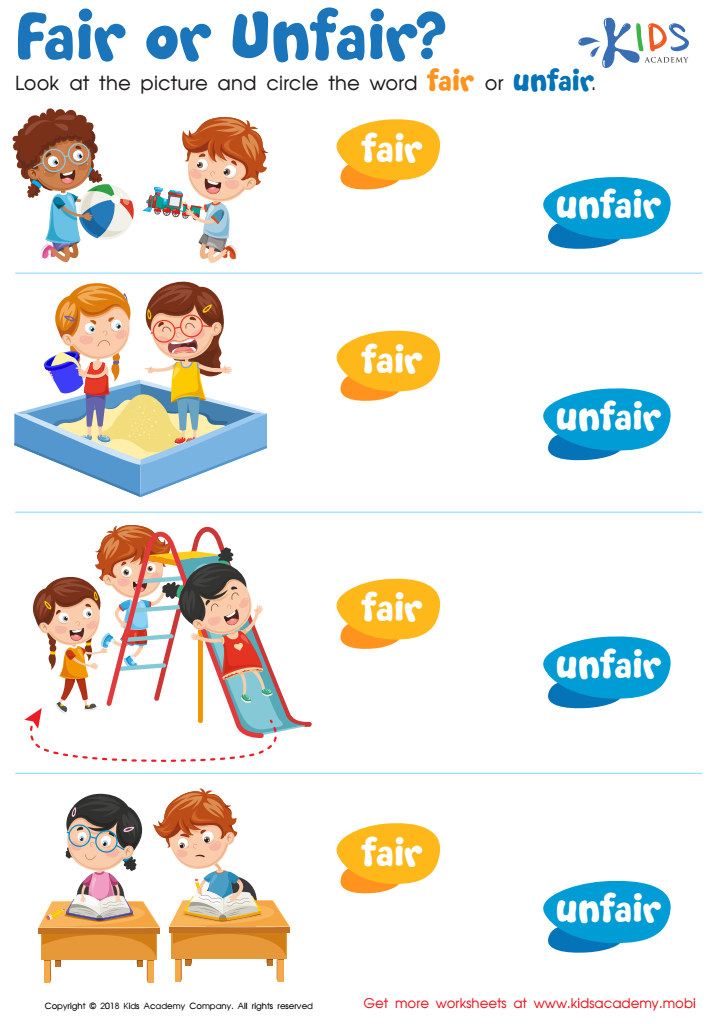
Fair or Unfair Worksheet

Towns Worksheet








Parents and teachers should prioritize decision-making skills in children aged 3 to 8 as these skills lay a foundation for future independence and success. During these formative years, children are at a crucial stage of cognitive development, where they learn how to evaluate choices, consider consequences, and develop problem-solving abilities. Encouraging decision-making helps children gain confidence and trust in their own judgment, which is vital for their emotional and social growth.
In a community setting, decisive young learners are more likely to express their opinions, collaborate with peers, and engage in discussions, promoting a healthy, inclusive environment. Strong decision-making skills empower children to confront challenges and make informed choices, from selecting friends to managing their daily activities. This capability is essential not only in childhood but also when navigating academic and life choices as they grow older.
By fostering an atmosphere where decision-making is practiced, educators and parents can guide children in analyzing scenarios, reflecting on outcomes, and becoming resilient thinkers. Encouraging these skills in the community contributes to nurturing responsible and empathetic individuals, further benefiting the collective. Ultimately, investing in decision-making skills at this age will prepare them for future challenges, improving both individual and community well-being.