Geography skills Geography Worksheets for Ages 3-8
3 filtered results
-
From - To
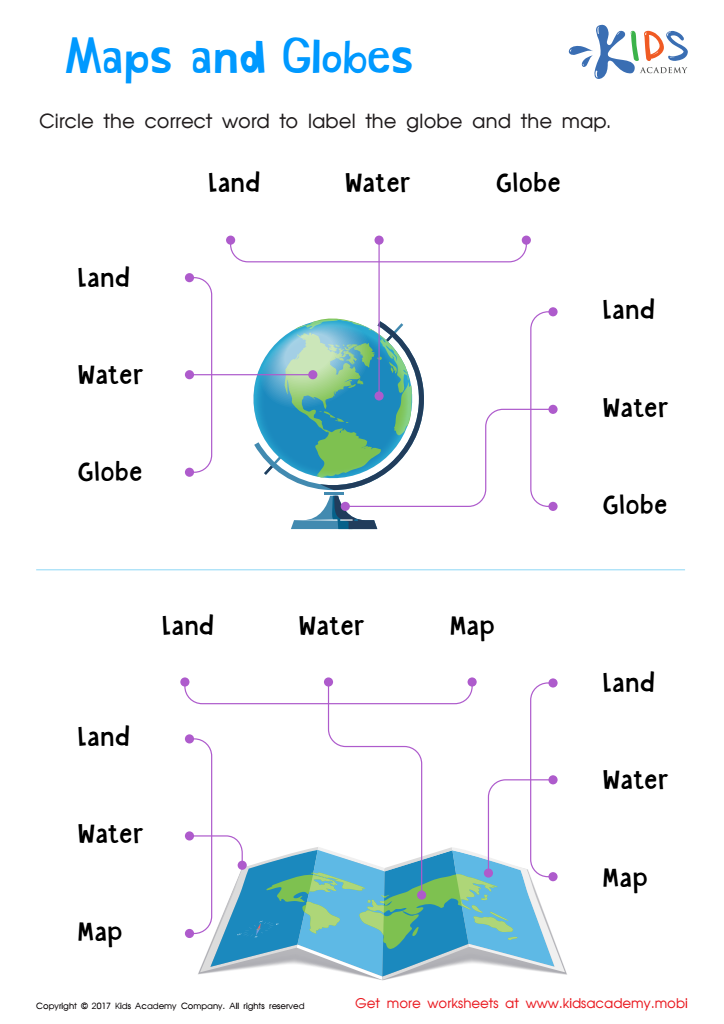
Discover a world of learning with our Geography Skills Worksheets for children aged 3-8! Designed to spark young minds, these engaging worksheets introduce foundational geography concepts in a fun and interactive way. From identifying continents and oceans to understanding maps and directions, children will develop essential skills while enhancing their cognitive abilities. Our resources are crafted to cater to different learning styles, featuring a variety of activities, including puzzles, matching games, and coloring tasks. Perfect for both home and classroom use, these worksheets make geography enjoyable and accessible, nurturing your child’s curiosity about the world around them. Let the adventure begin!
 Assign to My Students
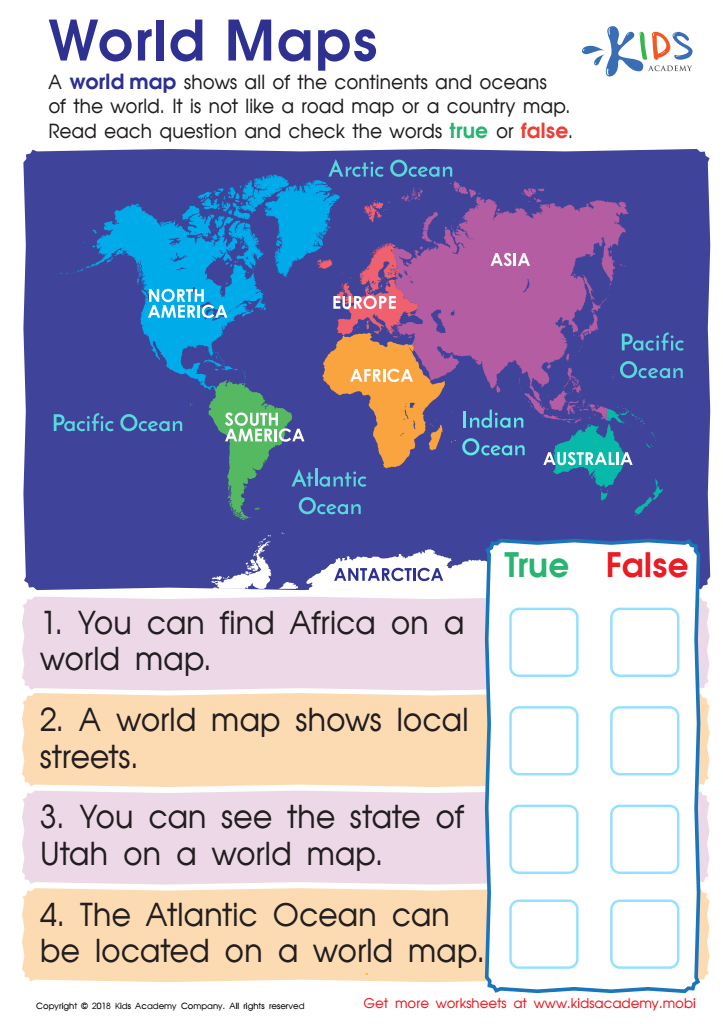
World Maps Worksheet
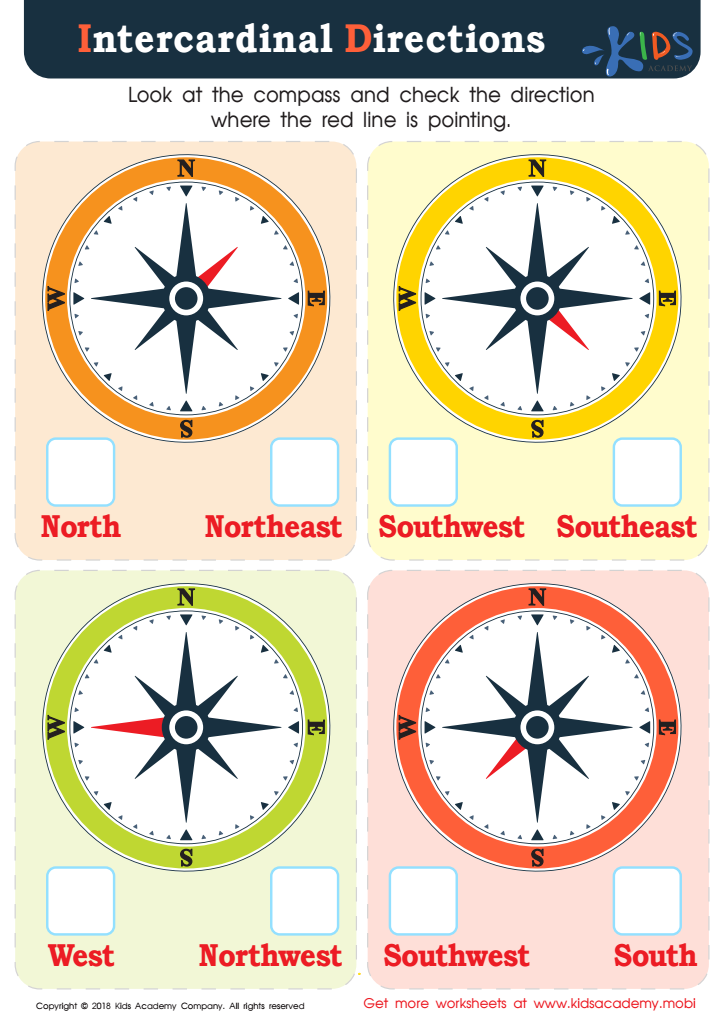
Intercardinal Directions Worksheet



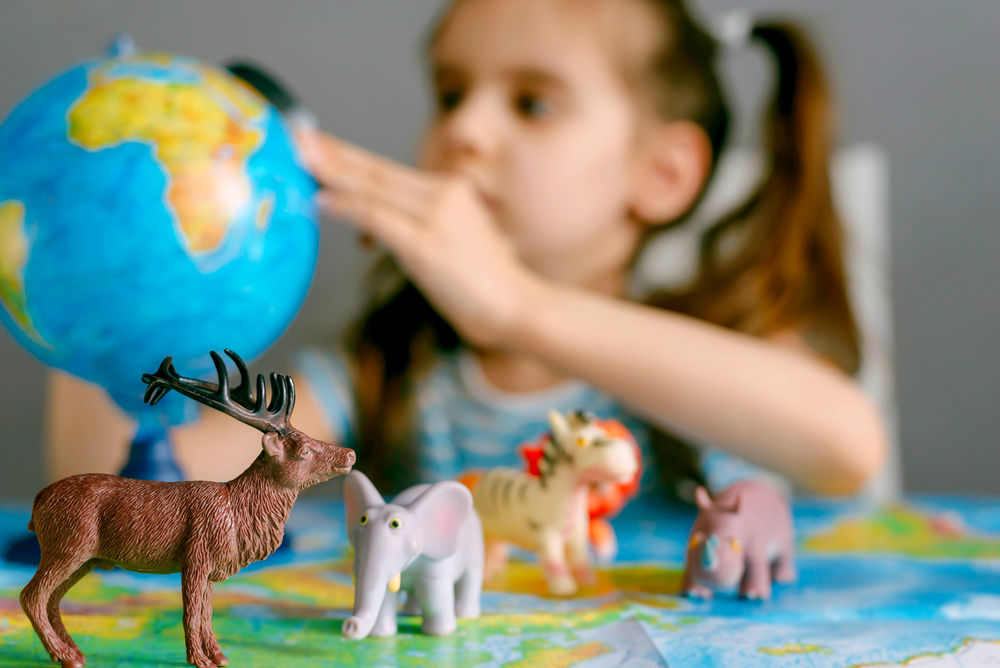



Teaching geography skills to children aged 3-8 is essential for their holistic development and understanding of the world. Firstly, early exposure to geography fosters curiosity about their environment. At this age, children are naturally inquisitive about places, cultures, and the planet, making it an ideal time to introduce them to basic geographical concepts.
Additionally, geography education promotes critical thinking and problem-solving skills. As children learn to identify different locations, map their communities, and understand physical and human features, they develop the ability to analyze and draw connections between various factors, enhancing their cognitive skills.
Furthermore, geography teaches empathy and global awareness. By understanding diverse cultures and lifestyles, children become more tolerant and appreciative of differences, which is vital in our interconnected world.
Lastly, geography can enhance language and communication skills. Discussing various locations, terminology, and cultural contexts refines vocabulary and encourages expressive language.
Overall, incorporating geography into early education nurtures well-rounded individuals who are informed, empathetic, and capable of navigating the complexities of the world around them, making it a crucial aspect of childhood learning.