Map reading skills Geography Worksheets for Ages 3-8
7 filtered results
Difficulty Level
Grade
Age
-
From - To
Subject
Activity
Standards
Introduce your little explorers to the fascinating world of geography with our "Map Reading Skills Geography Worksheets" designed specifically for ages 3-8! These engaging worksheets foster essential map literacy and spatial awareness through interactive activities and colorful illustrations. Perfect for both home and classroom settings, children will learn to identify landmarks, understand directions, and interpret symbols on maps. Our thoughtfully crafted exercises promote hands-on learning and help develop critical thinking skills while ensuring kids have fun. Start your child's geographical adventure today and empower them with foundational skills that will last a lifetime! Explore our range of resources now!
Favorites
With answer key
Interactive
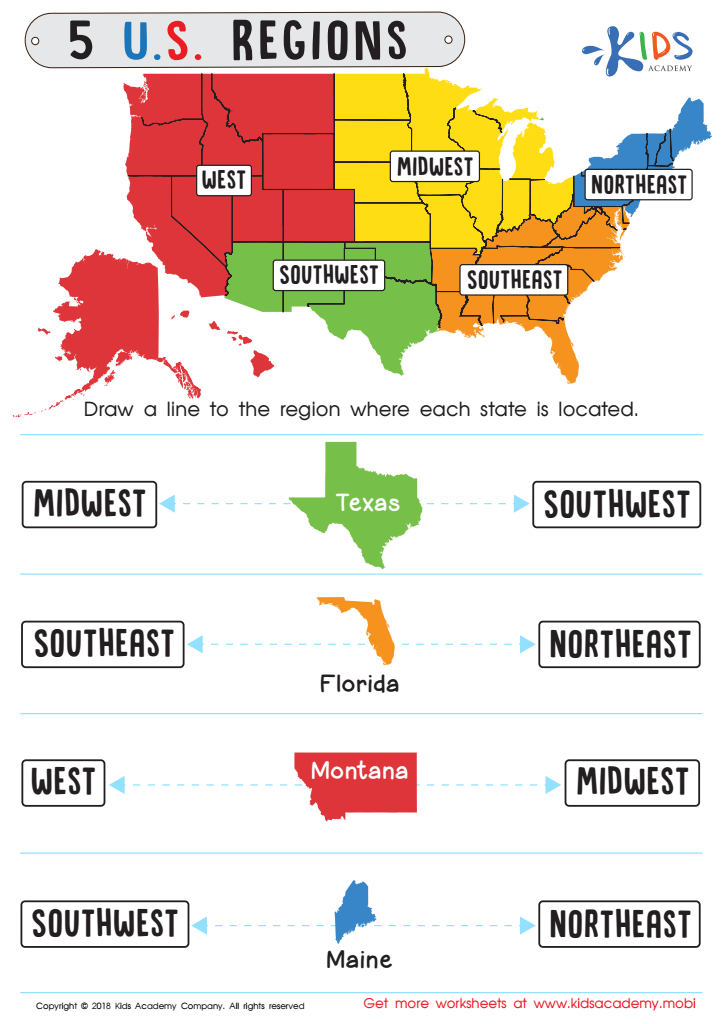
5 U.S. Regions Worksheet
Familiarize students with states & capitals in your country before starting. Look at the map and ask kids to name some states. Then have them draw a line to the region each state is located in. This'll help them recognize the different places and make the exercise easier.
5 U.S. Regions Worksheet
Worksheet
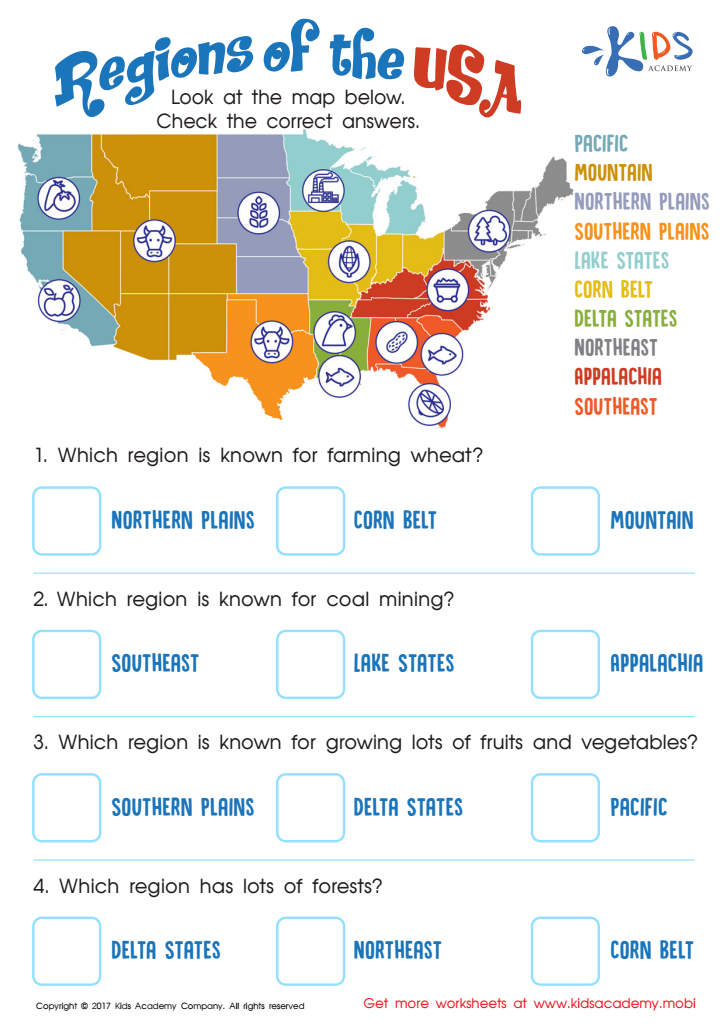
Regions of the USA Worksheet
Help your child explore the US with this regions of the United States worksheet! They'll learn about the diverse cultures, climates and purposes of each region. Make geography and US history fun with this educational exercise!
Regions of the USA Worksheet
Worksheet
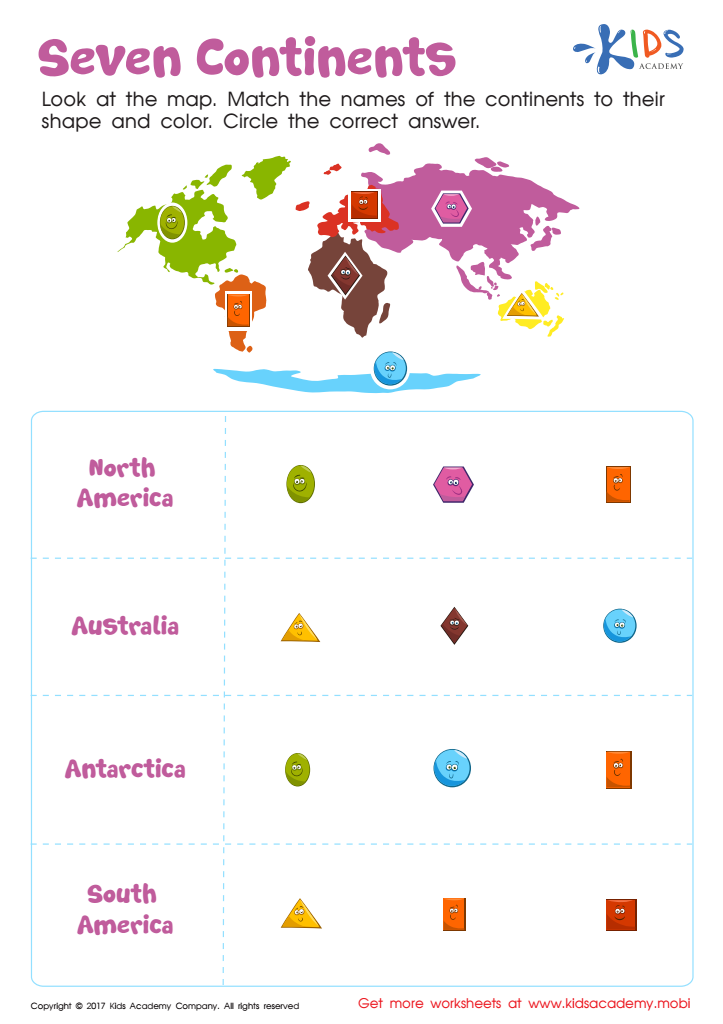
Seven Continents Worksheet
Geography teaches kids about the world! Encourage exploration with a seven continents worksheet - it'll help your child identify each continent using fun shapes.
Seven Continents Worksheet
Worksheet
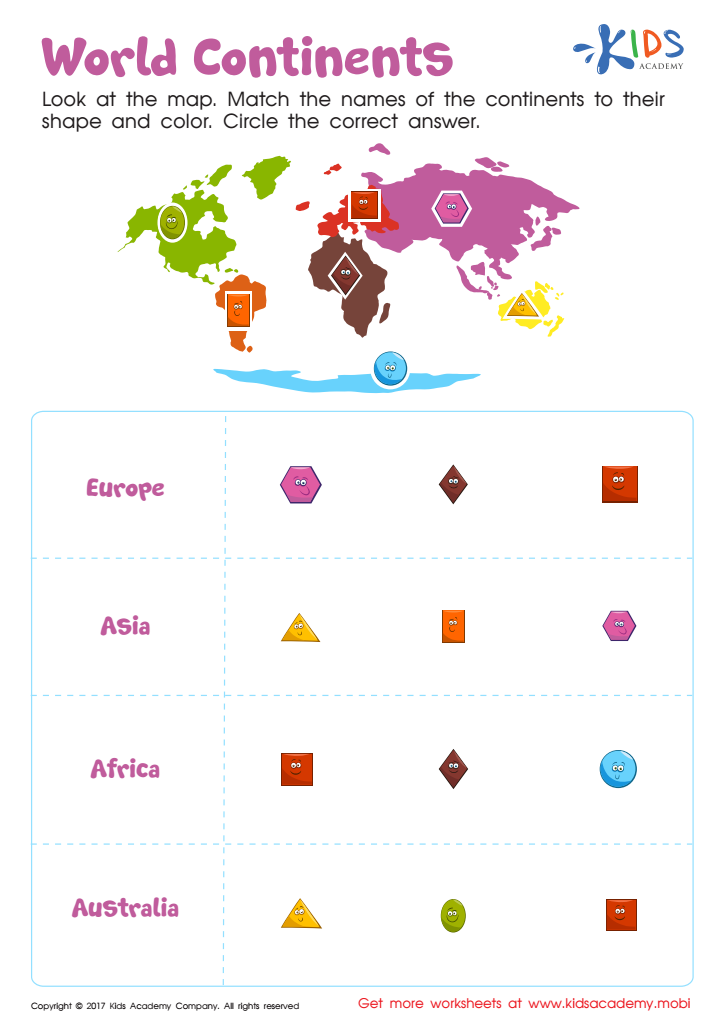
World Continents Worksheet
Help expand your child's knowledge of the world with this fun worksheet! It features goofy shapes to identify each continent, making learning the seven continents fun and memorable.
World Continents Worksheet
Worksheet
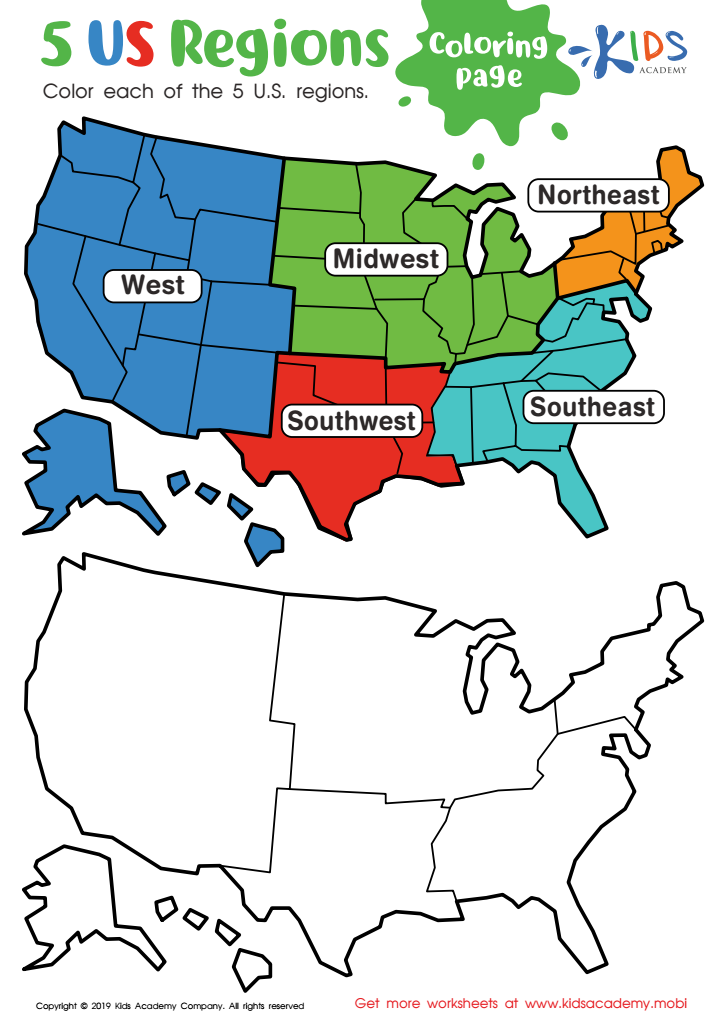
US Regions Coloring Page Worksheet
Our great nation is split into five distinct regions: Southeast, Southwest, West, Midwest, and Northeast. Each is known for its own special offerings and states. Let your kids have fun learning about the regions with a coloring activity! It's a great way for them to understand where each region stands on the map.
Download (PDF)
 Assign to My Students
Assign to My Students
US Regions Coloring Page Worksheet
Worksheet
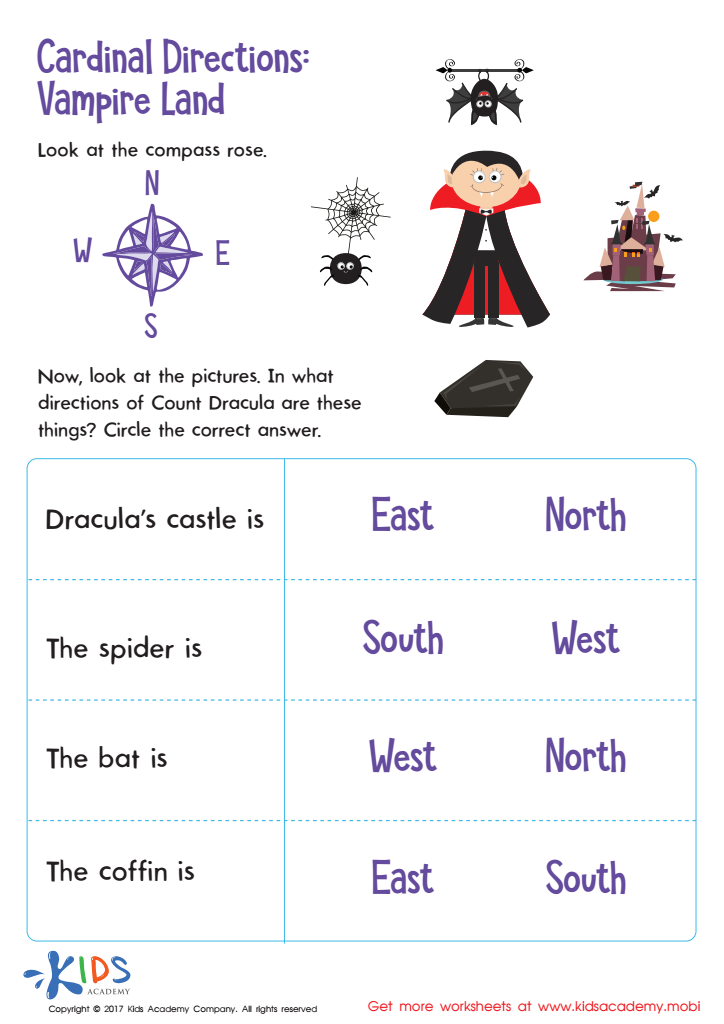
Cardinal Directions Printable
Perfect for fall, let's go to Transylvania with Count Dracula to learn cardinal directions. This printable worksheet introduces the compass rose and offers valuable practice. Kids will love the fun vampire theme! Get them motivated and help them discover the world with this spooky worksheet.
Cardinal Directions Printable
Worksheet
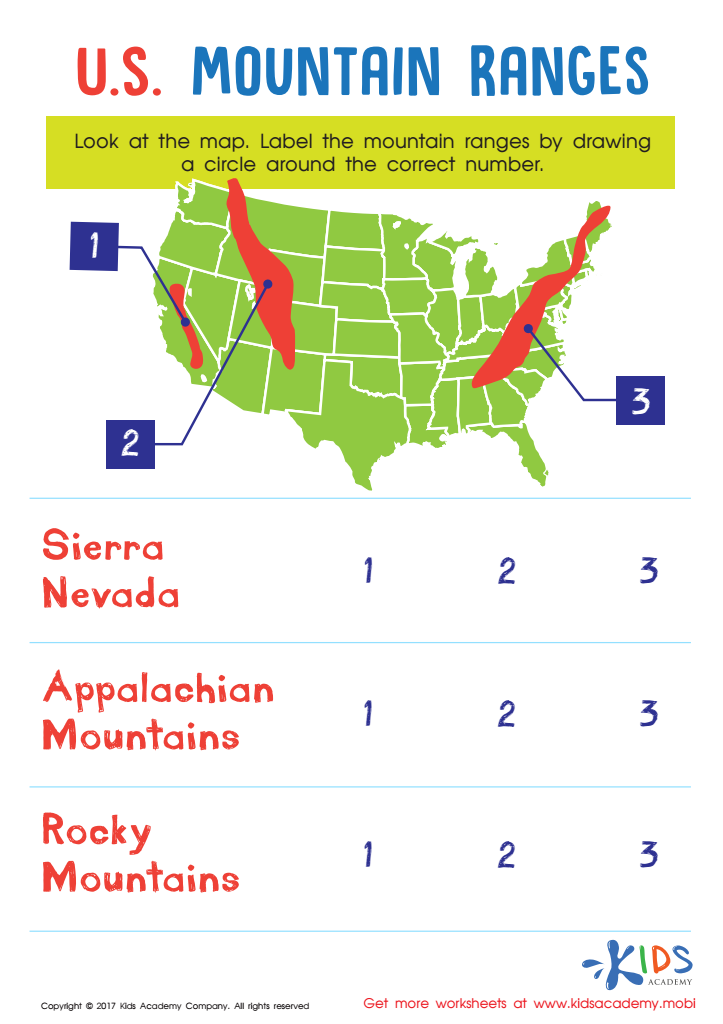
US Mountain Ranges Worksheet
Introduce your little one to the U.S. with this Mountain Ranges worksheet! It'll help them recognize the major ranges and locate them on a map, sharpening their map skills.
US Mountain Ranges Worksheet
Worksheet
Join Kids Academy for Free
Who is primarily going to use this learning content?






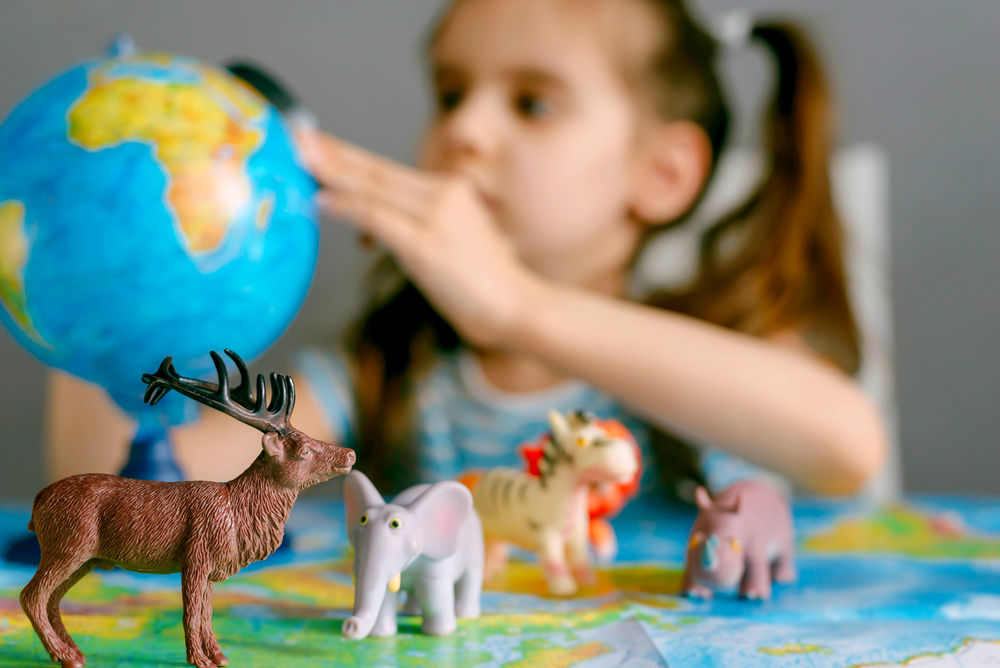
Map reading skills are essential for children aged 3-8, and parents and teachers should prioritize their development for several reasons. First, mastering map reading fosters spatial awareness, helping children understand their position within their environment. This foundational skill not only sharpens their ability to navigate but also enhances problem-solving and critical thinking.
Second, map reading encourages curiosity about the world. As young learners explore maps, they engage with concepts of geography, cultures, and landscapes, enriching their understanding of global diversity. This curiosity can be translated into a sense of adventure, inspiring children to explore their surroundings and ask questions about the world.
Additionally, reading maps lays the groundwork for academic skills in later grades, where geography is often a challenging subject. Early familiarity with maps helps demystify the topic, making future learning more accessible and enjoyable.
Lastly, map reading nurtures collaboration and communication skills, as children learn to interpret symbols and articulate their navigating strategies with peers and adults. In a world increasingly connected by technology, developing effective map reading skills equips young learners with the tools they need for informed decision-making and awareness about their surroundings. Thus, prioritizing map reading during the early years creates well-rounded, knowledgeable citizens.