
Critical Thinking Governance and Civics Worksheets for Ages 3-8
7 filtered results
Difficulty Level
Grade
Age
-
From - To
Subject
Activity
Standards
Discover our engaging Critical Thinking Governance and Civics Worksheets designed for children ages 3-8. These age-appropriate resources help cultivate essential critical thinking skills while introducing young learners to the fundamental concepts of governance and civic responsibility. Our worksheets include interactive activities that promote creativity, problem-solving, and decision-making, ensuring that kids grasp the basics of how communities operate. Perfect for home or classroom use, these materials foster curiosity and understanding of civic engagement. Encourage your child's analytical thinking and empower them with the knowledge they need to become thoughtful and informed future citizens. Download and start exploring today!
Favorites
With answer key
Interactive
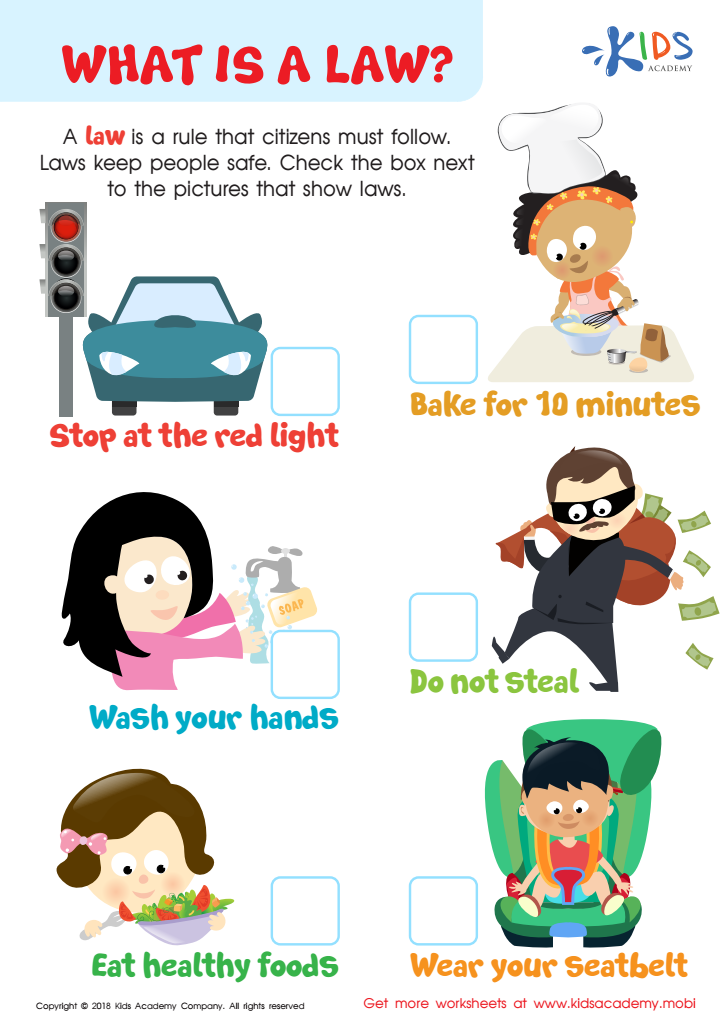
What is a Law? Worksheet
Encourage your students to think about the laws they abide by - at home, school, and the playground. Explain the importance of laws in keeping us safe, then ask them to check the box next to the pictures depicting different laws in a worksheet.
 Assign to My Students
What is a Law? Worksheet
Worksheet
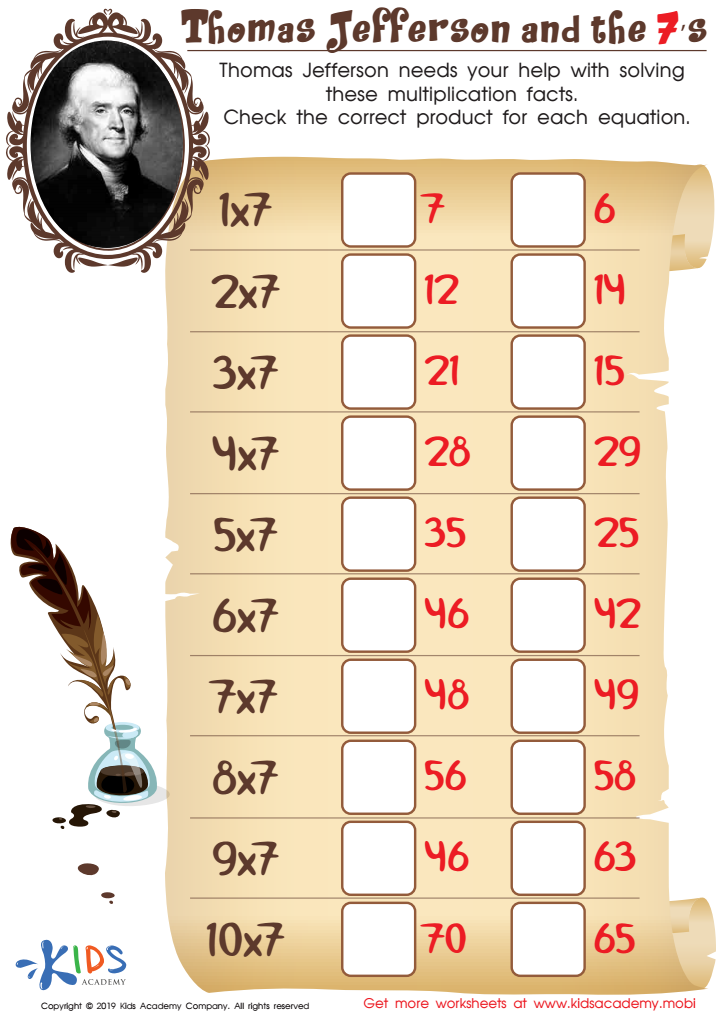
Thomas Jefferson and the 7’s Worksheet
Thomas Jefferson championed education and wants kids to know their times tables. Help your child with this worksheet focusing on 7's. Check the box for the correct answer for each multiplication problem. Make sure your child gets the facts right!
Thomas Jefferson and the 7’s Worksheet
Worksheet
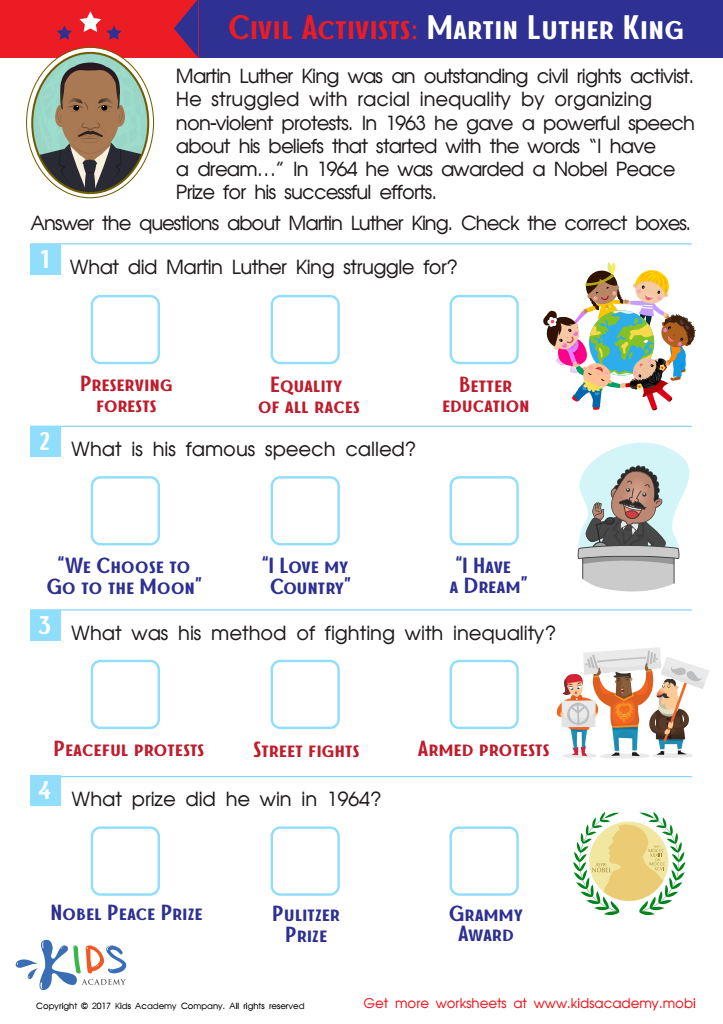
Martin Luther King Worksheet
Introduce your 3rd grader to Martin Luther King Jr.! This worksheet will open their eyes to his impact on US history. Let them discover his life, learnings, and legacy with this informative activity.
Martin Luther King Worksheet
Worksheet
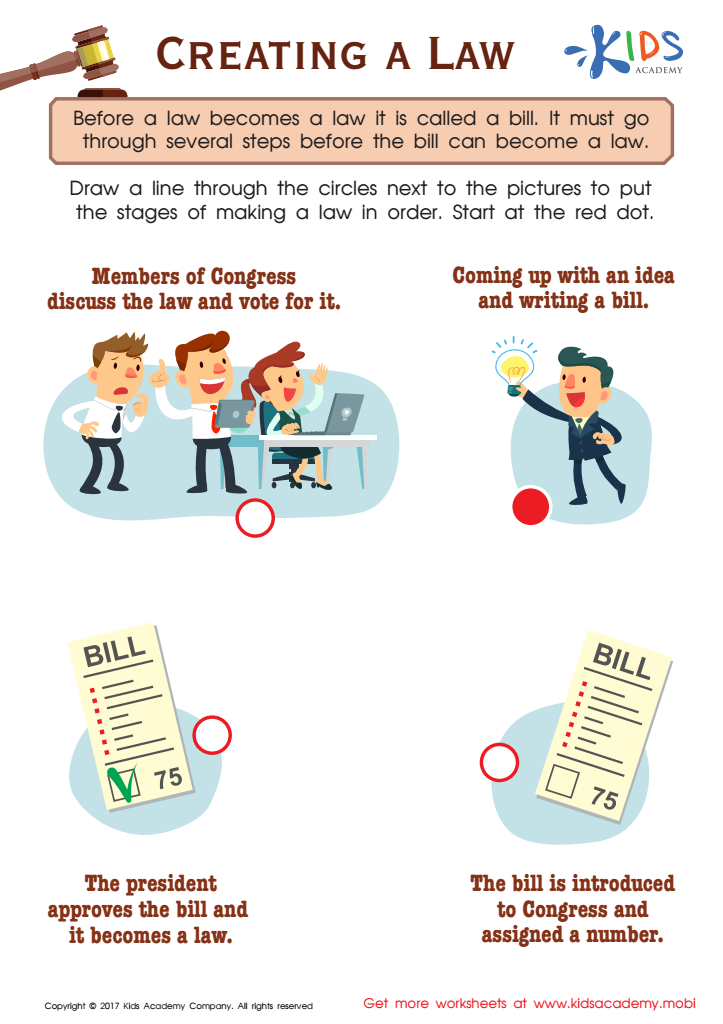
Creating a Law Worksheet
Help your child understand how laws are made with this Creating a Law Worksheet. Perfect for young learners, it covers the lawmaking process with fun pictures and simple language. Get an exciting insight into democracy and teach kids the importance of laws!
Creating a Law Worksheet
Worksheet
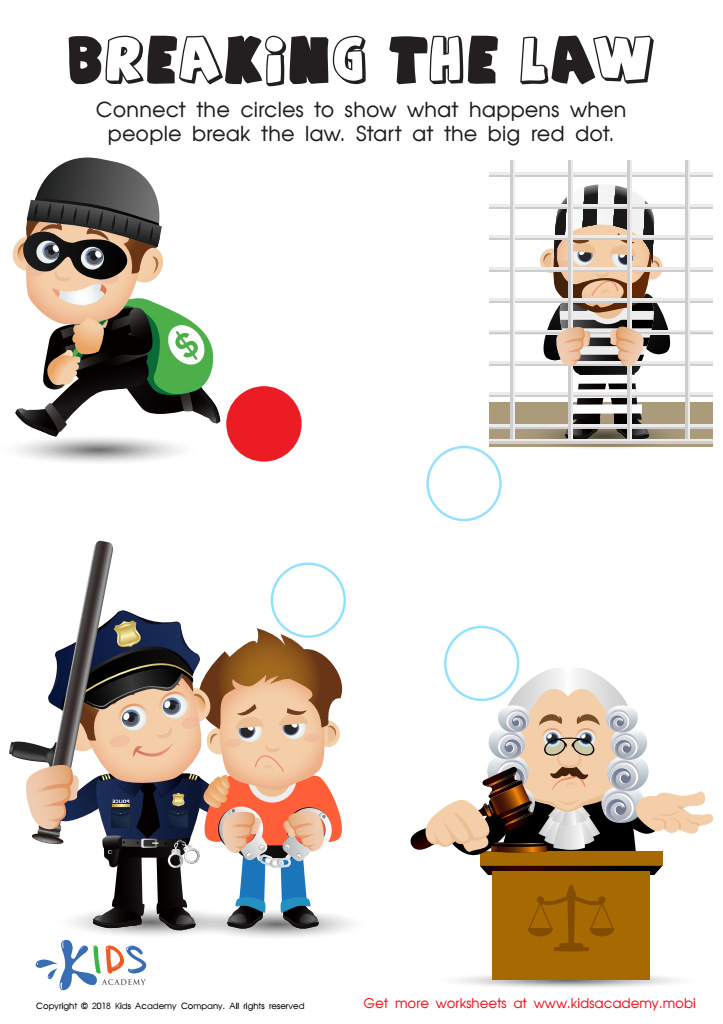
Breaking the Law Worksheet
Explain to your child why people go to jail. Show them this worksheet; it illustrates the stages a criminal goes through from breaking the law to receiving their punishment. Guide them in connecting the circles from the big red dot. Finish with a discussion on why it's important to follow the law.
Breaking the Law Worksheet
Worksheet
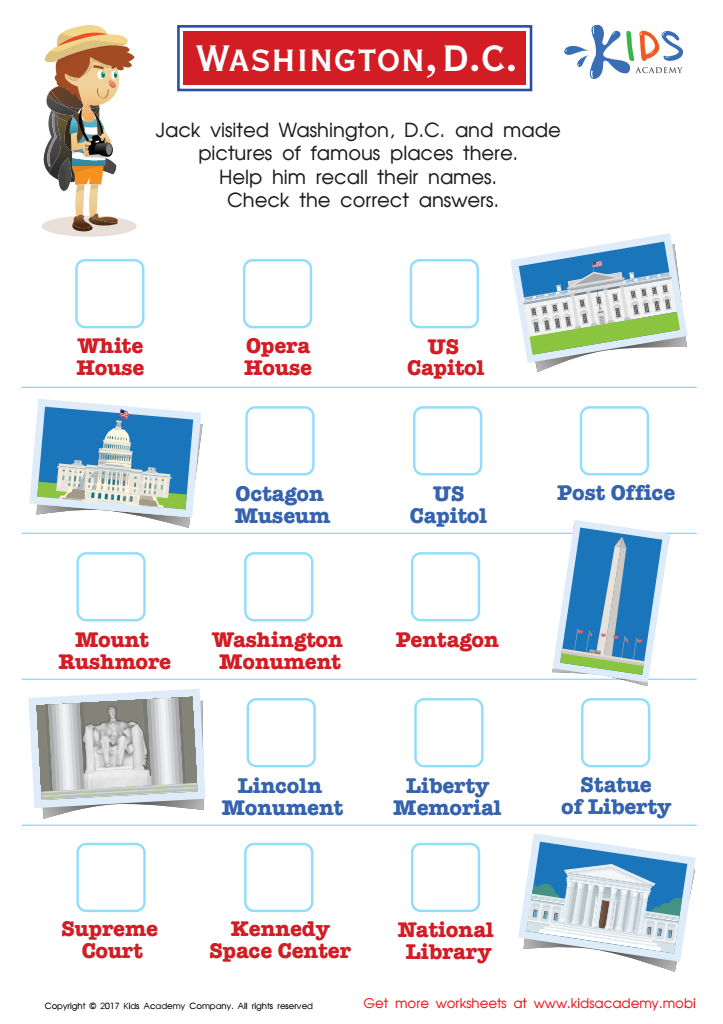
Washington D.C. Printable Worksheet
Join Jack on an adventure to explore the iconic attractions of Washington, D.C.! This printable worksheet helps kids learn about and recognize buildings and monuments that form part of the nation's history. It's a fun way to introduce children to the importance of these landmarks.
Washington D.C. Printable Worksheet
Worksheet
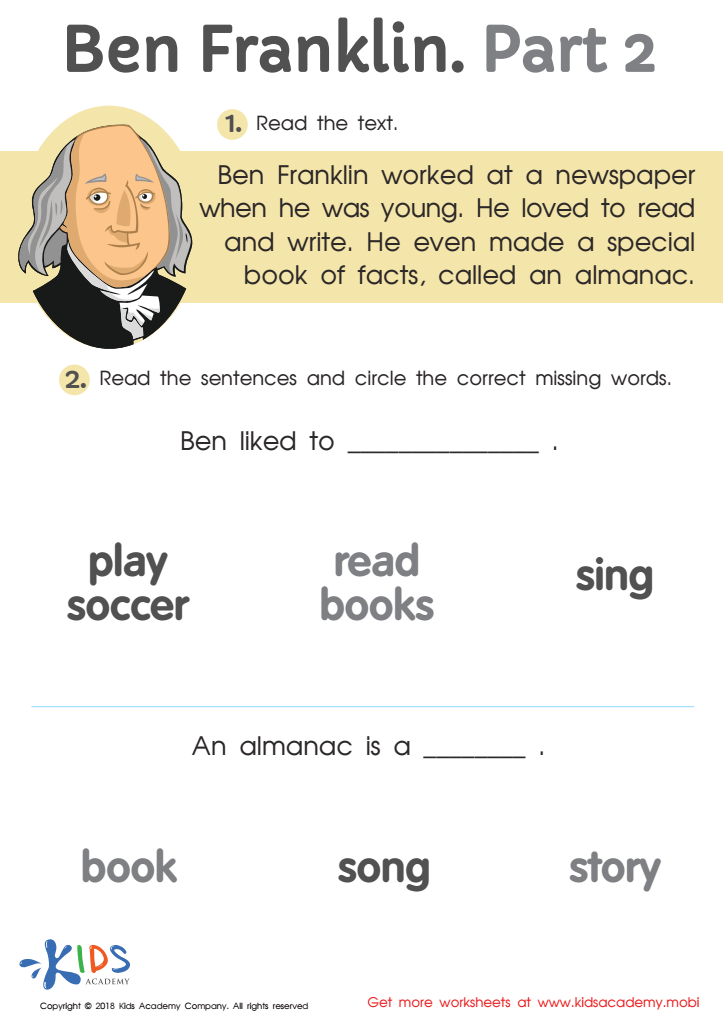
Ben Franklin Part 2 Worksheet
History is filled with great figures, like Benjamin Franklin. Let your kids in on the legacy by introducing them to the founder of the US fire department, diplomat, and inventor. Then, use a worksheet to have them fill in the blanks with the correct word to teach them more. Read the text, then read the sentences and have them circle the missing word.
Ben Franklin Part 2 Worksheet
Worksheet
Join Kids Academy for Free
Who is primarily going to use this learning content?


Critical Thinking Governance and Civics is crucial for children ages 3-8 as it lays the foundation for informed, engaged citizens. At this developmental stage, children begin to develop their understanding of the world around them. By introducing concepts of critical thinking, governance, and civics, parents and teachers can help them capture the essence of decision-making, empathy, and community involvement.
Learning to think critically enables young children to analyze information, ask questions, and explore different perspectives. This cognitive skill is vital in an age where they are exposed to various ideas and opinions. Teaching them about governance introduces concepts like rules, fairness, and the importance of civic engagement within their communities, regardless of how simple those concepts may be.
Encouraging discussions about responsibilities, diverse cultures, and collaboration also enhances their social emotional development and helps them understand their place within a larger society. Moreover, instilling these values early on fosters a sense of belonging and accountability in children, preparing them to navigate the complexities of adulthood. By prioritizing Critical Thinking Governance and Civics, parents and educators empower children to become thoughtful, active participants in their communities, ultimately leading to a more engaged and responsible society.








