Vocabulary enhancement Governance and Civics Worksheets for Ages 3-8
3 filtered results
-
From - To
Discover our engaging Vocabulary Enhancement Governance and Civics Worksheets designed for children aged 3-8. Perfect for early learners, these worksheets develop essential language-related skills while exploring fundamental concepts of governance and civics. Our carefully tailored activities foster vocabulary growth, critical thinking, and comprehension, laying a solid educational foundation. Packed with visual aids and interactive exercises, your child will enjoy learning key terms, understanding rules, and the basics of community participation. Ideal for parents and educators seeking entertaining and educational resources. Download our worksheets today and watch your child excel in linguistic and civic understanding!
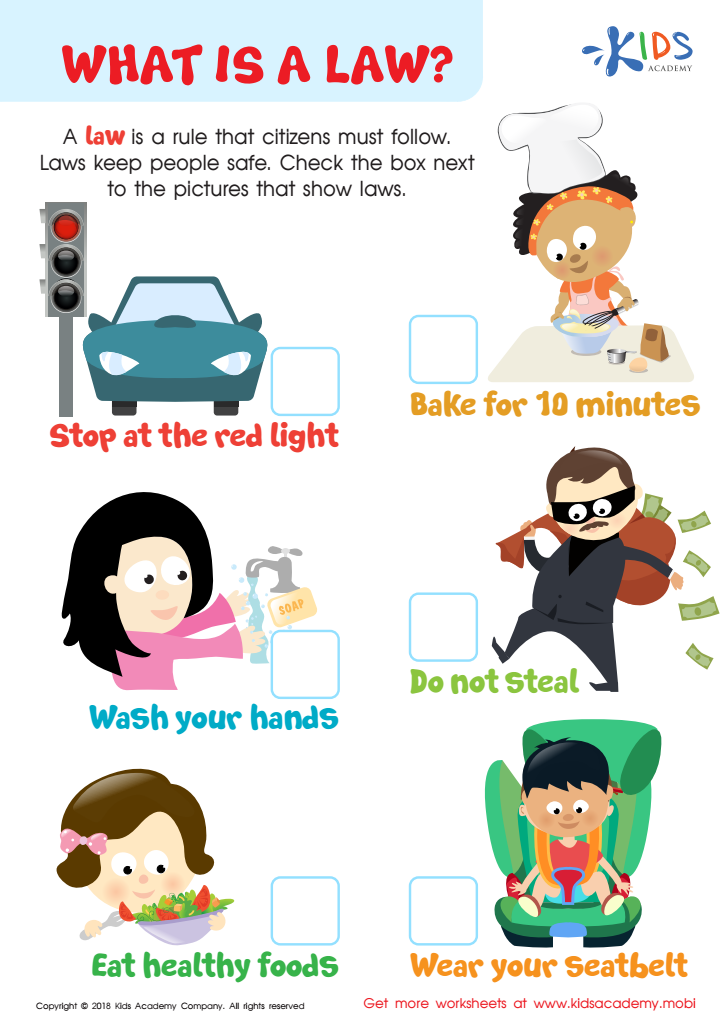
What is a Law? Worksheet
 Assign to My Students
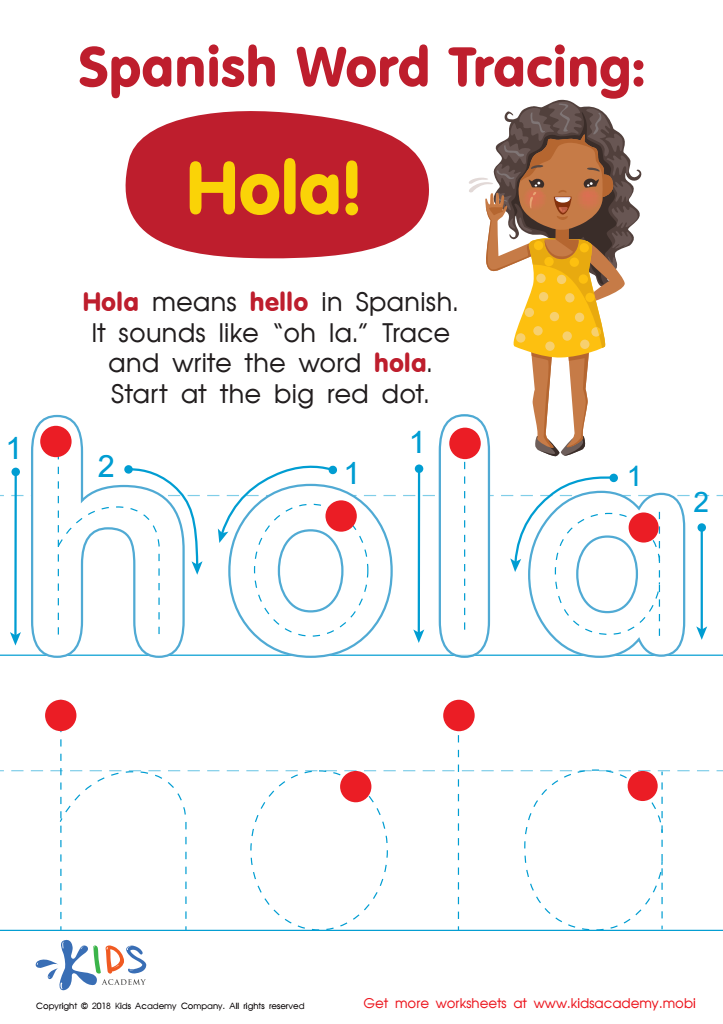
Spanish Word Tracing: Hola Worksheet
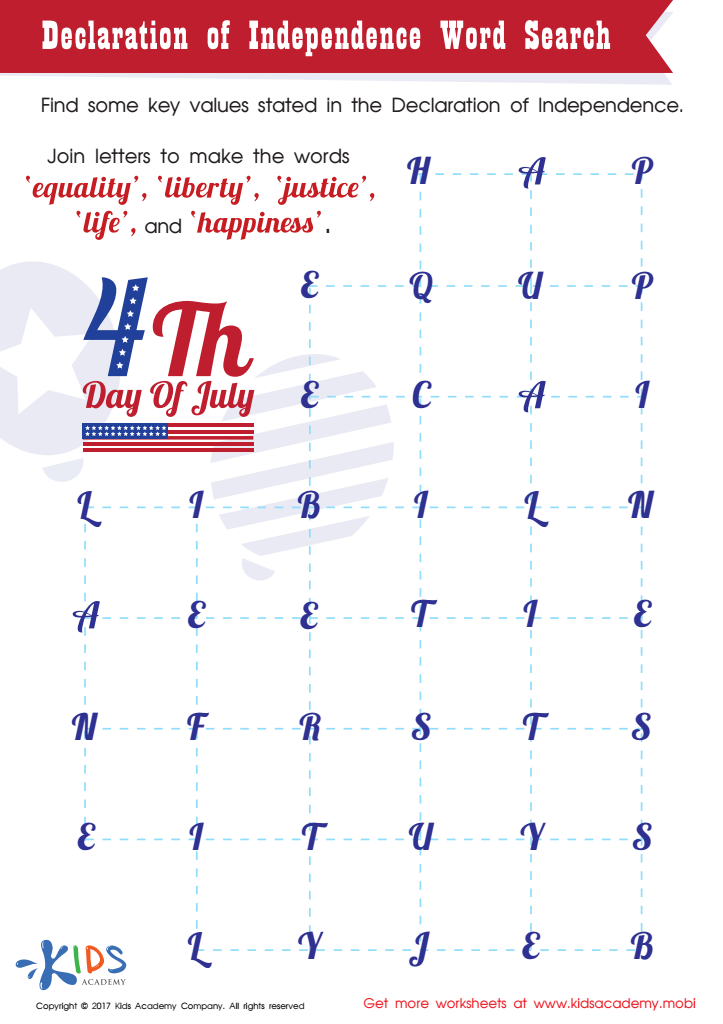
Declaration of Independence Word Search Printable


Vocabulary enhancement and an introduction to governance and civics for children aged 3-8 are critically important for their overall development. First and foremost, a robust vocabulary is foundational for effective communication, enabling children to express their thoughts, emotions, and needs clearly. It also enhances comprehension skills, laying the groundwork for academic success across all subjects. Early exposure to diverse words fosters cognitive growth and curiosity, encouraging lifelong learning.
Understanding basic governance and civics principles at a young age builds a sense of community and belonging. It teaches children empathy, fairness, and the importance of rules and cooperation, critical components of social interaction. Learning about their own rights and responsibilities helps cultivate informed and responsible future citizens. Moreover, this knowledge empowers children to positively influence their communities and stand up against injustice.
Combining vocabulary growth with civics concepts enriches children's critical thinking and problem-solving skills. For example, discussing simple governance terms like “vote,” “leader,” or “rules” while building vocabulary can lead to more meaningful conversations around decision-making and leadership. Parents and teachers play a pivotal role in this developmental stage, using interactive activities and discussions to make these foundational concepts accessible and engaging. Investing in these areas early on promotes well-rounded, informed, and articulate individuals.








