Event sequencing History Worksheets for Ages 3-8
3 filtered results
-
From - To
"Event Sequencing History Worksheets for Ages 3-8" are designed to introduce young learners to the concept of chronological order in history. These worksheets offer engaging activities that help children understand the sequence of historical events, allowing them to grasp cause and effect relationships. Using vibrant graphics and simple narratives, each worksheet aids in improving critical thinking and sequencing skills. Perfect for early learners, these tools support developing a foundational understanding of history in a fun and interactive way. Easy to integrate into any curriculum, these resources ensure history is both educational and enjoyable for ages 3 to 8.
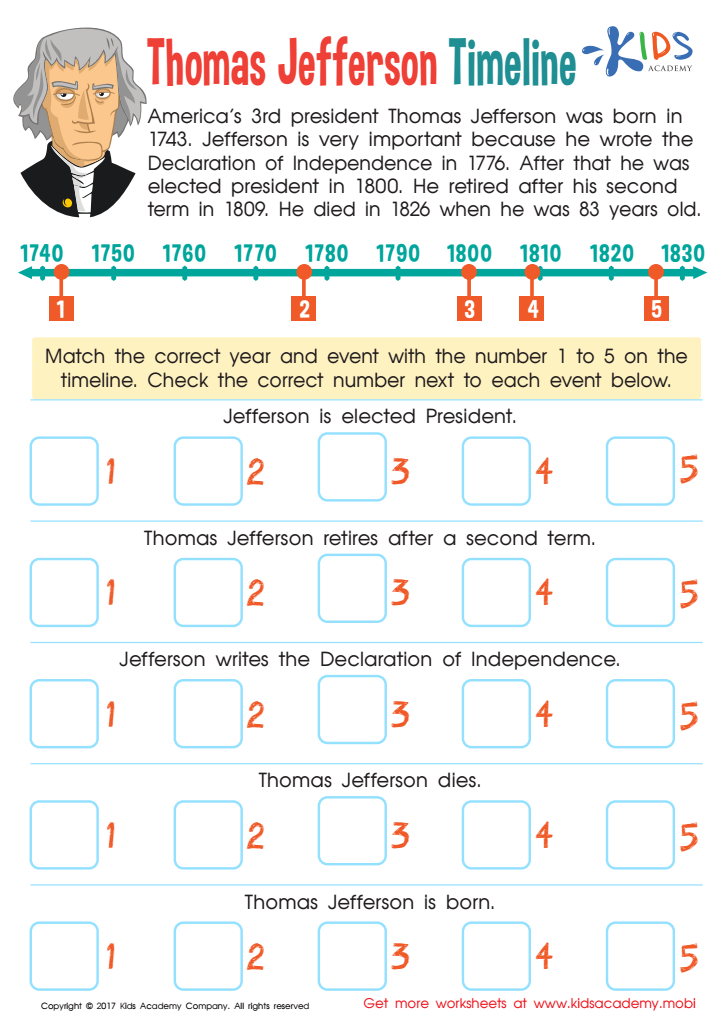
Thomas Jefferson Timeline Worksheet
 Assign to My Students
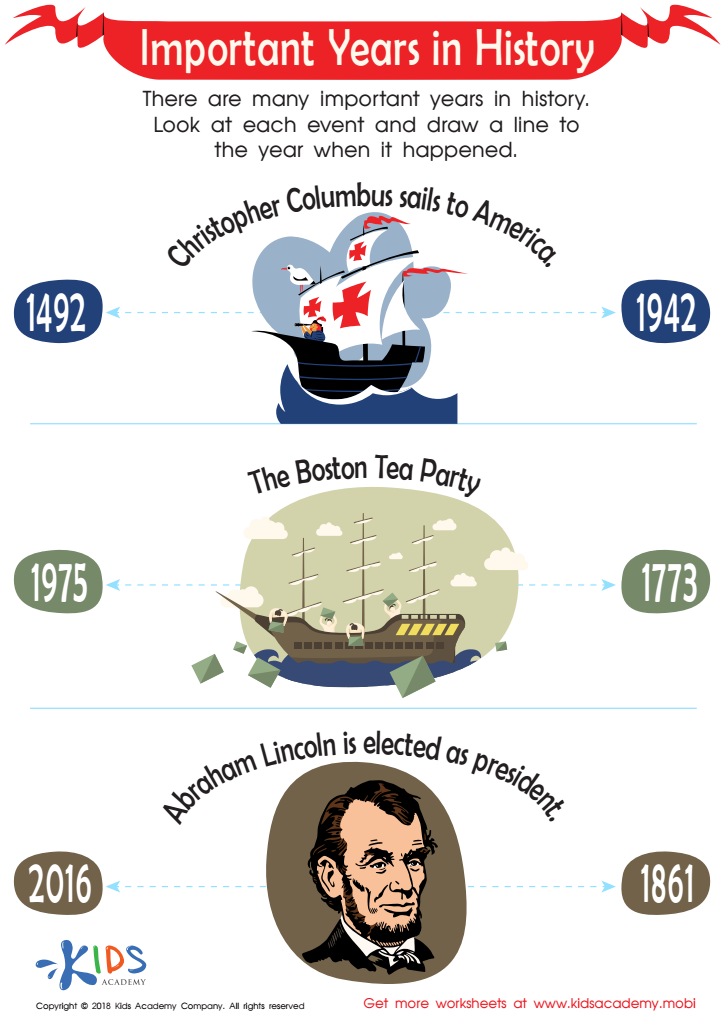
Important Years in History Worksheet
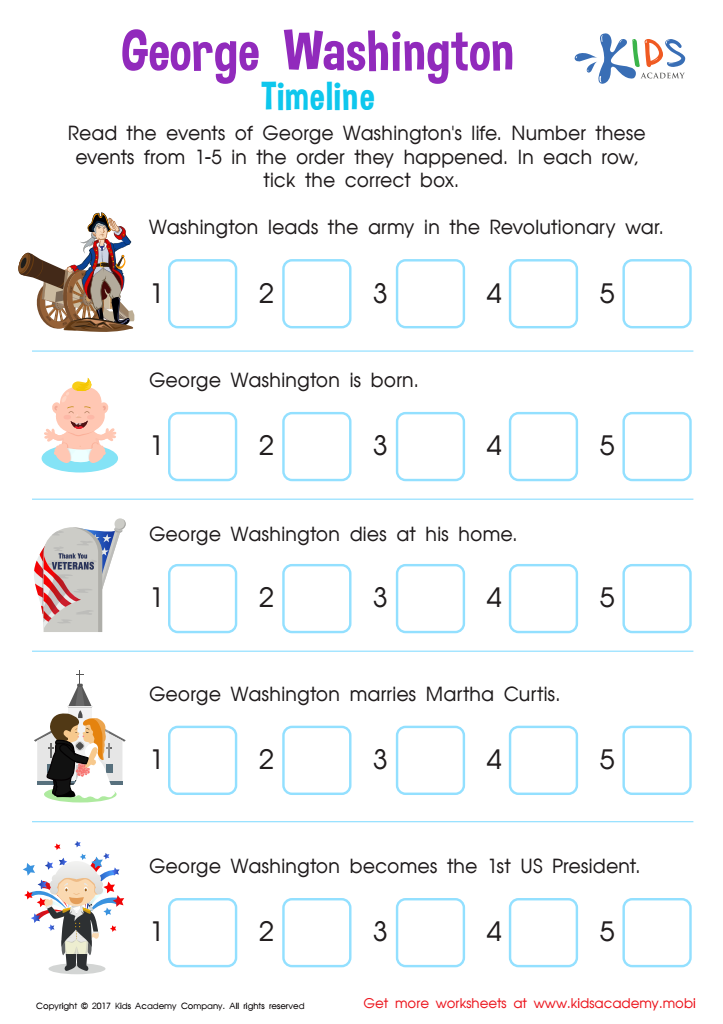
George Washington Timeline Worksheet




.jpg)



Event sequencing in history is a foundational skill crucial for young children, and both parents and teachers need to prioritize it for several reasons. First, understanding the order of events helps children develop critical thinking and comprehension skills. When kids grasp how history unfolds, they start to recognize cause and effect, making it easier for them to follow more complex narratives and processes as they grow.
Second, organization and structure are vital cognitive skills that benefit kids in all areas of learning. Sequencing activities enhance memory retention, helping children recall facts and events more effectively. This can boost their confidence in academic settings.
Additionally, event sequencing helps children understand the concept of time, which is key for both history and everyday life. They begin to comprehend terms like "before," "after," "next," which are fundamental to logical reasoning and planning.
Finally, learning about significant events in an organized way fosters a deeper appreciation for history and cultural awareness. Kids learn to value traditions, understand their heritage, and develop empathy for others.
By emphasizing event sequencing, parents and teachers equip children with tools that are essential not just for history lessons but for navigating the world intelligently and thoughtfully.