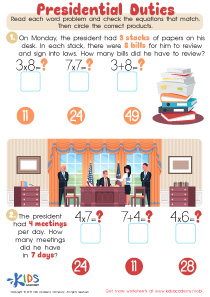
Basic Addition Social Studies Worksheets for Ages 3-8
3 filtered results
Difficulty Level
Grade
Age
-
From - To
Subject
Activity
Standards
Discover engaging Basic Addition Social Studies Worksheets designed for children aged 3-8! Our interactive resources seamlessly blend foundational math skills with social studies concepts, making learning both fun and meaningful. These worksheets introduce young learners to basic addition while exploring cultural themes and community awareness. Each worksheet is crafted to foster critical thinking and collaboration through group activities that promote understanding of numbers and their relevance in everyday life. Perfect for home or classroom use, these educational tools support early literacy and numeracy, helping children develop essential skills while gaining knowledge about their world. Start their learning adventure today!
Favorites
With answer key
Interactive
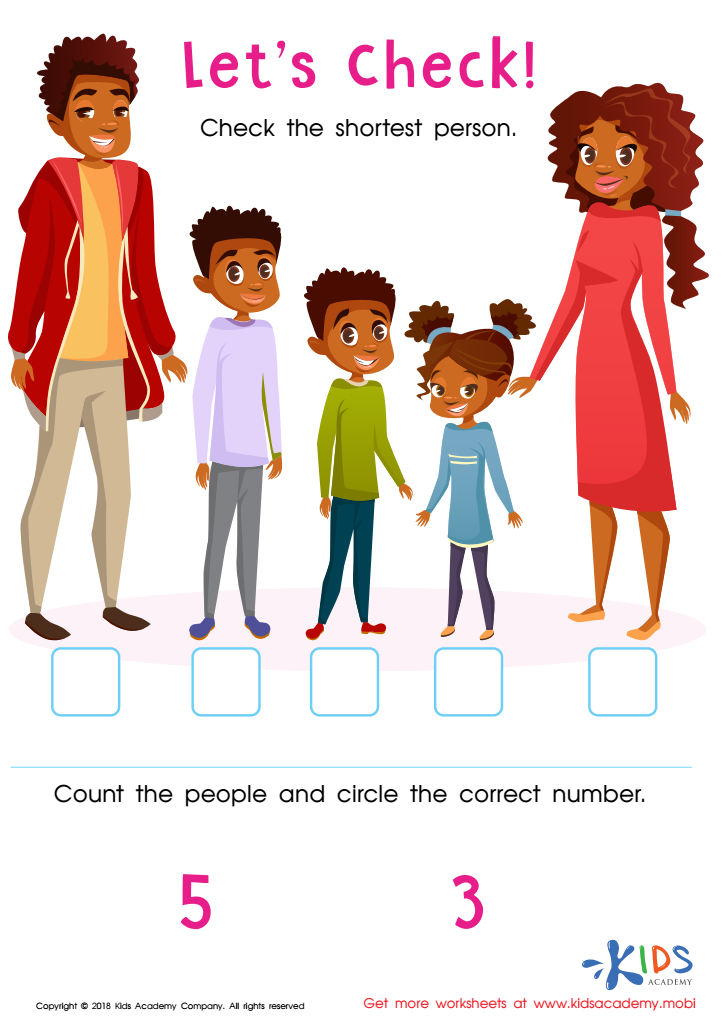
Let's Check! Assessment Worksheet
Check your child's understanding of height with this worksheet. Ask them to sort the objects in order of size and identify the tallest and shortest member of the family in the picture. See if they can correctly arrange the items from tallest to shortest.
 Assign to My Students
Let's Check! Assessment Worksheet
Worksheet
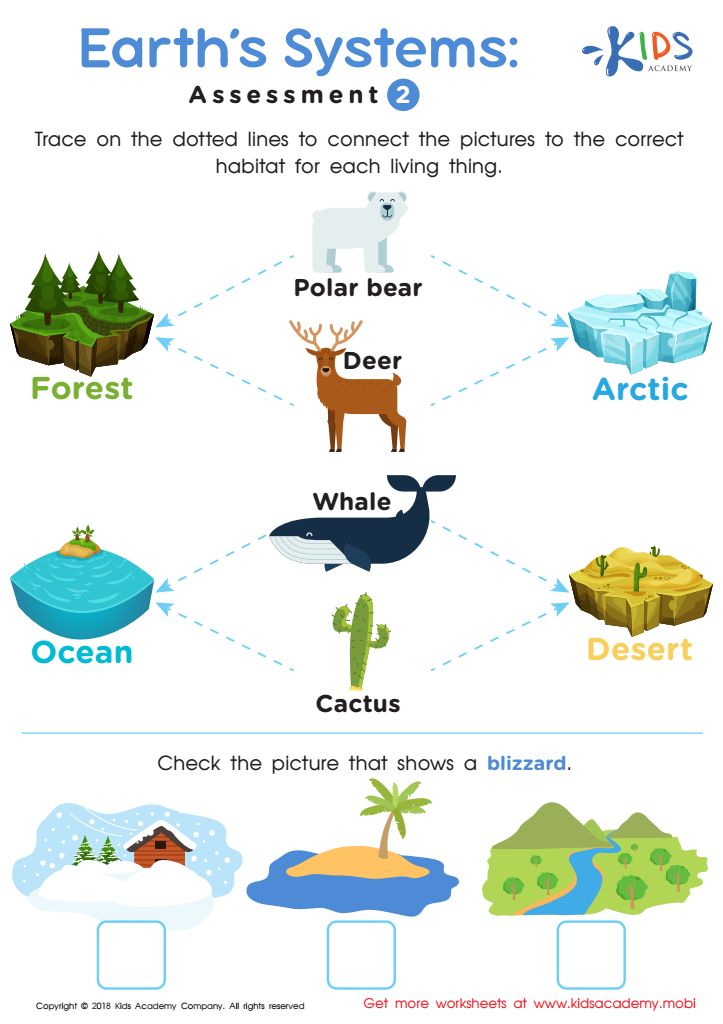
Earth's Systems: Assessment 2
Kids will love this free printable worksheet to assess their knowledge of habitats and the living creatures found in them. They'll trace the dotted lines to connect the pictures of plants and animals to their respective habitat and identify the type of weather depicted. No, polar bears don't live in the ocean, but they do like to swim in icy waters! With this fun activity, your little learner will master earth science basics.
Earth's Systems: Assessment 2
Worksheet
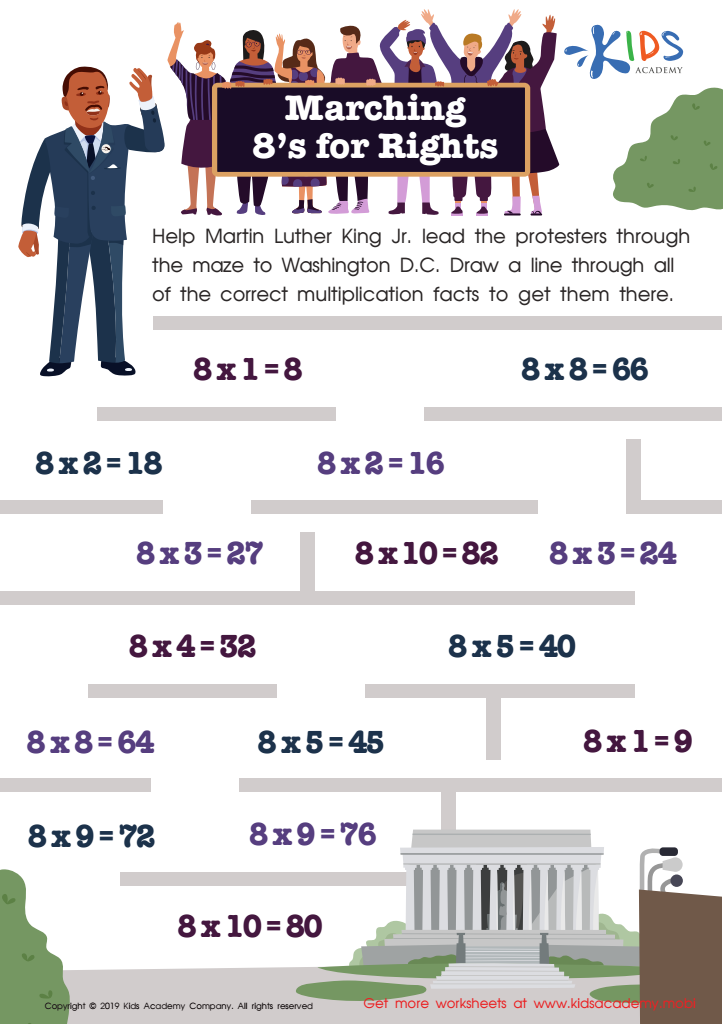
Marching 8’s for Rights Worksheet
Encourage your students to explore MLK's history! This worksheet provides the perfect opportunity. Help them understand his contributions by having them "march" MLK from the starting point to Washington D.C. Have them draw a line through the correct multiplication facts to get there. It's an enjoyable way for kindergartners to learn about a key part of history.
Marching 8’s for Rights Worksheet
Worksheet
Join Kids Academy for Free
Who is primarily going to use this learning content?





Basic addition is a fundamental skill that serves as a building block for future academic success. For children aged 3-8, incorporating basic addition into social studies lessons makes learning more engaging and relevant. When parents and teachers integrate math with social studies, children can better understand their world through practical applications, such as counting community resources, measuring distances on maps, or tallying cultural artifacts.
This interdisciplinary approach enhances critical thinking and problem-solving skills. For instance, while learning about different countries, children might add up the populations of those countries or compare the number of schools, promoting both mathematical reasoning and cultural awareness. Additionally, hands-on activities involving addition, like counting objects among various cultures, help reinforce social skills as children work collaboratively.
Furthermore, incorporating basic addition in social studies helps develop numeracy in a real-world context, making math feel less abstract and more applicable. Understanding the relationship between math and social concepts encourages children to appreciate the importance of both subjects, fostering a lifelong love for learning. Ultimately, parents and teachers should care because combining basic addition with social studies enriches children's educational experience, equipping them with essential skills for understanding the world around them.