Understanding communities Social Studies Worksheets for Ages 3-8
4 filtered results
-
From - To
"Understanding Communities Social Studies Worksheets for ages 3-8" provides engaging, age-appropriate activities to help young learners explore various communities and their roles. These printable worksheets from Kids Academy cover essential topics such as neighborhood structure, community helpers, and cultural diversity, fostering curiosity and empathy. Designed by educators, each worksheet combines colorful illustrations with interactive exercises to captivate young minds. Through fun activities like matching games, coloring pages, and simple quizzes, children deepen their understanding of how communities function and the importance of cooperation and inclusiveness. Perfect for both classroom use and homeschooling, these worksheets make learning about communities a fun adventure!
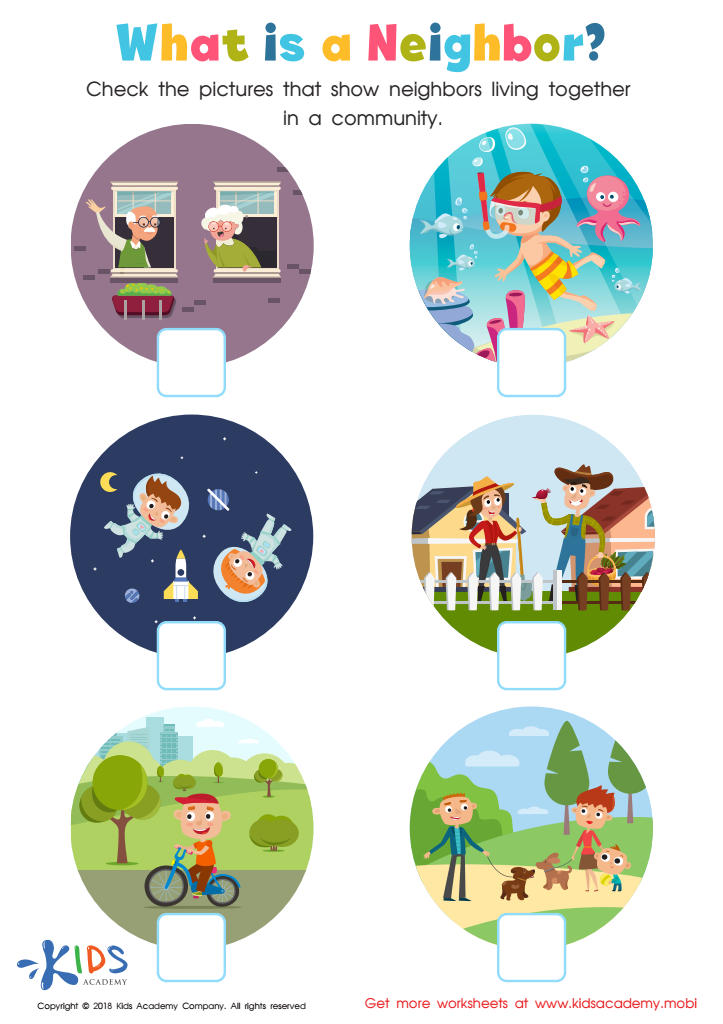
What is a neighbor Worksheet
 Assign to My Students
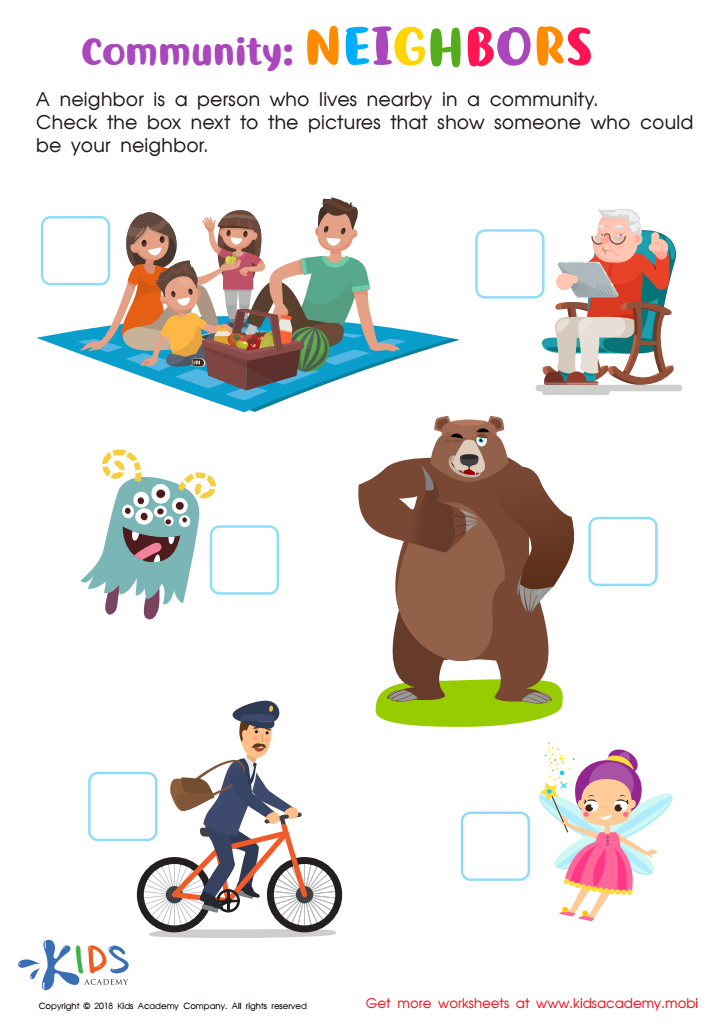
Community: Neighbors Worksheet
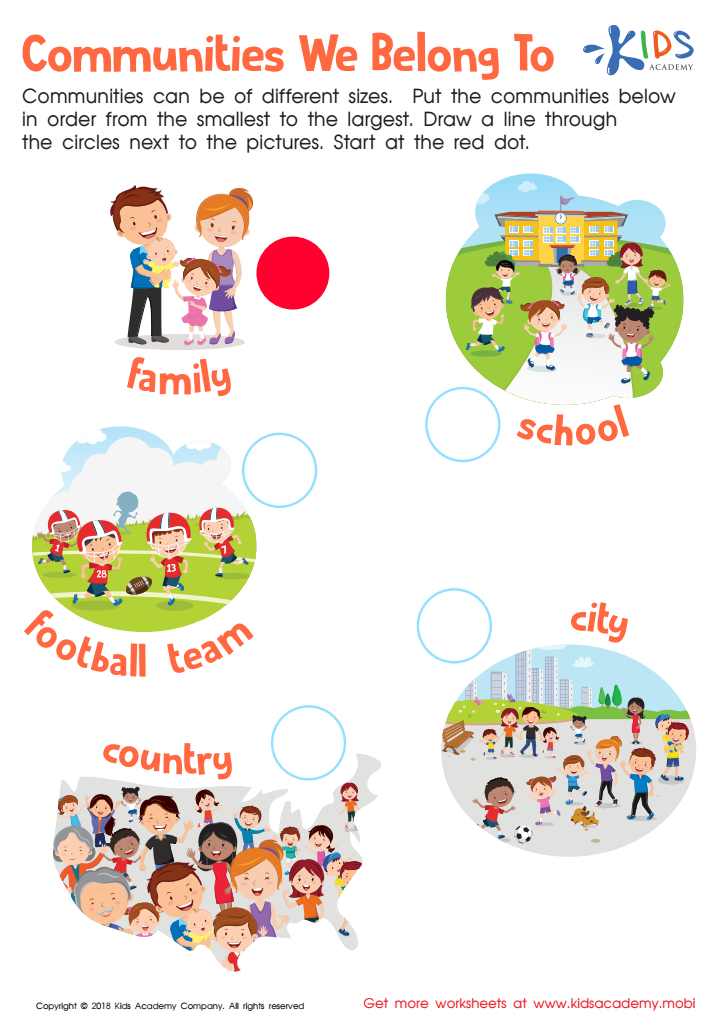
Communities We Belong to Worksheet
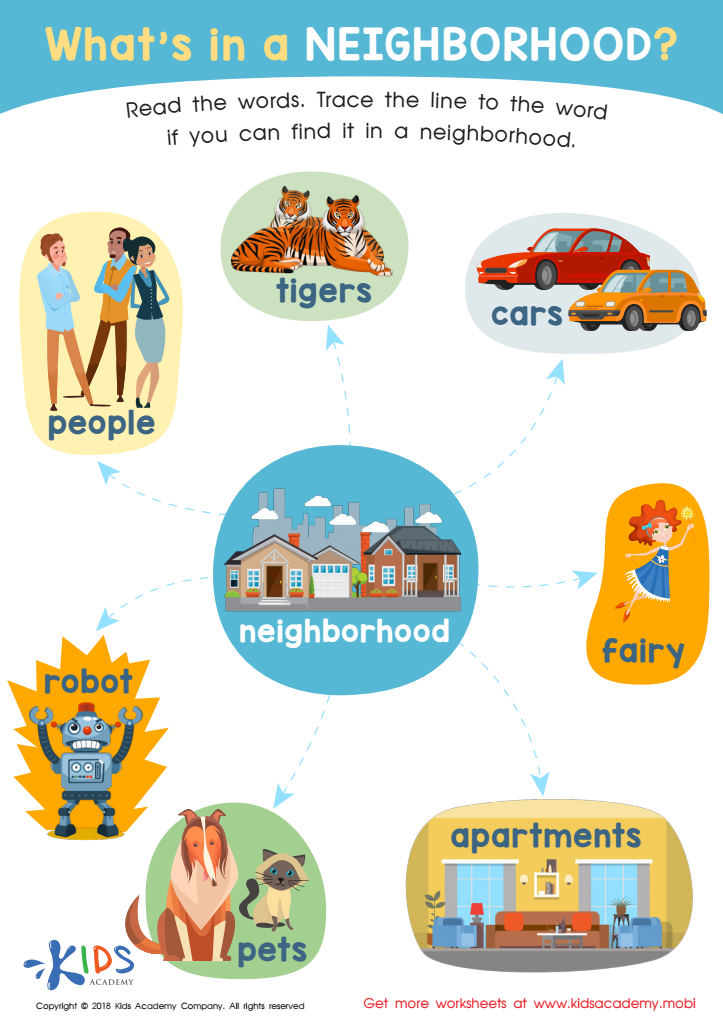
What's in a Neighborhood? Worksheet








Understanding communities through Social Studies is crucial for young children, ages 3-8, as it lays the foundation for empathy, social skills, and a sense of belonging. At this formative age, children are beginning to understand their place in the world and how they relate to others. Learning about communities helps them grasp the concept of diversity and appreciate different cultures, traditions, and perspectives.
For parents and teachers, focusing on community awareness nurtures children's social development. By teaching kids about various roles in the community like firefighters, doctors, and teachers, it highlights interdependence and collective responsibility. This knowledge fosters respect and cooperation, key components for healthy interpersonal relationships.
Moreover, understanding communities enhances critical thinking. When children explore how communities function, they learn about rules, fairness, and civic duties. These early lessons equip them with the ability to ask questions, solve problems, and participate actively in their environments.
Finally, studying communities instills a sense of identity. Children recognize the unique characteristics of their own community and feel more connected. This inclusion and validation of their background promote self-esteem.
In sum, caring about teaching community understanding in Social Studies builds a young child's emotional intelligence, civic sense, and personal identity, preparing them for a respectful and engaged future.








