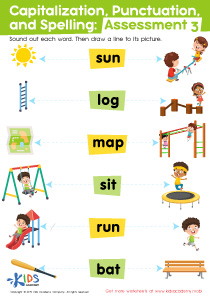
Phonics recognition Grammar Worksheets for Ages 3-8
5 filtered results
-
From - To
Discover the perfect phonics recognition grammar worksheets designed for children ages 3-8! Our engaging worksheets effectively blend fun and learning, aiding young learners in grasping essential phonetic concepts and grammar skills. Crafted by educational experts, these activities nurture early reading, writing, and comprehension abilities. Each worksheet offers interactive exercises, colorful illustrations, and age-appropriate tasks to keep kids motivated and attentive. Designed to support various learning styles, our resources ensure comprehensive development in language arts. Ideal for home or classroom use, empowering parents and educators to foster strong, foundational language skills in children with ease and enjoyment.
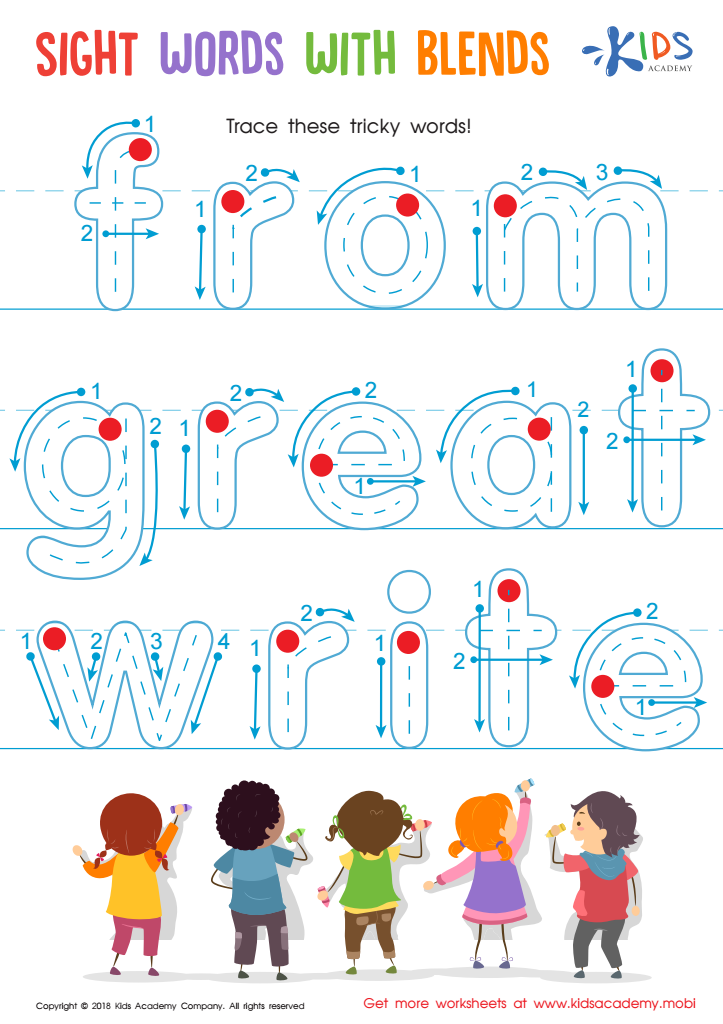
Sight Words with Blends Worksheet
 Assign to My Students
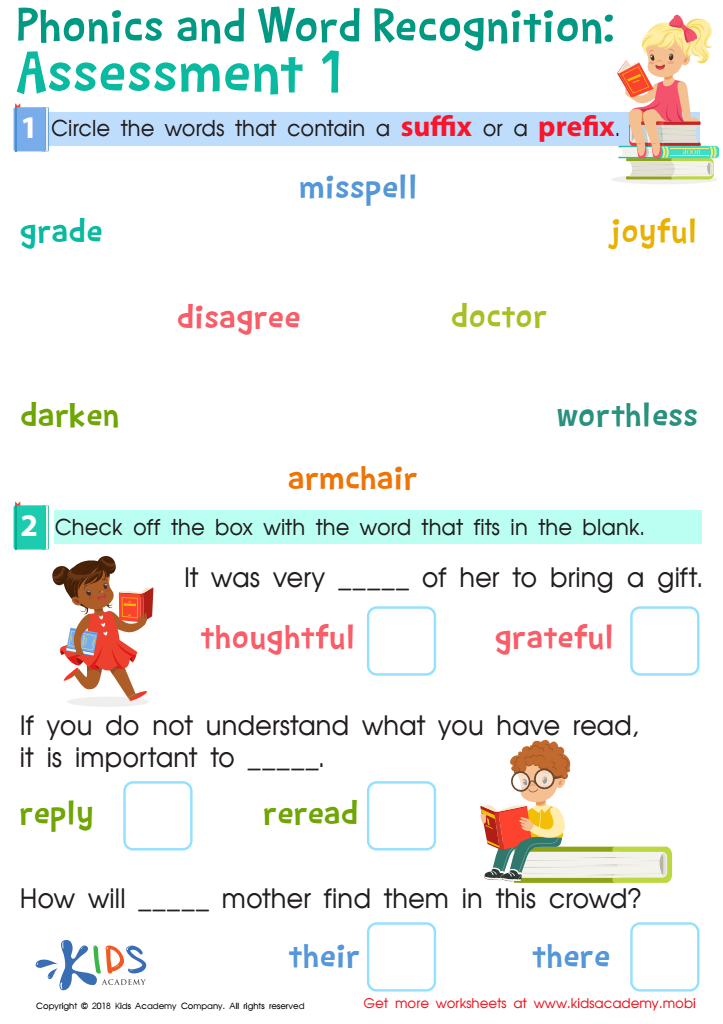
Phonics and Word Recognition: Assessment 1 Worksheet
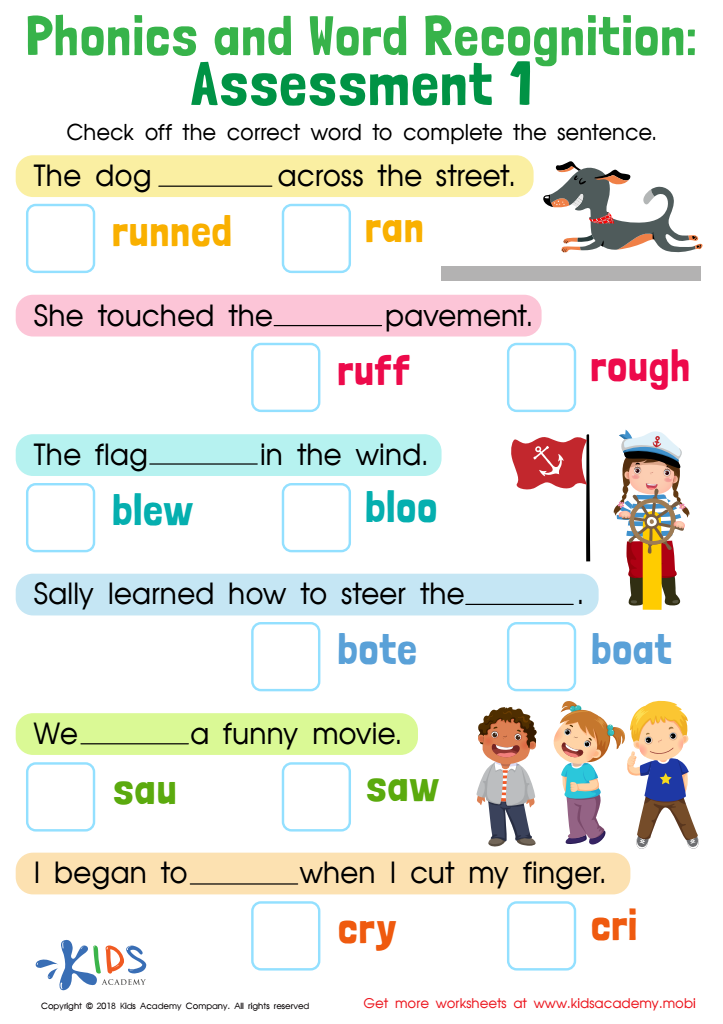
Phonics and Word Recognition: Assessment 1 Worksheet
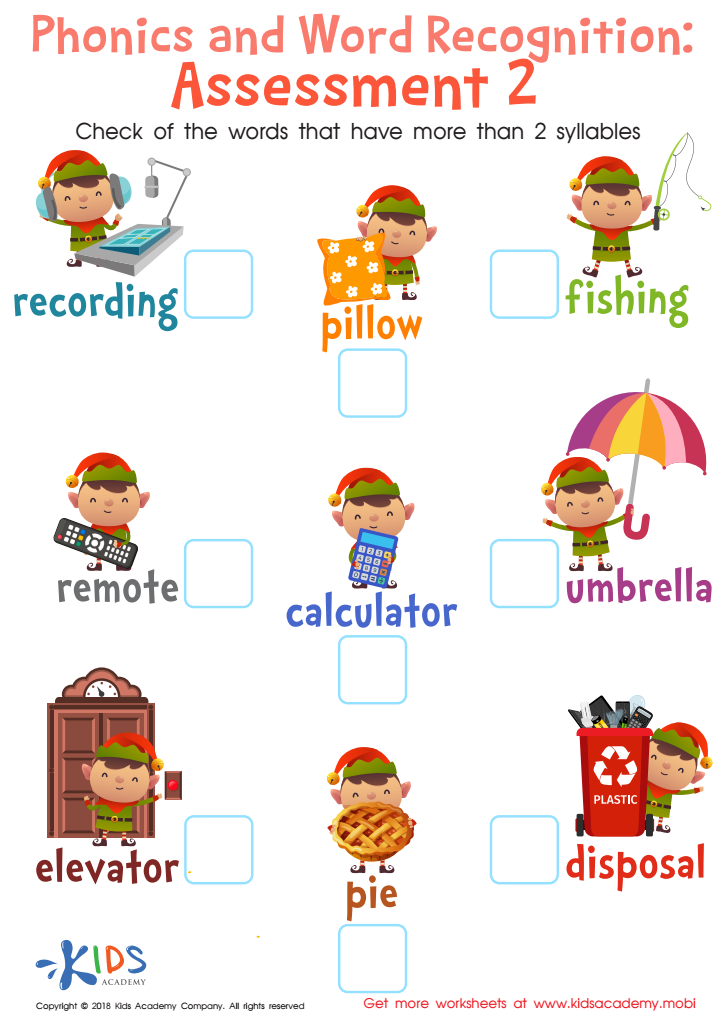
Phonics and Word Recognition: Assessment 2 Worksheet
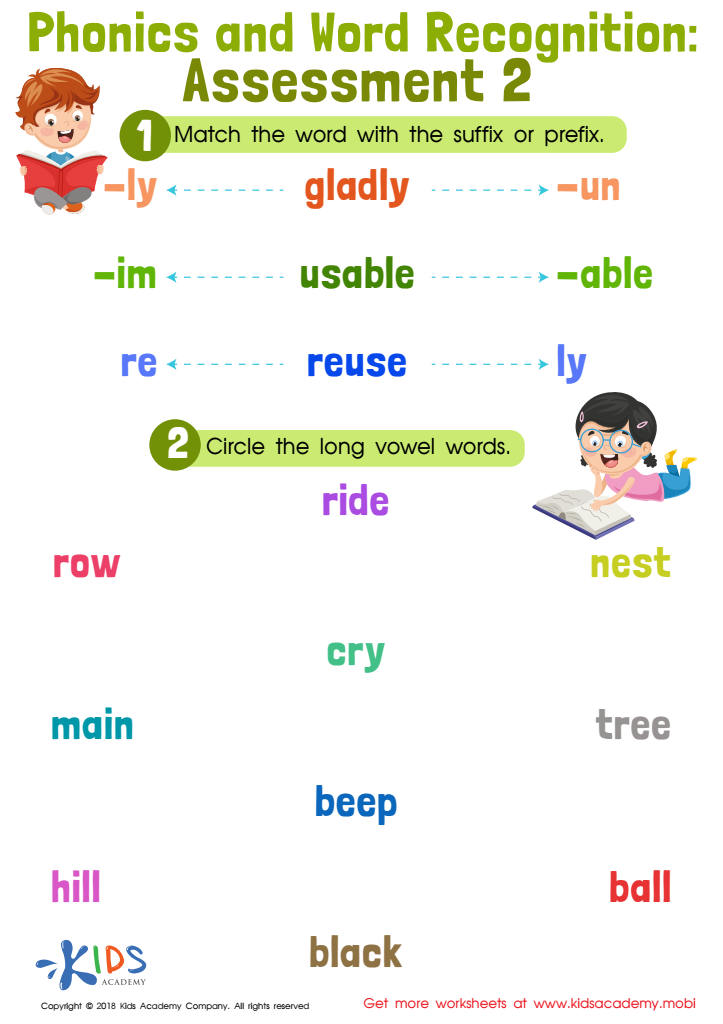
Phonics and Word Recognition: Assessment 2





Understanding phonics, recognition, and grammar is crucial for children ages 3-8 as it lays the foundation for their literacy skills. Phonics—the relationship between letters and sounds—enables children to decode words while reading and build spelling skills while writing, making them more confident readers and communicators. For instance, recognizing that the 'ph' sound corresponds to the letter combination ‘ph’ helps young learners make connections between sounds and visual words.
Recognition, which involves identifying words quickly and accurately, builds a child’s reading fluency. High fluency allows for better comprehension since children spend less mental effort on decoding words and more on understanding the content. It is the bridge between being able to read words and making sense of texts as a whole.
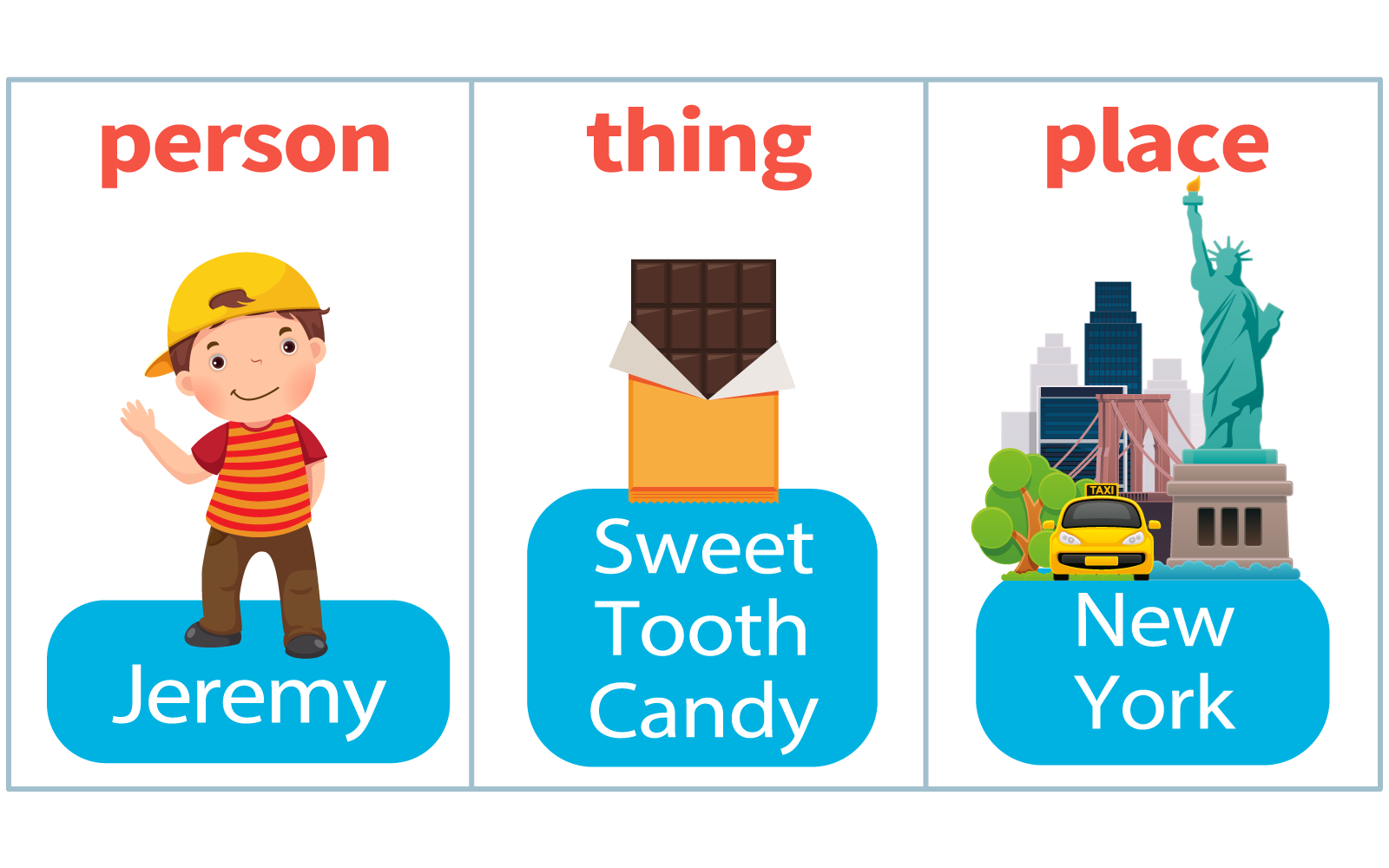
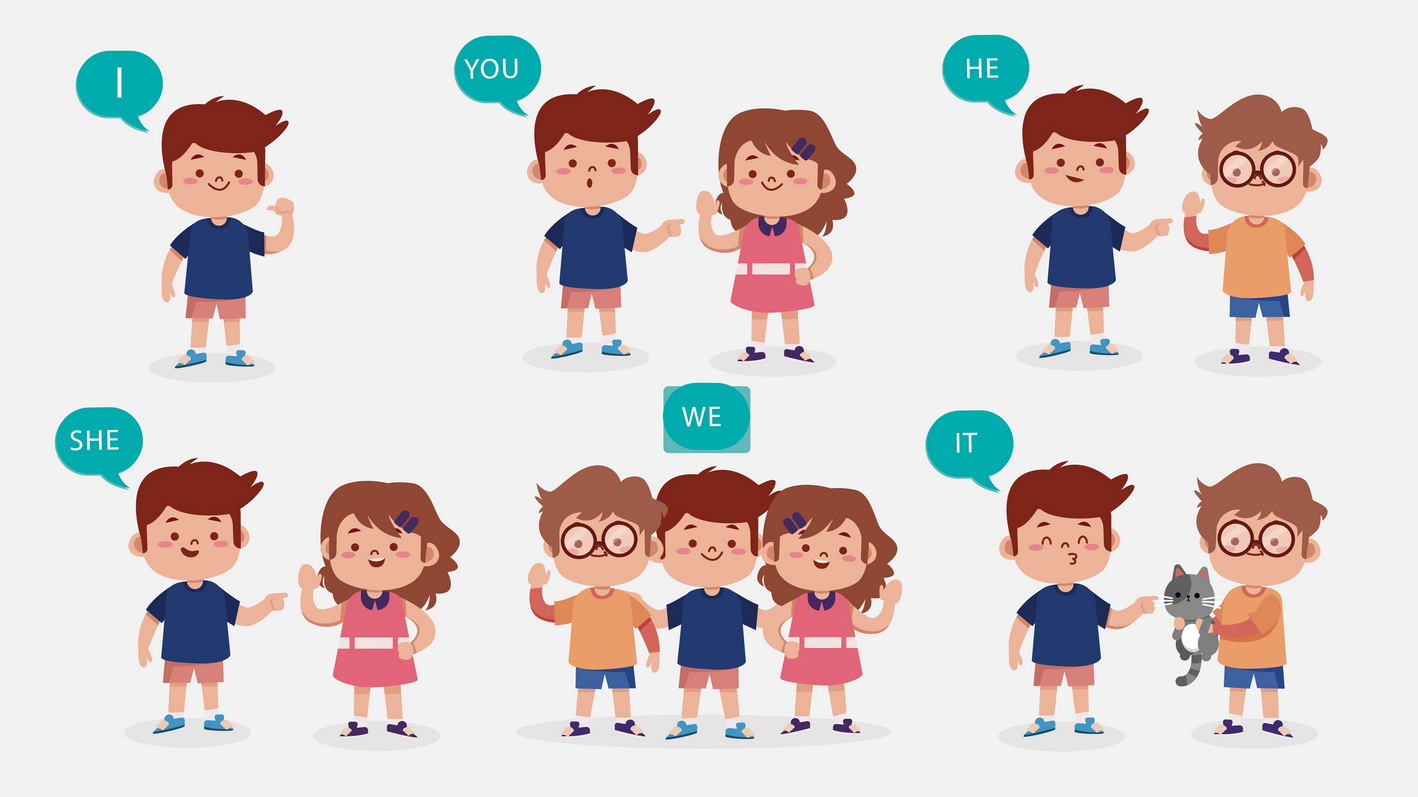
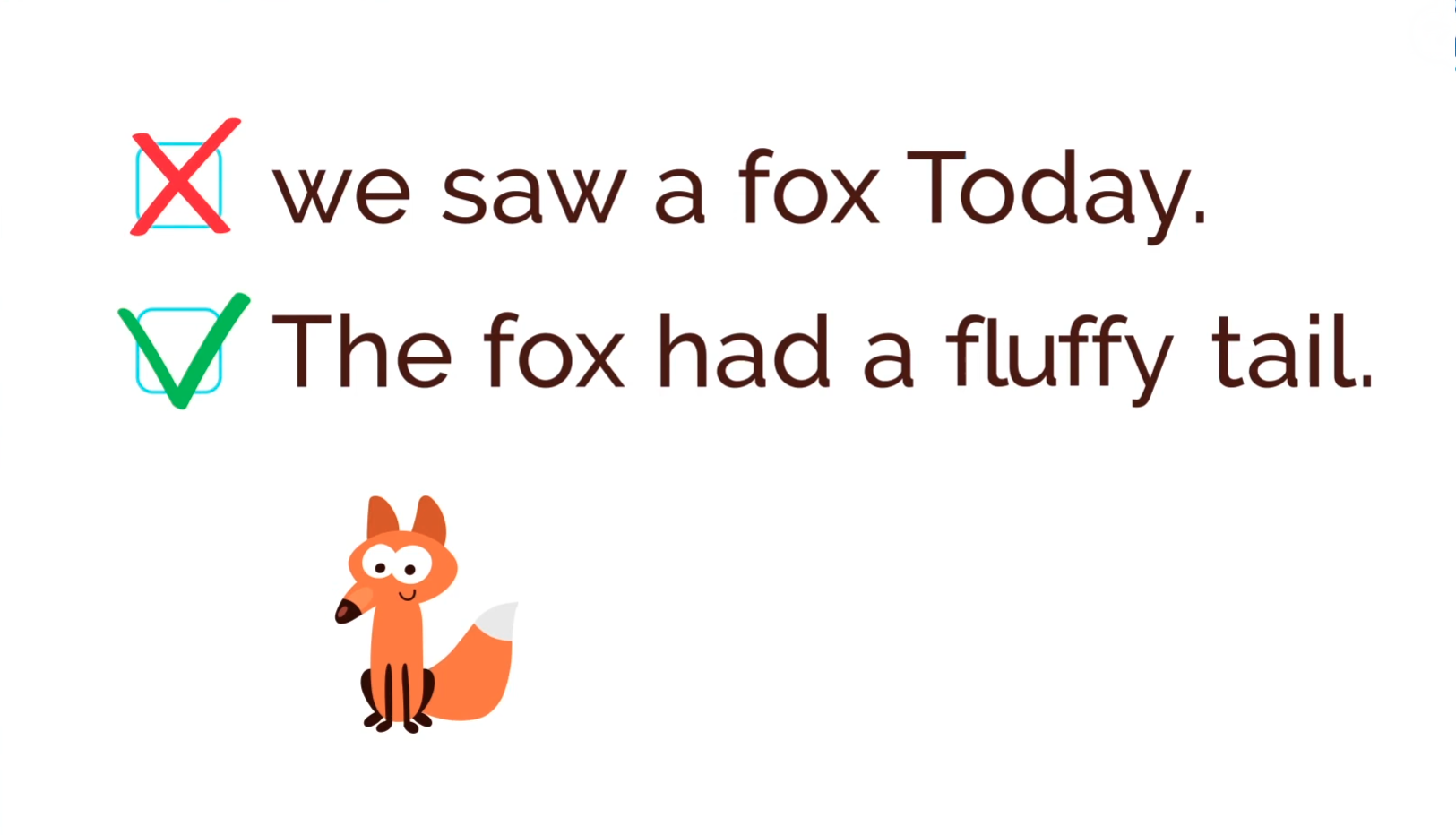
Grammar, on the other hand, helps children understand how language structures work. Basic grammar knowledge allows them to construct well-formed sentences and express their thoughts clearly. For example, understanding subject-verb agreement or appropriate tense usage ensures their speech and writing are cohesive and grammatically correct. Integrating such skills at an early age promotes better academic performance and lifelong language proficiency.
Ultimately, focusing on these three areas helps children build essential communication skills, impacting their education positively and fostering a love for reading and writing.