
Understanding syllables Grammar Worksheets for Ages 3-8
3 filtered results
Difficulty Level
Grade
Age
-
From - To
Subject
Activity
Standards
Discover fun and engaging 'Understanding Syllables' Grammar Worksheets designed for ages 3-8! These printable worksheets from Kids Academy make learning the building blocks of language intuitive and enjoyable. Help your young learners grasp the concept of syllables through colorful and interactive activities that include clapping, matching, and segmenting words. Perfect for early literacy development, these worksheets support phonological awareness and improve reading skills. Ideal for both classroom use and at-home practice, your kids will love mastering syllables with this fantastic educational resource. Download now and start your child's journey to becoming a confident reader!
Favorites
With answer key
Interactive
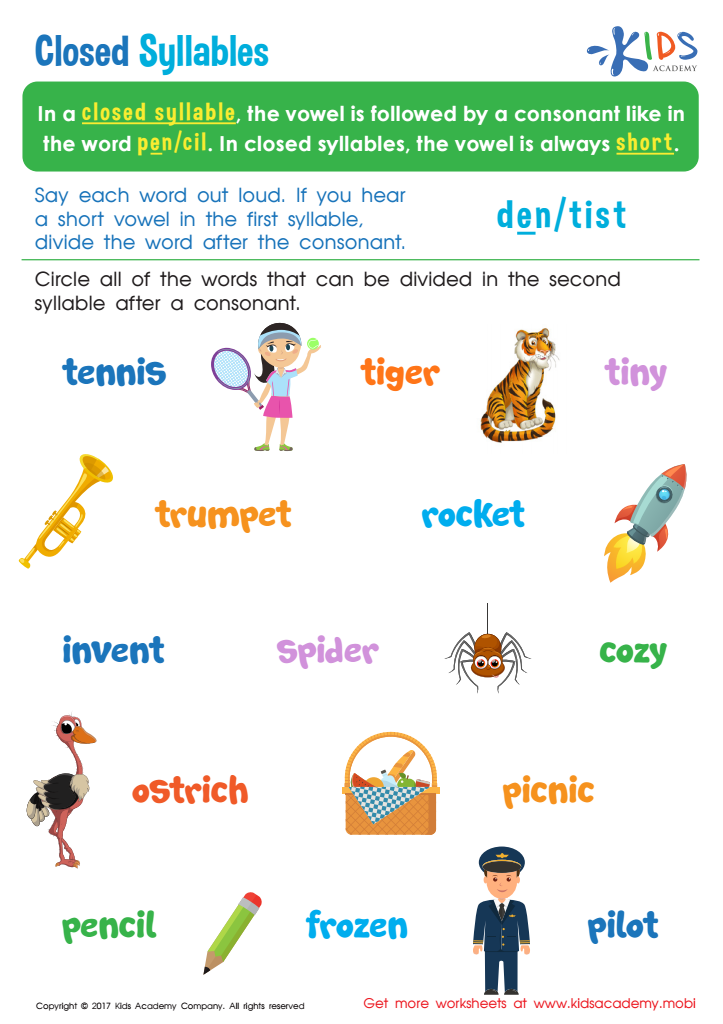
Closed Syllable Spelling Worksheet
Learning syllables can be tough, but we can make it easier! Look for long and short vowel sounds to identify closed syllables. This worksheet can help 3rd graders do just that, with its fun and colorful design.
 Assign to My Students
Closed Syllable Spelling Worksheet
Worksheet
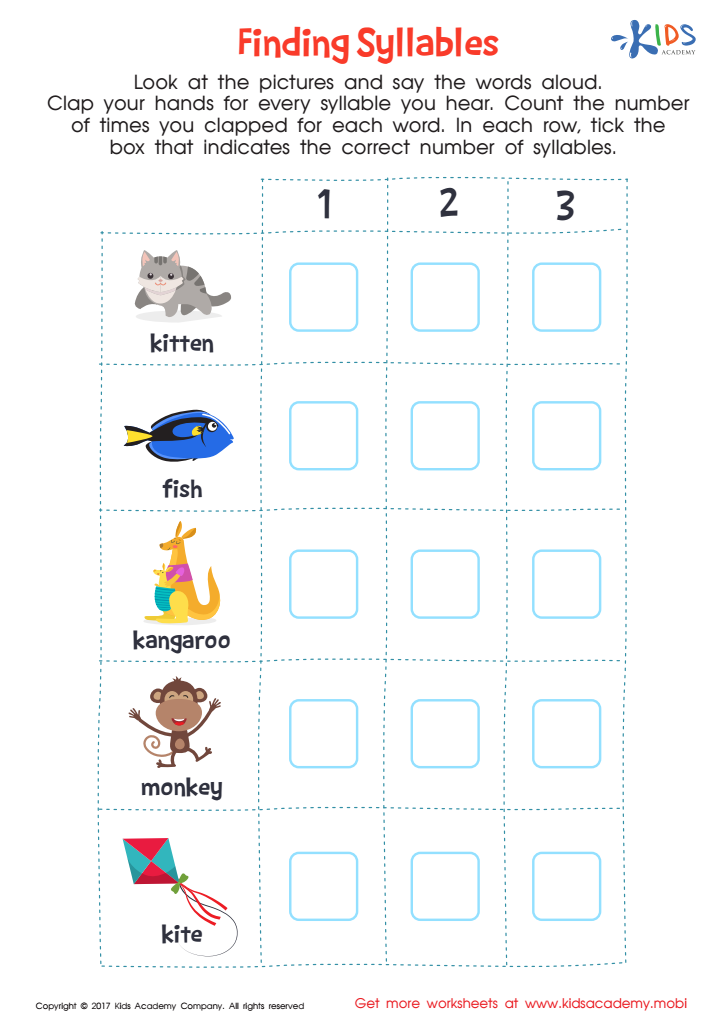
Finding Syllables Word Structure Worksheet
Have your kid clap and count syllables in words to improve their reading and spelling! Use this word structure worksheet for a fun activity - syllables!
Finding Syllables Word Structure Worksheet
Worksheet
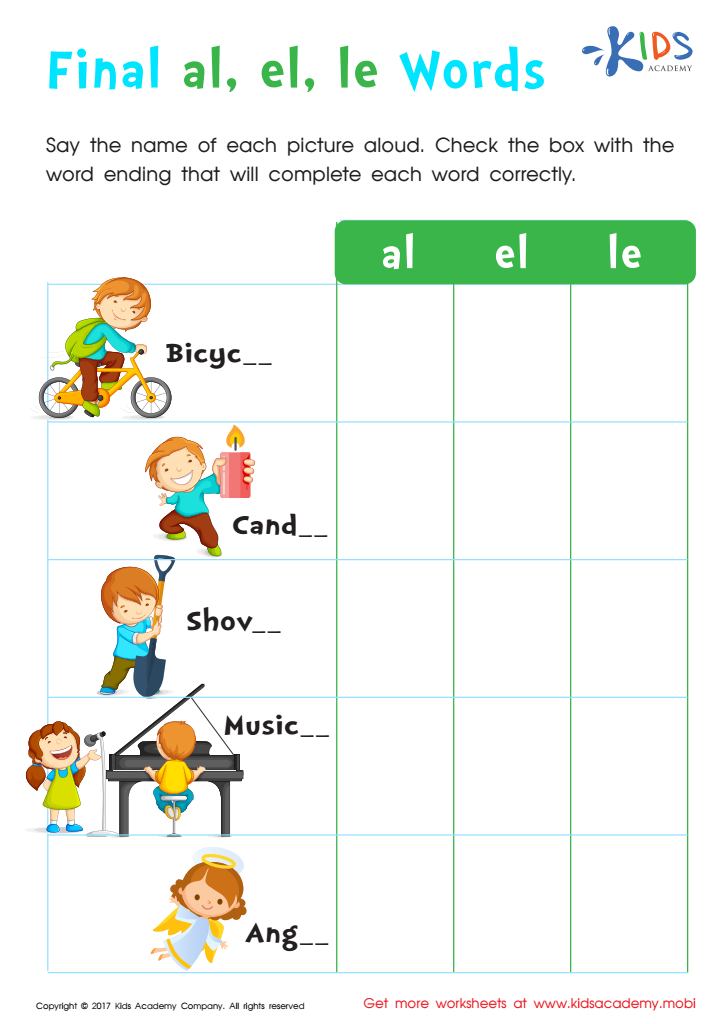
Spelling Words Ending with –le, –el and –al Worksheet
Spelling tricky words with the same ending sounds can be fun with this worksheet! Kids learn to spell -le, -el, and -al words while enjoying colorful pictures. It's a great way to refine their usage of tricky word endings.
Spelling Words Ending with –le, –el and –al Worksheet
Worksheet
Join Kids Academy for Free
Who is primarily going to use this learning content?



.jpg)
Understanding syllables is a cornerstone of early literacy, making it essential for parents and teachers to prioritize this element in grammar for children aged 3-8. Syllables form the building blocks of words, and grasping this concept helps young learners to improve their pronunciation, reading, and spelling skills.
When children recognize and clap out syllables, they become more fluent readers. Breaking down words into syllables makes them easier to decode, reducing a child's frustration when encountering new vocabulary. This is crucial during the early literacy phase when children are developing fundamental reading skills.
Moreover, understanding syllables enhances spelling by helping children visualize word structures more clearly. It allows them to segment words into manageable parts, making it easier to remember the correct sequence of letters.
Phonemic awareness, the ability to hear and manipulate sounds in words, is also bolstered through syllable practice. This skill is a predictor of reading success and helps children to become adept at both phonics and phonological awareness.
From a broader perspective, an early grasp of syllables stimulates cognitive development, bolsters listening skills, and lays the groundwork for more complex grammar rules. Investing time in syllable instruction sets children on a path to becoming confident, competent readers and writers, thus opening up doors to lifelong learning and academic success.








