Contextual understanding Writing Worksheets for Ages 3-8
6 filtered results
-
From - To
Enhance your child's writing skills with our Contextual Understanding Writing Worksheets, designed specifically for ages 3-8. These engaging, age-appropriate worksheets encourage young learners to comprehend contexts while expressing their thoughts through writing. Each activity focuses on nurturing creativity and developing language comprehension, ensuring that children not only learn to write but also understand the meaning behind their words. With vibrant illustrations and interactive prompts, these worksheets provide a fun learning experience that fosters critical thinking and enhances literacy skills. Perfect for home or classroom use, our Contextual Understanding Writing Worksheets are an essential resource for early education success!
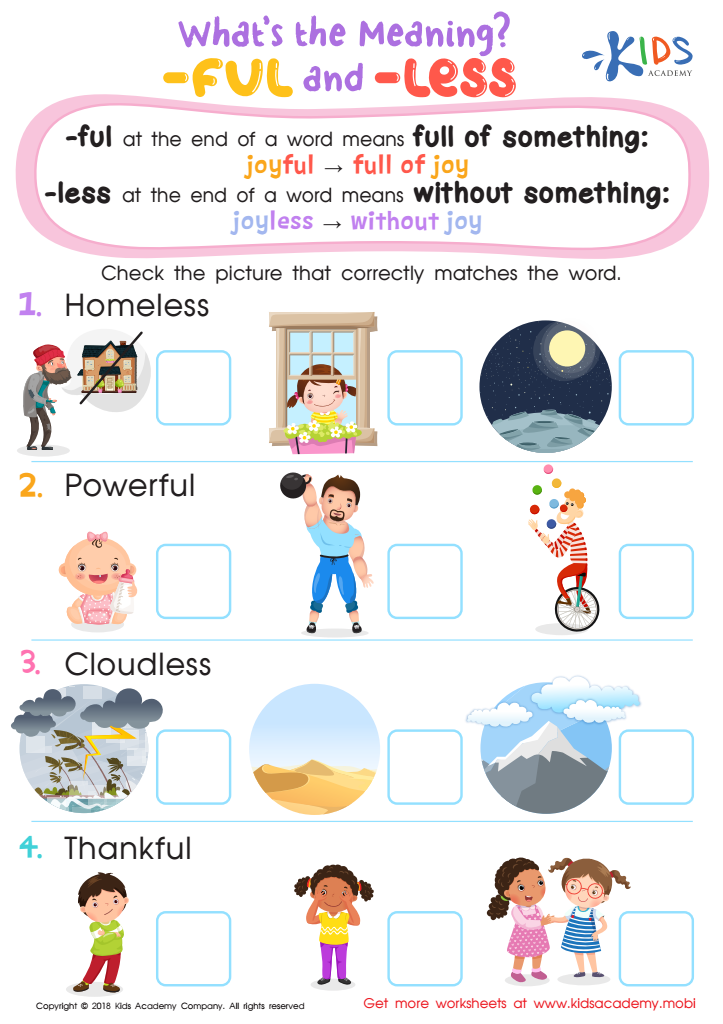
What's the Meaning? Worksheet
 Assign to My Students
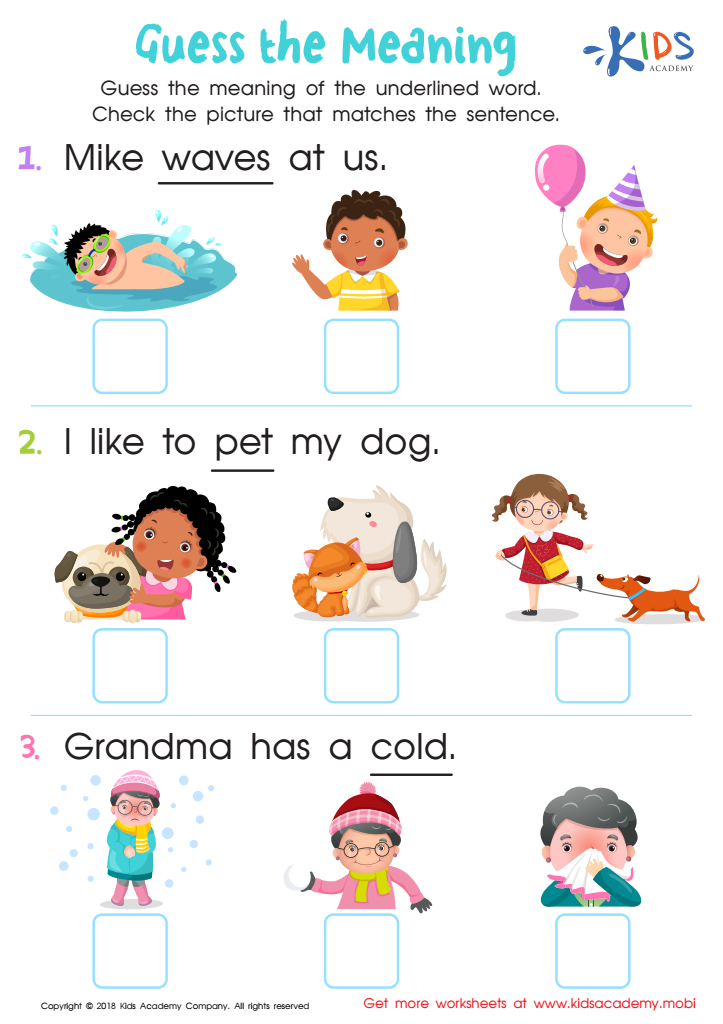
Guess the Meaning Worksheet
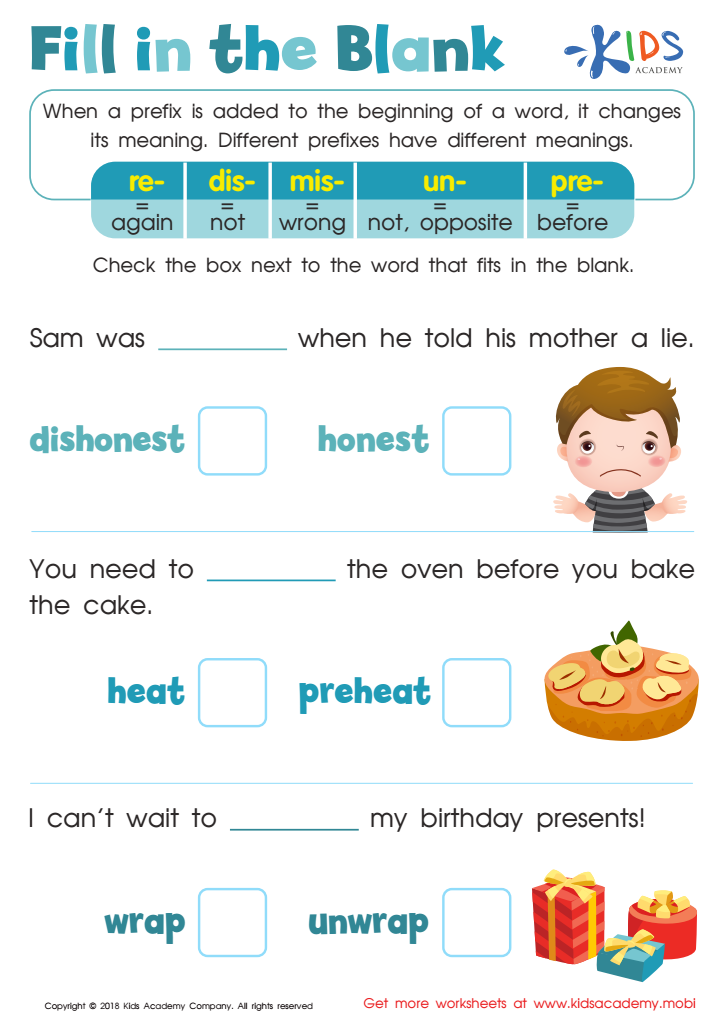
Reading: Fill in the Blank Worksheet
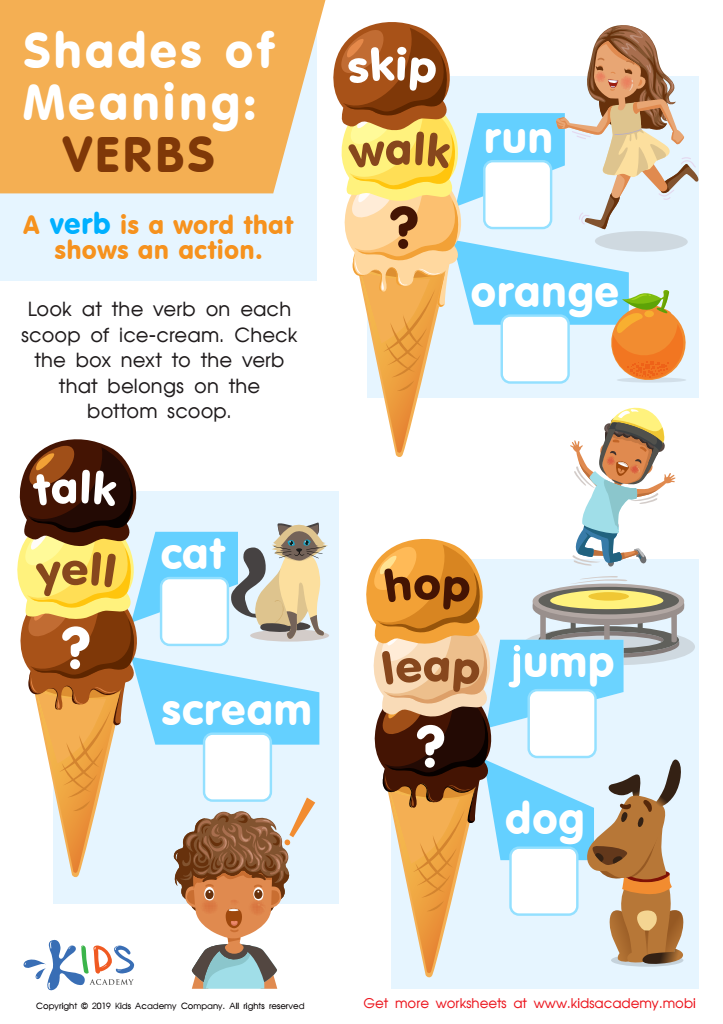
Shades of Meaning: Verbs Worksheet
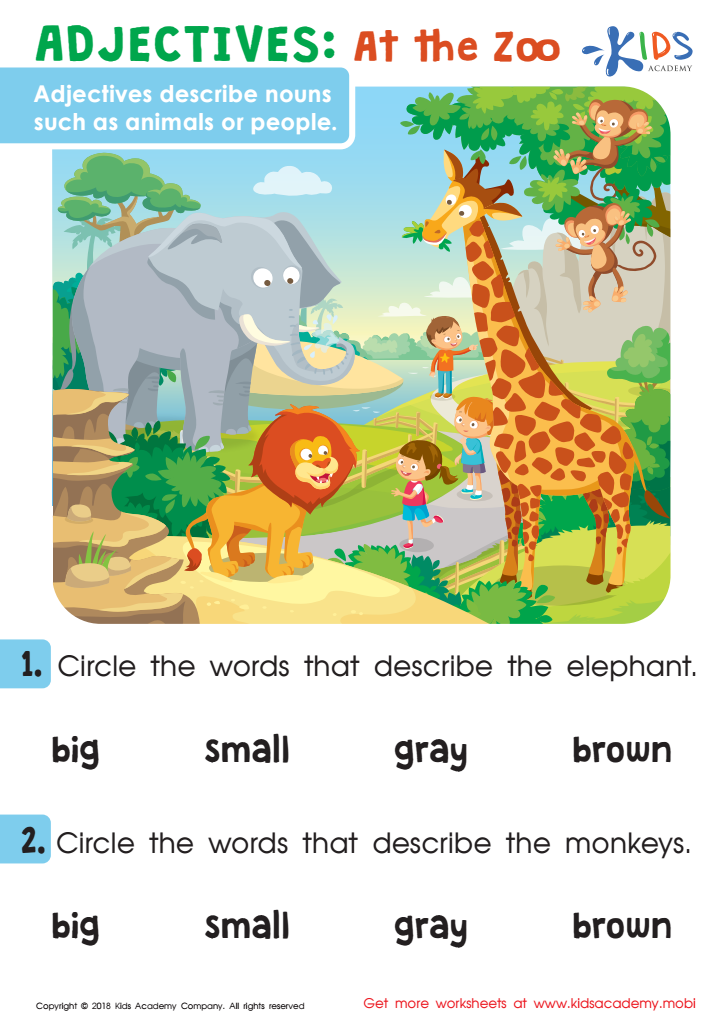
Adjectives: At The Zoo Worksheet
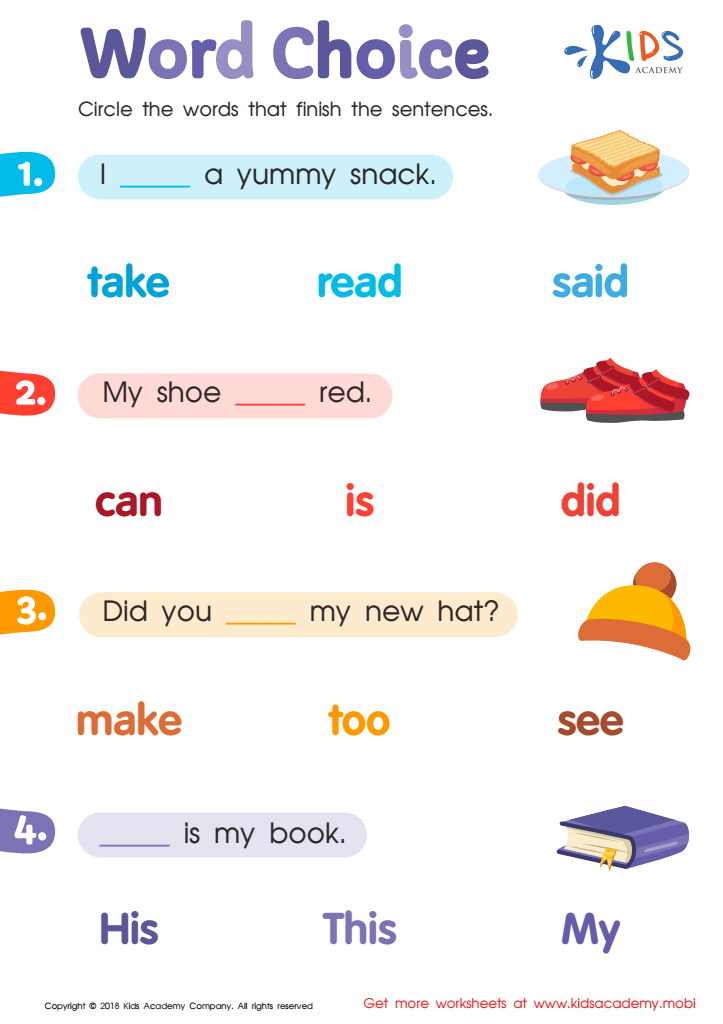
Word Choice Worksheet








Contextual understanding in writing is vital for children aged 3-8 as it forms the backbone of effective communication and critical thinking skills. At this developmental stage, children learn to connect their experiences and knowledge to the world around them. By focusing on contextual writing, parents and teachers can foster a deeper comprehension of language use, enriching children's vocabulary and enabling them to convey their thoughts more clearly.
Moreover, understanding context allows young learners to craft stories and express emotions that resonate with their environment. This connection imbues their writing with meaning, helping them engage their audience effectively. As children describe personal experiences or observations, they develop not only writing skills but also empathy and the ability to relate to others.
Furthermore, this kind of writing promotes literacy development by encouraging children to be curious and ask questions about their surroundings. It nurtures creativity and imagination, essential for their holistic growth. Collaborative writing exercises can also enhance social skills, as students share ideas rooted in shared contexts. Consequently, by prioritizing contextual understanding in writing, parents and teachers lay a robust foundation for lifelong learning, reinforcing children's ability to communicate, connect, and thrive.








