Critical Thinking Writing Worksheets for Ages 3-8
4 filtered results
-
From - To
Unlock your child’s potential with our specially-designed Critical Thinking Writing Worksheets for ages 3-8. These engaging activities foster curiosity and enhance problem-solving skills through fun writing exercises. Carefully crafted for young learners, our worksheets blend critical thinking with writing to cultivate vital cognitive abilities. Whether your child is deciphering patterns, solving puzzles, or developing arguments, these resources offer a playful yet educational approach to learning. Perfect for preschoolers and early elementary students, our printable worksheets serve as a useful tool to support early development and a love for learning. Transform your child’s educational journey today!
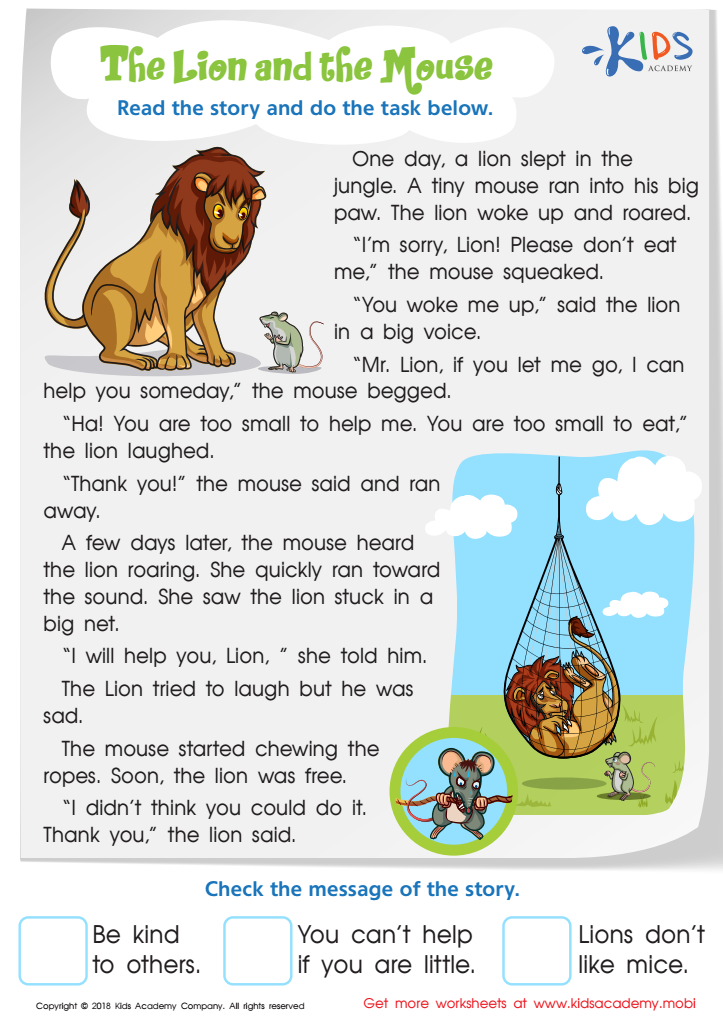
The Lion and the Mouse Worksheet
 Assign to My Students
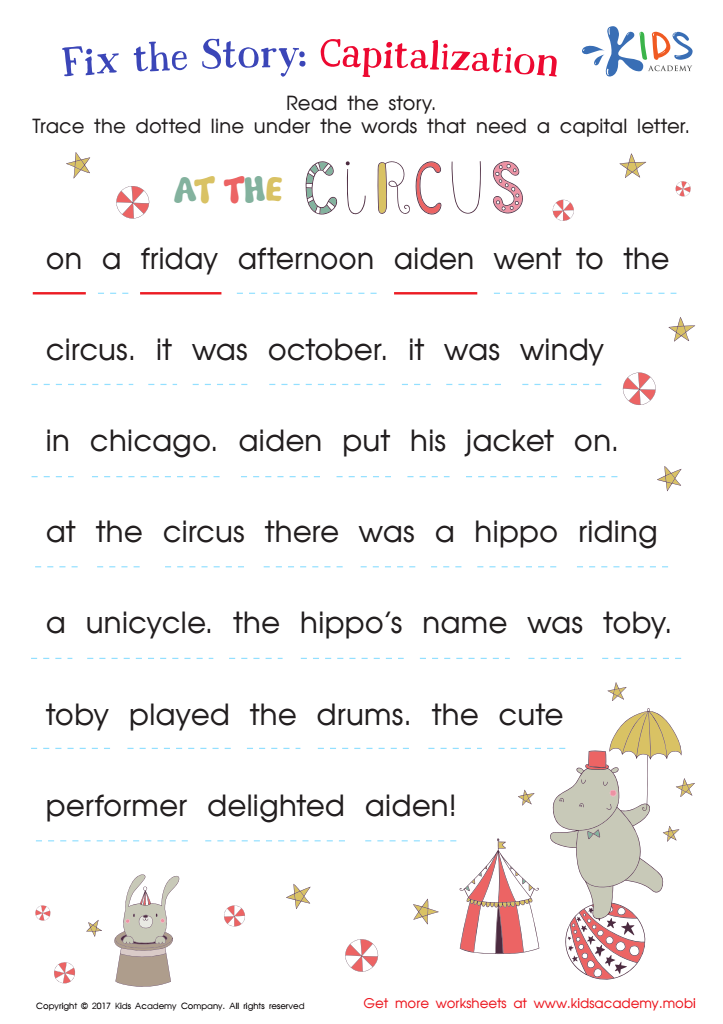
Capitalization: Fix the Story Worksheet
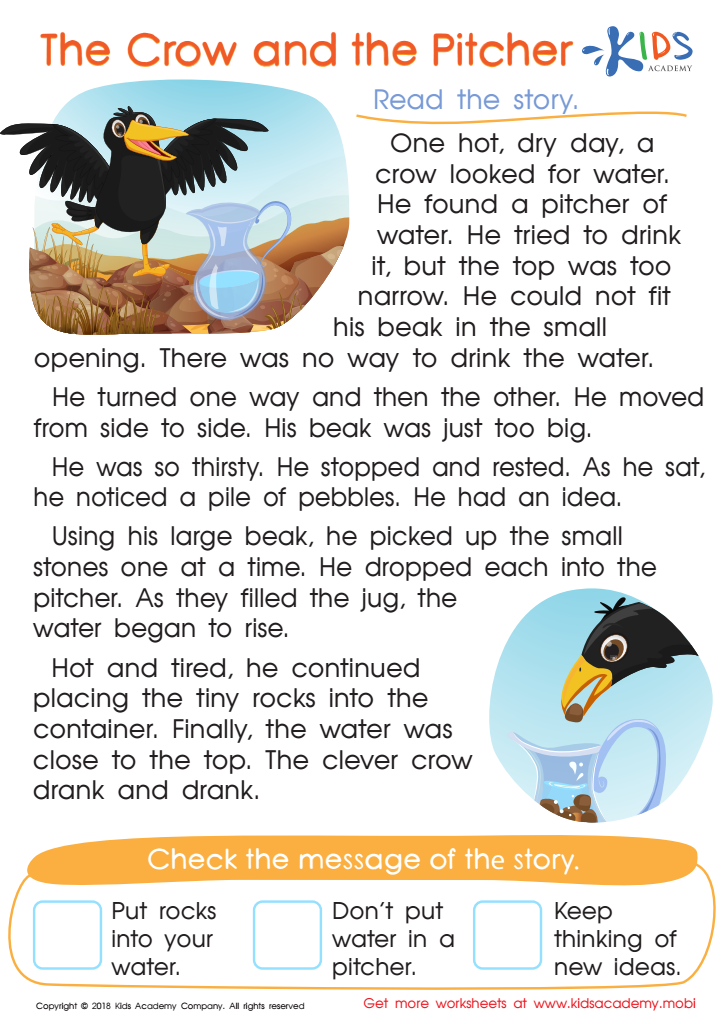
The Crow and the Pitcher Worksheet
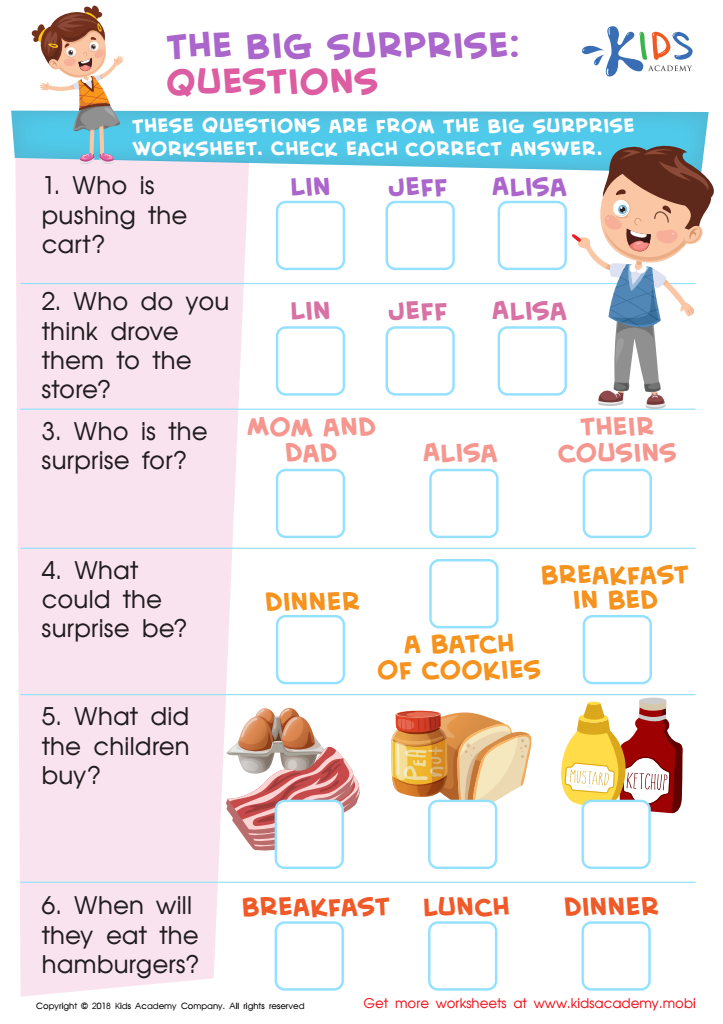
The Big Surprise: Questions Worksheet








Critical Thinking Writing is crucial for children aged 3-8 as it lays a strong foundation for their cognitive and academic development. At this developmental stage, young brains are incredibly malleable and receptive to new ideas. Encouraging critical thinking practices during writing exercises helps foster curiosity, problem-solving skills, and independent thought early on.
By engaging in Critical Thinking Writing, children begin to think beyond mere rote learning. This process involves questioning, reflecting, and connecting various concepts, which are essential components in all areas of learning—from math and science to social skills. Kids learn to approach problems from multiple angles and develop reasoning capabilities that are beneficial throughout their lives.
For parents and teachers, integrating critical thinking into writing exercises not only boosts cognitive growth but also enhances communication skills. When children write thoughtfully, they learn to express ideas clearly, organize thoughts coherently, and build a certain confidence in their own judgment.
Moreover, emphasizing these skills from a young age can mitigate later educational challenges and make homework less daunting. In a world increasingly driven by information and technology, nurturing active, analytical thinkers is essential. Ensuring that even the youngest learners develop critical thinking in writing equips them with invaluable life-long tools.








