Phonics practice Writing Worksheets for Ages 3-8
4 filtered results
-
From - To
Unlock your child's reading potential with our Phonics Practice Writing Worksheets for ages 3-8. Designed to make learning fun, these worksheets integrate playful activities that reinforce letter recognition, sound association, and early writing skills. With colorful illustrations and engaging exercises, each worksheet lays a strong foundation for fluent reading and confident writing. Parents and teachers will love how easy it is to track progress, while kids will enjoy hands-on practice that promotes a lifelong love for learning. Explore our comprehensive collection to give your young learner a head start in mastering essential phonics skills today!
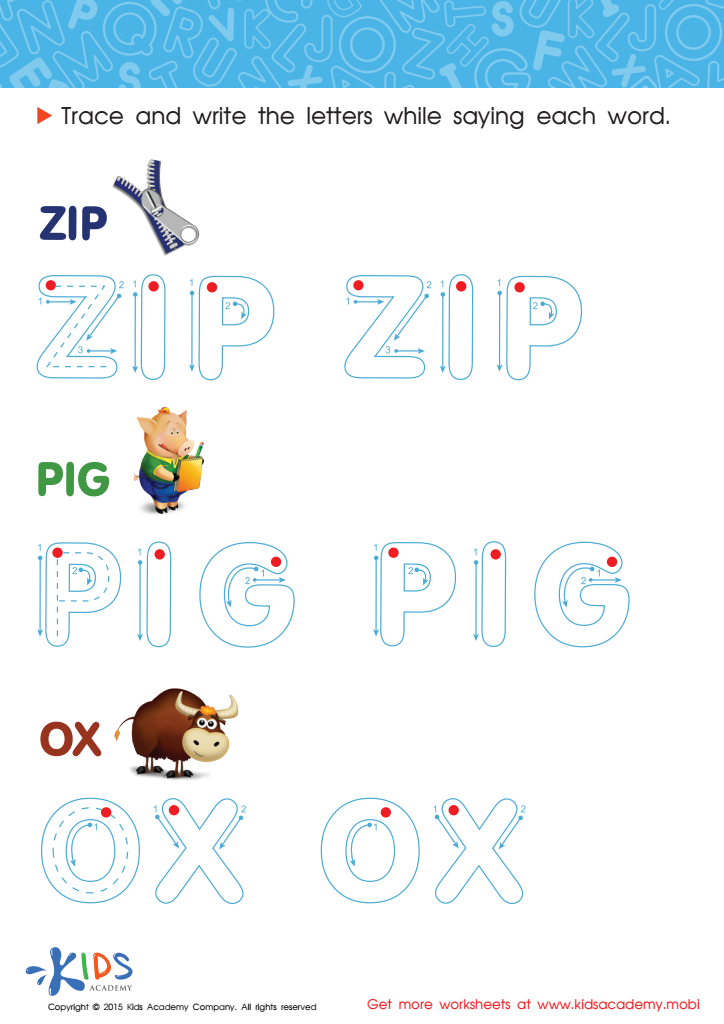
A Zip, a Pig and an Ox Spelling Worksheet
 Assign to My Students
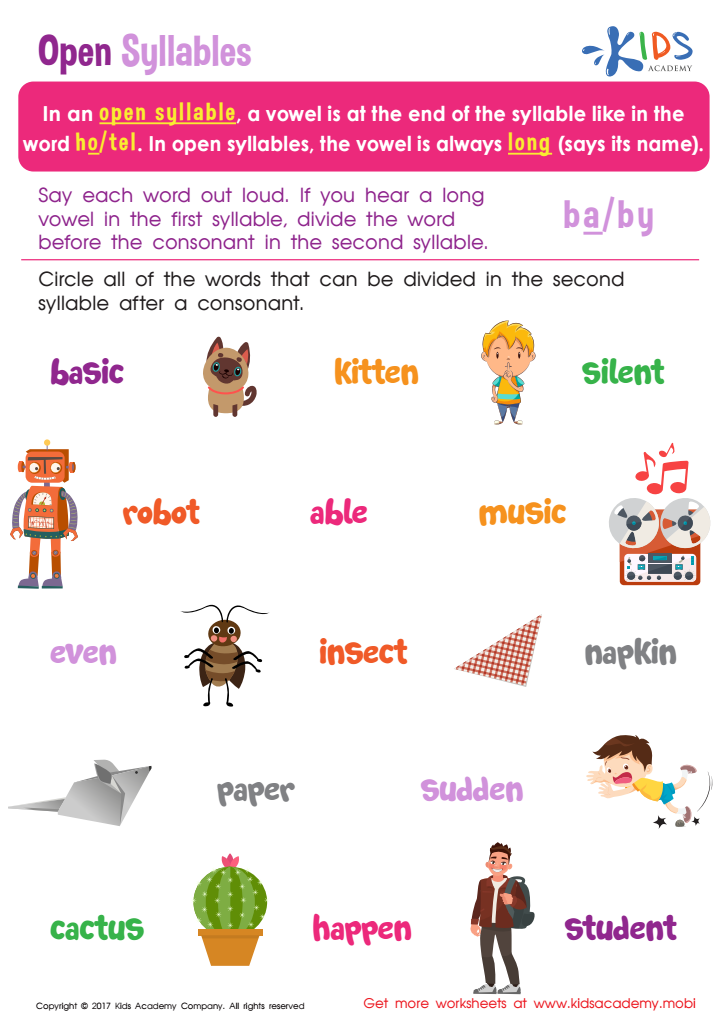
Open Syllable Printable Worksheet
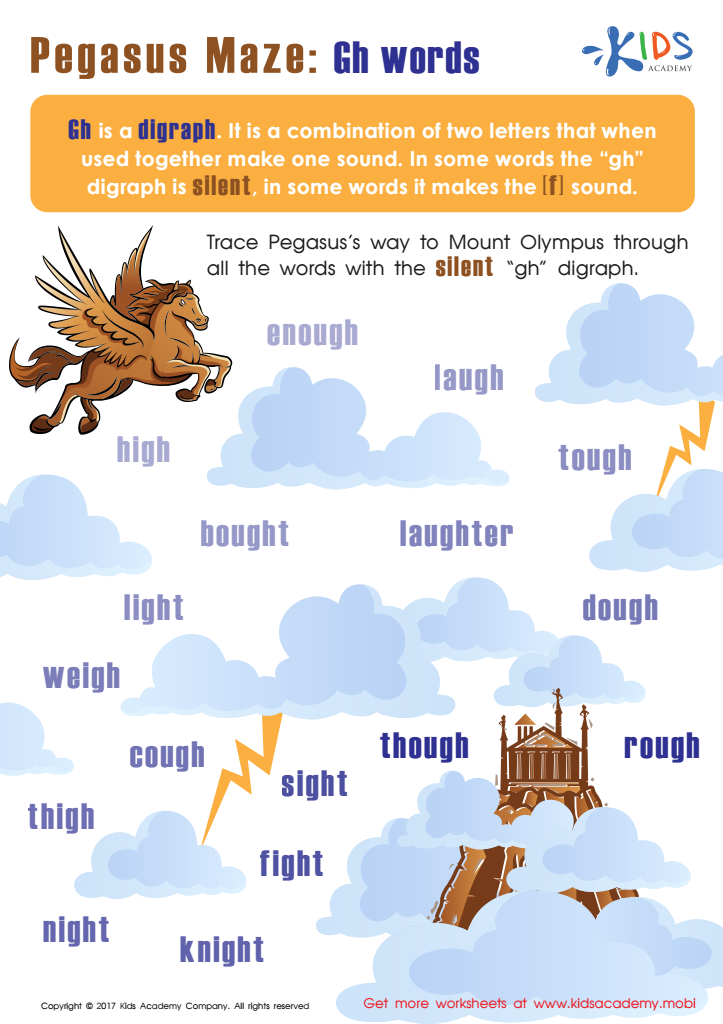
Pegasus Maze: GH Words Worksheet
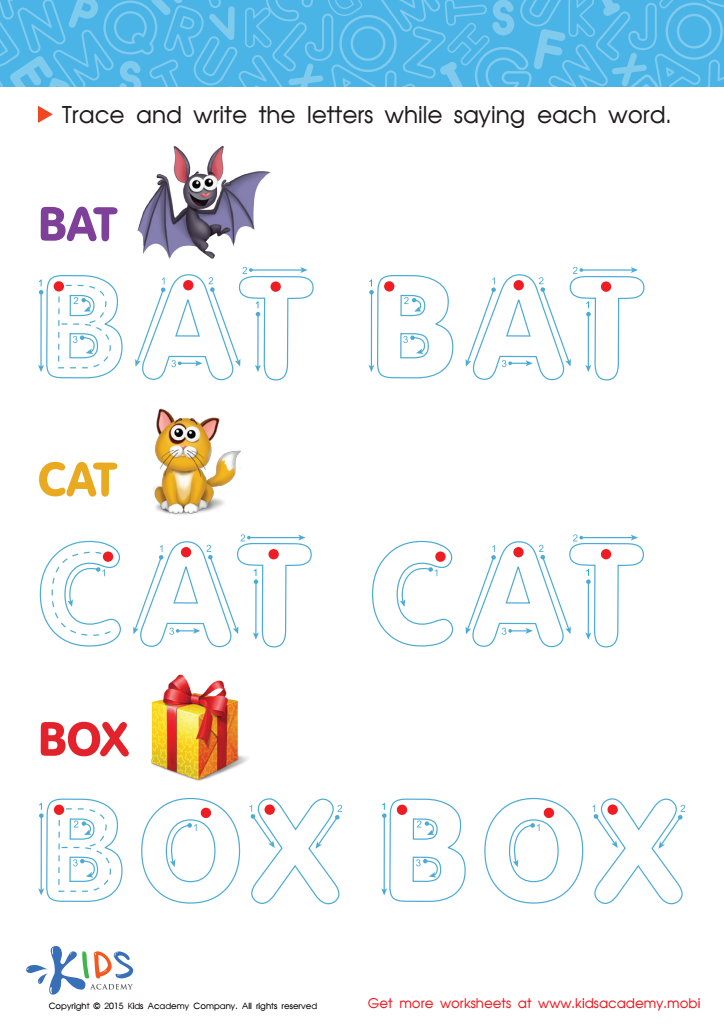
A Bat, a Cat and a Box Spelling Worksheet


.jpg)





Phonics practice is essential for children ages 3-8 as it forms the foundational skills necessary for reading and writing. Teaching young children the relationship between letters and sounds helps them decode words—a crucial step in developing reading proficiency. When children practice phonics through writing, they reinforce their understanding of how sounds correspond with letters and letter combinations, aiding in both reading fluency and spelling accuracy.
For parents and teachers, investing time in phonics practice sets up children for academic success. Without a strong grasp of phonics, many children struggle with reading comprehension, which affects their ability to learn across all subjects. Furthermore, early literacy skills are closely linked to cognitive development and long-term educational outcomes. Children who get adequate phonics practice are better prepared for the increased literacy demands of higher grades.
Phonics practice through writing also boosts children's fine motor skills. Holding a pencil, forming letters, and writing words strengthen their hand muscles and coordination. This dual advantage—enhanced literacy and motor skills—is critical during the formative years.
Creating a solid phonics foundation is beneficial not only for academic purposes but also for fostering a lifelong love for reading and learning. Therefore, parents and teachers should prioritize phonics practice to ensure holistic development during these critical early years.








