Reading skills improvement Writing Worksheets for Ages 3-8
6 filtered results
-
From - To
Enhance your child's reading skills with our specially-designed Writing Worksheets for Ages 3-8. At Kids Academy, we focus on boosting comprehension, vocabulary, and confidence in young readers through engaging activity sheets. Our carefully crafted exercises encourage children to recognize letters, understand word formation, and improve sentence structure in a fun, interactive way. Each worksheet is tailored to suit the developmental stages of children, making learning enjoyable and effective. Unlock your child's potential and make reading a delightful adventure with our superior quality writing worksheets – perfect for both classroom and home use. Explore more at Kids Academy today!
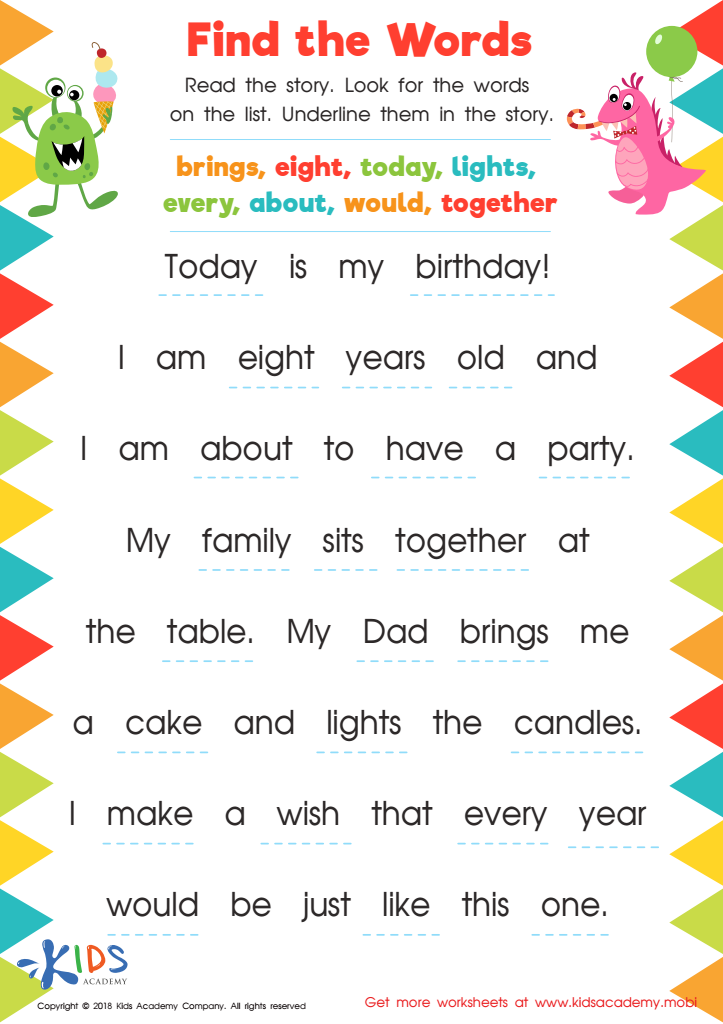
Find The Words Printable Worksheet
 Assign to My Students
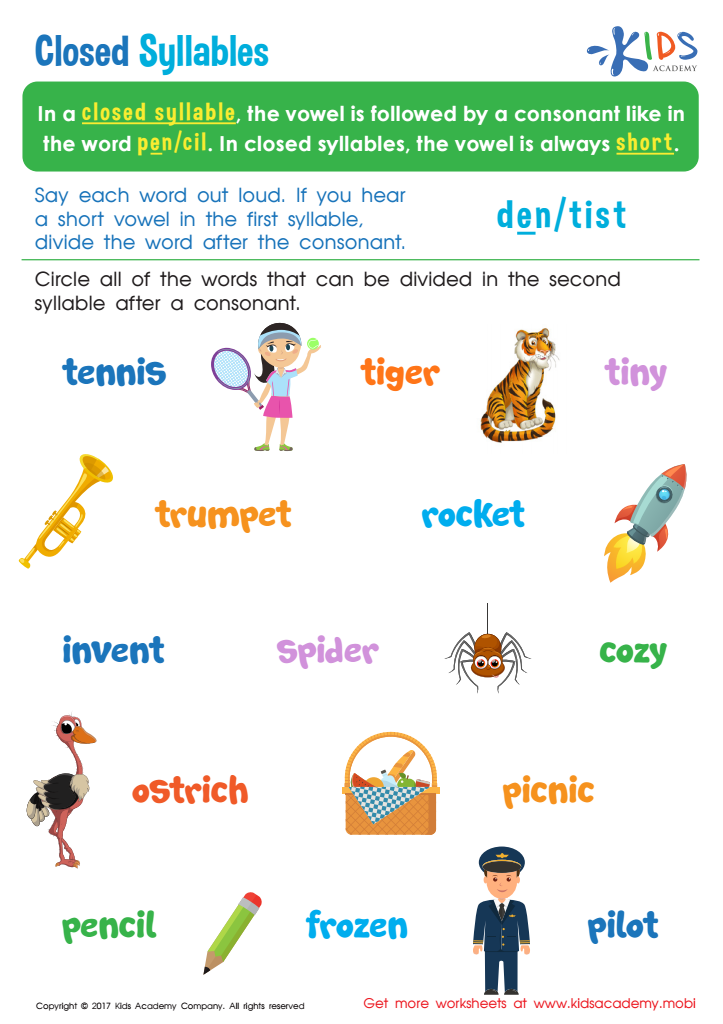
Closed Syllable Spelling Worksheet
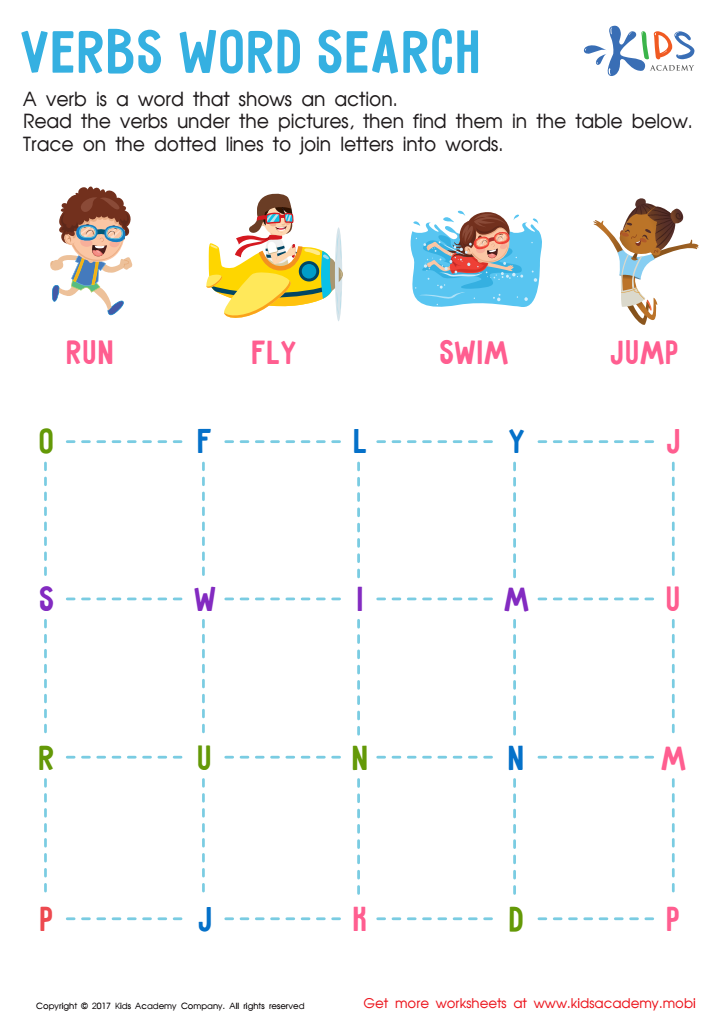
Verbs Word Search Worksheet
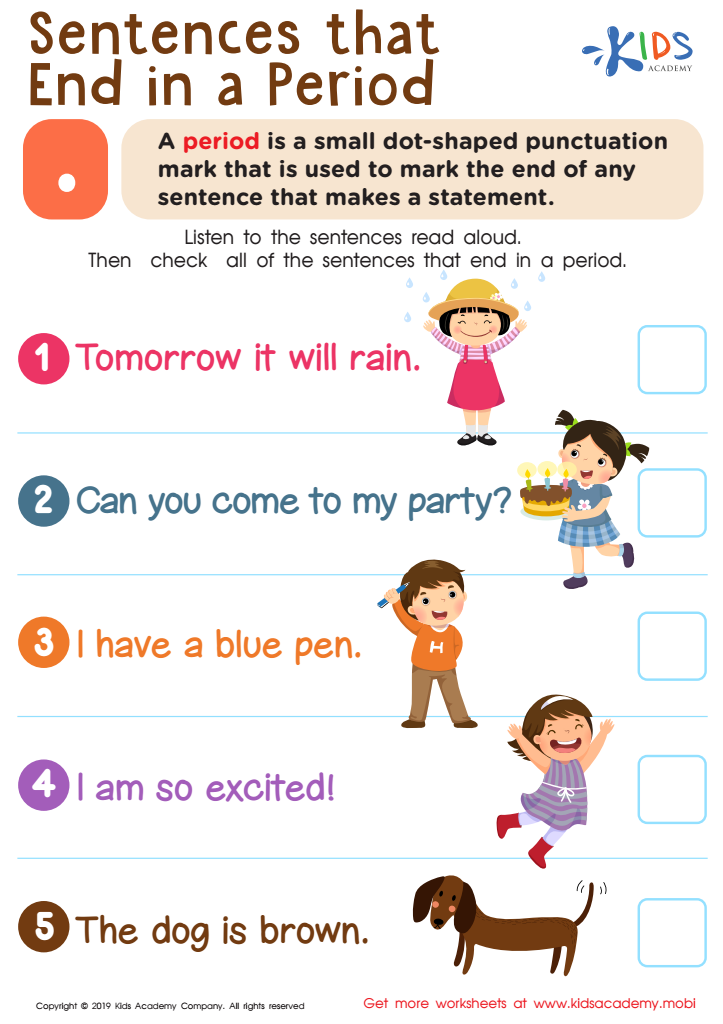
Sentences That End in a Period Worksheet
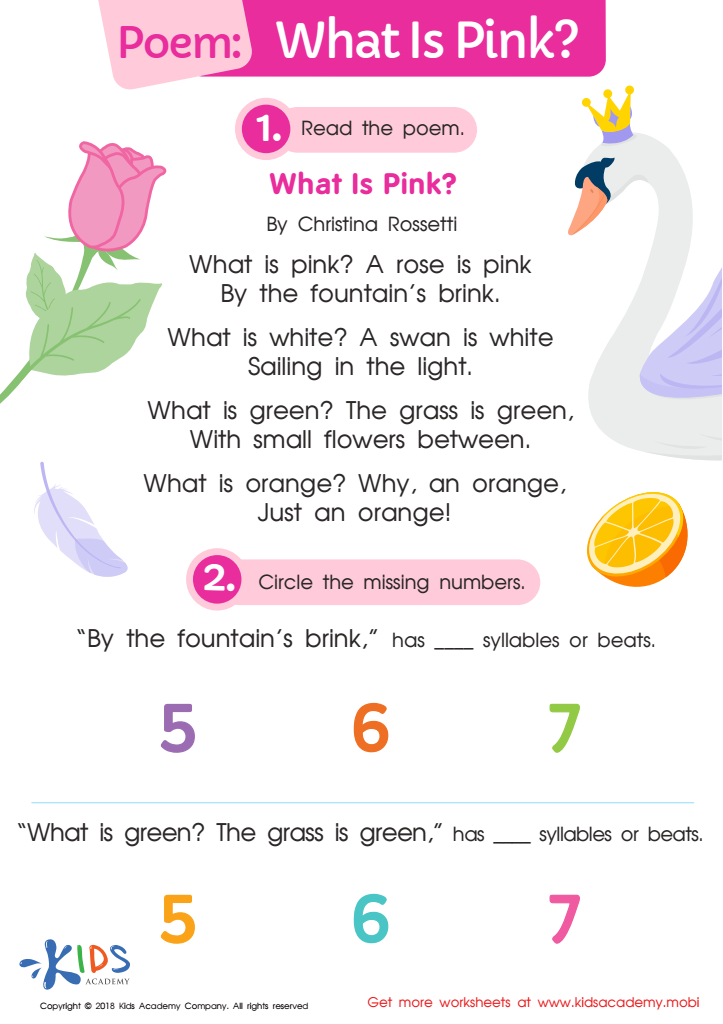
Poem: What Is Pink? Worksheet
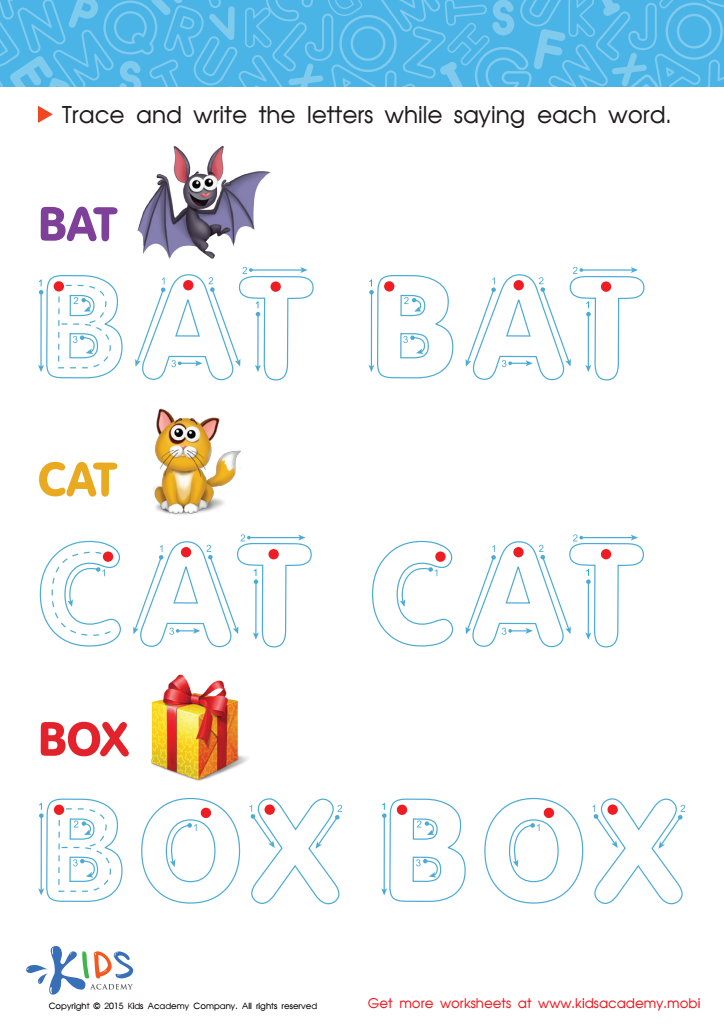
A Bat, a Cat and a Box Spelling Worksheet







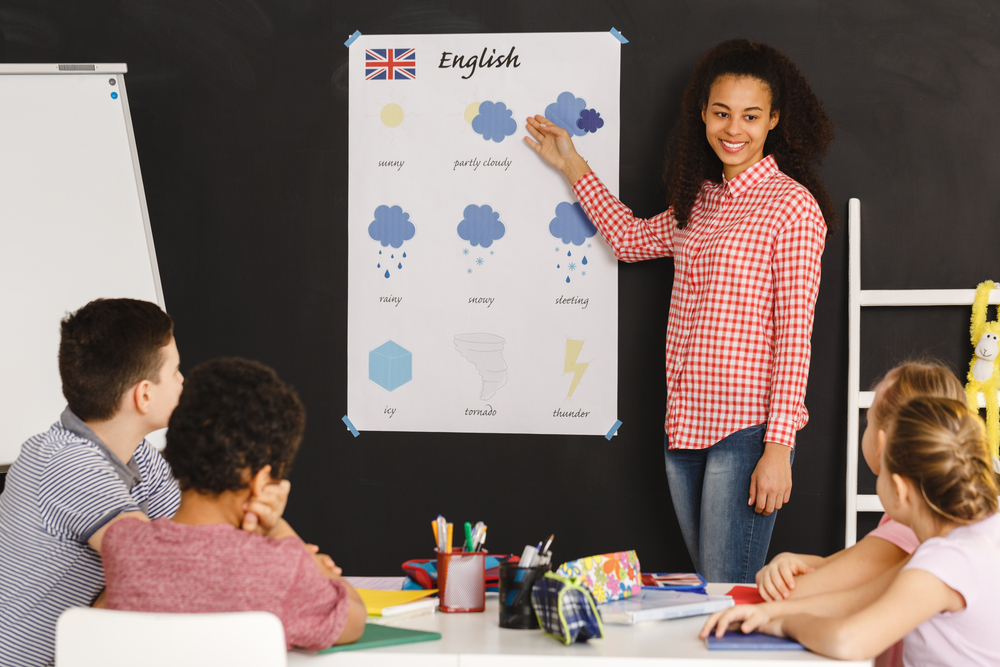
Reading skills are the cornerstone of a child's academic and personal development, especially between the ages of 3 and 8. This period, often termed the "formative years," is crucial for several reasons. First, strong reading skills lay the foundation for future educational success. Proficiency in reading enables children to grasp new concepts across various subjects, fostering a lifetime of learning and curiosity.
Second, early reading skills significantly impact a child's cognitive development. Reading exercises the brain, improves attention span, and enhances problem-solving abilities. As children engage with stories, they expand their vocabulary and understanding of language structure, which boosts both comprehension and communication.
Furthermore, reading nurtures emotional growth and empathy. Through stories and characters, children learn to understand different perspectives and emotions, building emotional intelligence. This skill is vital for developing healthy relationships and social skills.
Parents' involvement in reading activities introduces children to the joy of reading, making them more likely to continue reading independently.
Finally, economic implications also play a role. Literacy is linked to long-term success: higher literacy rates correlate with better job prospects and financial stability in adulthood. In summary, investing in reading skills between ages 3 and 8 equips children with the tools for academic achievement, cognitive development, emotional growth, and future socioeconomic advantages.








