
Understanding prefixes Writing Worksheets for Ages 3-8
6 filtered results
Difficulty Level
Grade
Age
-
From - To
Subject
Activity
Standards
Welcome to our "Understanding Prefixes Writing Worksheets" aimed at children ages 3-8. These engaging worksheets are designed to introduce young learners to the concept of prefixes, enhancing their vocabulary and writing skills. Through fun activities and exercises, kids will explore how prefixes modify the meanings of base words, fostering early literacy development. Our resources include colorful visuals and interactive tasks that make learning enjoyable. Each worksheet is crafted to accommodate various learning levels, ensuring that every child can progress at their own pace. Check out our printable worksheets and help your child build a strong foundation in language!
Favorites
With answer key
Interactive
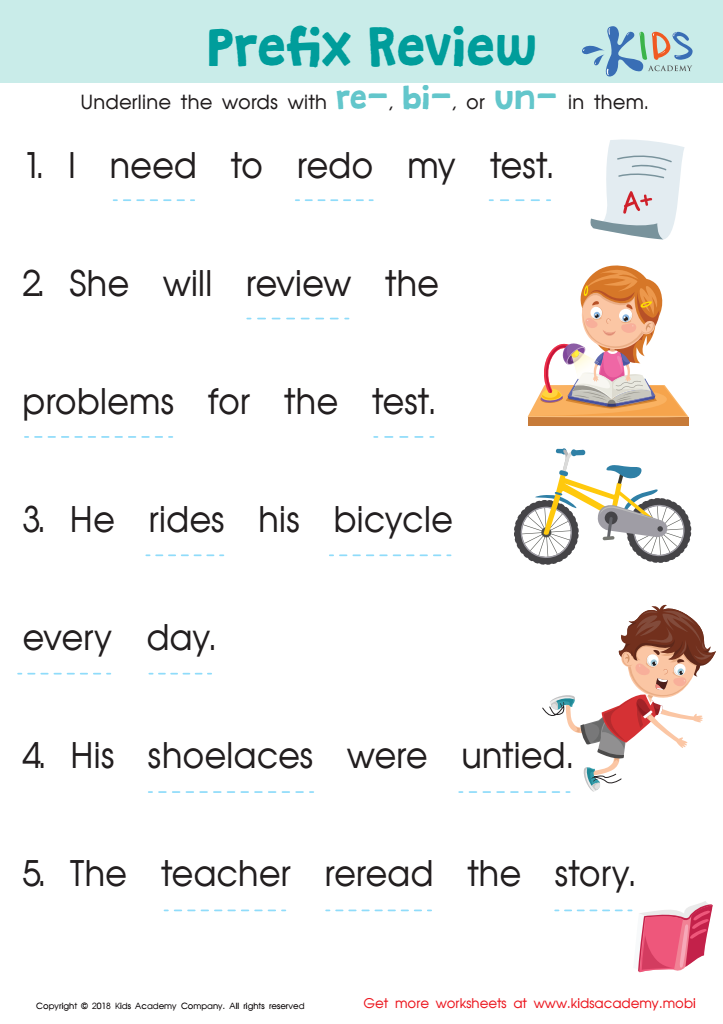
Prefix Review Worksheet
Learning prefixes is key for effective communication. Help your child master re-, bi-, and un- with a Kids Academy worksheet. Ask them to go through each sentence, underlining words with one of the prefixes. This will help them appreciate how prefixes alter the meaning of a root word.
 Assign to My Students
Prefix Review Worksheet
Worksheet
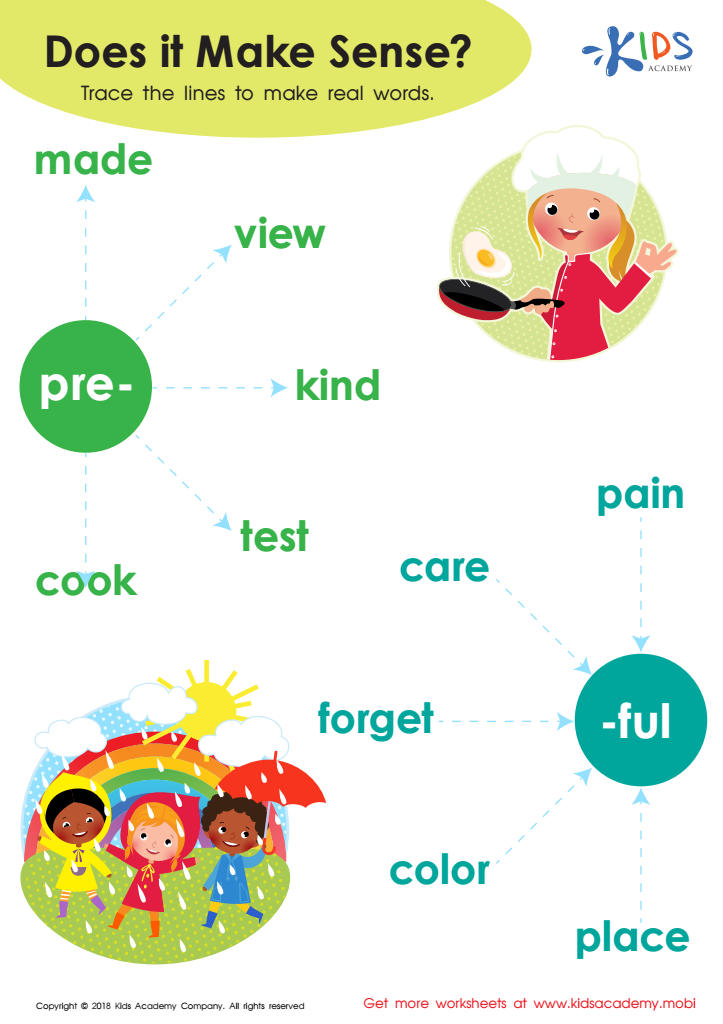
Prefix pre– and Suffix ful– Worksheet
Can't preforget something! This worksheet helps kids learn how to attach prefixes and suffixes to root words, forming new words that make sense. With this activity, they'll evaluate how the root words change when adding the prefix or suffix.
Prefix pre– and Suffix ful– Worksheet
Worksheet
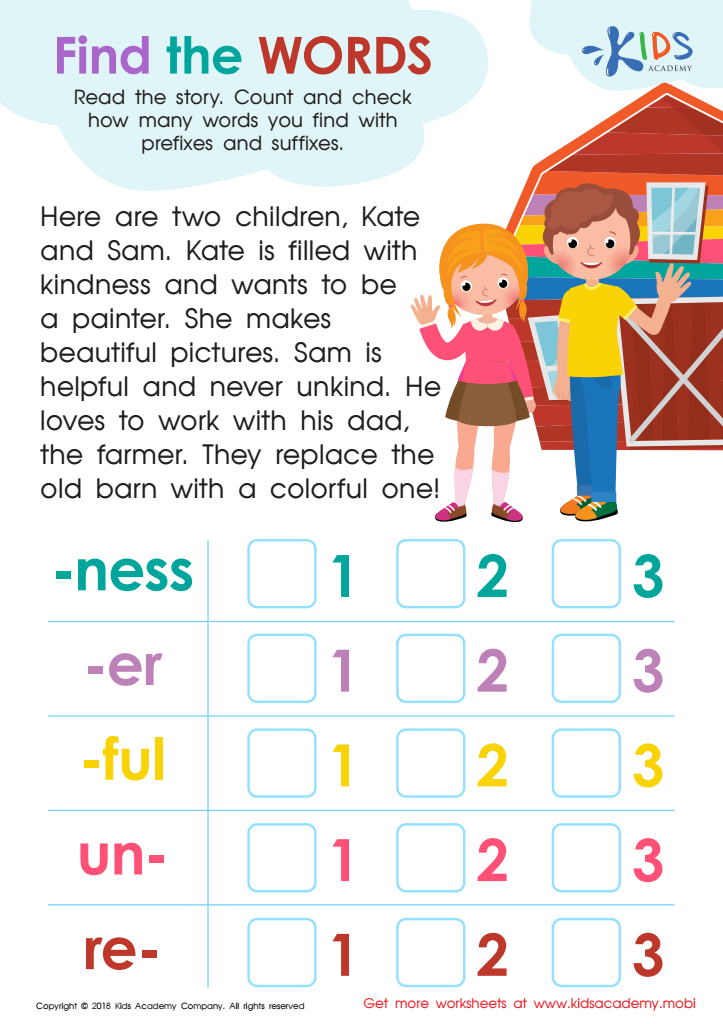
Prefix and Suffix Worksheet For Grade 3
Read the story about Sam and Kate and help your grade 3 child tally all the words with prefixes and suffixes. Check their work by counting the words and ticking the appropriate boxes. This entertaining worksheet will help develop their reading and counting skills! (80 words)
Prefix and Suffix Worksheet For Grade 3
Worksheet
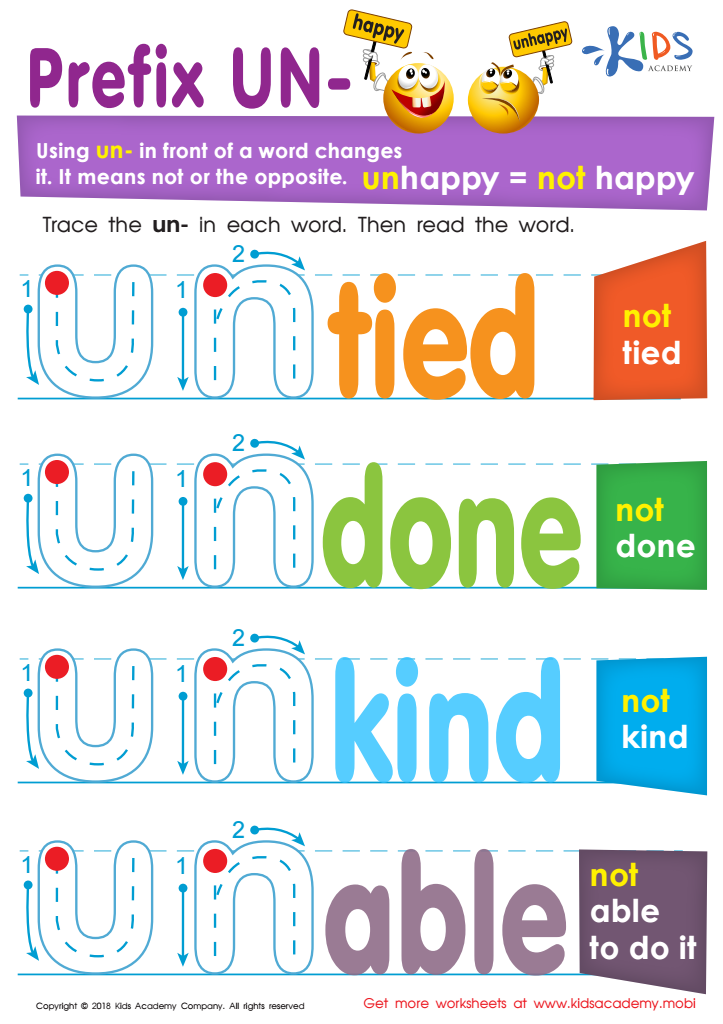
Prefix Un- Worksheet
Help your child understand the concept of adding "un-" to the front of words by giving examples such as "unhappy" (not happy) and "unserious" (not serious). Guide them in tracing the "un-" in each word and read it aloud together.
Prefix Un- Worksheet
Worksheet
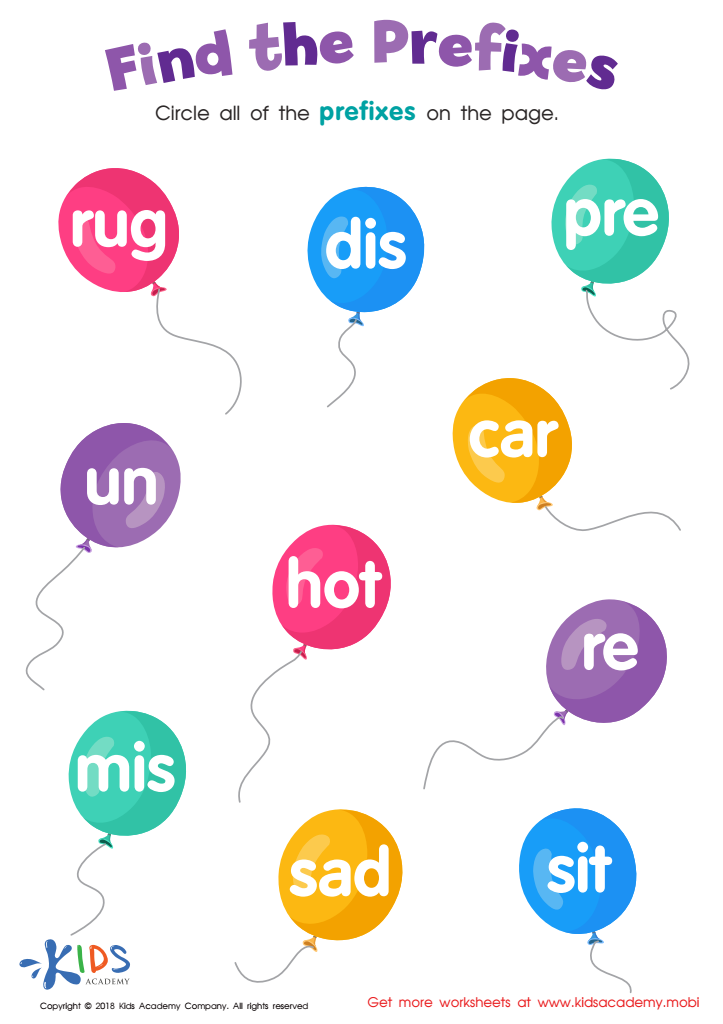
Reading: Find the Prefixes Worksheet
Students are asked to circle all prefixes on this worksheet and brainstorm a list of words that have them. It's a great tool for teaching vocabulary and helps students understand new and unfamiliar words by recognizing how prefixes change meaning.
Reading: Find the Prefixes Worksheet
Worksheet
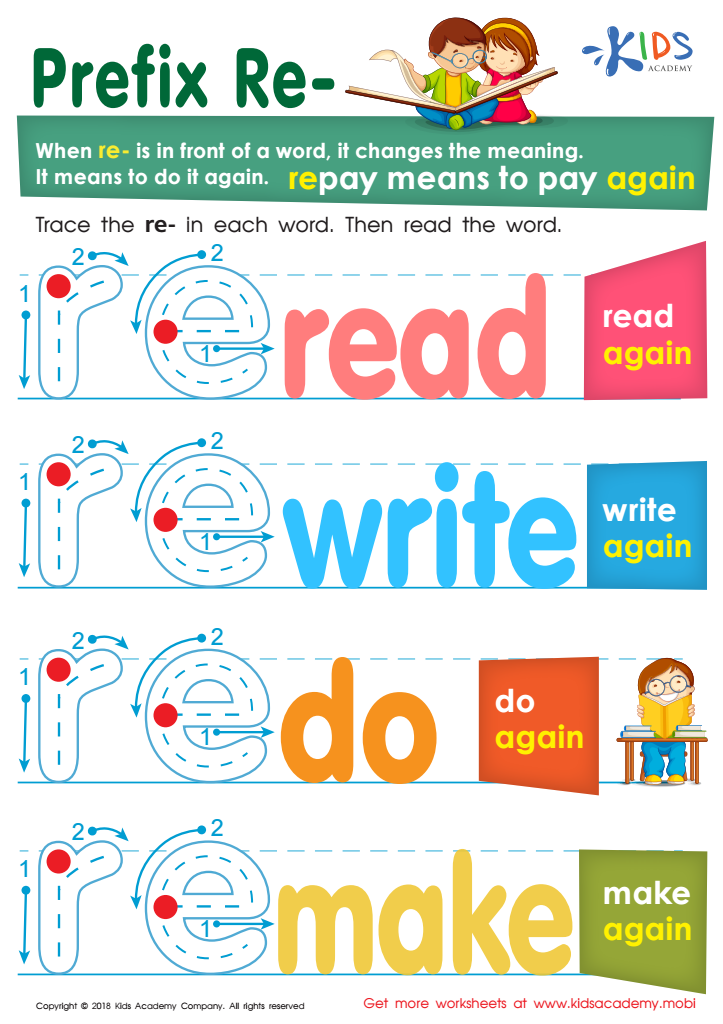
Prefix Re- Worksheet
Give your child examples of the re- prefix such as repay, restart, et cetera. Hold their hand and trace the re- in each word. Read the word aloud together and explain how it changes the meaning to 'to do again'. This worksheet will help your child see the re- prefix in action.
Prefix Re- Worksheet
Worksheet
Join Kids Academy for Free
Who is primarily going to use this learning content?








Understanding prefixes is essential for young learners aged 3-8 because it lays a critical foundation for language development and literacy skills. Prefixes are the building blocks of words, and recognizing their meanings helps children decode new vocabulary, enhancing their reading abilities. As children learn what each prefix signifies, they can infer the meanings of unfamiliar words, fostering a love for reading and exploration of language.
Moreover, early exposure to prefixes encourages curiosity and creativity in language. Children not only expand their vocabulary but also learn to play with words, generating new terms by adding prefixes to root words. This playful interaction with language helps cement their understanding and boosts their confidence in communication.
Parents and teachers can also harness knowledge of prefixes to engage children in fun, interactive activities, making learning enjoyable and effective. Such engagement not only aids in literacy development but also enhances cognitive skills like critical thinking and problem-solving.
In summary, teaching prefixes equips children with essential tools for reading comprehension and language proficiency and ignites their passion for communication, making it a vital area of focus for parents and educators alike.








