
Alphabetical order understanding Alphabet Worksheets for Ages 3-9
6 filtered results
Difficulty Level
Grade
Age
-
From - To
Subject
Activity
Standards
Explore our "Alphabetical Order Understanding Alphabet Worksheets" designed for children aged 3-9! These engaging worksheets help young learners grasp the concept of alphabetical order through fun activities and colorful visuals. Each interactive exercise focuses on enhancing letter recognition, sorting skills, and order sequencing. With a variety of challenges tailored to different age groups, kids will enjoy learning to organize words and names efficiently. Perfect for home or classroom use, our worksheets foster essential literacy skills while keeping children motivated and entertained. Promote early reading success with our carefully crafted materials, and watch your little ones enjoy mastering the alphabetic sequence!
Favorites
With answer key
Interactive
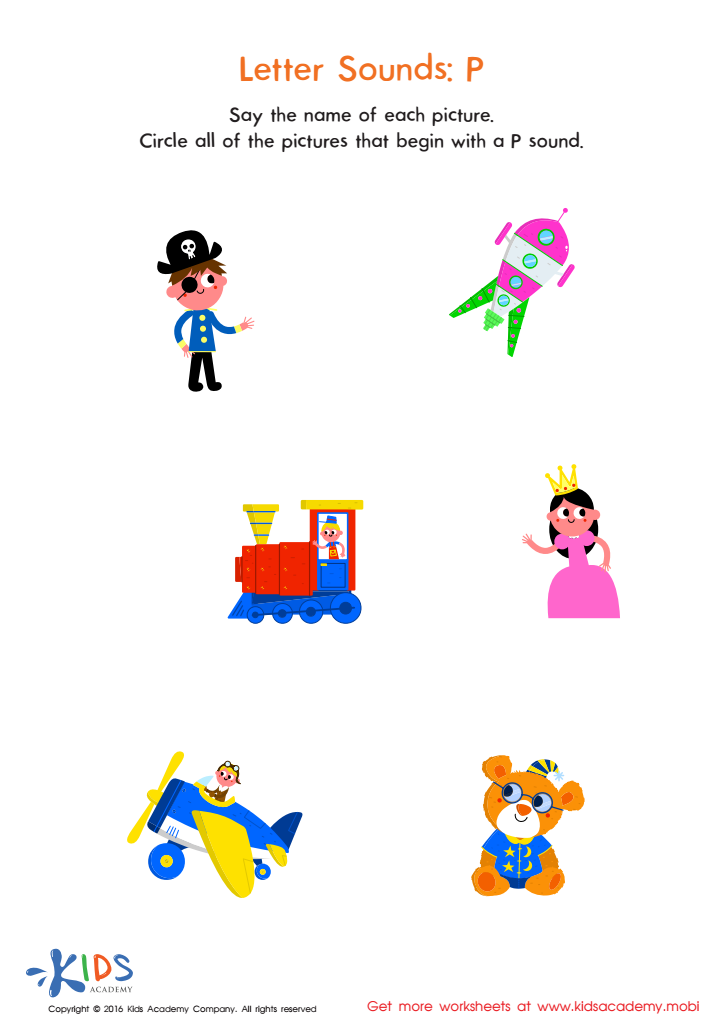
Letter P Sound Worksheet
Think P! Kids practice phonics with this fun letter P worksheet. With delightful illustrations, they'll sound out simple words and get closer to reading.
Letter P Sound Worksheet
Worksheet
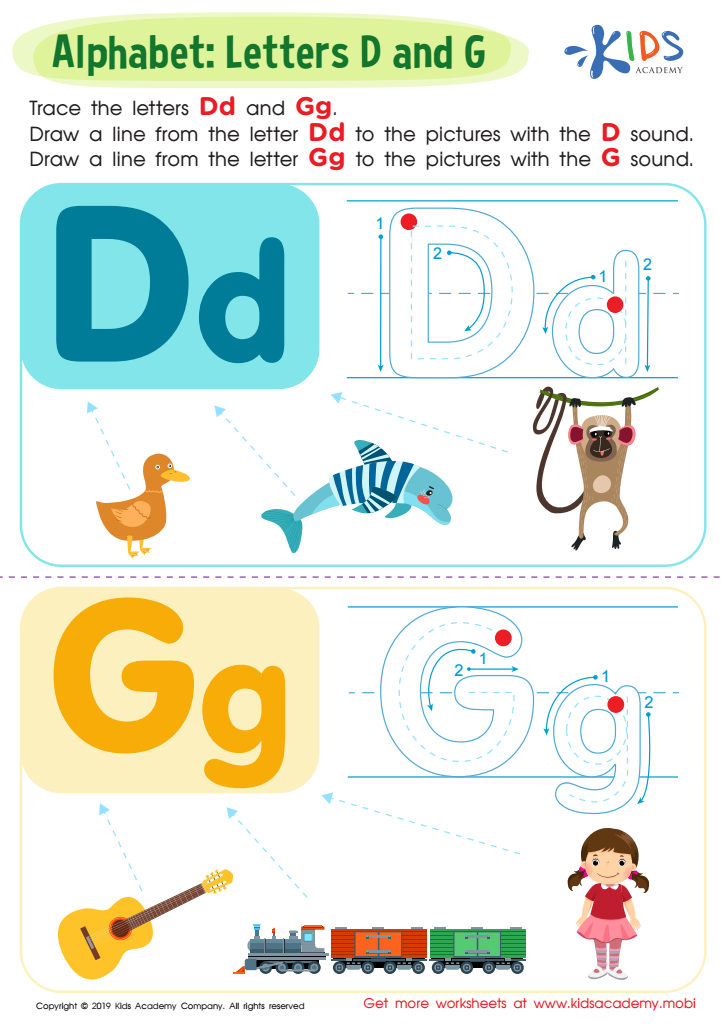
Letter D and G Tracing Worksheet
Kids can explore their imagination with the 'Alphabet: Letters D and G' worksheet! They'll trace capital and lowercase "D" and "G" and trace a line from the words. Colorful animals and objects make the task more fun and entertaining!
Letter D and G Tracing Worksheet
Worksheet
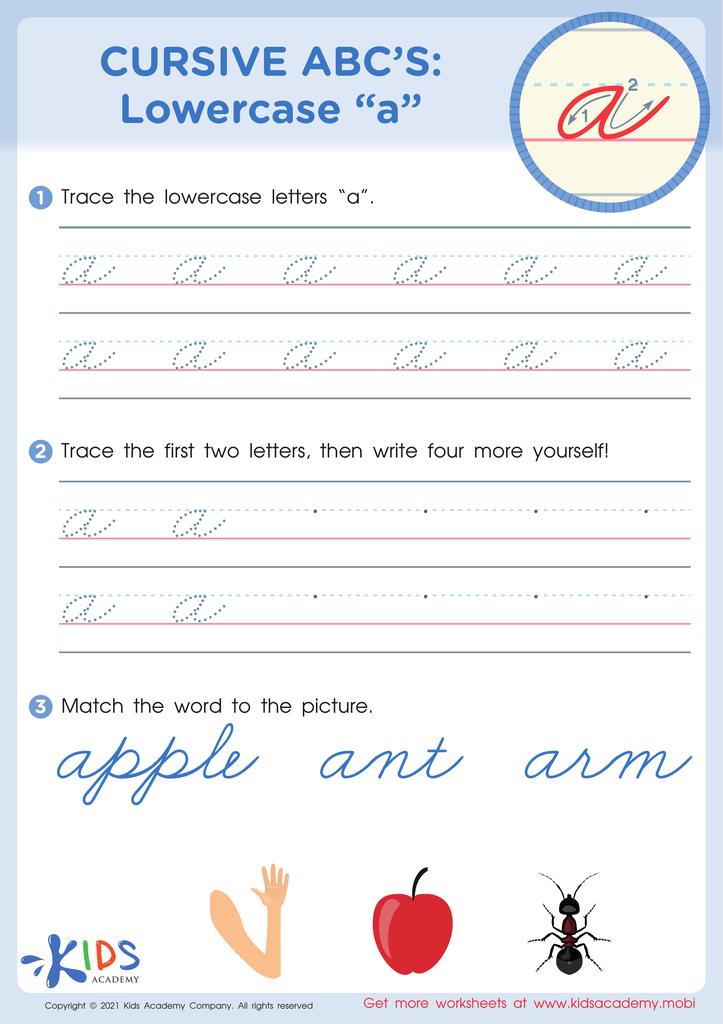
Cursive ABCs: Lowercase a
Help your children learn to write cursive letters with these free tracing sheets. They'll practice their handwriting, develop printing skills and build vocabulary. By tracing the lowercase letter “a” multiple times, they'll learn how it's formed and be ready to write it on their own. The colorful pictures at the bottom of each page also offer new words beginning with the letter 'a'.
Cursive ABCs: Lowercase a
Worksheet
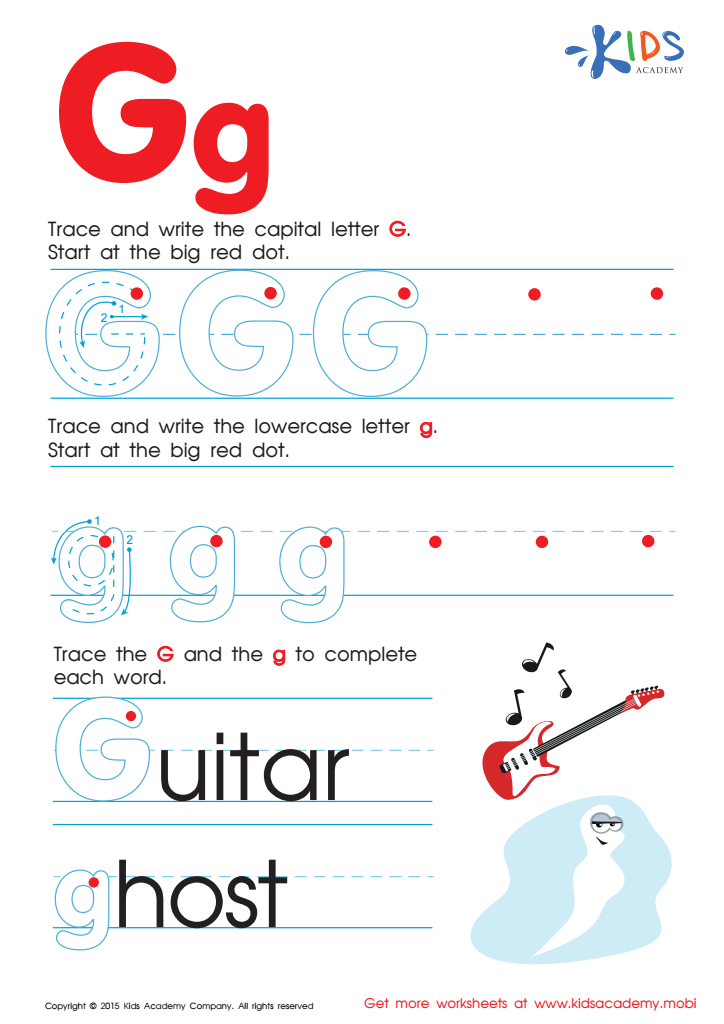
Letter G Tracing Page
Get ready to trace the letter "G" – with a big red spot as the starting point, trace the lines and watch the letter appear. Uppercase and lowercase letters are both easy and fun to write. Give it a go and finish the word "go". Play the guitar and say "hello" to a funny ghost!
Letter G Tracing Page
Worksheet
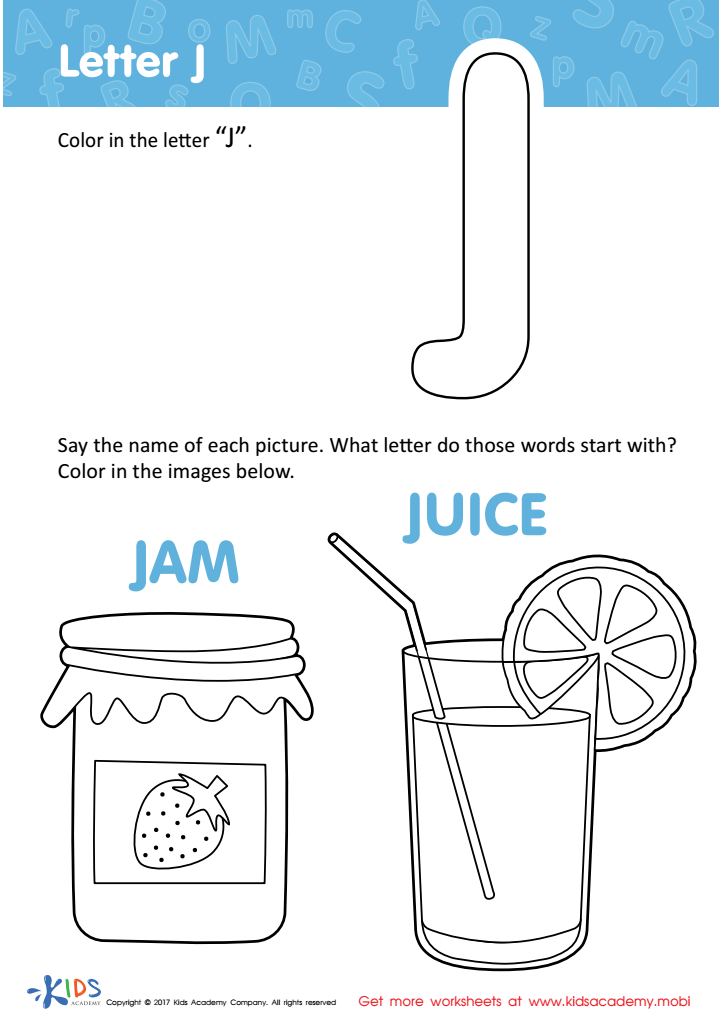
Letter J Coloring Sheet
Practice the letter 'J' with your little one with this fun coloring page! Pictures of jar, juice, jam and jelly make it an enjoyable experience for kids. Learning the letter and coloring is fun for even the youngest learners.
Download (PDF)
 Assign to My Students
Assign to My Students
Letter J Coloring Sheet
Worksheet
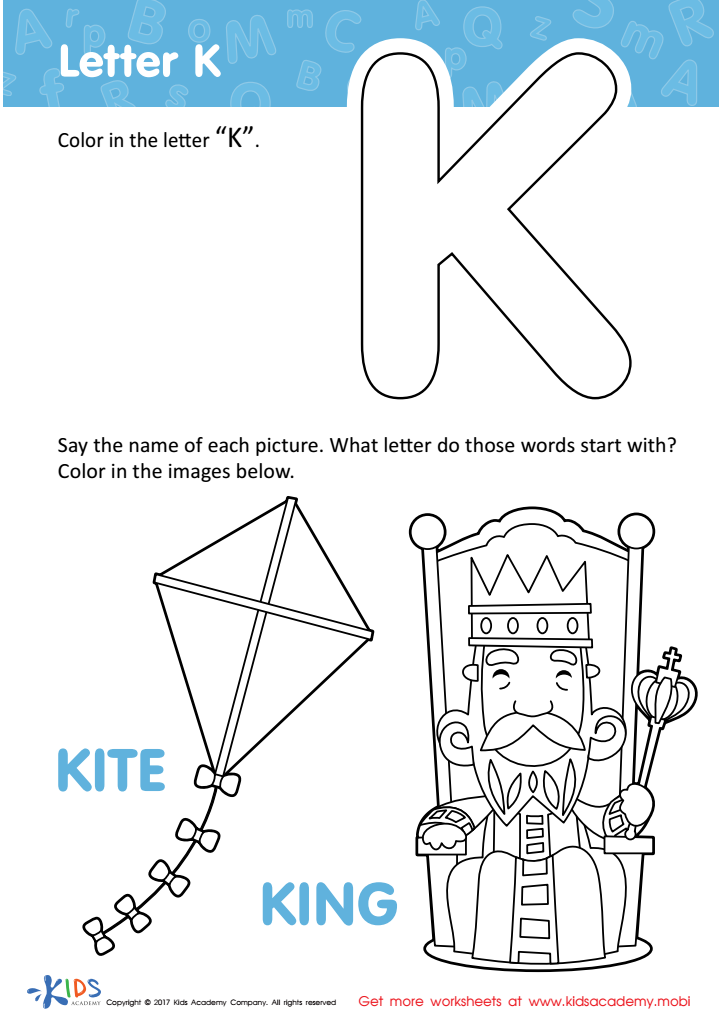
Letter K Coloring Sheet
This letter K coloring page captivates your child's creativity while learning the letter! Showcasing a king and kite, common words for their age group, it's sure to spark their imagination.
Download (PDF)
Assign to My Students
Assign to My Students
Letter K Coloring Sheet
Worksheet
Join Kids Academy for Free
Who is primarily going to use this learning content?







Understanding the alphabet and its order is crucial for children aged 3-9, as it lays the foundation for their literacy development. Learning the alphabet helps children recognize letters, understand their sounds, and form connections between letters and words. This foundational skill plays a significant role in early reading and writing abilities, enabling youngsters to decode words efficiently as they advance in school.
Parents and teachers should emphasize alphabetical order because it aids in organizing information and improves memory skills. When children can alphabetize words, they develop logical thinking and categorization abilities, essential for academic success across subjects. Mastering alphabetical order also enhances vocabulary and spelling, supporting clearer communication.
Moreover, familiarity with alphabetical order boosts children’s confidence in engaging with books, libraries, and various educational resources, promoting a lifelong love for reading and learning. It empowers them to independently find and access information, setting a precedent for effective research habits.
In a world that values information access and organization, ensuring children comprehend the alphabet and its order is a valuable investment in their future learning. Thus, parents and educators should prioritize this fundamental skill in their early literacy programs and home activities.







