
Color Identification Alphabet Worksheets for Ages 3-9
6 filtered results
Difficulty Level
Grade
Age
-
From - To
Subject
Activity
Standards
Discover our engaging Color Identification Alphabet Worksheets designed for children ages 3-9! These educational and fun worksheets blend the excitement of learning colors with alphabet recognition, fostering essential early literacy skills. Perfect for parents and teachers, each worksheet encourages children to identify and color letters while associating them with vibrant hues. Whether your child is just starting to learn their ABCs or looking to reinforce their knowledge, our worksheets offer an interactive way to enhance their learning experience. Strengthen your child's color identification and alphabet skills with this enjoyable resource from Kids Academy!
Favorites
With answer key
Interactive
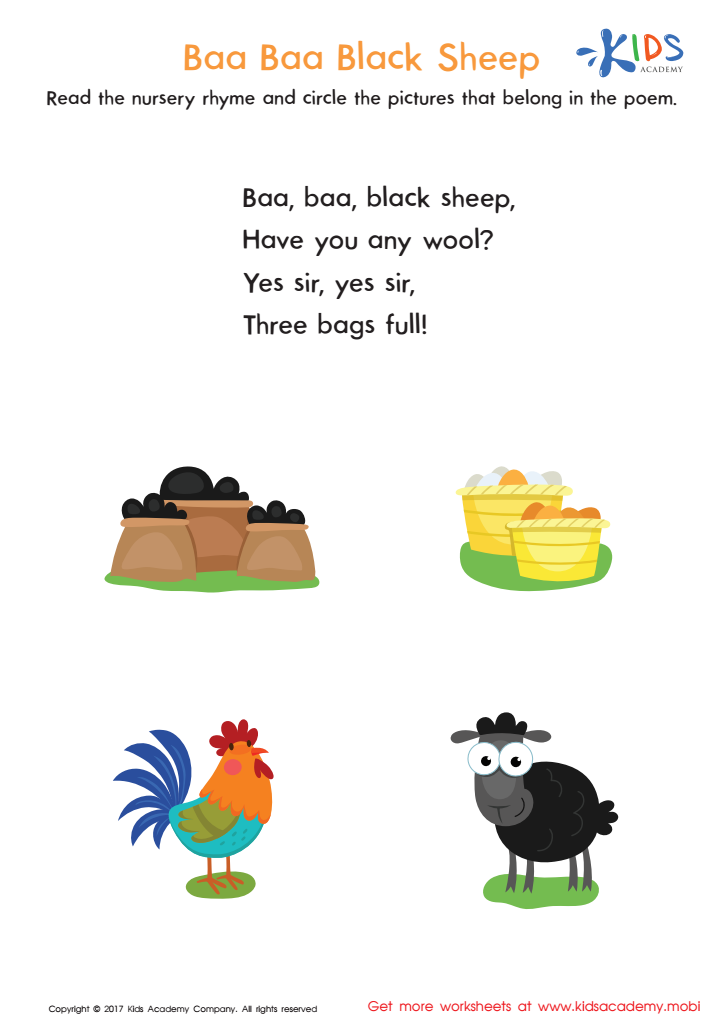
Baa Baa Black Sheep Printable
Jumpstart your child's reading skills with this printable Baa Baa Black Sheep worksheet! Recite the lines with them, then have them select the pictures associated with the poem to test comprehension. Fun and educational!
Baa Baa Black Sheep Printable
Worksheet
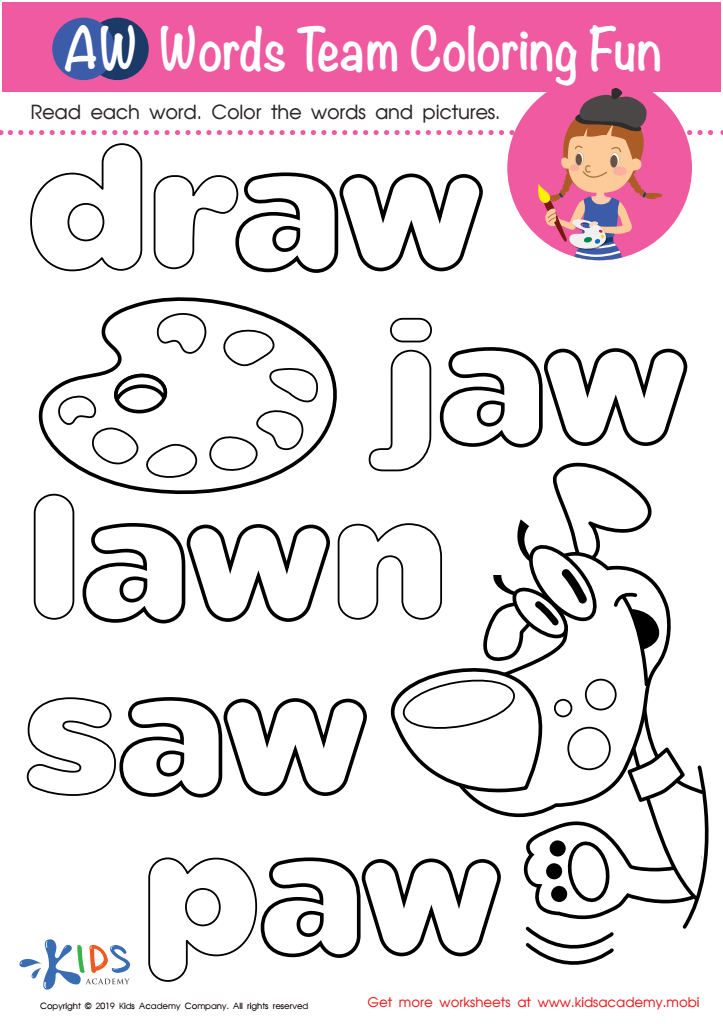
AW Words Team Coloring Fun Worksheet
Coloring words they can read is a blast for little learners! This worksheet offers emerging readers the chance to practice and gain confidence in reading words from the -aw family, while also improving fine-motor and creativity skills. Without knowing it, they'll learn about phonetic teams along the way!
Download (PDF)
 Assign to My Students
Assign to My Students
AW Words Team Coloring Fun Worksheet
Worksheet
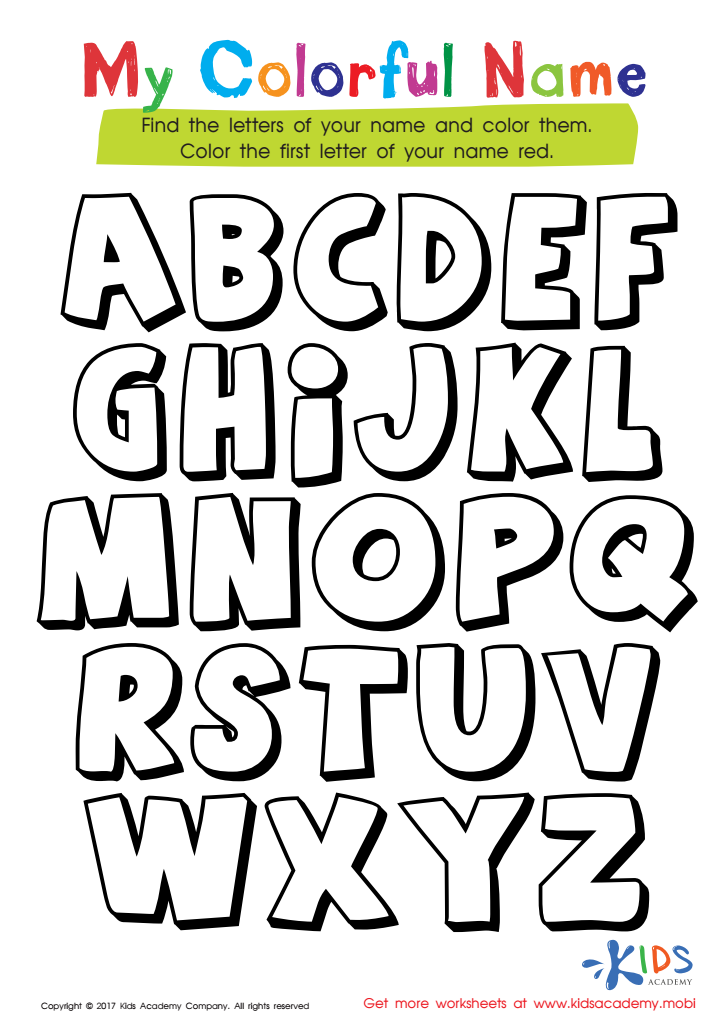
My Colorful Name Worksheet
Writing their names is a milestone for children. With this worksheet, they recall the letters in their name and color the letters one at a time. Spelling and alphabet order are reinforced as they find each letter. Use this fun printable to help kids learn to write their names!
Download (PDF)
Assign to My Students
Assign to My Students
My Colorful Name Worksheet
Worksheet
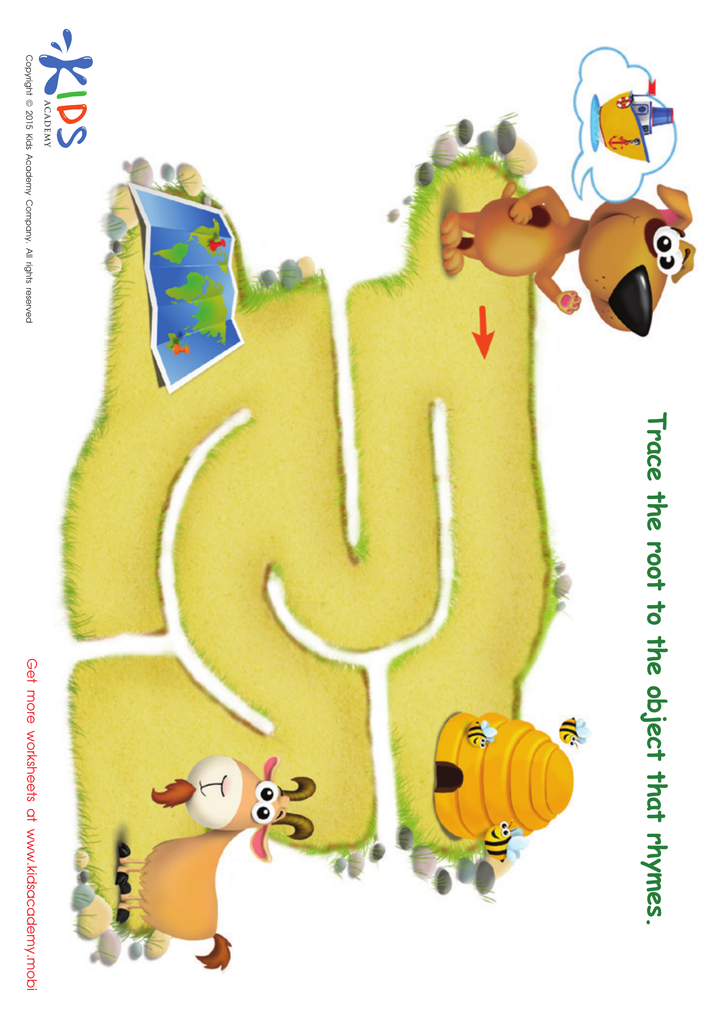
Boat Rhyming Words Worksheet
Help your preschooler complete the maze and rhyme with their favorite pooch! Draw a line from the dog to the matching item - is it a hive, a map or a goat? This fun activity lets them name the root words of pictures, and listen for rhymes to help them with phonics and reading.
Boat Rhyming Words Worksheet
Worksheet
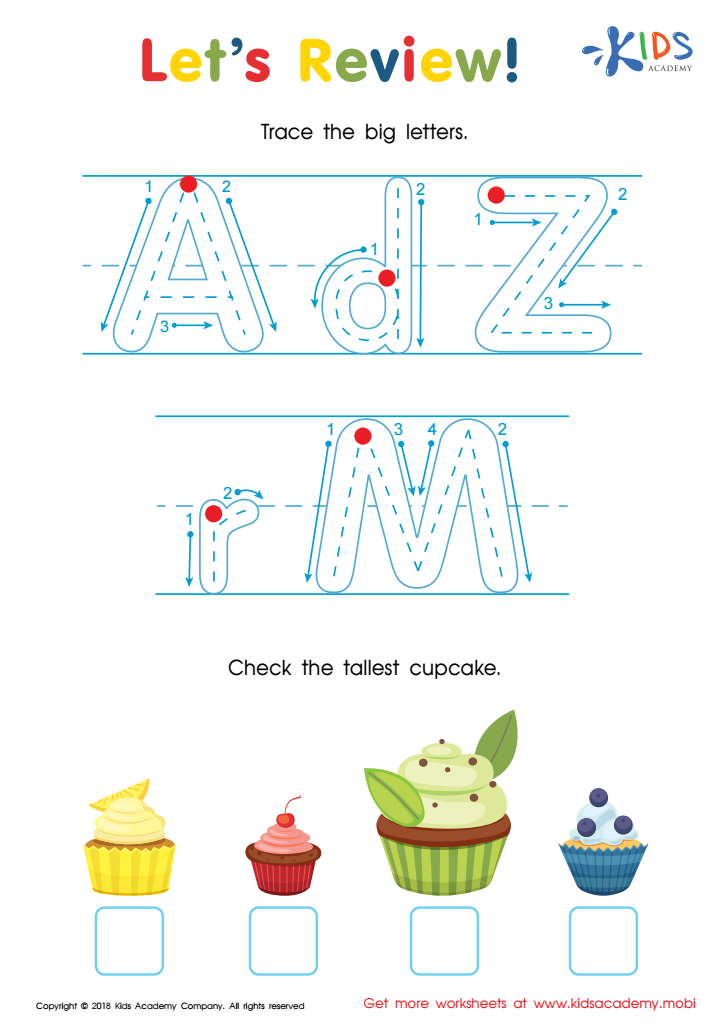
Let's Review! Big Letters Worksheet
Teach your child to read and write big and small letters with Kids Academy's tracing worksheet. Show them how to guide their pencil with each stroke. Reinforce their understanding with fun cupcake pictures and help them choose the tallest one. It's a great way to help them differentiate between uppercase and lowercase letters.
Let's Review! Big Letters Worksheet
Worksheet
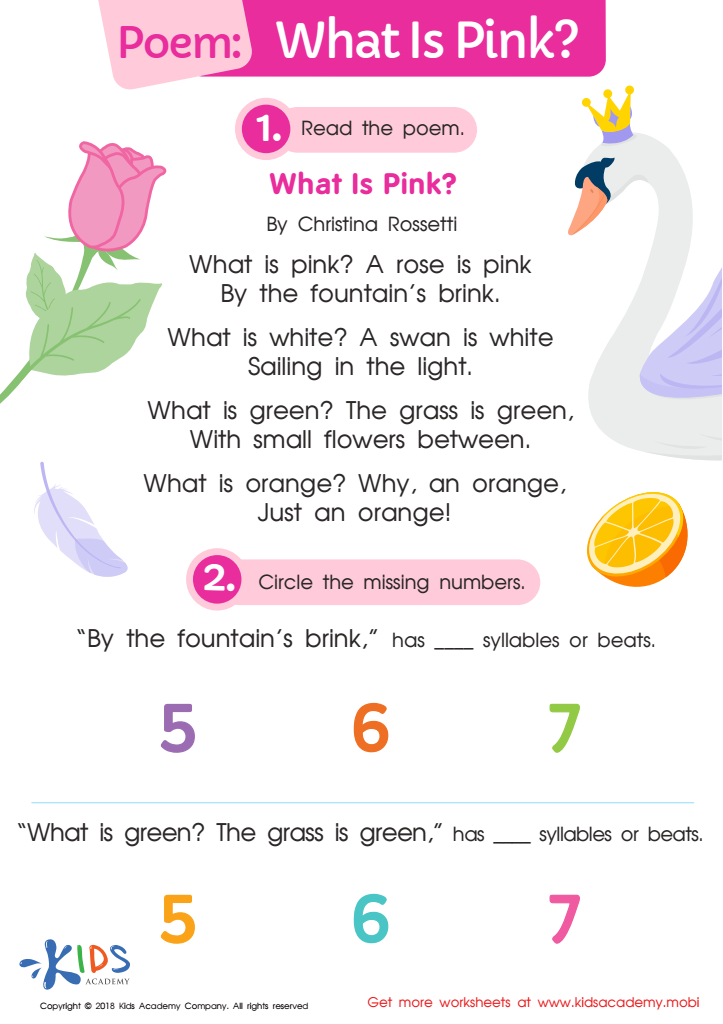
Poem: What Is Pink? Worksheet
Help your kids learn with short, fun, interesting poems! Read it aloud to them and point out the rhyme patterns. Have them circle the missing numbers to answer two questions. Show examples of objects with the colors in the poem. This will help them learn to read, and also understand colors better.
Poem: What Is Pink? Worksheet
Worksheet
Join Kids Academy for Free
Who is primarily going to use this learning content?







Parents and teachers should care about Color Identification Alphabet for children ages 3-9 because it lays a solid foundation for essential cognitive and language development. By associating colors with letters, children engage multiple areas of the brain simultaneously, enhancing memory retention and overall learning. The vibrant, visually stimulating alphabets capture young minds' interest, making the learning process enjoyable and effective.
Early identification of colors paired with alphabet recognition also promotes key developmental milestones such as improved fine motor skills through writing and coloring activities. This dual focus nurtures both creative and analytical thinking. Color-based learning creates an excellent opportunity to introduce new vocabulary and emotional cues, building a child's language skills and emotional intelligence.
Additionally, integrating these concepts helps children make connections between visual cues and language, which is essential for reading readiness. Visual learning tools resonate well with young learners who are often more responsive to engaging, colorful materials. By introducing the Color Identification Alphabet at an early age, parents and teachers can provide a structured yet fun learning framework that lays the groundwork for future academic success and lifelong learning enthusiasm. For these reasons, this educational approach is a valuable asset in early childhood education.







