Rhyming skills development Alphabet Worksheets for Ages 3-9
5 filtered results
-
From - To
Our Rhyming Skills Development Alphabet Worksheets are designed for children ages 3-9, blending fun and education seamlessly. Using creative exercises, these worksheets help kids understand and identify rhyming words while reinforcing their alphabet knowledge. Engaging activities such as matching words, filling in missing rhymes, and easy-to-follow instructions ensure that learning is enjoyable. Ideal for both classroom use and home study, these worksheets foster early literacy and phonemic awareness, providing a strong foundation for reading proficiency. Boost your child's language skills today with our expertly crafted, age-appropriate rhyming alphabet worksheets.
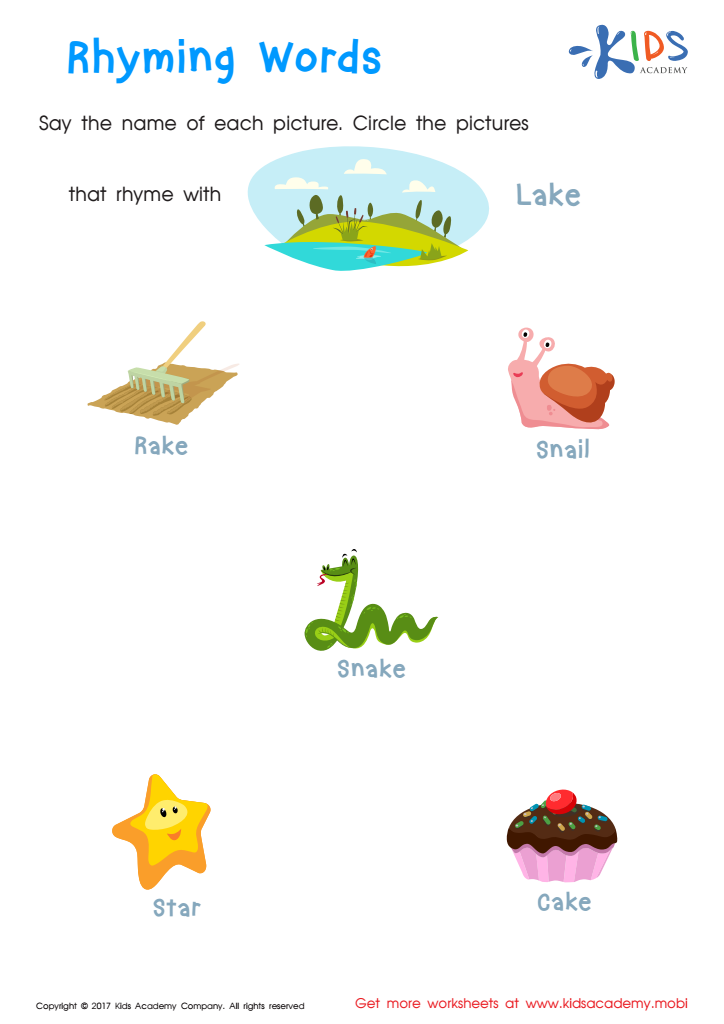
Rhyming Words Rhyming Worksheet
 Assign to My Students
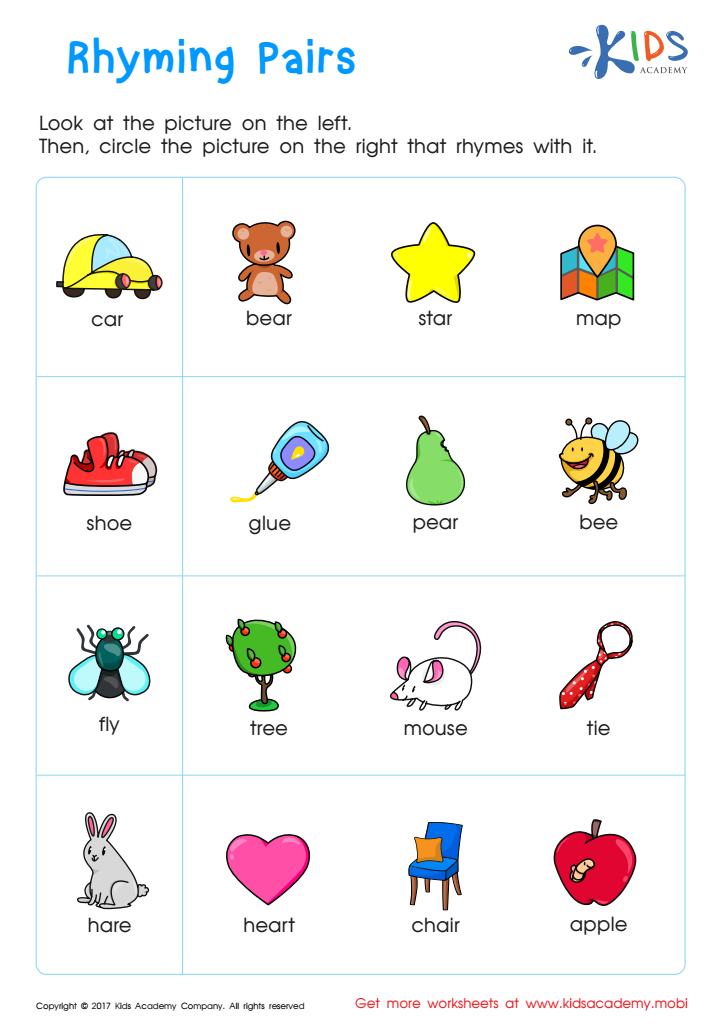
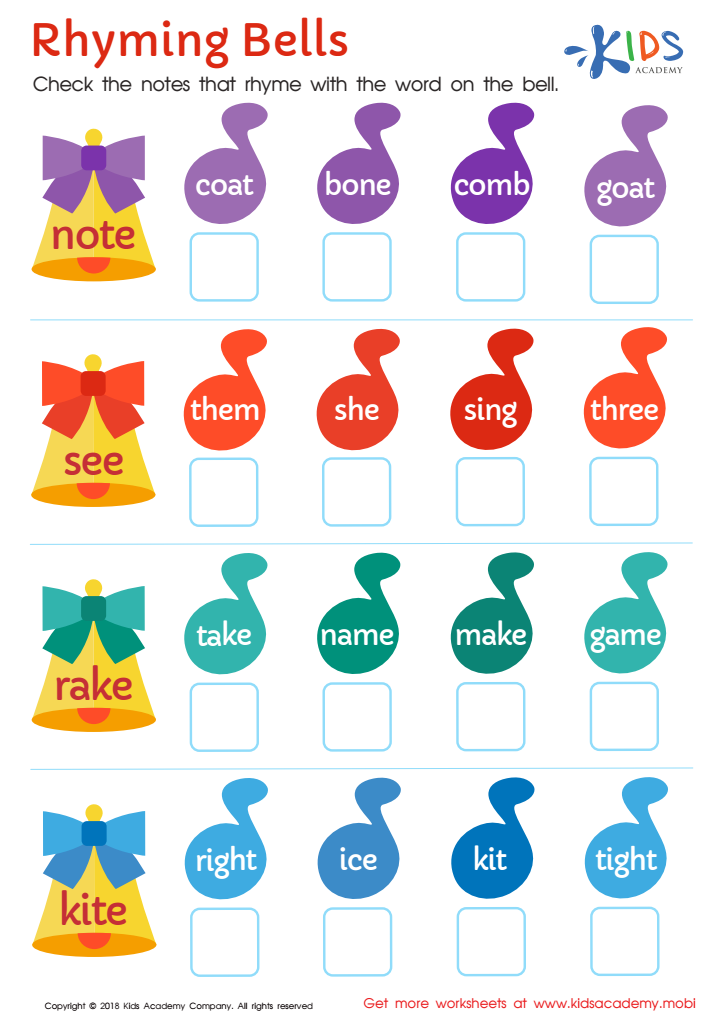
Rhyming Bells Worksheet
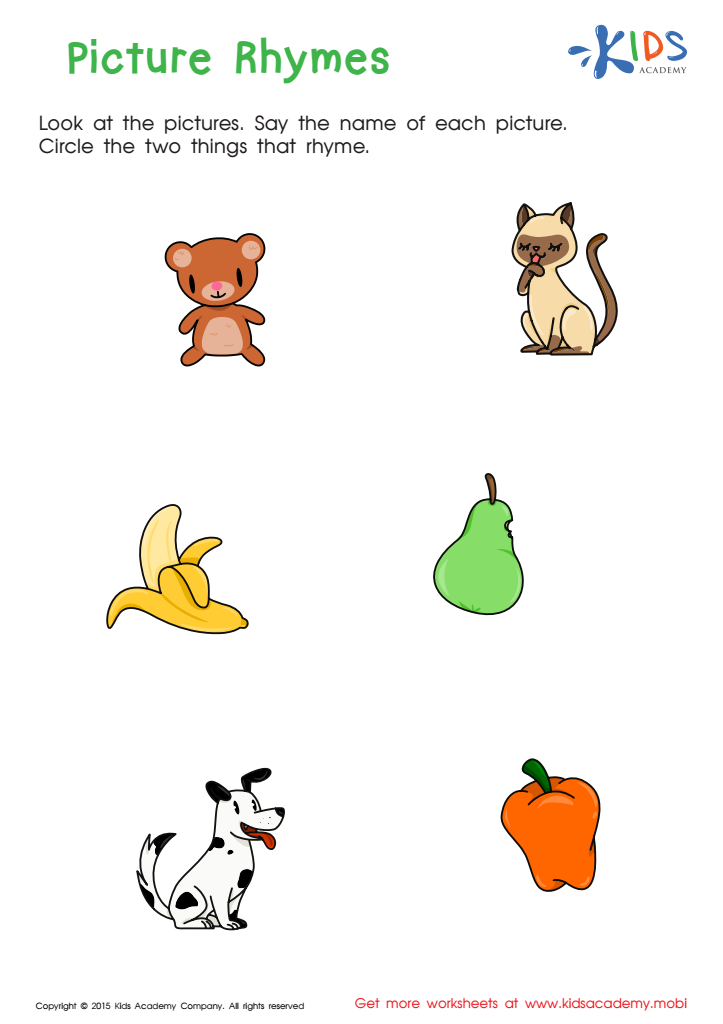
First Words: Picture Rhymes Worksheet
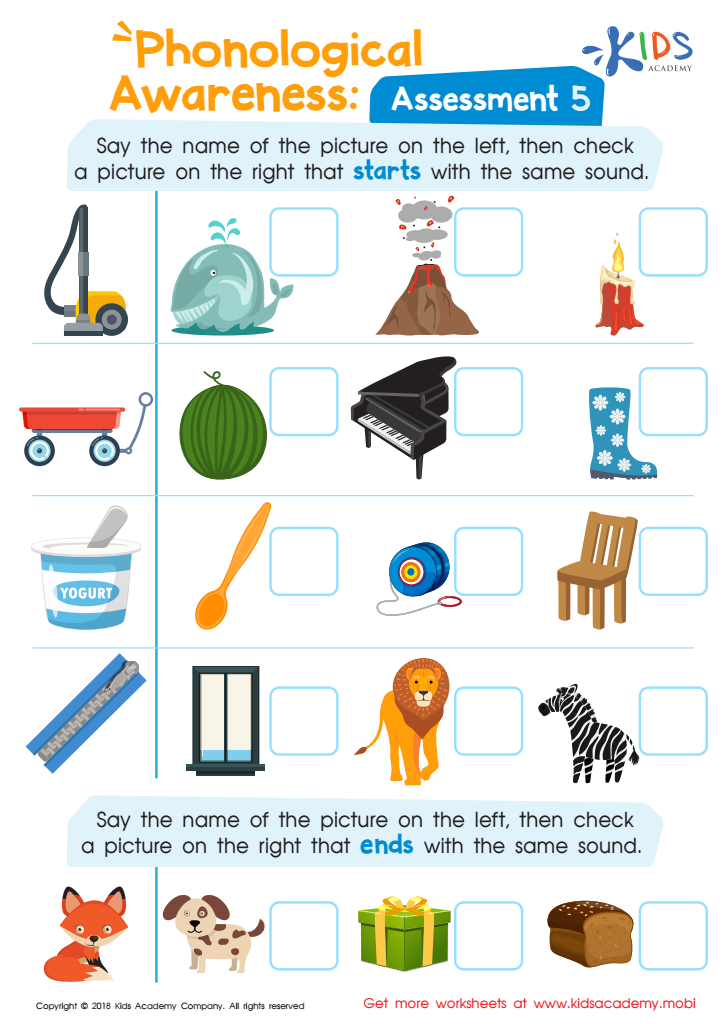
Phonological Awareness: Assessment 5 Worksheet






Developing rhyming skills and familiarity with the alphabet for children ages 3-9 is crucial for early literacy and overall cognitive development. Rhyming helps children understand the patterns and sounds of language, which is foundational for reading and phonemic awareness. When children recognize rhymes, they are better able to anticipate sounds and word families, enabling smoother decoding of new words as they read.
Knowing the alphabet fluently is essential for young learners. It provides them with the building blocks needed to decode written language. Familiarity with letter shapes and sounds forms a cornerstone of reading and writing skills.
Rhyming activities can be engaging and enjoyable, fostering a love for language and literacy from an early age. This kind of playful learning helps children in developing memory, listening skills, and vocabulary. Through songs, chants, and rhyming stories, children become more immersed in the learning process.
Overall, investing in rhyming skills and alphabet knowledge equips children with necessary tools for academic success. Early proficiency in these areas can lead to higher reading levels, better comprehension skills, and an enduring love for learning, forming a solid foundation for their future education. Therefore, parents and teachers should recognize and support the development of these critical skills during these formative years.







