Visual discrimination Alphabet Worksheets for Ages 3-9
5 filtered results
-
From - To
Enhance your child's learning experience with our Visual Discrimination Alphabet Worksheets, designed specifically for ages 3-9. These engaging activities promote essential visual discrimination skills, helping kids distinguish between similar letters and shapes. Our fun and interactive worksheets combine educational benefits with enjoyable exercises, enabling young learners to identify and differentiate between alphabetic characters effectively. Perfect for preschool and early elementary grades, these resources support letter recognition, improve fine motor skills, and boost confidence in early literacy. Help your child become a proficient reader and writer with our carefully crafted worksheets, designed to foster a love for learning and foundational skills. Download now!
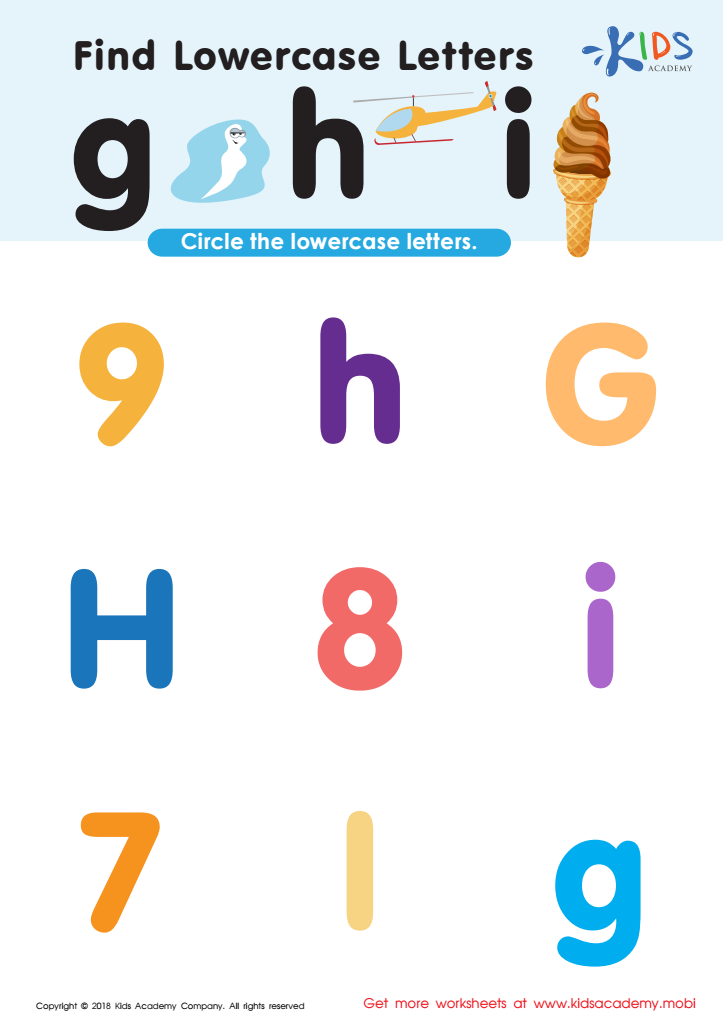
Find Lowercase Letters g h i Worksheet
 Assign to My Students
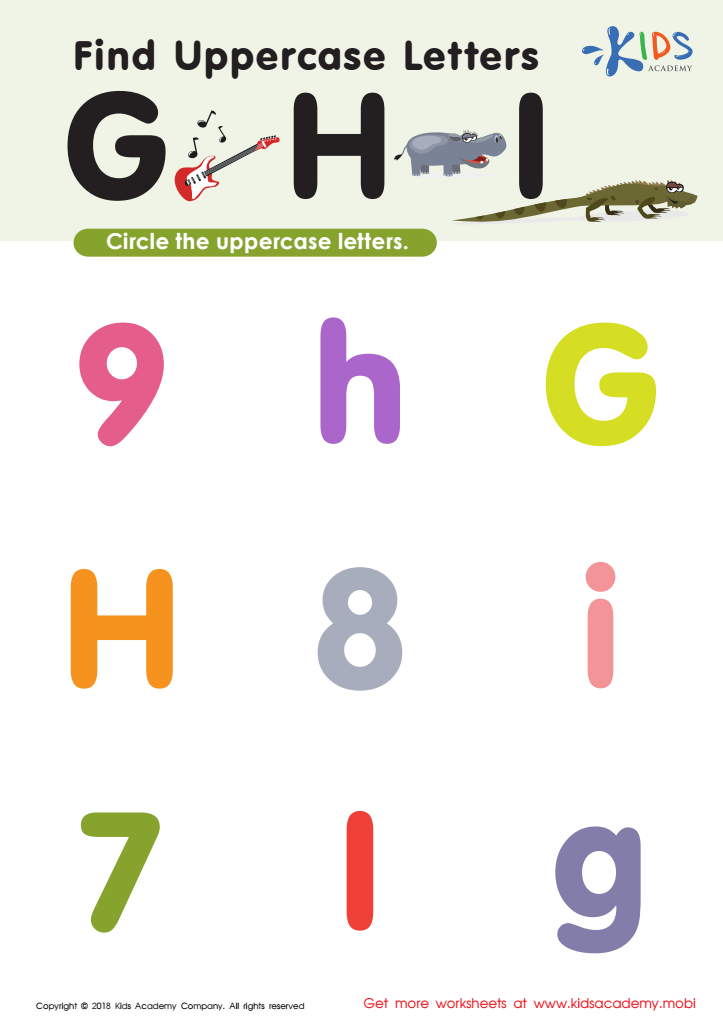
Find Uppercase Letters G, H, and I Worksheet
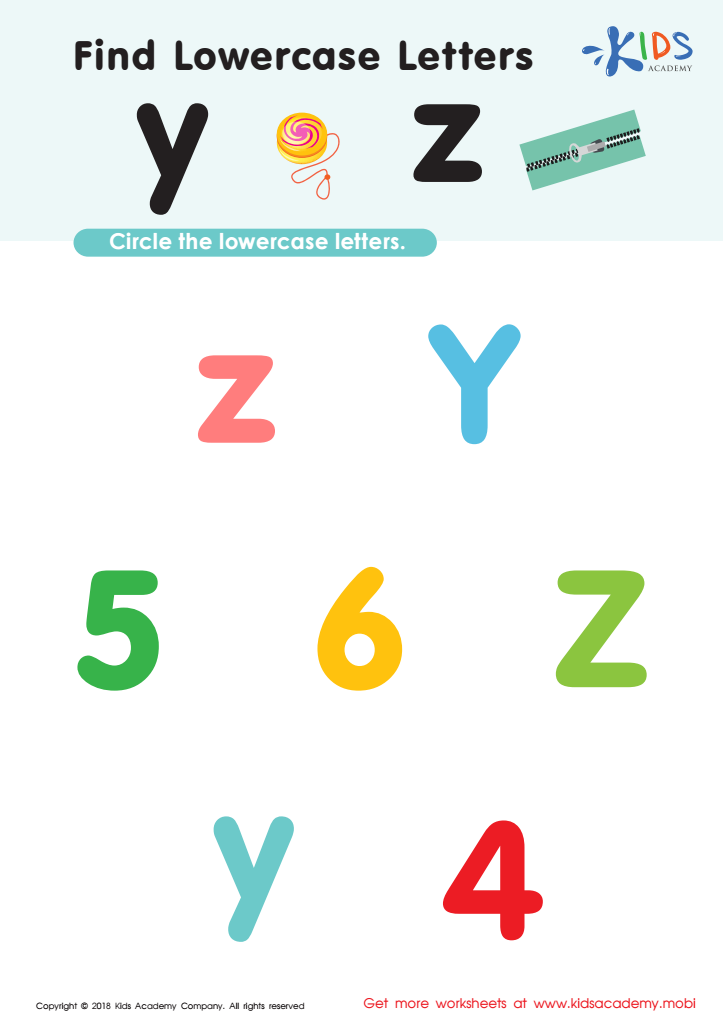
Find Lowercase Letters y z Worksheet
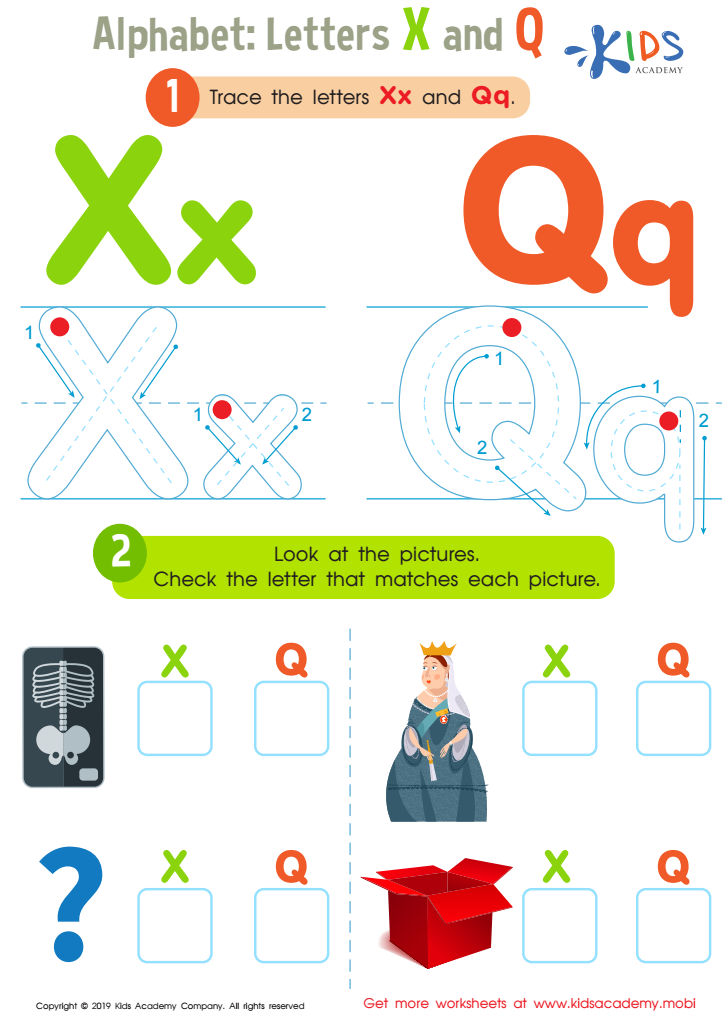
Letters X and Q Tracing Worksheet
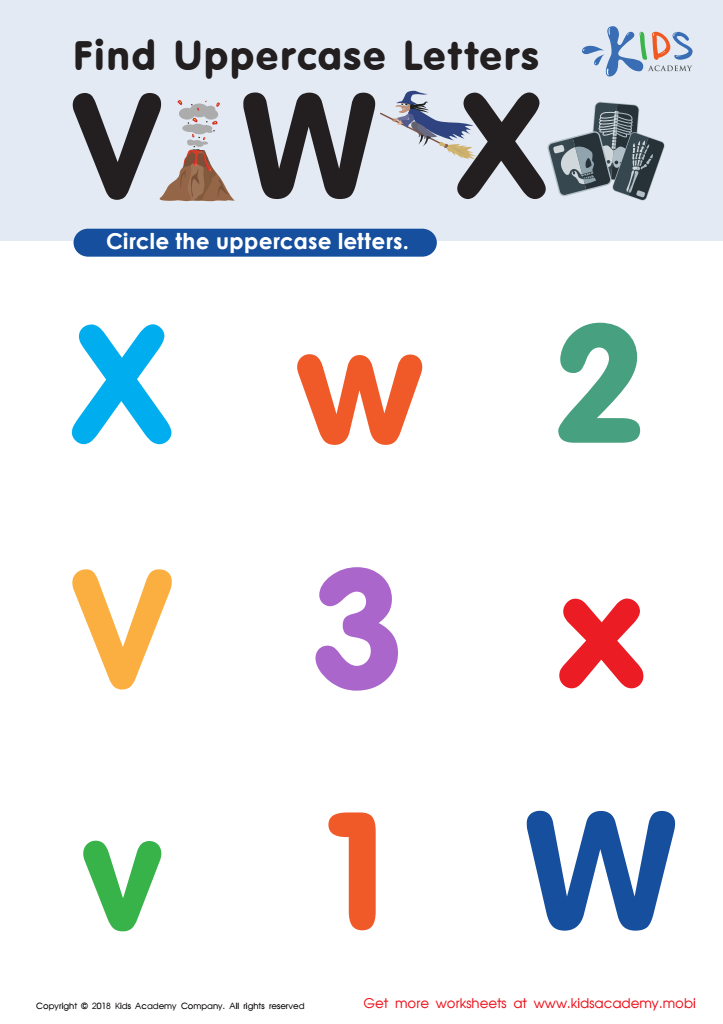
Find Uppercase Letters V, W, X Worksheet






Visual discrimination is a critical skill for children aged 3-9, as it refers to the ability to identify similarities and differences in visual images, such as letters of the alphabet. Understanding visual discrimination is particularly important during early literacy development, when children begin to learn to read and write.
Parents and teachers should care about this skill because it lays the foundation for recognizing letters, words, and numbers. Children with strong visual discrimination skills can more easily distinguish between letters, especially those that have similar shapes, such as "b" and "d," or "p" and "q." This helps prevent confusion and supports accurate reading and writing.
Moreover, enhancing visual discrimination can boost children's overall cognitive abilities. This skill encourages attention to detail and sharpens problem-solving abilities—essential attributes for academic success across various subjects.
By incorporating activities that promote visual discrimination of the alphabet, such as games, puzzles, and hands-on crafts, parents and teachers can foster an engaging learning environment. This ultimately leads to improved literacy skills, greater confidence, and a love of learning in young children, setting them on a path toward future academic achievement.







