
Word identification Alphabet Worksheets for Ages 3-9
10 filtered results
Difficulty Level
Grade
Age
-
From - To
Subject
Activity
Standards
Our engaging Word Identification Alphabet Worksheets for children ages 3-9 are designed to enhance early literacy skills through fun, interactive activities. These printable worksheets help young learners recognize letters, understand their sounds, and connect them to words, fostering a strong foundation in reading. Perfect for classroom use or at-home practice, each worksheet features captivating themes and vibrant illustrations to keep children motivated. With these resources, kids will enjoy the journey of learning while developing crucial skills in letter recognition, phonics, and word identification. Boost your child's reading confidence and abilities with our expertly crafted worksheets!
Favorites
With answer key
Interactive
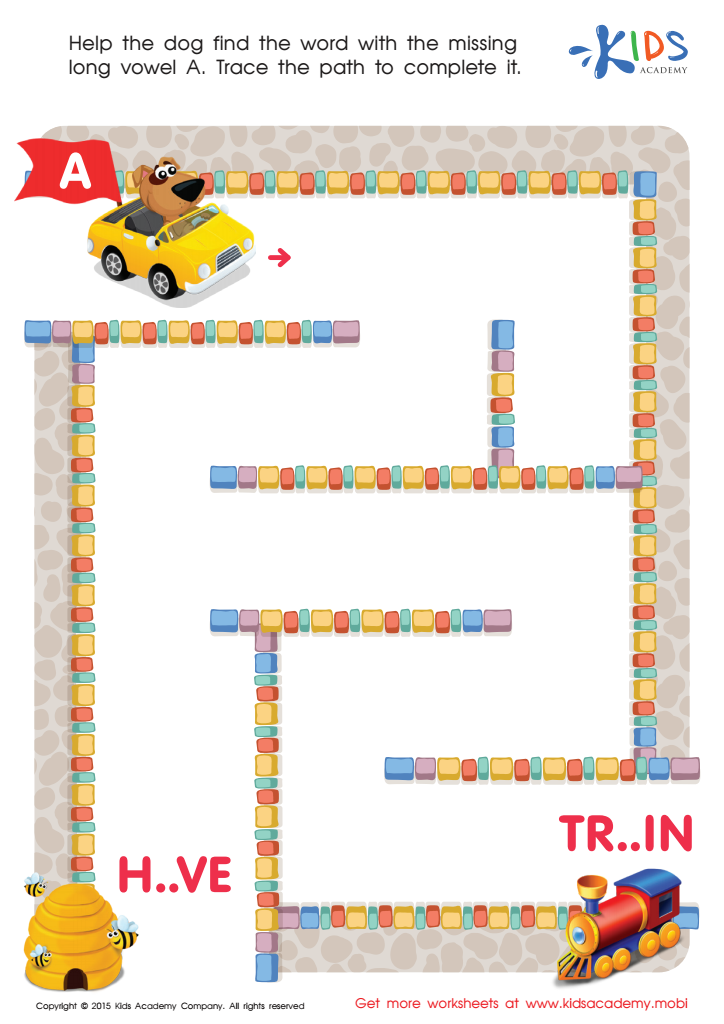
Long Vowel Sound A Worksheet
Teach your young learner about the long vowel A with this colorful free printable phonics worksheet. The long vowel A says its name while the short vowel A does not. Complete the worksheet by tracing the root to the toy train and helping the dog by filling in the missing letter A. Have them practice writing and spelling with phonics while having fun!
Long Vowel Sound A Worksheet
Worksheet
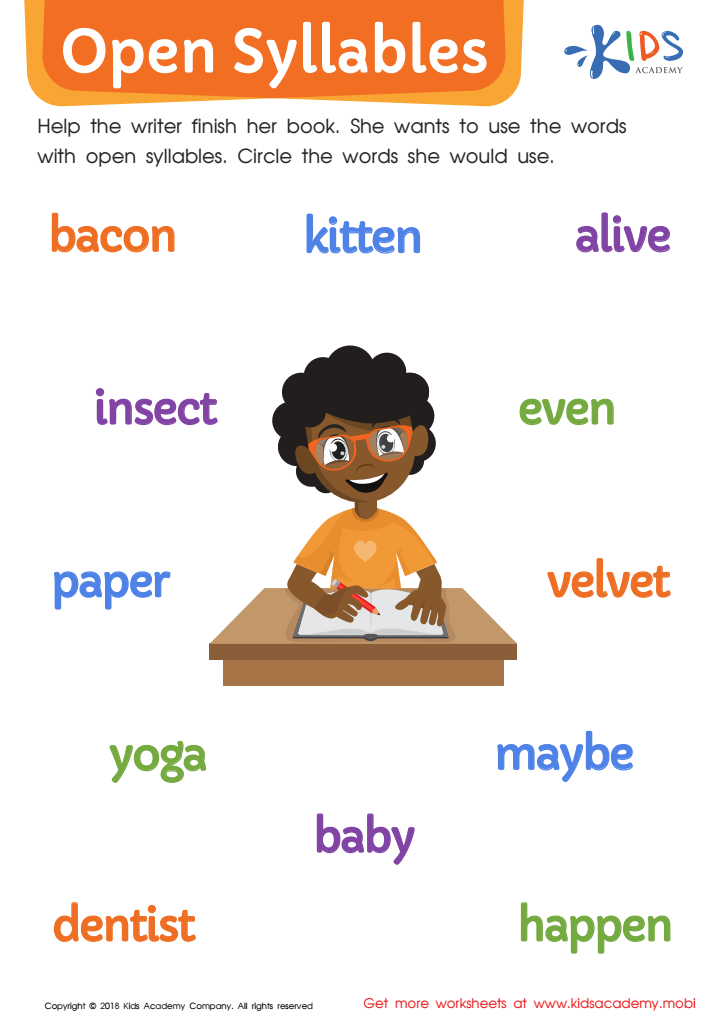
Open Syllables Worksheet
Before beginning this worksheet, make sure your child knows what open syllables are. If not, take time to teach them with examples. Then, help the writer finish her book by circling words with open syllables. She needs your child's help!
Open Syllables Worksheet
Worksheet
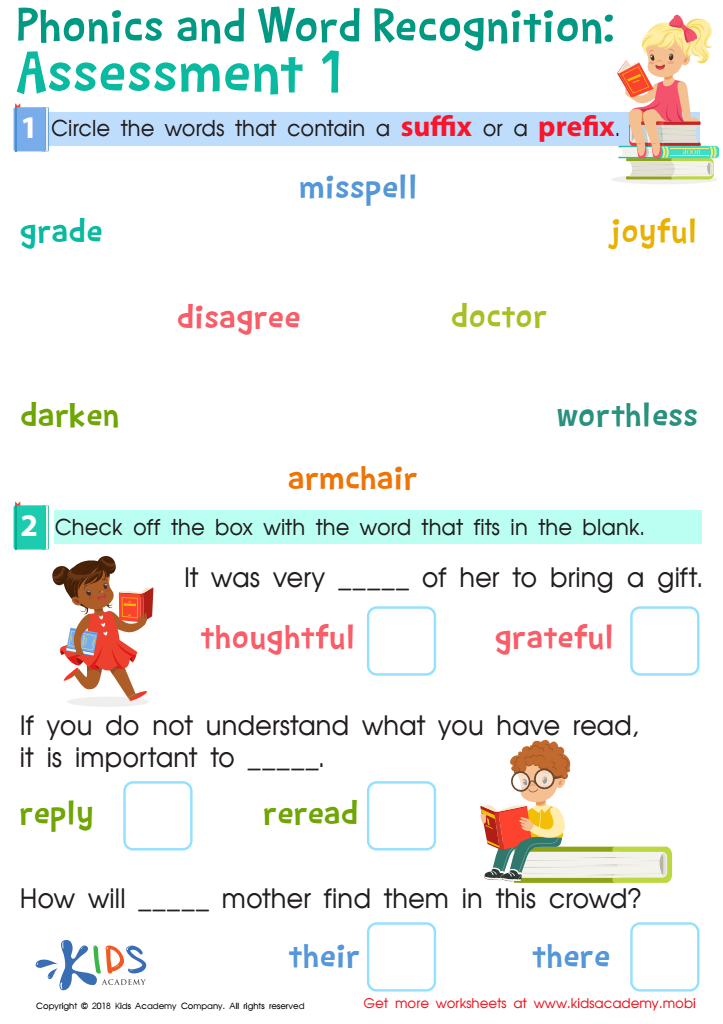
Phonics and Word Recognition: Assessment 1 Worksheet
Explain prefixes (words added to start of another word to give it a new meaning) and suffixes (added to end of word to change its meaning) to your kids with examples like 'unhappy' (prefix) and 'forgetful' (suffix). Now, help your child complete this worksheet, including circling words and checking boxes.
Phonics and Word Recognition: Assessment 1 Worksheet
Worksheet
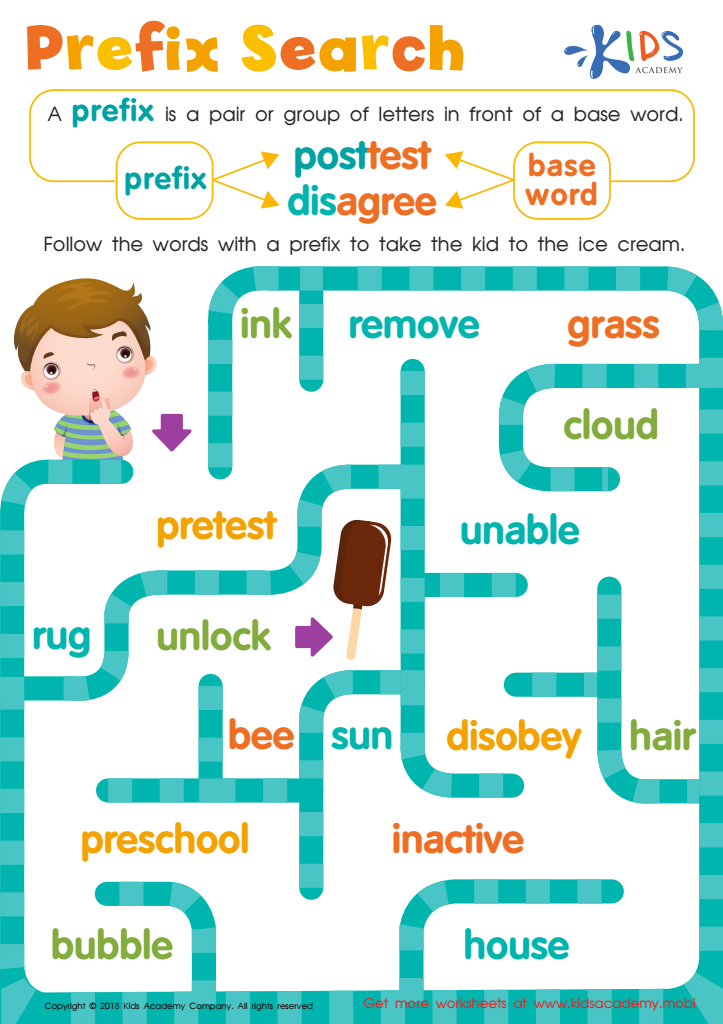
Reading: Prefix Search Worksheet
Maze your way through prefixes! This worksheet helps students practice reading new words with a prefix and figuring out the base word. An understanding of prefixes gives students the skills to comprehend new words. A fun and useful activity for the reading classroom!
Reading: Prefix Search Worksheet
Worksheet
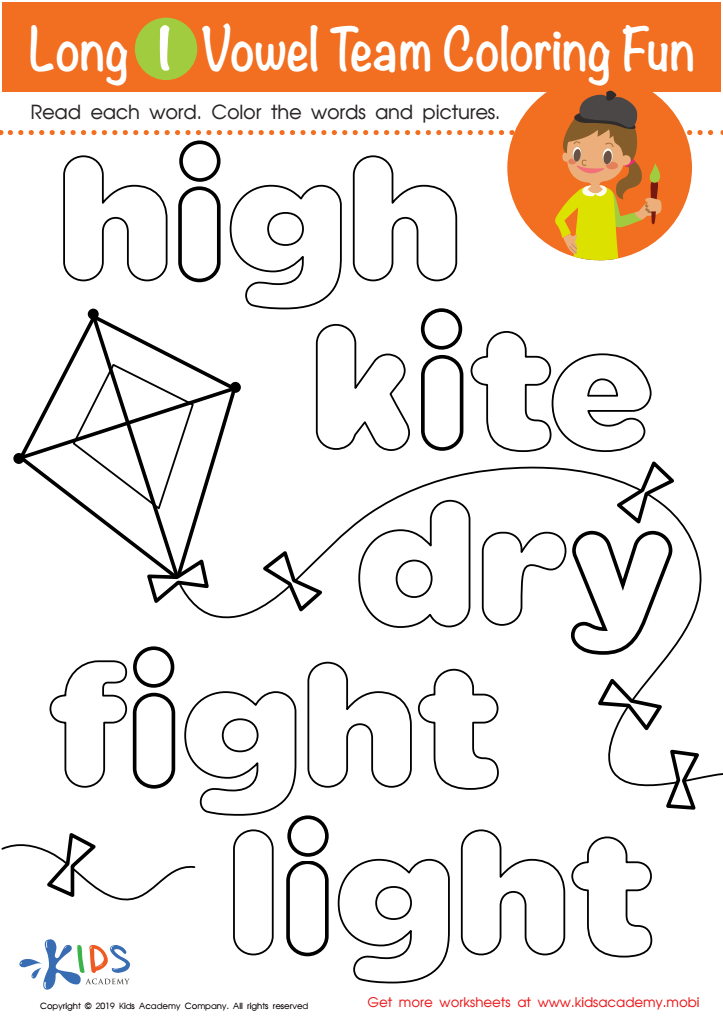
Long I Vowel Team Coloring Worksheet
This worksheet provides practice with letter combinations that make the long "i" sound while enhancing creativity and motor skills with a fun coloring activity. Unknowingly, new readers learn key phonics skills while having fun!
Download (PDF)
 Assign to My Students
Assign to My Students
Long I Vowel Team Coloring Worksheet
Worksheet
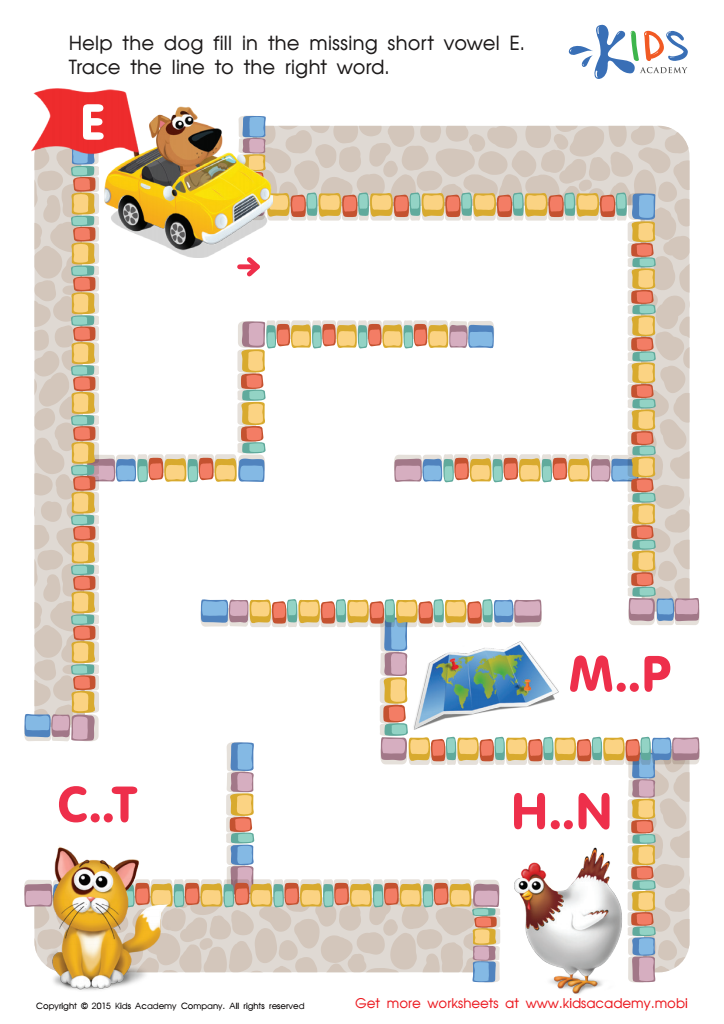
Short Vowel Sound E Worksheet
This free printable phonics worksheet helps kids learn the short vowel sound E. Kids need to help the dog complete the word “hen” by finding their way through a maze. It teaches kids to see the connection between letters and sounds and also strengthens their writing and spelling skills. Fun and educational, this phonics worksheet is great for kids. Want more? Check out here.
Short Vowel Sound E Worksheet
Worksheet
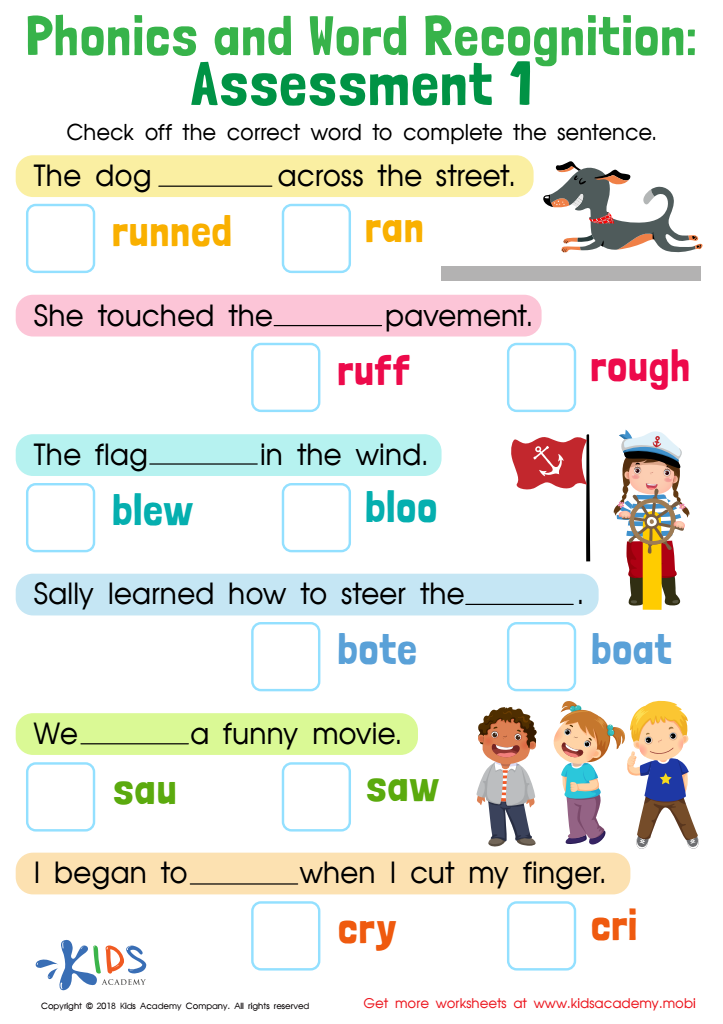
Phonics and Word Recognition: Assessment 1 Worksheet
This worksheet tests phonetics and word recognition. Students should be familiar with past tense verbs. Read incomplete sentences, then read multiple options and help students select the correct one.
Phonics and Word Recognition: Assessment 1 Worksheet
Worksheet
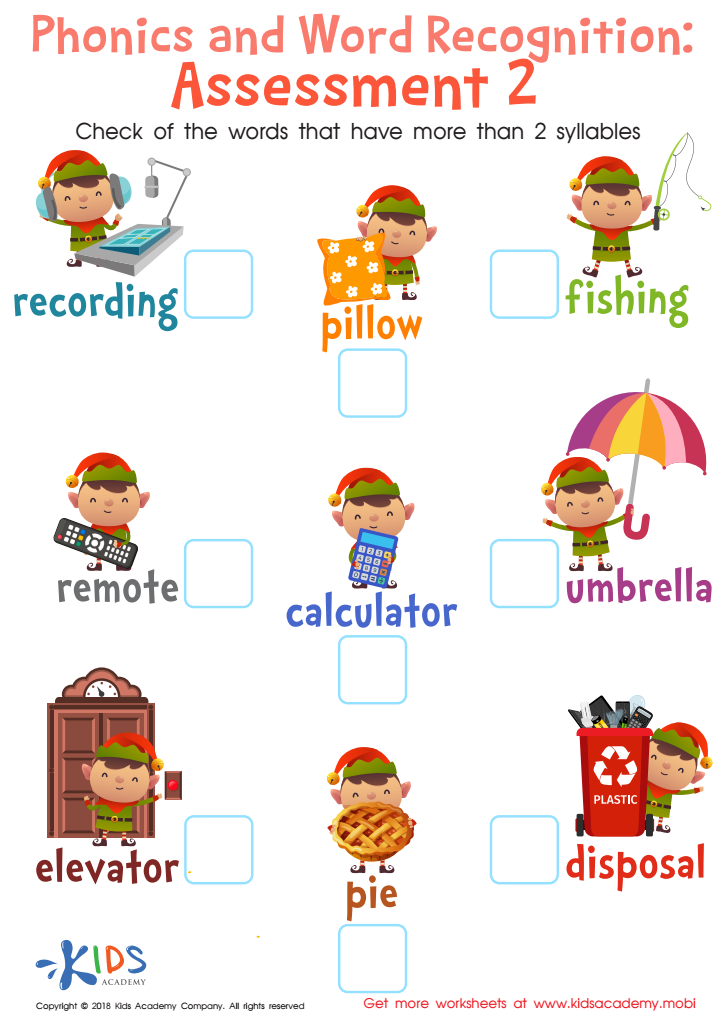
Phonics and Word Recognition: Assessment 2 Worksheet
Help your kids learn proper pronunciation by counting syllables. Most words they'll encounter have 1-3 syllables, making them simple to say. Have them repeat the words in your worksheet after you. Focus on longer words with more than two syllables.
Phonics and Word Recognition: Assessment 2 Worksheet
Worksheet
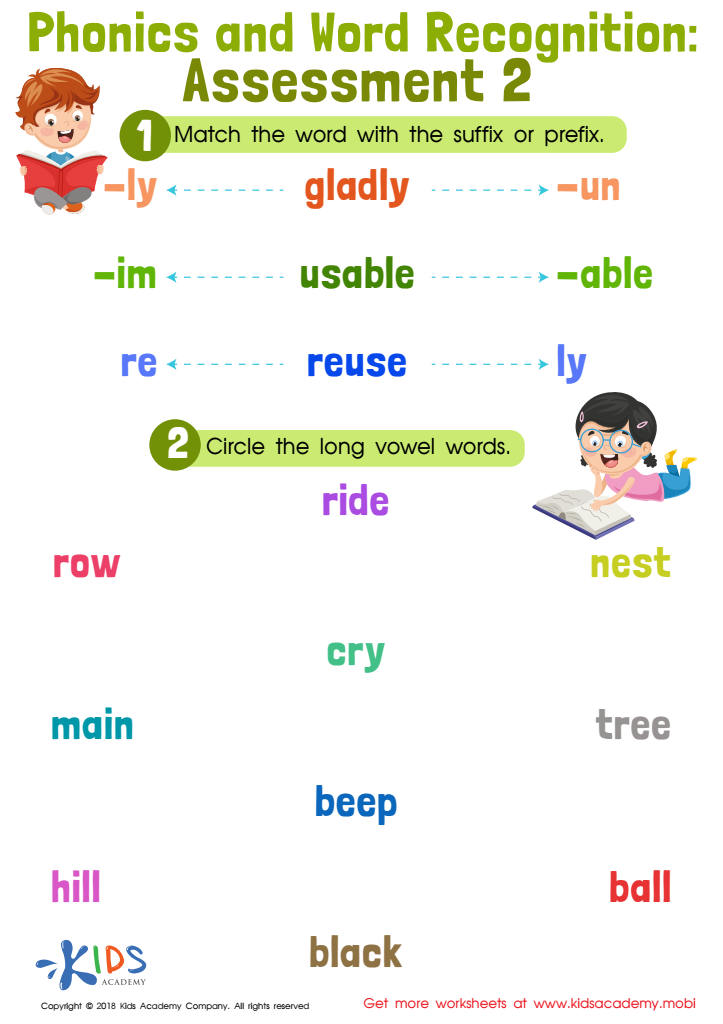
Phonics and Word Recognition: Assessment 2
Give kids common examples of suffixes and prefixes, such as "un-," "unhappy," "ness," "happyness." Ask them to match each word in the word recognition exercise to the correct suffix or prefix. Test phonetic understanding by having them circle the long vowel sounds.
Phonics and Word Recognition: Assessment 2
Worksheet
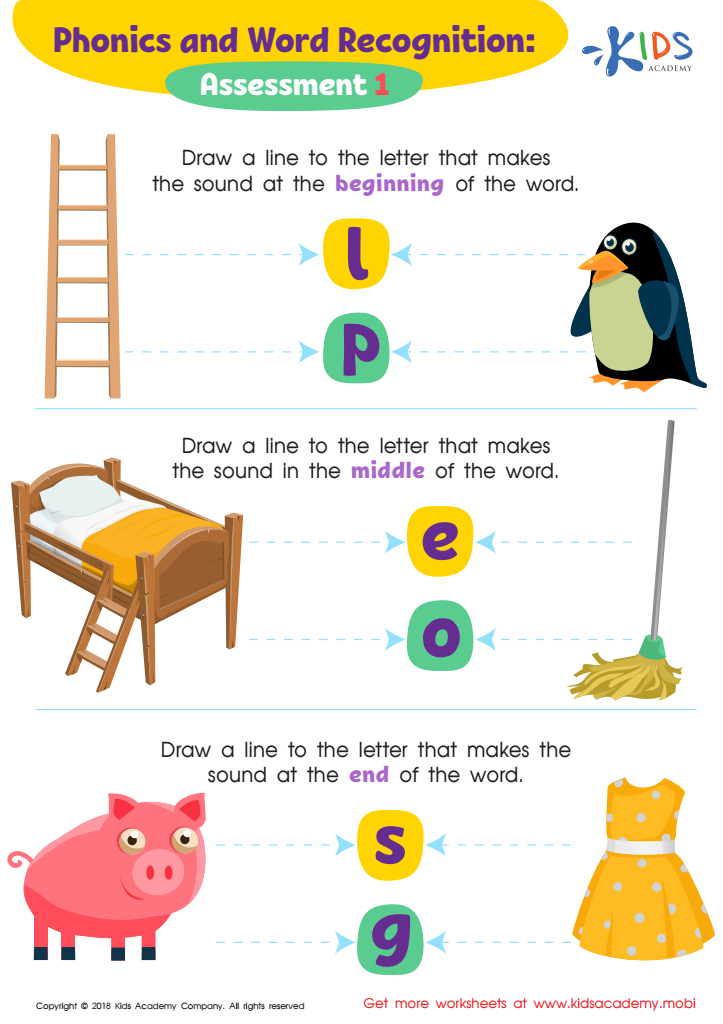
Phonics and Word Recognition: Assessment 1 ELA Worksheet
This fun worksheet tests your child's sound recognition skills for each part of a word. Ask your child to name each image and trace the line to match it with the corresponding letter. Listen for beginning sounds on 1st, middle sounds on 2nd, and ending sounds on 3rd. Encourage learning with this colorful and interactive activity!
Phonics and Word Recognition: Assessment 1 ELA Worksheet
Worksheet
Join Kids Academy for Free
Who is primarily going to use this learning content?








Word identification and alphabet knowledge are fundamental building blocks for early literacy development, and they are crucial for children aged 3-9. During these formative years, children are highly receptive to learning and acquiring foundational skills that will influence their academic success.
Knowing the alphabet is the first step toward reading and writing. It helps children recognize letters, understand their corresponding sounds (phonemic awareness), and begin to decode words. These skills create a foundation for word identification, which is the ability to correctly identify and understand words quickly and accurately. Proficient word identification skills allow children to read more fluently, supporting better comprehension and a love for reading.
For parents and teachers, fostering a strong grasp of the alphabet and word identification can lead to numerous benefits. Children who are ready with these skills often find schoolwork more enjoyable and less frustrating, enhancing their confidence and motivation to learn. Furthermore, early literacy skills can help bridge academic gaps, ensuring that all children, including those from disadvantaged backgrounds, have a fair opportunity to succeed.
Engaging children in playful and interactive alphabet games, reading aloud, and providing rich literary environments can make learning enjoyable while significantly boosting their cognitive and language development. By prioritizing word identification and alphabet mastery at a young age, we set the stage for lifelong literacy and educational achievement.







