Letter recognition Letter G Worksheets for Ages 3-9
3 filtered results
-
From - To
Welcome to our engaging "Letter Recognition Letter G Worksheets" designed specifically for children ages 3-9! This resource helps young learners identify, trace, and write the letter G, enhancing their alphabet skills in a fun and interactive way. Our worksheets feature colorful images and exercises focusing on letter recognition, providing various activities to support visual and motor skills. Perfect for home or classroom use, these worksheets cater to different learning styles to ensure every child grasps the essentials of letter G. Start nurturing your child's literacy journey today with our thoughtfully designed activities that make learning enjoyable and effective!
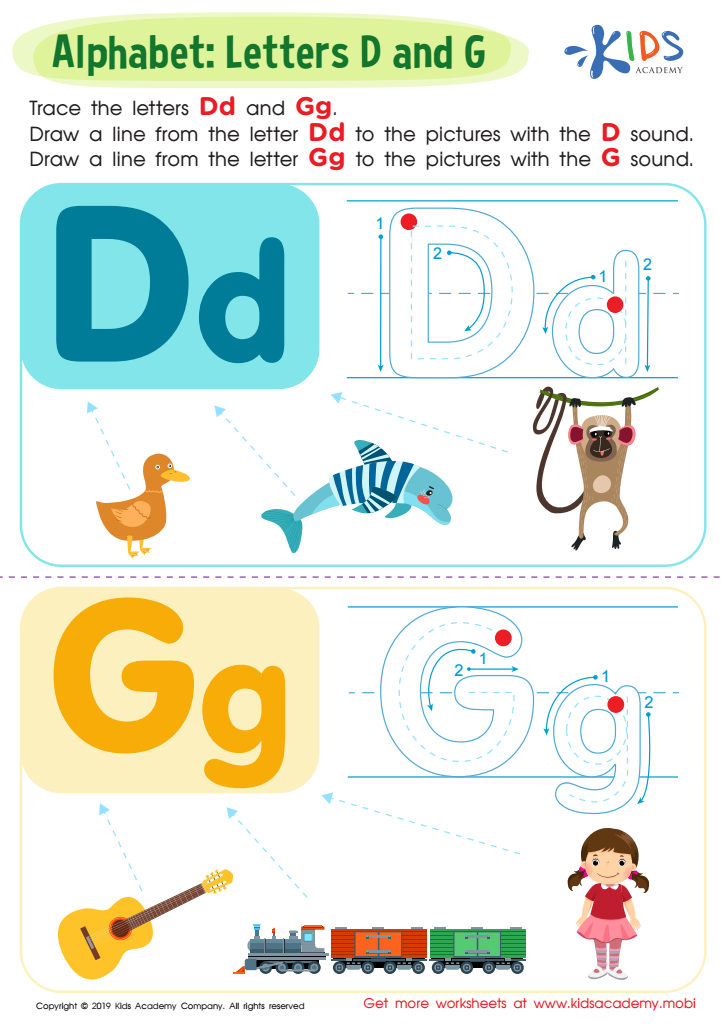
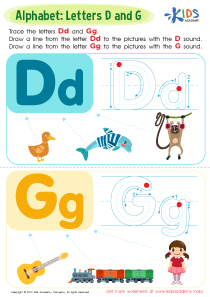
Letter D and G Tracing Worksheet

Letter G Tracing Page
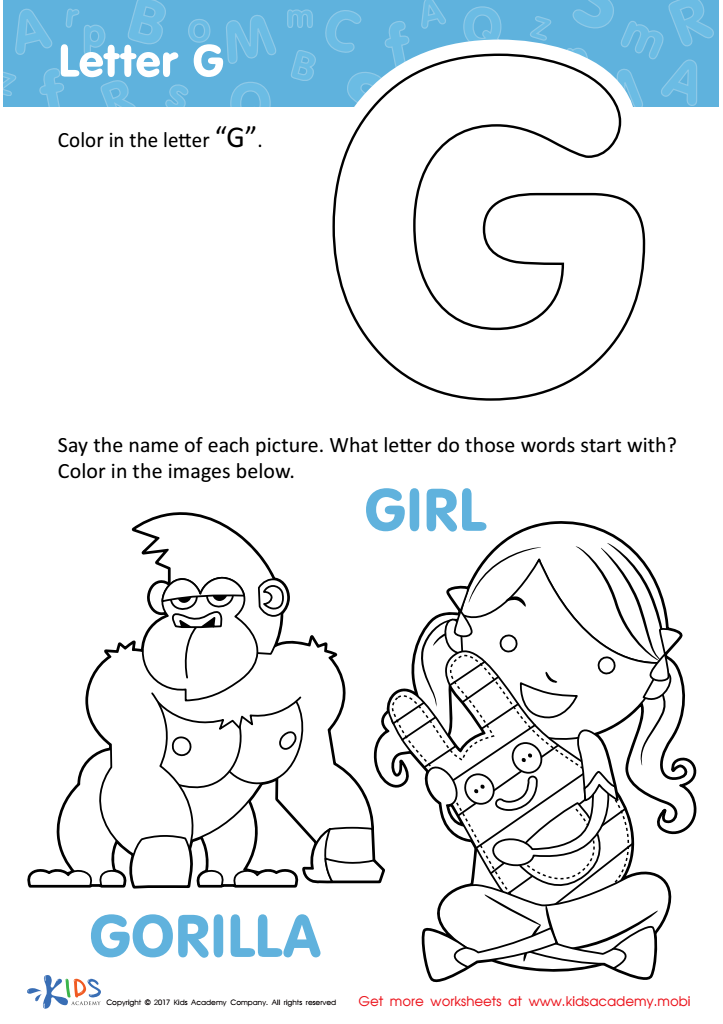
Letter G Coloring Sheet
 Assign to My Students






Letter recognition is a fundamental skill that sets the stage for children's literacy development. Focusing on the letter G, specifically for children aged 3-9, is crucial due to its distinct shape and phonetic sound, which challenges and cultivates young learners' cognitive abilities.
Understanding the letter G helps children identify and articulate phonemes, contributing to improved reading and writing skills. Parents and teachers should be concerned about letter recognition because it promotes not only literacy but also language development, as children learn to associate their sounds with words like “go,” “give,” and “game.” Incorporating activities such as games, songs, and crafts can make learning engaging and fun.
Moreover, recognizing letters like G enhances critical thinking skills since children begin to differentiate letters and sounds, fostering better decoding abilities during reading. This recognition is vital for building confidence; as children master letters, they develop a positive self-image associated with learning.
By prioritizing letter recognition, particularly the letter G, educators and parents lay a strong foundation for literacy, enabling children to flourish academically and socially as they transition to more complex learning experiences. Ultimately, investing time in this fundamental skill can yield significant long-term benefits for children's education and personal growth.