Sound Association Letter Recognition Worksheets for Ages 3-9
5 filtered results
-
From - To
Discover our engaging Sound Association Letter Recognition Worksheets, specially designed for children aged 3-9. These interactive resources help young learners connect letter sounds with their corresponding letters, enhancing literacy skills in a fun and effective way. With vibrant illustrations and hands-on activities, kids will improve their phonemic awareness while building a solid foundation for reading and writing. Perfect for at-home practice or classroom use, our worksheets cater to various learning styles, ensuring each child can thrive. Equip your little ones with the essential skills they need to succeed in their educational journey. Visit us to explore and download these essential resources today!
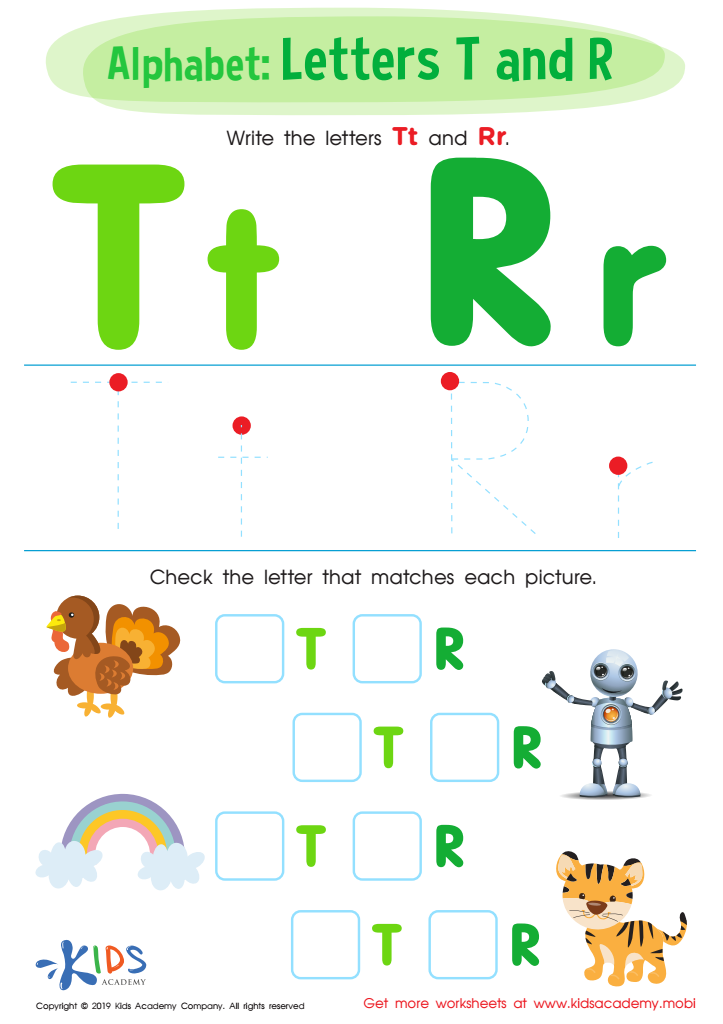
Letters T and R Worksheet
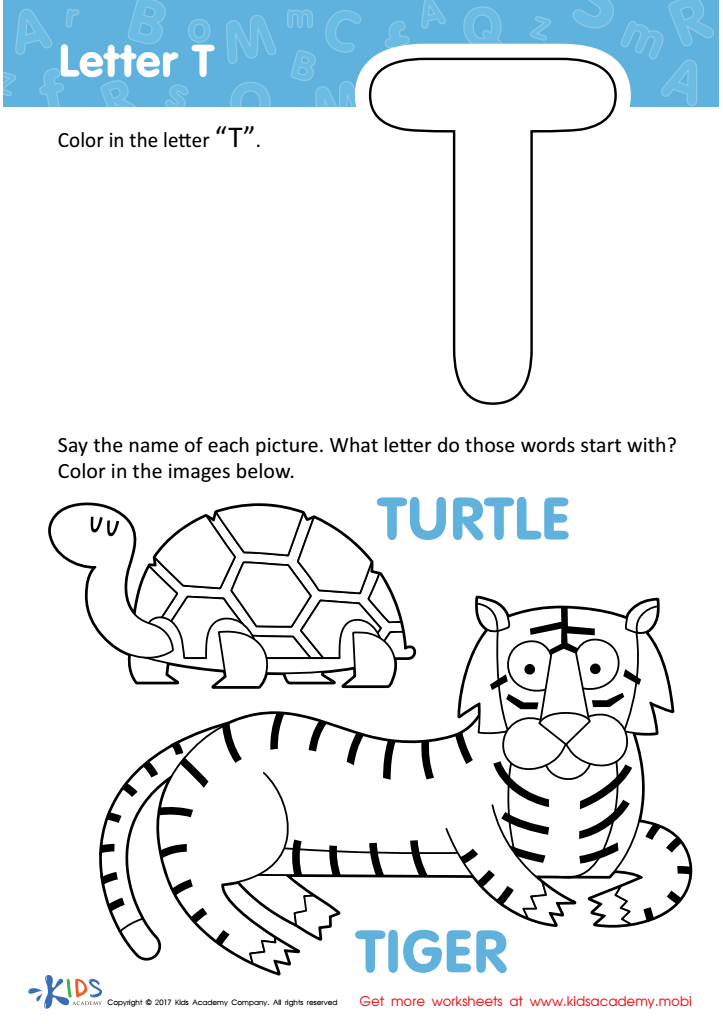
Letter T Coloring Sheet
 Assign to My Students
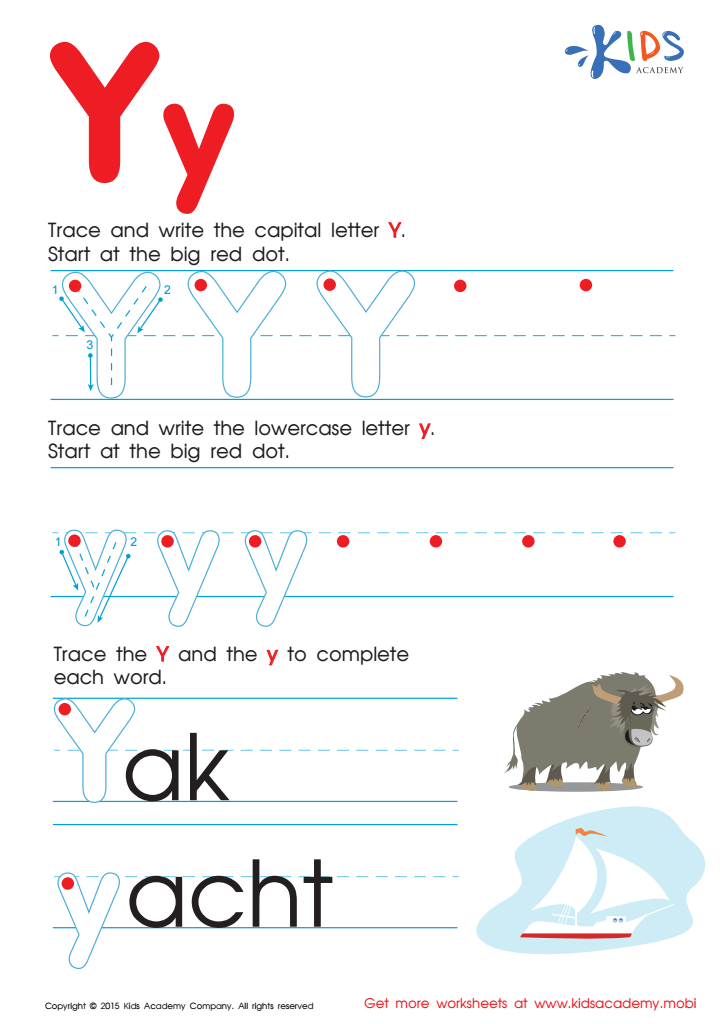
Letter Y Tracing Page
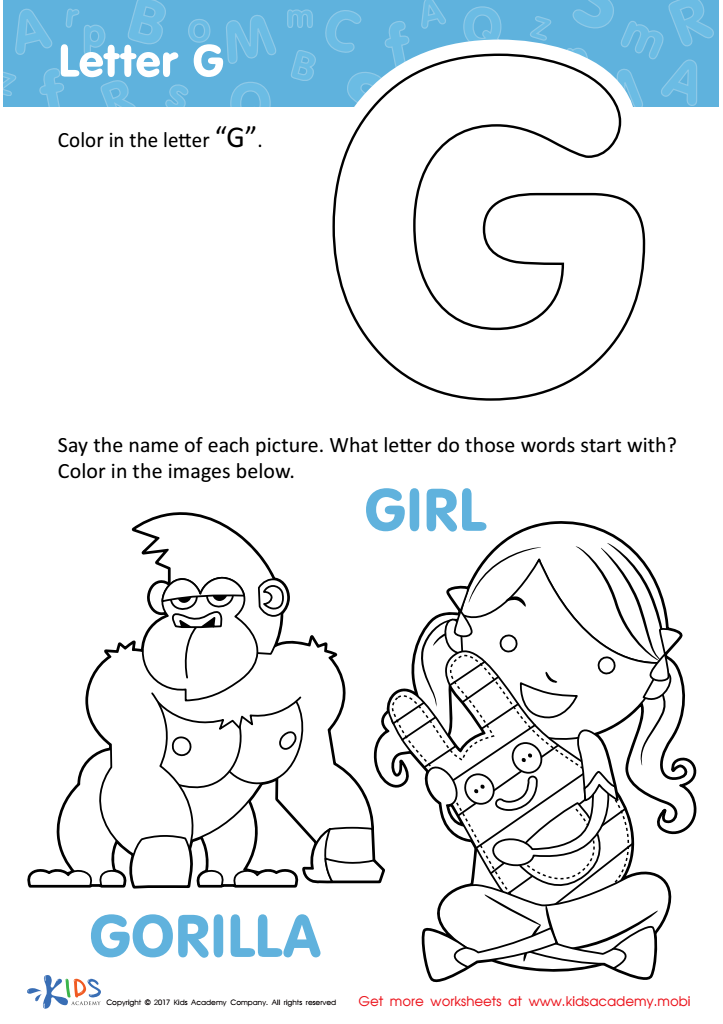
Letter G Coloring Sheet
Assign to My Students
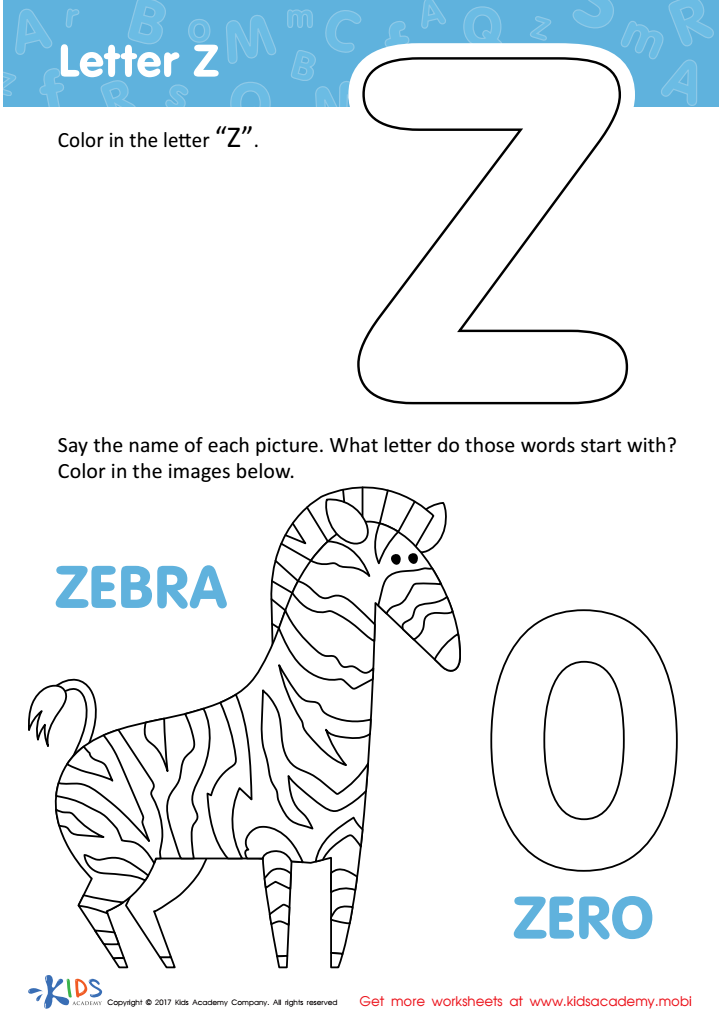
Letter Z Coloring Sheet
Assign to My Students








Sound Association Letter Recognition is a crucial foundational skill in early childhood literacy. For children aged 3-9, understanding the relationship between sounds and letters is essential for reading and writing development. Parents and teachers should care about this skill because it lays the groundwork for a child's phonemic awareness, which is pivotal for reading fluency and comprehension later on.
By helping children make associations between sounds and letters, caregivers promote their ability to decode words, enhancing their reading abilities as they progress in school. This recognition can also boost a child’s confidence, fostering a love for reading, which is vital for lifelong learning. Furthermore, children who struggle with letter-sound associations may face challenges in later grades, leading to difficulties in school and affecting their overall educational journey.
Engaging in activities that reinforce sound-letter association, such as phonics games, songs, or storytime discussions, not only supports academic success but also encourages cognitive development and critical thinking skills. Ultimately, by prioritizing sound association letter recognition, parents and teachers can empower children to become proficient readers, ensuring they are better equipped for both academic challenges and effective communication in their future.







