Word identification Long Vowels Worksheets for Ages 3-9
3 filtered results
-
From - To
Explore our engaging Word Identification Long Vowels Worksheets designed specifically for children aged 3-9! These interactive resources help young learners develop essential reading skills by focusing on long vowel sounds. Our worksheets provide a variety of activities that enhance word recognition, phonemic awareness, and vocabulary development in a fun, approachable way. Perfect for homeschooling or complementing classroom learning, these printable worksheets encourage children to identify and connect long vowel words with colorful images and engaging exercises. Foster your child’s literacy skills and unlock their reading potential with our thoughtfully crafted resources! Visit our page to access and download these invaluable worksheets today!
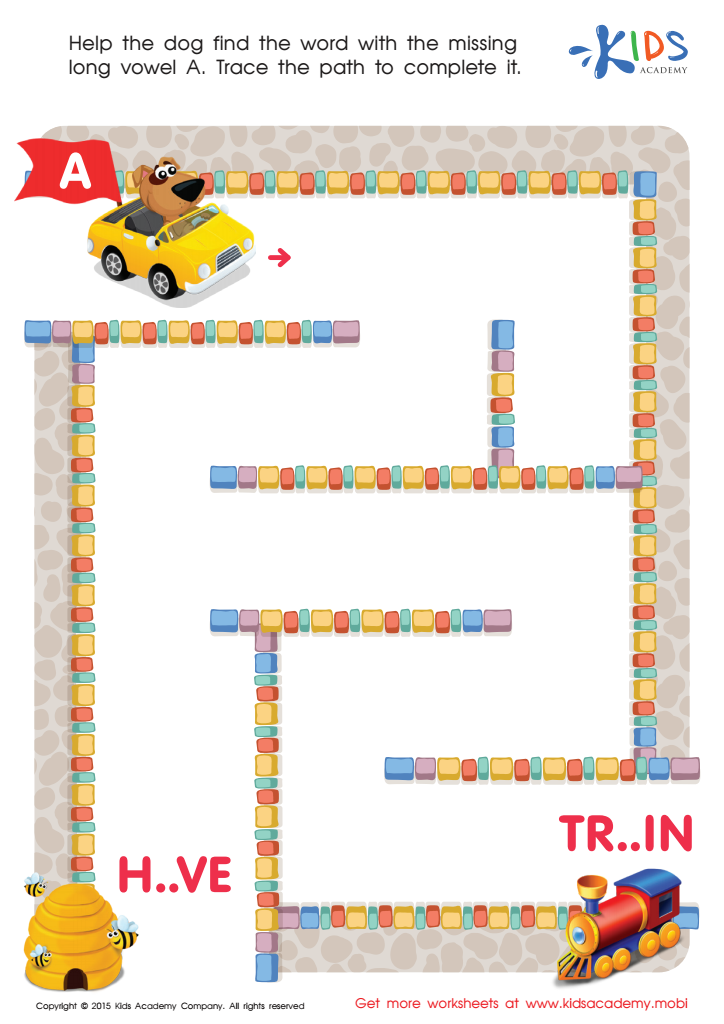
Long Vowel Sound A Worksheet
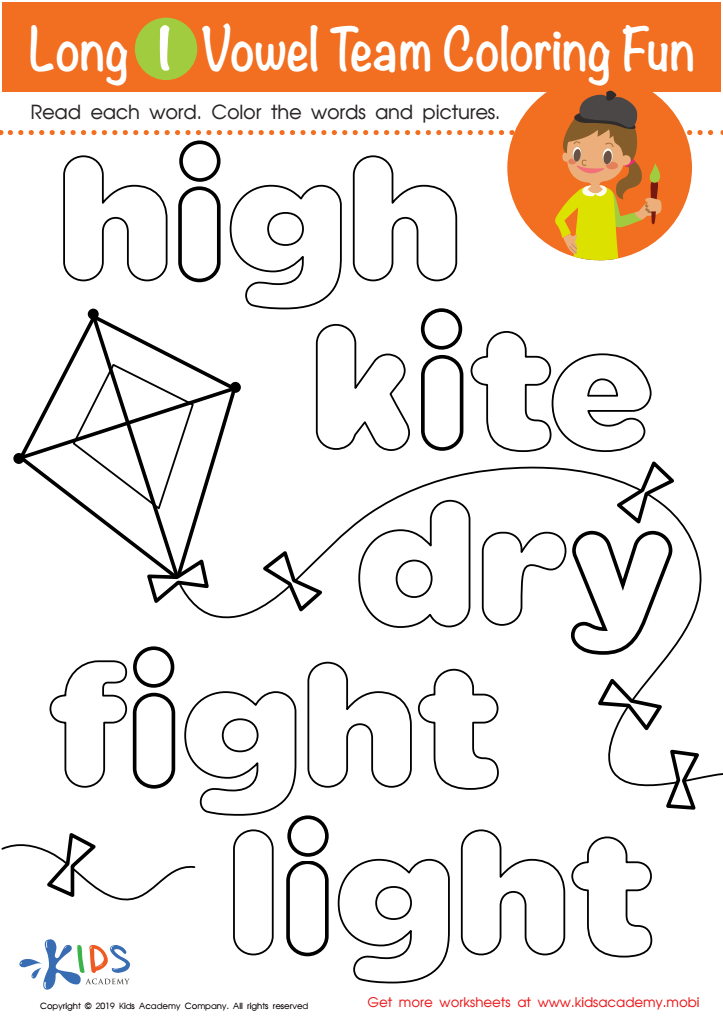
Long I Vowel Team Coloring Worksheet
 Assign to My Students
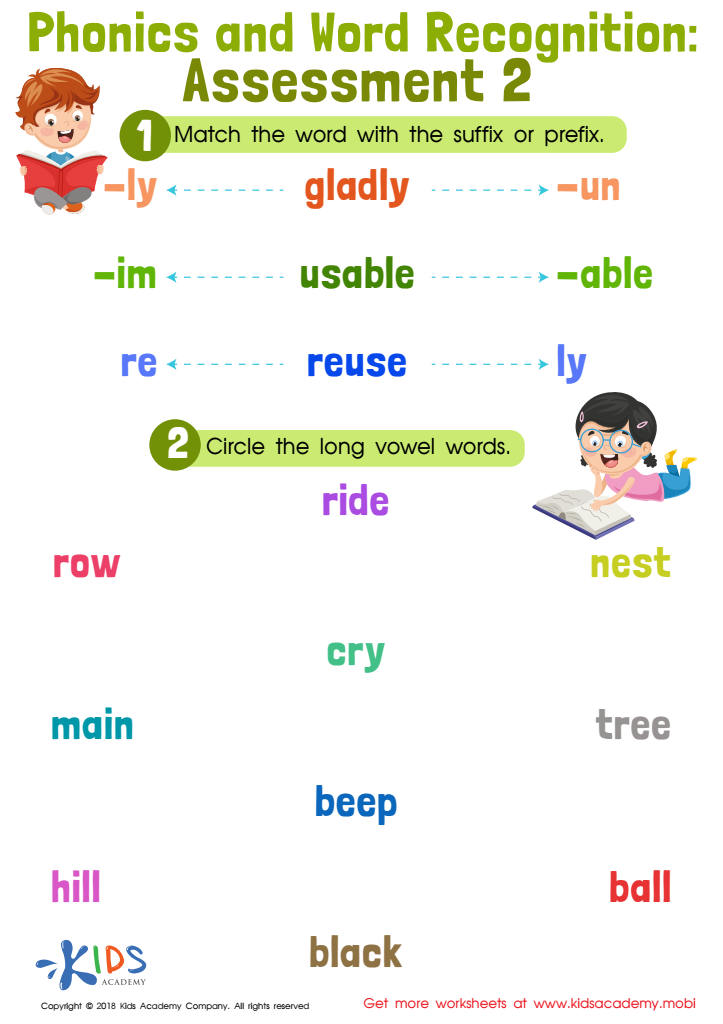
Phonics and Word Recognition: Assessment 2



Word identification of long vowels is crucial for children aged 3-9, as it forms the foundation for successful reading and literacy development. Understanding long vowels—those that sound like their names, such as "a" in "cake" or "e" in "tree"—is essential for phonemic awareness. Children who can identify and manipulate long vowel sounds are better equipped to decode unfamiliar words, which fosters independent reading skills.
When parents and teachers prioritize long vowel instruction, they help children recognize patterns in language, enhancing their spelling and vocabulary. This ability not only aids reading fluency but also boosts comprehension, allowing young learners to extract meaning from texts more effectively. Additionally, mastery of long vowel sounds can improve confidence and motivation in early readers, making the act of reading more enjoyable.
Furthermore, laying a solid foundation in early literacy helps close achievement gaps. As children progress, those who have a firm grasp of word identification will have a higher likelihood of excelling in later grades, contributing to overall educational success. By emphasizing the importance of long vowel identification, parents and educators can effectively nourish a child's love for reading and lifelong learning. Such investment is key in cultivating future readers who are engaged and proficient.