Sound differentiation Phonics Worksheets for Ages 3-9
4 filtered results
-
From - To
Unlock the world of reading for your child with our "Sound Differentiation Phonics Worksheets for Ages 3-9", available at Kids Academy. Specially designed to enhance phonemic awareness, these engaging worksheets help children distinguish between different sounds, laying a strong foundation for fluent reading. Perfect for young learners, each activity combines fun illustrations with educational challenges, ensuring kids aged 3-9 develop key literacy skills. Whether for classroom use or homeschooling, these phonics exercises are an indispensable resource for fostering a love of learning. Start exploring today and watch your children thrive in their reading journey!
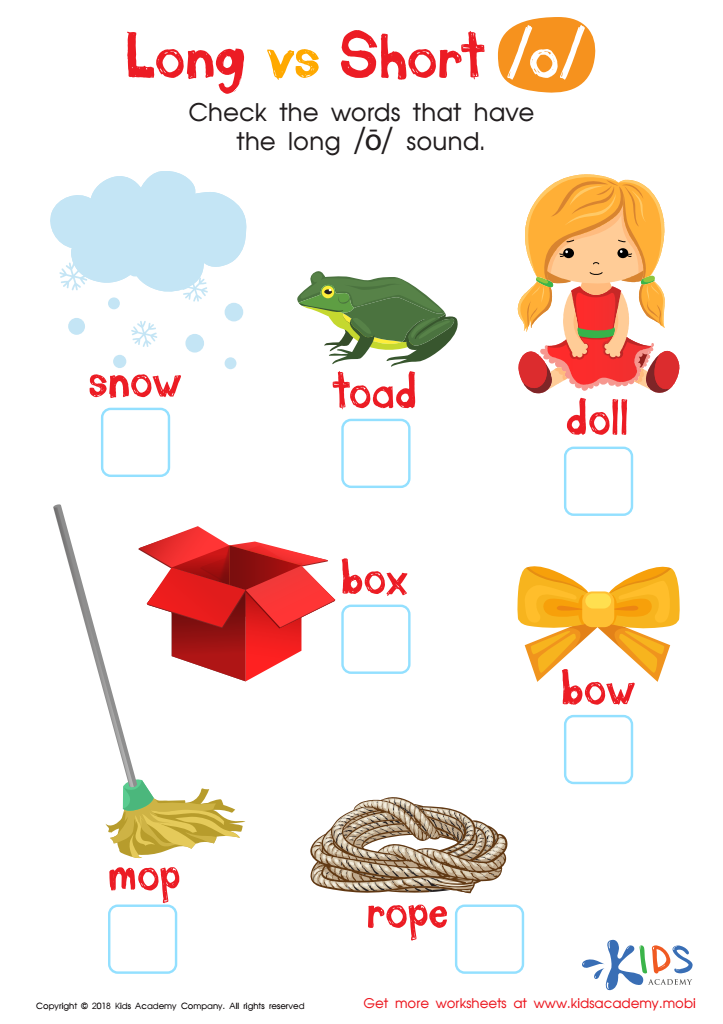
Long vs Short O Reading Worksheet
 Assign to My Students
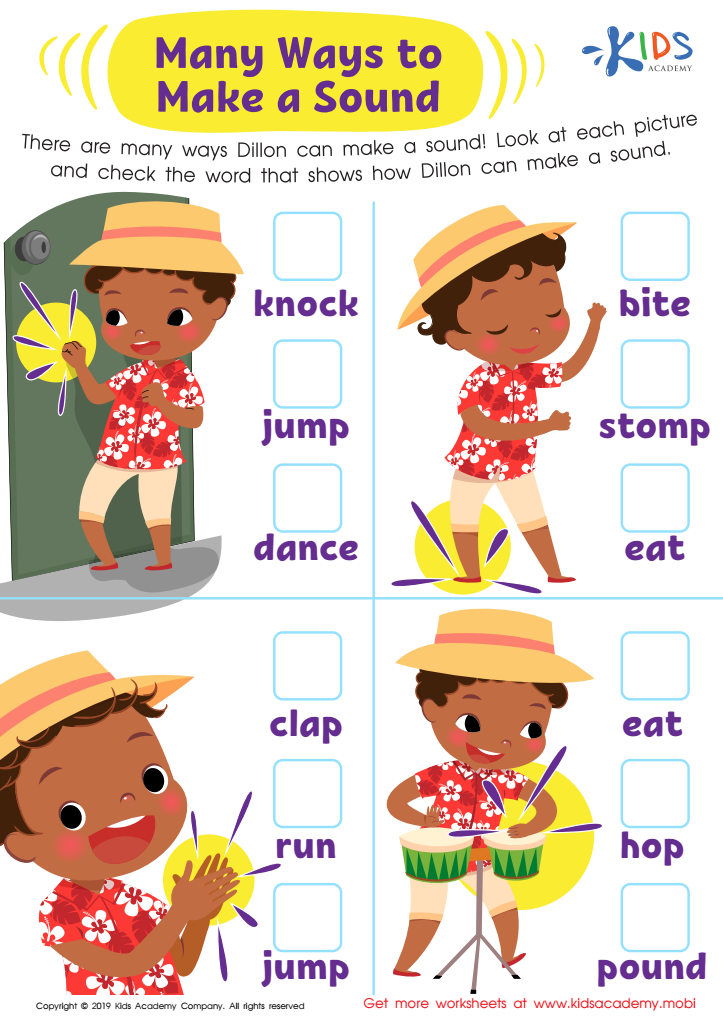
Many Ways to Make a Sound Worksheet
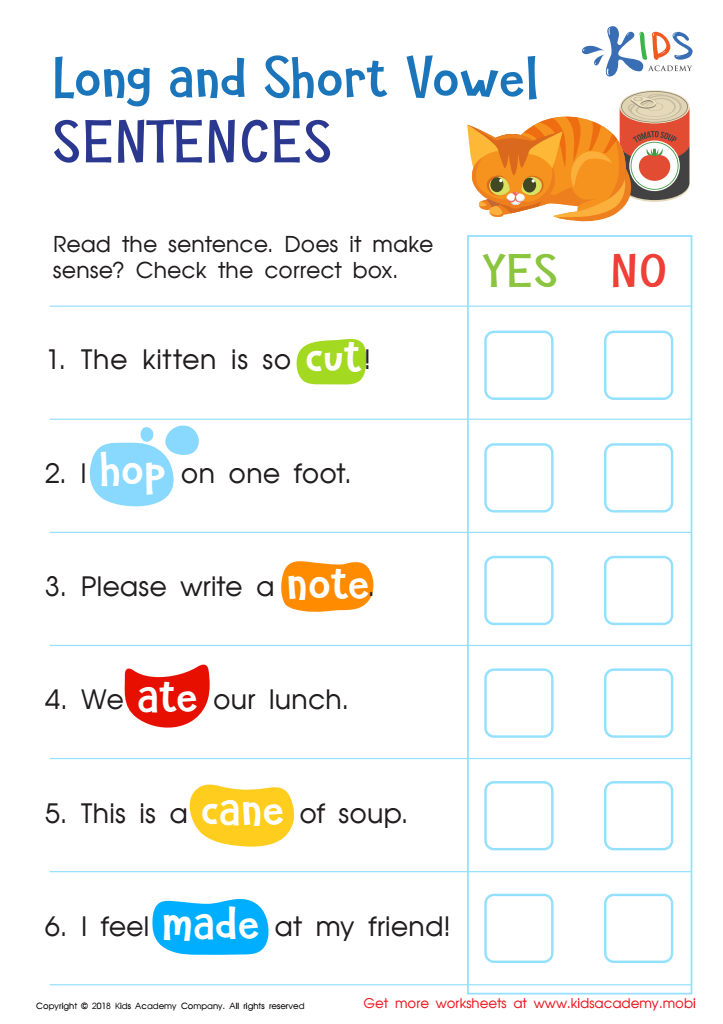
Long and Short Vowel Sentences: Assessment Worksheet
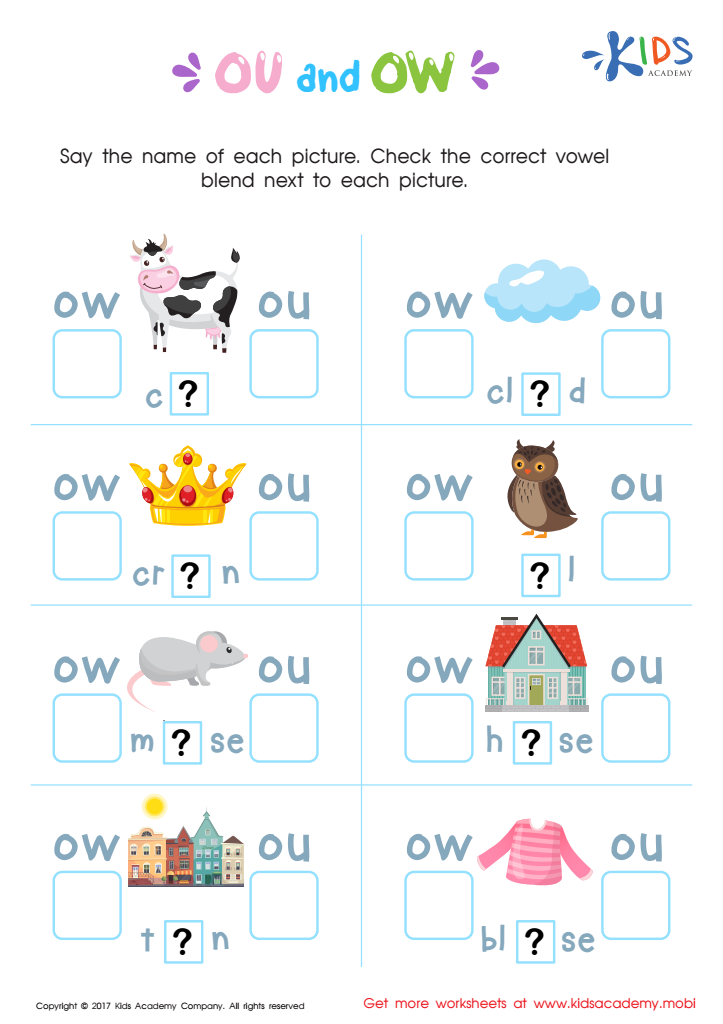
OU and OW Words Worksheet








Sound differentiation phonics is crucial for children aged 3-9 as it lays the foundation for successful reading and language development. During these formative years, young brains are hardwired to absorb and process sounds, making it the ideal period to introduce phonics. This method teaches children to distinguish between different sounds, which is essential for decoding words and developing strong reading skills.
When children can differentiate between sounds, they can recognize patterns in words and understand how letters combine to make specific sounds. This skill is fundamental for reading fluency, comprehension, and spelling. Without a strong grasp of sound differentiation, children may struggle with basic literacy tasks, which can have long-term impacts on their academic success and self-esteem.
For teachers, structured phonics instruction provides a clear, evidence-based approach to teaching reading, which can lead to more consistent and effective outcomes in the classroom. For parents, supporting phonics at home can create a collaborative environment that reinforces what is learned at school, fostering a love of reading.
Investing time in phonics during early childhood can bridge potential learning gaps, making reading a less daunting task and setting children on a path to lifelong learning and literacy. For these reasons, parents and teachers should prioritize sound differentiation phonics for children's early educational experiences.







