Understanding syllables Phonics Worksheets for Ages 3-9
4 filtered results
-
From - To
Introduce your child to the world of reading with our "Understanding Syllables Phonics Worksheets" designed for ages 3-9. These engaging worksheets help young learners grasp the concept of syllables, boosting reading and pronunciation skills. Through fun, interactive activities, children will learn to recognize, count, and segment syllables in words, paving the way for fluent reading. Perfect for both classroom and home use, our expertly crafted worksheets cater to various learning styles, ensuring each child progresses at their own pace. Bring the joy of mastering syllables into your child's learning journey today!
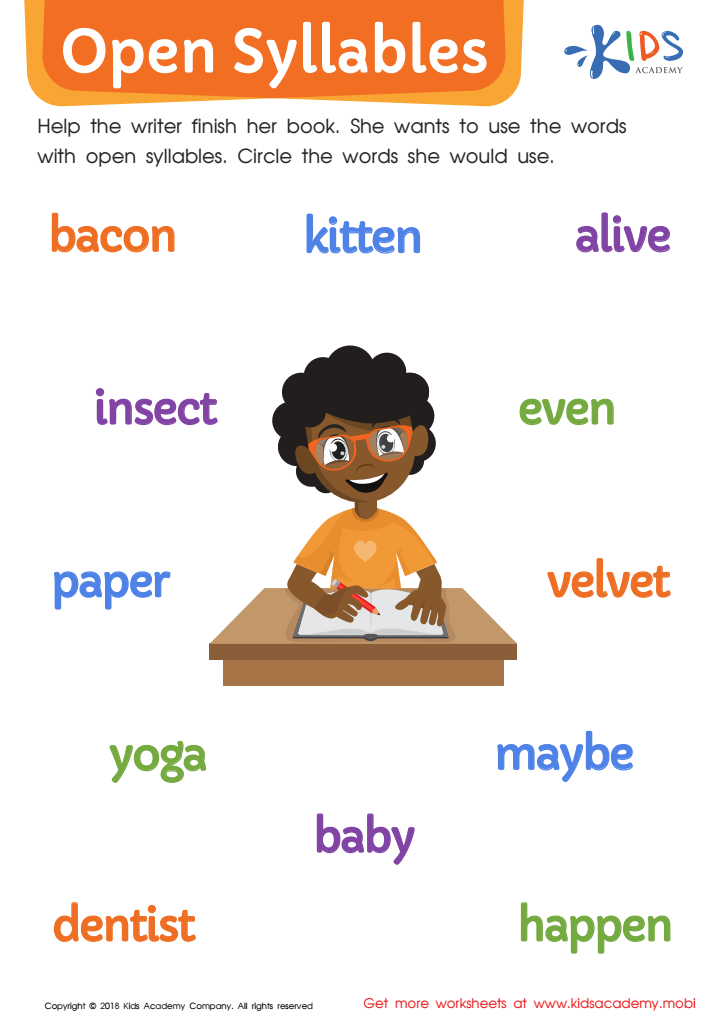
Open Syllables Worksheet
 Assign to My Students
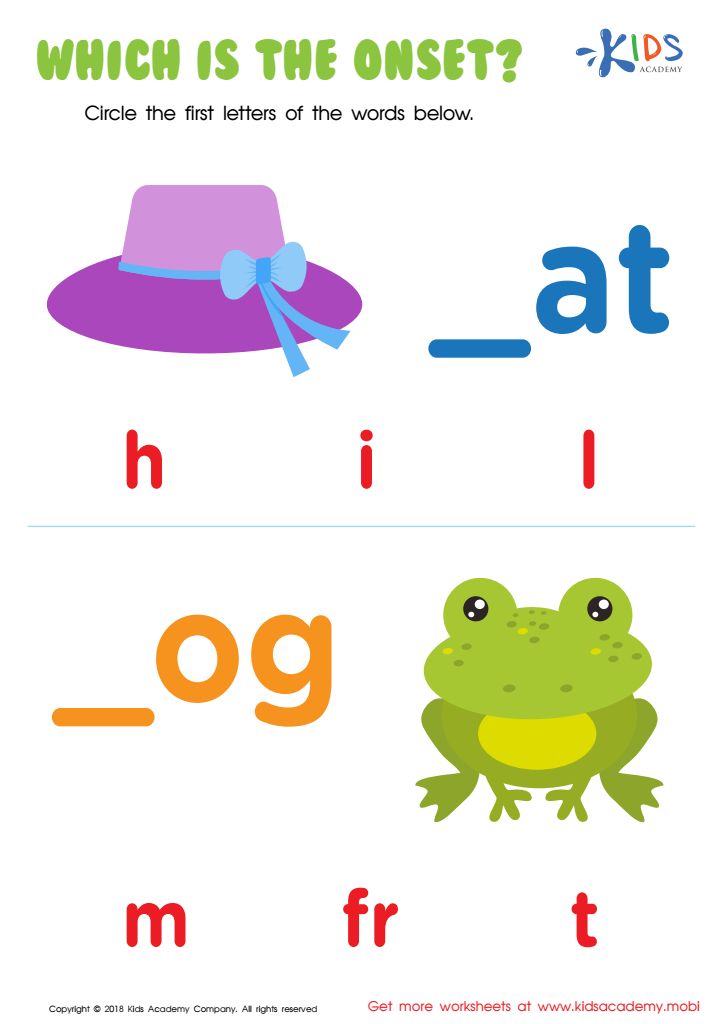
Which Is the Onset? Worksheet
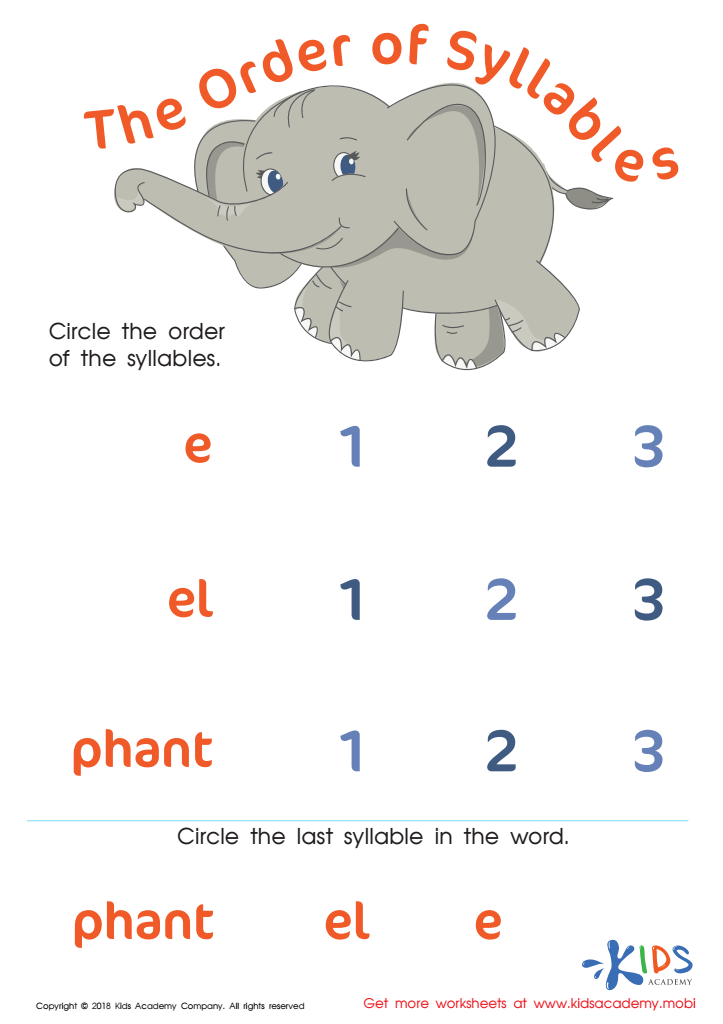
The Order of Syllables Worksheet
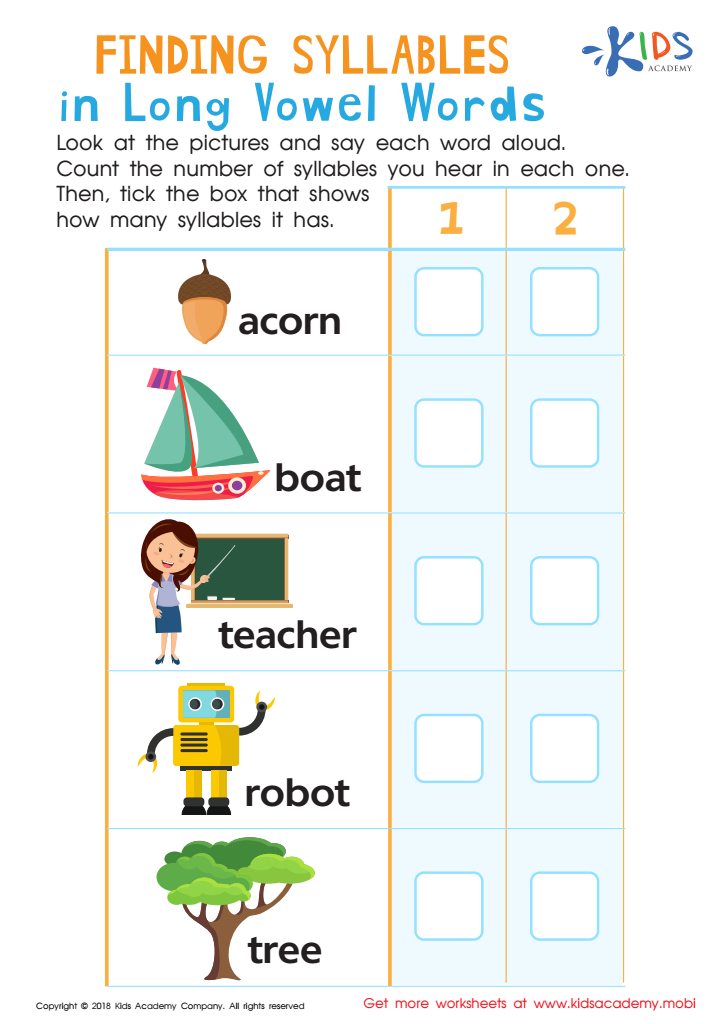
Finding Syllables in Long Vowel Words Worksheet








Understanding syllables and phonics is fundamental to early literacy development for children ages 3-9. During these formative years, mastering these skills helps lay the groundwork for effective reading, writing, and communication.
Syllables are the building blocks of words. By breaking down words into smaller, manageable parts, children can more easily decode and build words, leading to improved reading fluency. Recognizing syllables also supports pronunciation and aids in spelling, fostering a connection between spoken and written language.
Phonics, the relationship between letters and sounds, is equally crucial. It equips children with the tools to sound out unfamiliar words, promotes word recognition, and enhances vocabulary development. Phonics-based instruction helps in establishing strong foundational skills for reading comprehension, which is key to academic success across all subjects, as young learners are better equipped to understand and retain what they read.
Moreover, early positive experiences with reading can foster a lifelong love of learning. Engaging with syllables and phonics can make learning to read fun and interactive, boosting children’s confidence and motivation.
In summary, for children ages 3-9, understanding syllables and phonics is not just about learning to read; it is about building a strong foundation for all future learning, thereby enriching their academic and personal lives.







