Handwriting practice Tracing Letters Worksheets for Ages 3-9 - Page 2
28 filtered results
-
From - To
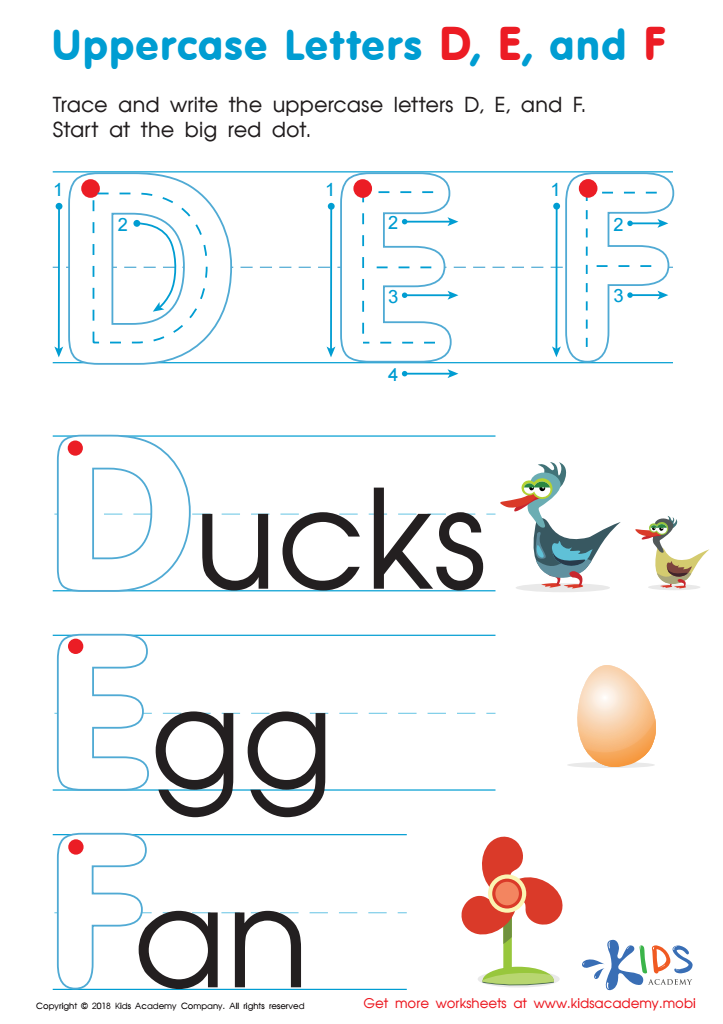
Uppercase Letters D, E, and F Worksheet
 Assign to My Students
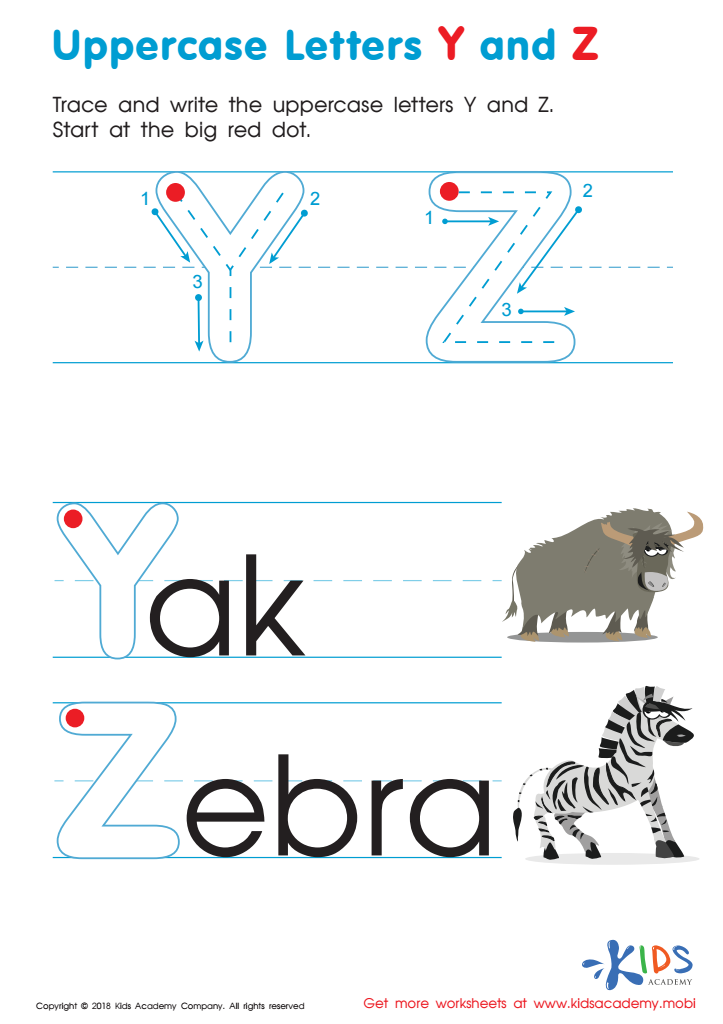
Uppercase Letters Y Z Worksheet
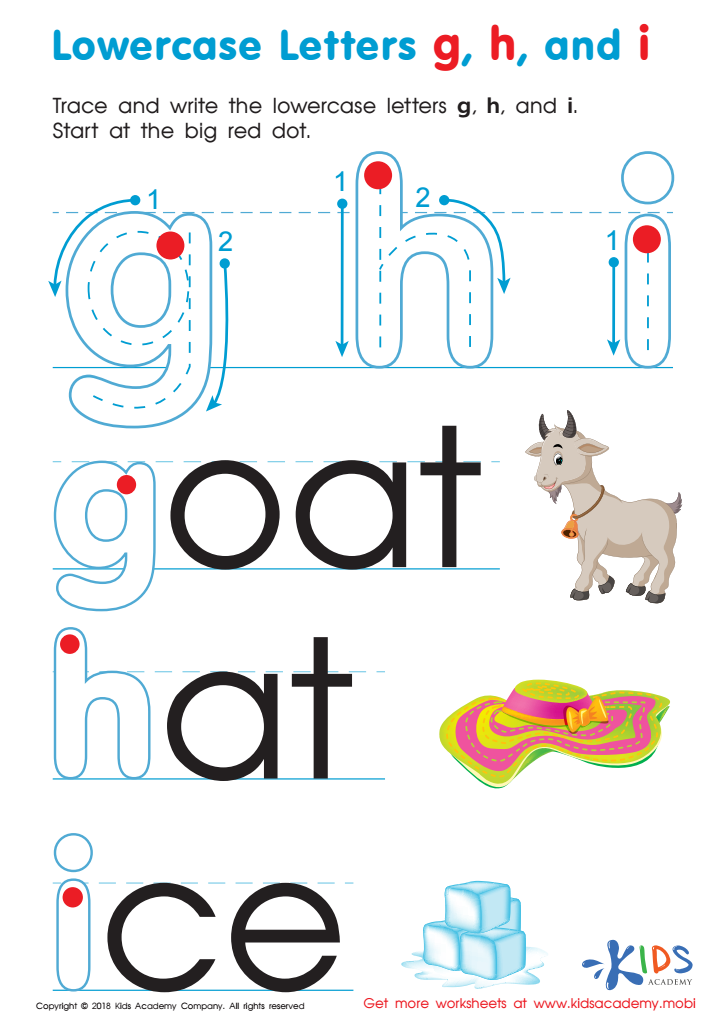
Lowercase Letters g h i Worksheet
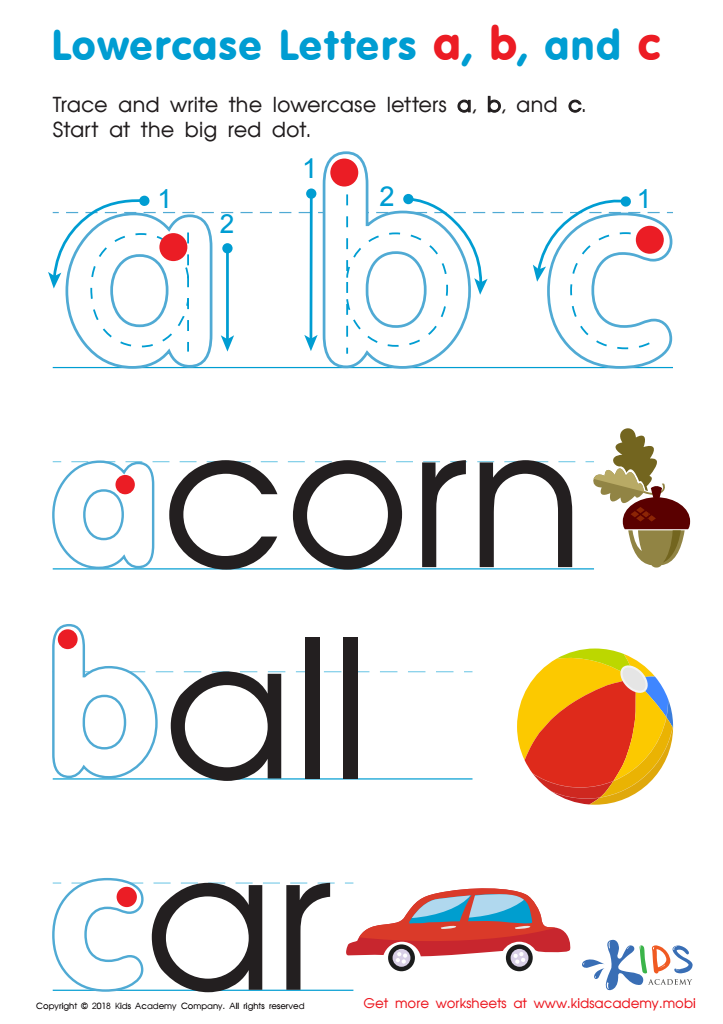
Lowercase Letters a b c Worksheet








Handwriting practice and letter tracing are vital activities for children aged 3-9 and play a crucial role in their cognitive and motor skill development. Parents and teachers should prioritize these practices to lay a strong foundation for academic success and everyday functioning.
For young children, particularly those in the 3-9 age range, the act of tracing letters boosts fine motor skills, hand-eye coordination, and dexterity. These physical skills are essential for a wide array of daily tasks, from tying shoelaces to using utensils.
Cognitively, the process of tracing letters enhances visual recognition and memory. This repetitive activity helps solidify the shapes and forms of letters in a child's mind, which is critical for reading and writing fluency. When children practice tracing, they also develop better spatial orientation and understanding of the spacing and alignment necessary for writing.
Socially and emotionally, mastering handwriting can boost a child's self-esteem and confidence. These early successes in learning can create positive attitudes toward education and contribute to greater classroom engagement.
Furthermore, strong handwriting skills support overall literacy. Being able to write fluidly allows children to focus more on expressing creative and complex ideas rather than the mechanics of writing, making learning an enjoyable and less frustrating experience.
Therefore, consistent handwriting practice through letter tracing offers multifaceted benefits, nurturing a child's growth holistically.








